Quick Answer: What EVs Should You Consider?
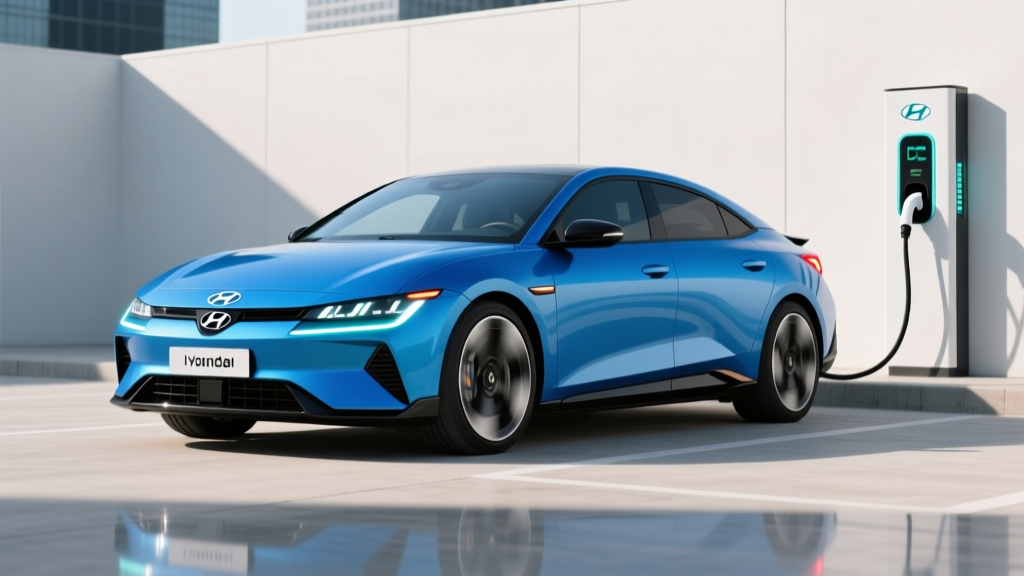
The right EV depends on three variables: your daily mileage, your charging access, and your budget after incentives. If you drive under 40 miles daily and can install a Level 2 home charger, nearly any modern EV with 250+ miles of EPA range will work — models like the Chevrolet Equinox EV (319 mi EPA, ~$33,600 base) or Hyundai Ioniq 5 (318 mi EPA, ~$42,600 base) are strong starting points. If you lack home charging or regularly road-trip in cold climates, a plug-in hybrid like the Toyota RAV4 Prime (42 mi electric, 38 MPG combined) may serve you better until public infrastructure matures in your area.
Mapping Your Needs Before You Shop
The question "what EVs should I buy" has no universal answer because electric vehicles span a massive range — from the $29,990 Nissan Leaf (149 mi EPA, 40 kWh battery) to the $130,000+ Lucid Air Grand Touring (516 mi EPA, 112 kWh battery). The gap between a good EV purchase and a frustrating one almost always comes down to mismatched expectations, not flawed vehicles.
Start by auditing your actual driving. Pull up your odometer logs or phone GPS history. Most Americans drive 30-40 miles per day, according to FHWA data, which means even a 200-mile-range EV covers a full work week without charging. But averages hide extremes — if you commute 80 miles round-trip or haul kids across a metro area, you need more buffer.
Your Charging Reality Check
Home charging access is the single biggest predictor of EV satisfaction. A Level 2 home charger (240V, 32-48 amps, delivering 7.7-11.5 kW) adds roughly 25-44 miles of range per hour of charging. Plug in overnight, and you start every morning with a full battery. Without home charging, you'll rely on public DC fast chargers or workplace Level 2 stations, which adds time, cost, and unpredictability to ownership.
If you live in an apartment, condo, or street-parking situation without charging access, don't dismiss EVs entirely — but do weigh a PHEV seriously. Plug-in hybrids give you 25-45 miles of electric range for daily errands and a gas engine for longer trips, eliminating range anxiety without requiring a dedicated charging spot.
EV vs Gas vs Hybrid: The Numbers Side by Side
Let's compare three realistic vehicles in the popular compact crossover segment to make the economics concrete:
| Metric | Hyundai Ioniq 5 SEL (EV) | Toyota RAV4 Prime XSE (PHEV) | Honda CR-V EX-L (Gas) |
|---|---|---|---|
| Base MSRP | $46,650 | $47,875 | $38,350 |
| Fed. Tax Credit (§30D) | Up to $7,500* | Up to $7,500* | None |
| Effective Price (after credit) | ~$39,150 | ~$40,375 | $38,350 |
| EPA Range / Efficiency | 290 mi / 110 MPGe | 42 mi EV + 38 MPG gas | 29 MPG combined |
| Annual Fuel/Energy Cost | ~$540 (15k mi, $0.13/kWh) | ~$780 (mixed EV/gas) | ~$1,760 (15k mi, $3.40/gal) |
| 5-Year Energy Cost | ~$2,700 | ~$3,900 | ~$8,800 |
| Annual Maintenance (est.) | ~$300 | ~$550 | ~$750 |
| 0-60 mph | 5.1 sec (AWD) | 5.7 sec | 7.8 sec |
*§30D tax credit eligibility depends on MSRP caps ($80,000 for SUVs), buyer income limits ($150K single / $300K joint), and battery critical-mineral sourcing requirements. Verify current rules at IRS.gov before purchasing. Point-of-sale transfer is available at participating dealers.
The 5-Year Total Cost Picture
The EV's higher sticker price narrows quickly once you factor in energy savings and lower maintenance. Over five years and 75,000 miles, the Ioniq 5 saves roughly $6,100 in energy costs versus the gas CR-V, and another $2,250 in maintenance (no oil changes, fewer brake replacements due to regenerative braking). Insurance is typically 10-15% higher for EVs due to repair costs and parts pricing — budget an extra $150-$250/year.
5-Year Total Cost of Ownership (75,000 miles)
| Category | Ioniq 5 EV | RAV4 Prime PHEV | CR-V Gas |
|---|---|---|---|
| Purchase (after credit) | $39,150 | $40,375 | $38,350 |
| Energy/Fuel | $2,700 | $3,900 | $8,800 |
| Maintenance | $1,500 | $2,750 | $3,750 |
| Insurance (est.) | $7,250 | $6,500 | $6,250 |
| Depreciation (est.) | $18,000 | $16,500 | $14,000 |
| Total 5-Year Cost | $68,600 | $70,025 | $71,150 |
The EV wins on 5-year cost, but the margin is thin — and it assumes you qualify for the full tax credit and charge primarily at home. If you rely on public DC fast charging at $0.35-$0.50/kWh, your annual energy cost jumps to $1,200-$1,700, erasing much of the advantage.
Real-World Range: What the EPA Sticker Doesn't Tell You
EPA range estimates are useful for comparison shopping, but real-world results vary significantly based on speed, temperature, and terrain. Here's what to expect from a typical 300-mile EPA-rated EV:
- City/suburban driving (30-50 mph): You'll often match or exceed EPA range. Regenerative braking recaptures energy at every stop.
- Highway driving (70-80 mph): Expect 15-25% less than EPA. Aerodynamic drag scales with the square of speed — 80 mph consumes dramatically more energy than 65 mph.
- Cold weather (below 30°F): Plan for 20-35% range loss. Battery chemistry slows in cold, and cabin heating draws significant power. A heat pump (standard on many 2025-2026 models including the Ioniq 5 and Tesla Model Y) reduces this penalty to roughly 15-25%.
- Towing: If you tow even a light trailer, cut range by 40-50%. EVs are torque-rich but aerodynamically penalized when pulling loads.
According to testing by fueleconomy.gov, most current EVs achieve 85-95% of their EPA combined estimate in mixed real-world driving during moderate temperatures. The gap widens in extreme conditions.
Practical rule: Choose an EV whose EPA range is at least 1.5x your typical daily driving need. If you drive 60 miles daily, target 250+ miles EPA. This gives you buffer for detours, cold weather, and battery degradation over time.
Charging Speeds and What They Mean for Your Routine
Understanding charging requires distinguishing between kW (power — how fast energy flows) and kWh (energy — how much the battery holds). A 77 kWh battery charged at 11 kW (Level 2) takes about 7 hours from empty to full. The same battery at a 150 kW DC fast charger can go from 10-80% in roughly 25 minutes.
| Charging Level | Power (kW) | Miles Added/Hour | Best For |
|---|---|---|---|
| Level 1 (120V outlet) | 1.0-1.4 kW | 3-5 mi/hr | PHEVs, overnight top-ups, emergencies |
| Level 2 (240V home) | 7.7-11.5 kW | 25-44 mi/hr | Daily home charging — the EV owner's workhorse |
| DC Fast Charge | 50-350 kW | 150-900+ mi/hr | Road trips, quick stops; rate tapers above 80% SoC |
Charging curve reality: DC fast chargers don't sustain their peak rate. A vehicle rated for "240 kW peak" may hold that speed only between 10-40% State of Charge, then taper progressively. The 10-80% time matters more than peak kW. For example, the Ioniq 5 peaks at ~240 kW but averages closer to 150 kW across the 10-80% session, completing it in about 18-20 minutes on a 350 kW charger.
Home Charger Installation Costs
Budget $500-$2,500 for a Level 2 home installation, depending on your electrical panel's capacity and the distance from panel to charger location. A 200-amp panel with spare breaker slots might need only a $600-$900 job (charger hardware + electrician + permit). A panel upgrade to 200A or a long conduit run can push costs to $2,000-$4,000. Always get a licensed electrician's assessment before purchasing hardware.
The Decision Framework: What EVs Fit Your Situation
If-Then EV Buyer's Guide
- If you have a garage/driveway and can install Level 2: A battery EV with 250+ miles EPA range is your sweet spot. Look at the Equinox EV, Ioniq 5, Tesla Model Y, or Volkswagen ID.4.
- If you lack home charging but have workplace Level 2: A BEV still works if your workplace charger is reliable. Charge to 80% during the workday. Confirm your employer's charging policy and availability first.
- If you rely entirely on public charging: A PHEV is likely the smarter choice. You'll use electricity for short trips and gas for longer ones, without depending on public charger uptime.
- If you live in a cold climate (regular sub-25°F winters): Prioritize EVs with heat pumps and larger batteries (80+ kWh usable). The Ford F-150 Lightning, Rivian R1S, and Tesla Model Y all manage cold well. Expect to precondition your battery before fast charging.
- If you road-trip monthly (300+ miles): Choose an EV with 300+ EPA range and proven fast-charge capability (Tesla Supercharger network or NACS-equipped vehicles gaining Supercharger access). Alternatively, a PHEV eliminates route-planning stress entirely.
- If you tow regularly: The F-150 Lightning (320 mi EPA, 7,700 lb tow rating) and Rivian R1T are purpose-built for this, but plan charging stops every 120-150 miles when towing.
- If your budget is under $35,000 after incentives: The Chevrolet Equinox EV LT (~$33,600 MSRP, 319 mi EPA) and the base Tesla Model 3 RWD (~$38,990 MSRP, 272 mi EPA) are the strongest value plays. Check state incentives — some states stack additional credits on top of federal.
Common Misconceptions, Corrected with Data
| Myth | Fact |
|---|---|
| "EV batteries need replacing every few years at huge cost." | Federal law mandates battery warranties of at least 8 years/100,000 miles. Most NMC and LFP batteries retain 85-92% capacity after 100,000 miles based on fleet data. Full replacement costs $8,000-$18,000 but is rarely needed within the vehicle's useful life. |
| "EVs are worse for the environment because of battery mining." | Lifecycle analyses from Argonne National Laboratory show EVs produce 50-70% fewer greenhouse gas emissions over their lifetime than comparable gas cars, even accounting for battery manufacturing and current US grid mix. The advantage grows as the grid decarbonizes. |
| "You'll be stranded because chargers are always broken." | Reliability varies by network. Tesla Superchargers consistently report 99%+ uptime. Electrify America and ChargePoint have improved but still see 85-92% uptime at some locations. Plan road trips with backup chargers using apps like PlugShare or A Better Routeplanner. |
| "EVs are slow and boring to drive." | Electric motors deliver instant torque. The base Ioniq 5 does 0-60 in 5.1 seconds — quicker than most V6 sport sedans from a decade ago. Performance EVs like the Tesla Model 3 Performance (3.1 sec) and Porsche Taycan (2.6 sec) rival supercars. |
| "The tax credit is $7,500 for every EV." | The §30D credit requires meeting MSRP caps, buyer income limits, and battery sourcing requirements that change annually. Not all EVs qualify for the full amount. Some qualify for $3,750 (partial sourcing) and some for $0. Always verify at IRS.gov. |
What First-Time EV Buyers Need to Know Before Signing
Battery Chemistry Matters
Two dominant chemistries exist in today's EVs: NMC (nickel manganese cobalt) and LFP (lithium iron phosphate). NMC offers higher energy density — more range in a lighter pack — but is more sensitive to sustained high states of charge. LFP is heavier and less energy-dense but tolerates daily 100% charging without accelerated degradation and uses no cobalt. Tesla Model 3 RWD, Ford Mustang Mach-E Select, and several Chinese-market models now use LFP. If you plan to charge to 100% daily for commuting, LFP is the lower-stress choice.
Tire Costs Are Real
EVs are 15-25% heavier than equivalent gas vehicles and deliver instant torque, both of which accelerate tire wear. Expect to replace tires every 25,000-40,000 miles rather than the 50,000+ miles typical for gas cars. Budget $800-$1,500 for a set of EV-rated tires (low rolling resistance, noise-reducing foam). Some owners rotate every 5,000 miles to extend life.
Insurance Is Higher — Shop Around
EV insurance premiums average 10-20% above comparable gas vehicles. Repair costs, specialized parts, and higher vehicle prices all contribute. But rates vary wildly by insurer. Get quotes from at least three companies before purchasing — some insurers now offer EV-specific discounts.
Preconditioning Is Your Secret Weapon
Most EVs let you precondition the battery and cabin while still plugged in. This warms the battery for better range and faster charging, and heats or cools the cabin without draining the pack. Set a departure timer in your vehicle's app and you'll leave every morning with a conditioned battery and a comfortable cabin — a significant advantage in both summer and winter.
Do I really need 300+ miles of range?
Not if you charge at home and drive under 80 miles daily. A 220-250 mile EPA range covers most routines with ample buffer. You need 300+ miles primarily for frequent road trips, cold climates, or if public charging is your only option.
What EVs qualify for the full $7,500 tax credit?
The list changes as automakers adjust battery sourcing. As of 2025-2026, vehicles like the Tesla Model Y (certain trims), Ford F-150 Lightning, and Chevrolet Equinox EV have qualified for partial or full credits. The MSRP must be under $80,000 for SUVs/pickups and $55,000 for sedans, and buyer AGI must not exceed $150K (single) or $300K (joint). Confirm your specific vehicle's eligibility at IRS.gov before purchase.
Will an EV work in extreme cold?
Yes, but with range compromises. Expect 20-35% less range below 25°F. Choose a vehicle with a heat pump, precondition while plugged in, and add buffer to your range calculations. EVs start reliably in any temperature — unlike gas engines, they don't need to crank a cold motor.
How long do EV batteries actually last?
Data from high-mileage fleets shows most modern EV batteries retain 85-92% of original capacity at 100,000 miles. Degradation typically slows after the initial 10-15% loss in the first 30,000-50,000 miles. With proper care (avoiding sustained 100% charge on NMC packs, minimizing DC fast charging to 100%), a battery should outlast 150,000-200,000 miles before dropping below 80% capacity.
What EVs are best for apartment dwellers without home charging?
If you can't install a home charger, a PHEV like the Toyota RAV4 Prime, Jeep Wrangler 4xe, or Chrysler Pacifica Hybrid lets you benefit from electric driving when you find charging and use gas otherwise. If you're committed to a full BEV, ensure you have reliable workplace or public Level 2 charging within a 10-minute detour of your daily route.