What Does EV Stand For?
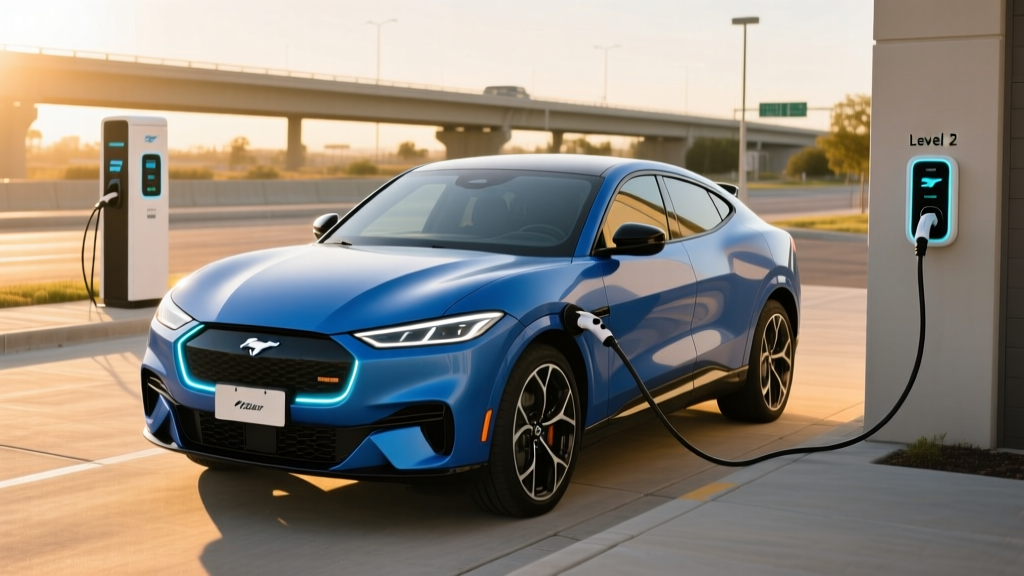
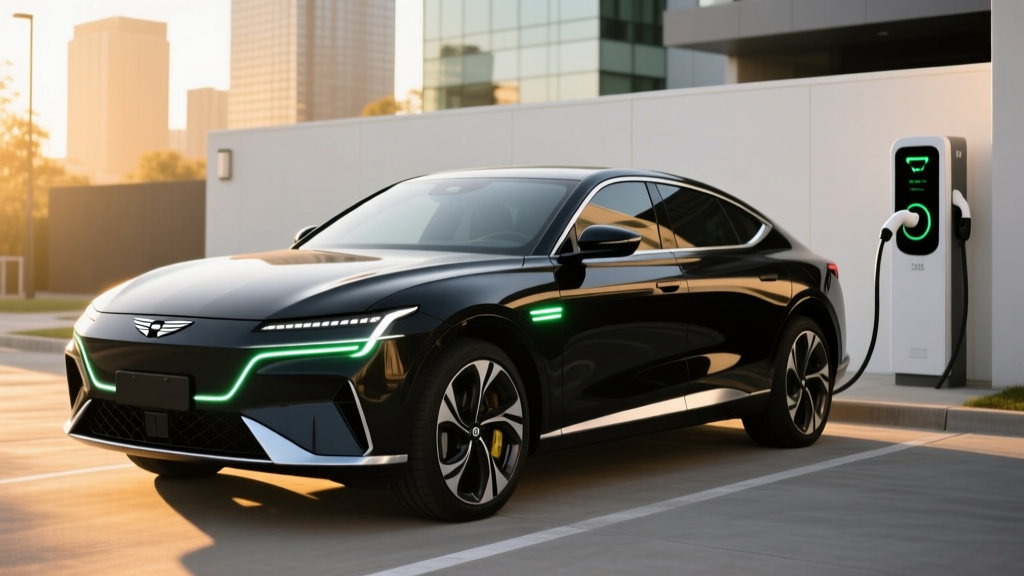
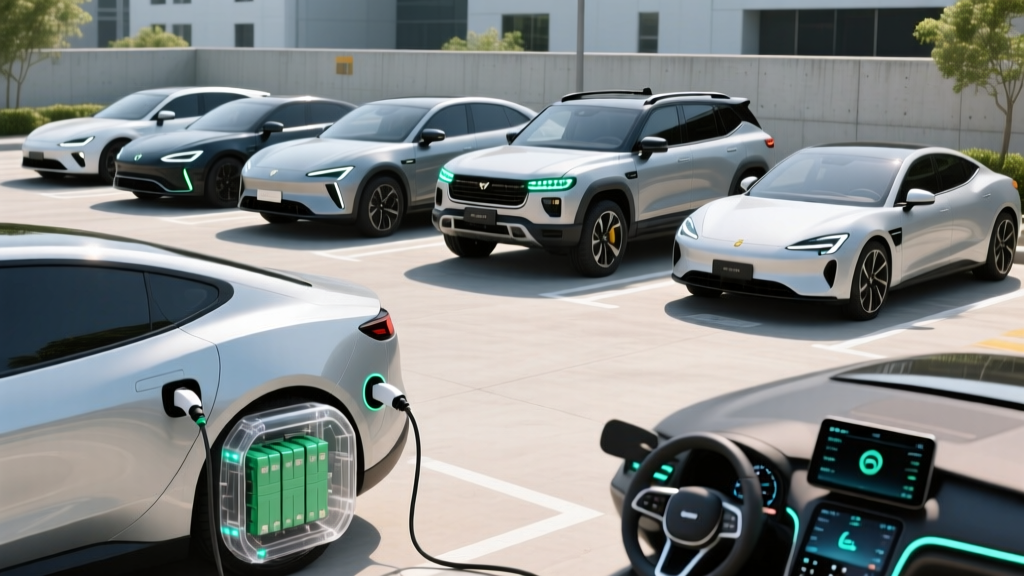
EV stands for Electric Vehicle — any automobile propelled partially or entirely by an electric motor powered by a rechargeable battery pack. In 2026, the term covers three distinct categories:
- BEV (Battery Electric Vehicle): 100% electric, no gas engine. Examples: Tesla Model 3, Hyundai Ioniq 5, Ford F-150 Lightning.
- PHEV (Plug-in Hybrid Electric Vehicle): Gas engine + electric motor with a battery you plug in for 20–50 miles of electric-only range. Examples: Toyota RAV4 Prime, Jeep Wrangler 4xe.
- HEV (Hybrid Electric Vehicle): Gas engine + small battery recharged by braking — no plug. Examples: Toyota Prius, Honda Accord Hybrid.
When people say "EV" casually, they usually mean a BEV — a car you charge instead of fuel. This guide focuses primarily on BEVs with PHEV context where relevant, because the buying decision hinges on understanding what you're actually signing up for.
BEV vs PHEV vs HEV: Which Electrified Vehicle Fits You?
The letters matter because each category solves a different problem. Here's how they compare on the metrics that affect your wallet and your daily routine:
| Metric | BEV (Battery Electric) | PHEV (Plug-in Hybrid) | HEV (Standard Hybrid) | Gas-Only (ICE) |
|---|---|---|---|---|
| Electric-only range | 220–400+ mi (EPA) | 20–50 mi (EPA) | 0 mi | 0 mi |
| Total range | 220–400+ mi | 350–550 mi (combined) | 450–600 mi | 350–500 mi |
| Fueling / Charging | Electricity only | Electricity + gas | Gas only | Gas only |
| Home charging needed? | Strongly recommended | Recommended for savings | No | No |
| EPA efficiency | 100–140 MPGe | 38–94 MPGe (combined) | 44–57 MPG | 22–32 MPG |
| Maintenance cost (annual avg) | ~$300–$500 | ~$600–$900 | ~$600–$900 | ~$900–$1,200 |
| Base price range (2026) | $29,000–$100,000+ | $33,000–$65,000 | $28,000–$45,000 | $22,000–$60,000 |
The critical split: if you can charge at home and your daily commute is under 60 miles round-trip, a BEV eliminates gas entirely and cuts fuel cost by 50–70%. If you regularly drive 300+ miles in a day or lack reliable home charging, a PHEV gives you electric commuting with gas-engine backup — no range anxiety, no route planning around chargers.
The Real Cost of EV Ownership: Purchase, Charging, and Maintenance
The sticker price of an EV is typically higher than a comparable gas car. But total cost of ownership (TCO) tells a different story — if the math works in your situation.
Purchase Price and the Federal Tax Credit
Under IRS §30D rules, qualifying new BEVs and PHEVs can receive up to $7,500 in federal tax credits, now transferable at the point of sale as an instant discount. But eligibility is not universal. The current requirements:
- MSRP caps: $55,000 for sedans; $80,000 for SUVs, pickups, and vans
- Buyer income limits: AGI ≤ $150,000 (single), $225,000 (head of household), $300,000 (joint)
- Battery sourcing: Critical minerals and battery components must meet phased-in domestic/free-trade-area sourcing thresholds that tighten annually
- Assembly: Final assembly must occur in North America
Not every EV qualifies. Before you fall in love with a model, verify eligibility on fueleconomy.gov — the list changes as automakers adjust battery supply chains.
Charging vs Fueling: The Per-Mile Cost
This is where EVs earn their keep — but the savings depend entirely on your electricity rate and how you charge.
| Scenario | Cost per kWh / Gallon | Cost per Mile | Annual cost (12,000 mi) |
|---|---|---|---|
| BEV — home charging (national avg $0.17/kWh, 3.5 mi/kWh) | $0.17/kWh | $0.049 | $583 |
| BEV — DC fast charging (avg $0.40/kWh) | $0.40/kWh | $0.114 | $1,371 |
| Gas car (28 MPG avg, $3.40/gal) | $3.40/gal | $0.121 | $1,457 |
| Hybrid (50 MPG, $3.40/gal) | $3.40/gal | $0.068 | $816 |
Home charging is the economic foundation. If you charge exclusively at home on a standard residential rate, you'll spend roughly $580/year to drive 12,000 miles — about 60% less than a comparable gas car. But if you rely entirely on DC fast chargers at $0.35–$0.50/kWh, your per-mile cost approaches or exceeds gas. This is why home charging access is the single biggest predictor of EV satisfaction.
Maintenance Savings
BEVs have no oil changes, no spark plugs, no transmission fluid, and no exhaust system. Brake pad life extends to 80,000–120,000+ miles because regenerative braking handles most deceleration. Annual maintenance for a BEV averages $300–$500 vs $900–$1,200 for a gas car, according to AAA's Your Driving Costs analysis. Over five years, that's $2,500–$3,500 in maintenance savings.
Insurance: The Hidden Cost
EV insurance premiums run 15–25% higher than equivalent gas cars due to higher repair costs (specialized parts, battery-pack labor, aluminum body panels). A Tesla Model Y or Ford F-150 Lightning may cost $200–$400 more per year to insure. Always get a quote before buying — it can change the TCO equation.
Range, Charging, and the Real-World Gaps Nobody Advertises
The EPA range sticker is a starting point, not a promise. Understanding the gaps between marketing and reality is essential for any first-time EV buyer.
Real-World Range vs EPA Estimates
EPA range testing uses a mixed city/highway cycle at moderate temperatures. In practice:
- Highway driving at 70+ mph: Expect 15–25% less than EPA range. Aerodynamic drag dominates at speed, and EVs don't benefit from the "city boost" of regenerative braking.
- Cold weather (below 32°F): Range drops 20–40% due to battery chemistry slowdown and cabin heating energy. A 300-mile EPA BEV may deliver 180–220 miles in a Midwest January.
- Moderate city/suburban driving (55–65 mph, 60–80°F): You'll often meet or slightly exceed the EPA number thanks to regen and low-speed efficiency.
A practical rule: plan trips around 70% of the EPA range to maintain a safety buffer, especially in winter or on highway-heavy routes.
Charging Speed: Peak kW Is Not Sustained kW
When an automaker advertises "250 kW DC fast charging," that's the peak rate — achieved only at low state-of-charge (SoC) and optimal battery temperature. The charging curve tapers significantly as the battery fills:
- 10–40% SoC: Near peak rate (e.g., 230–250 kW)
- 40–60% SoC: Moderate taper (e.g., 150–180 kW)
- 60–80% SoC: Significant taper (e.g., 80–120 kW)
- 80–100% SoC: Slow trickle (e.g., 20–50 kW)
This is why the industry standard metric is 10–80% charge time, not peak kW. A 2026 Hyundai Ioniq 5 with its 800V architecture peaks at ~240 kW and reaches 10–80% in roughly 18 minutes at a capable charger. A Chevrolet Equinox EV peaks at ~150 kW and takes about 30 minutes for the same 10–80% session. Both numbers matter more than the headline kW figure.
Home Charging Setup: What It Actually Costs
Level 1 charging (120V standard outlet) adds roughly 3–5 miles of range per hour — adequate only for PHEVs or very low-mileage drivers. Most BEV owners install a Level 2 home charger (240V, 32–48 amps) that adds 25–40 miles per hour, fully replenishing a 75 kWh battery overnight.
Level 2 installation costs vary widely:
- Simple install (charger near panel, no upgrade): $500–$1,200
- Moderate install (50–100 ft conduit run): $1,200–$2,500
- Panel upgrade required (100A → 200A service): $2,500–$5,000+
Get a quote from a licensed electrician before committing to a BEV. If you rent or live in a condo without charging access, your economics shift heavily toward public charging — which, as noted, erodes the cost advantage.
Common EV Myths vs Facts
Misinformation slows good buying decisions. Here are the claims you'll encounter — and the data behind them:
| Myth | Fact |
|---|---|
| "EV batteries need replacing every few years." | Modern LFP and NMC packs are warrantied for 8 years / 100,000 miles (10 years / 150,000 in CARB states) with a capacity-retention threshold of 70%. Real-world degradation averages 1.5–2.5% per year. Most packs outlast 200,000 miles with 80%+ capacity. |
| "EVs are worse for the environment because of battery mining." | Lifecycle analyses from Argonne National Laboratory and ICCT show BEVs produce 50–70% fewer lifetime emissions than gas cars in the US grid mix, even accounting for battery manufacturing. The grid gets cleaner every year, widening the gap. |
| "Charging takes too long for road trips." | At a 250+ kW DC fast charger, modern BEVs add 150–200 miles in 15–20 minutes. Combined with rest stops and food, this adds ~20–30 minutes per 3 hours of driving. It's a different rhythm, not a dealbreaker — but it requires planning in rural corridors. |
| "You'll get stranded — the charging network is unreliable." | Network reliability varies. Tesla's Supercharger network consistently reports 99%+ uptime. Electrify America and ChargePoint have improved but still show 85–92% session success rates in independent surveys. Route planning with apps like A Better Routeplanner mitigates most risk. |
| "EVs don't work in cold climates." | Norway is the world's EV-per-capita leader, with harsh winters and 80%+ new-car BEV share. Cold reduces range (20–40%), but preconditioning (warming the battery while plugged in) and heat-pump HVAC systems mitigate the loss. It works — you just need a larger range buffer. |
First-Time EV Buyer Checklist: What You Must Know Before Signing
If you're transitioning from a gas car, these are the ownership realities that catch new EV buyers off guard:
- Home charging is non-negotiable for most buyers. If you can't install Level 2 at home, a PHEV or HEV is likely a better fit. Public-only charging is expensive, time-consuming, and inconsistent.
- Understand kW vs kWh. kW (kilowatts) measures power — how fast you charge. kWh (kilowatt-hours) measures energy — how big your battery is. A 75 kWh battery charged at 11 kW (Level 2) takes ~7 hours from empty. At 150 kW (DC fast), it takes ~30 minutes to 80%.
- Connector types matter. In 2026, the industry is consolidating around NACS (Tesla's connector, now the SAE J3400 standard). Most new EVs from Ford, GM, Rivian, Hyundai, and others ship with NACS. CCS1 is still present on some models and at many public stations. Adapters exist, but native compatibility simplifies life.
- Preconditioning is essential for fast charging. If your EV has battery preconditioning (most do), use the navigation system to route to a DC fast charger. The car will warm the battery en route, enabling peak charge rates. Without preconditioning, cold batteries charge at a fraction of their rated speed.
- One-pedal driving changes everything. Strong regenerative braking lets you slow and stop using only the accelerator in most situations. It takes a week to adjust, then you'll never want to go back. It also reduces brake wear dramatically.
- Tax credit eligibility is model-specific and buyer-specific. Don't assume. Check the IRS qualified vehicles list, verify your AGI, and confirm the trim's MSRP falls under the cap. Point-of-sale transfer makes the credit an instant rebate at the dealer.
Decision Framework: Should You Buy a BEV, PHEV, or Stick with Gas?
Choose a BEV if:
- You can install Level 2 charging at home (garage, driveway, or dedicated parking spot)
- Your daily driving is under 80 miles round-trip (covers 90%+ of US commutes)
- You take road trips 1–4 times per year and can plan charging stops
- You want the lowest per-mile fuel cost and minimal maintenance
- You qualify for federal or state incentives that narrow the price gap
Choose a PHEV if:
- You have home charging but also take frequent long trips (300+ miles)
- You want electric commuting (20–50 mi) without any range anxiety
- You live in a region with sparse DC fast-charging infrastructure
- You're not ready to commit to full electric but want meaningful fuel savings
Choose a Hybrid (HEV) or Gas Car if:
- You cannot charge at home and have no reliable workplace charging
- You regularly tow heavy loads (trailers, boats) over long distances
- Your budget is tight and the upfront EV premium doesn't pencil out within your ownership timeline
- You live in an extreme-cold region with limited charging infrastructure
5-Year Cost Snapshot: EV vs Gas vs Hybrid
Numbers make the decision concrete. Here's a representative 5-year / 60,000-mile comparison for a compact SUV in each category, assuming home charging and national-average electricity/gas prices:
| Cost Category | BEV (e.g., Hyundai Ioniq 5 SEL, ~$46,000 MSRP) | Gas SUV (e.g., Toyota RAV4 LE, ~$31,000 MSRP) | Hybrid (e.g., Toyota RAV4 Hybrid, ~$34,000 MSRP) |
|---|---|---|---|
| Purchase price (after credits) | ~$38,500 (with $7,500 credit) | $31,000 | $34,000 |
| Fuel / Electricity (5 yr) | $2,915 | $7,285 | $4,080 |
| Maintenance (5 yr) | $1,800 | $5,200 | $4,200 |
| Insurance (5 yr est.) | $9,500 | $7,200 | $7,500 |
| Depreciation (5 yr est.) | $16,500 | $12,000 | $13,500 |
| 5-Year Total Cost | $69,215 | $62,685 | $63,280 |
In this scenario, the BEV's higher purchase price, insurance, and depreciation partially offset its fuel and maintenance savings. The breakeven timeline vs a gas car is typically 5–8 years depending on miles driven, electricity rates, and whether the tax credit applies. High-mileage drivers (15,000+ mi/year) in states with cheap electricity break even faster. Low-mileage drivers may not break even at all — and that's okay. The right choice depends on your numbers, not someone else's.
Frequently Asked Questions
Does EV stand for electric vehicle or something else?
EV universally stands for Electric Vehicle in the automotive context. The term covers BEVs (fully electric), PHEVs (plug-in hybrid), and sometimes HEVs (standard hybrids), though most buyers and manufacturers use "EV" to mean a fully electric BEV.
Is an EV cheaper than a gas car over time?
It depends on your driving volume, electricity rate, and whether you qualify for tax credits. For a driver covering 12,000+ miles annually with home charging at $0.15/kWh and a $7,500 tax credit, a BEV typically breaks even with a comparable gas car in 5–7 years and saves money thereafter. Low-mileage drivers or those relying on expensive DC fast charging may not see savings.
How long do EV batteries last?
Federal law mandates battery warranties of at least 8 years / 100,000 miles (10 years / 150,000 miles in CARB states) with capacity retention above 70%. Real-world data from sources like NHTSA and fleet operators show most modern LFP and NMC packs retain 85–92% capacity at 100,000 miles. Full battery replacement is rare and typically costs $8,000–$20,000 depending on the vehicle, though prices continue to decline.
What happens if I can't charge at home?
Public-only EV ownership is significantly more expensive ($0.35–$0.50/kWh at DC fast chargers vs $0.12–$0.20/kWh at home) and less convenient. If home charging isn't an option, consider a PHEV for electric commuting with gas flexibility, a hybrid for maximum MPG without plugging in, or wait until workplace or apartment charging becomes available.
Are EVs safe in crashes?
EVs undergo the same IIHS and NHTSA crash testing as gas cars, and many earn top ratings. The battery pack's low placement gives EVs a lower center of gravity, reducing rollover risk. Battery fires after crashes are statistically rarer than gas-vehicle fires per vehicle-mile, though they require specialized firefighting procedures.
What's the difference between LFP and NMC batteries?
LFP (Lithium Iron Phosphate) batteries offer longer cycle life, better thermal stability, and lower cost but have lower energy density (heavier for the same range). NMC (Nickel Manganese Cobalt) batteries pack more energy per pound, enabling longer range in a smaller package, but degrade slightly faster and cost more. Tesla, Ford, and others now offer LFP in standard-range trims. Both chemistries are reliable — the choice affects range and weight, not safety.