Quick Answer: What Does EV Stand For?
EV stands for "Electric Vehicle" — any vehicle propelled primarily by one or more electric motors using energy stored in a rechargeable battery pack. In automotive usage, "EV" most commonly refers to a Battery Electric Vehicle (BEV), which runs entirely on electricity with no gasoline engine. However, the term also encompasses Plug-in Hybrid Electric Vehicles (PHEVs) and, in broader definitions, standard Hybrid Electric Vehicles (HEVs).
If you've seen "EV" everywhere — news headlines, dealership signs, your neighbor's garage — and wondered what it actually means for your next car purchase, this guide breaks down every variant, the real costs, and whether one fits your life. No hype, just data.
The Three Types of EVs: BEV, PHEV, and HEV Explained
Not every vehicle wearing an "EV" badge operates the same way. The acronym covers three distinct powertrain architectures, each with different fueling requirements, range profiles, and ownership economics.
| Type | Full Name | Power Source | Tailpipe Emissions | Plug-In? |
|---|---|---|---|---|
| BEV | Battery Electric Vehicle | Electricity only (battery + motor) | Zero | Yes |
| PHEV | Plug-in Hybrid Electric Vehicle | Battery + gasoline engine | Low (electric mode: zero) | Yes |
| HEV | Hybrid Electric Vehicle | Gasoline engine + small battery assist | Reduced vs. conventional | No |
BEV: The Pure Electric Vehicle
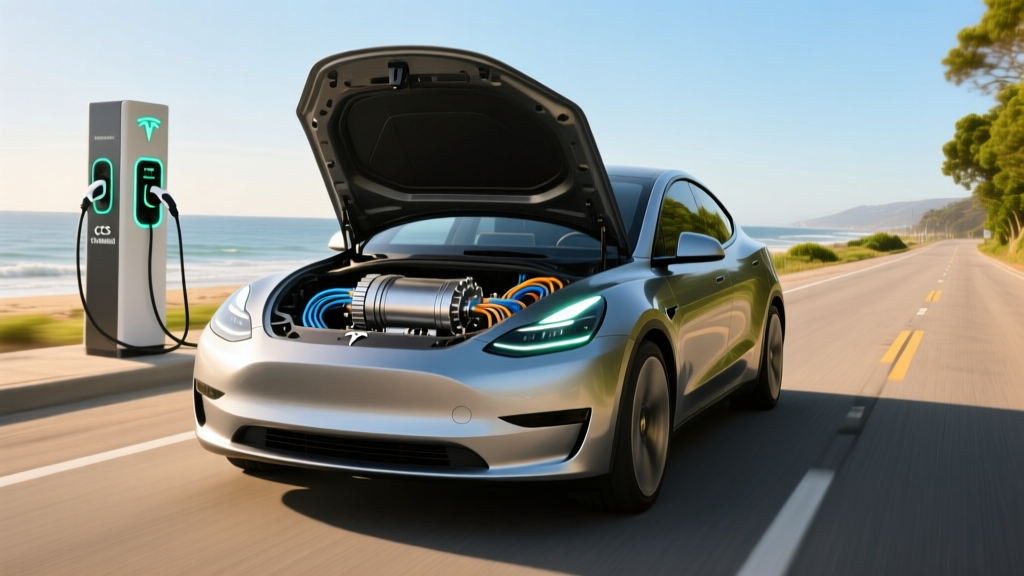
A BEV like the 2026 Tesla Model Y Long Range (EPA 320 miles, 75 kWh usable battery, starting at ~$44,990) or the 2026 Hyundai Ioniq 5 (EPA 303 miles, 84 kWh battery, ~$42,600) has no engine, no fuel tank, and no tailpipe. You charge it from the grid, and an electric motor converts that stored energy (measured in kWh — kilowatt-hours, the unit of energy capacity) into motion. Efficiency is measured in MPGe (miles per gallon equivalent) or kWh/100mi. The Ioniq 5, for instance, achieves 110 MPGe combined per the EPA.
PHEV: The Bridge Between Gas and Electric
A PHEV like the 2026 Toyota RAV4 Prime offers ~42 miles of electric-only range from an 18.1 kWh battery, then seamlessly switches to hybrid mode for 94 MPGe combined or 38 MPG on gas alone. You can plug it in to capture that electric range, or just fill the tank and drive it like a regular hybrid. PHEVs suit buyers who want daily electric commuting without any range-anxiety risk on road trips.
HEV: The Self-Charging Hybrid
Standard hybrids like the 2026 Toyota Camry Hybrid (51 MPG combined) use a small battery charged entirely by regenerative braking and the engine. They never plug in. While technically "electric vehicles" by the broadest definition, most consumers and regulators reserve "EV" for plug-in models. HEVs are better understood as highly efficient gas cars with electric assist.
EV vs. Gas Car: The Real Cost and Performance Comparison
The decision between a BEV, PHEV, and conventional gas car comes down to total cost, daily driving habits, and infrastructure access. Here's a data-driven comparison using current figures:
| Metric | 2026 Tesla Model Y LR (BEV) | 2026 Toyota RAV4 Gas (AWD) | 2026 RAV4 Prime (PHEV) |
|---|---|---|---|
| Base MSRP | ~$44,990 | ~$31,900 | ~$44,590 |
| Fed. Tax Credit (§30D) | Up to $7,500 (eligibility varies) | $0 | Up to $7,500 (eligibility varies) |
| EPA Range / MPG | 320 mi / 111 MPGe | 29 MPG combined | 42 mi electric + 600 mi gas |
| Fuel/Energy Cost (15k mi/yr) | ~$540/yr (electric at $0.16/kWh) | ~$1,810/yr (gas at $3.50/gal) | ~$700/yr (mixed) |
| Annual Maintenance | ~$300 | ~$750 | ~$550 |
| 0-60 mph | 5.0 seconds | 8.2 seconds | 5.7 seconds |
The takeaway: The BEV has a higher sticker price but saves roughly $1,200-$1,500 annually in fuel and maintenance. Over five years, that's $6,000-$7,500 in operational savings, partially offsetting the purchase premium — and that's before any federal or state incentives.
Real Ownership Costs: What EV Buyers Actually Spend
Sticker price is only the beginning. Here's a realistic five-year cost breakdown for a typical BEV owner driving 15,000 miles per year:
| Cost Category | BEV (5-Year Total) | Gas Car (5-Year Total) | Notes |
|---|---|---|---|
| Purchase (after credit) | $37,490 | $31,900 | Assumes full $7,500 §30D credit; many buyers won't qualify for the full amount |
| Home Charger Install | $500–$2,000 | $0 | Level 2 (240V) station + electrician; may require panel upgrade ($1,500-$3,000 extra) |
| Energy/Fuel | $2,700 | $9,050 | BEV at $0.16/kWh avg; gas at $3.50/gal |
| Maintenance | $1,500 | $3,750 | No oil changes, fewer brake replacements (regen braking), cabin filter, tire rotation |
| Insurance | $9,000 | $7,000 | EV insurance averages 15-25% higher due to repair costs and battery replacement risk |
| Tires | $2,400 | $1,600 | EVs wear tires ~20% faster due to instant torque and heavier weight |
| Total 5-Year | ~$53,590–$55,090 | ~$53,300 | Nearly identical when tax credit applies; BEV pulls ahead in years 6+ |
Key nuance on the §30D tax credit: Not every EV qualifies for the full $7,500, and not every buyer qualifies. The IRS rules impose buyer income caps ($150K single / $300K joint), vehicle MSRP caps ($55K sedans / $80K SUVs and trucks), and strict battery critical-mineral and component sourcing requirements that change annually. Always verify current eligibility on fueleconomy.gov before purchasing.
What First-Time EV Buyers Must Know Before Purchasing
If you're considering your first EV, these are the practical realities that spec sheets don't always highlight:
Real-World Range Is Not the EPA Sticker
The EPA range estimate assumes mixed driving at moderate temperatures. Expect to lose 15-30% of rated range at sustained highway speeds (70+ mph) and 20-40% in freezing temperatures (below 32°F) due to battery chemistry limitations and cabin heating demands. A 320-mile EPA rating might deliver 240-260 miles on a winter highway road trip. Vehicles equipped with a heat pump (standard on the Model Y and Ioniq 5) mitigate cold-weather loss significantly compared to resistive heating.
Charging Speed: kW vs. kWh and the Curve Reality
This is the most common confusion for new buyers. kWh (kilowatt-hours) measures battery capacity — how much energy is stored. kW (kilowatts) measures charging power — how fast energy flows in. A 250 kW peak charge rate does not mean you charge at 250 kW the entire session. Charging follows a curve: the battery accepts peak power only at low states of charge (roughly 10-40%), then progressively tapers to protect battery health. The Ioniq 5 peaks at 238 kW but averages closer to 150 kW across a 10-80% session, taking roughly 18 minutes. Above 80%, charging slows dramatically — plan to charge to 80% on road trips and move on.
Home Charging Access Is the Make-or-Break Factor
Public DC fast charging costs $0.30-$0.50/kWh in most markets — close to gasoline on a per-mile basis. The economics of EV ownership depend on affordable home charging at residential rates ($0.10-$0.20/kWh). If you live in an apartment without charging access, rely on street parking, or have a 100+ mile commute with no workplace charging, a PHEV may be a more practical choice than a BEV. A Level 2 home charger (7-11 kW) adds 25-44 miles of range per hour of charging, easily replenishing a full day's driving overnight.
Battery Longevity and Warranty
Modern EV batteries are engineered for longevity. Most manufacturers warranty the battery for 8 years / 100,000 miles with a capacity retention threshold of 70% (meaning the battery must hold at least 70% of its original capacity or it's replaced). Real-world degradation data from fleets and long-term owners shows typical NMC batteries losing 10-15% capacity over 100,000 miles, while LFP (lithium iron phosphate) chemistries — used in the base Model 3 and some Chinese-market vehicles — degrade even more slowly and tolerate daily 100% charging without harm.
Common EV Misconceptions — Myth vs. Fact
| Myth | Fact |
|---|---|
| "EVs are worse for the environment because of battery mining." | Lifecycle analyses by the ICCT and EPA consistently show BEVs produce 50-70% fewer lifetime emissions than gas cars in the US grid mix, even accounting for battery manufacturing. The grid is also getting cleaner every year. |
| "You'll be stranded — there aren't enough chargers." | The US has over 200,000 public charging ports as of 2026. Rural charging deserts exist, but major highway corridors are well-served. With proper trip planning (Tesla's built-in router or apps like A Better Routeplanner), range stranding is extremely rare. |
| "EV batteries need replacing every few years and cost $20,000." | Battery replacement is uncommon under 150,000 miles. When needed, costs range from $5,000-$15,000 depending on the pack, but most batteries outlast the vehicle. The 8-year/100K-mile warranty protects against premature failure. |
| "EVs are slow and boring to drive." | Electric motors deliver instant torque from 0 RPM. The $44,990 Model Y hits 60 mph in 5.0 seconds — faster than most V6 sports sedans. Even economy EVs feel responsive in city driving. |
| "Charging takes hours." | Level 2 home charging takes 6-10 hours but happens while you sleep. DC fast charging adds 150-250 miles in 15-25 minutes at a 150+ kW station — roughly a rest-stop break on a road trip. |
Your Decision Framework: Which Type of EV Is Right for You?
Choose a BEV if:
- You have reliable home or workplace Level 2 charging access
- Your daily driving is under 80 miles round-trip
- You take road trips fewer than 6 times per year (and can plan DC fast-charger stops)
- You want the lowest per-mile operating cost and minimal maintenance
- You qualify for the §30D tax credit (check IRS guidelines)
Choose a PHEV if:
- You want electric-only commuting (25-45 miles) but frequently drive longer distances
- You lack reliable home charging but can plug in occasionally
- You live in an area with extreme cold or limited public charging infrastructure
- You want to reduce fuel consumption without any range-anxiety risk
Choose an HEV (standard hybrid) if:
- You have zero access to plug-in charging (apartment, street parking, no garage)
- You want better fuel economy without changing your fueling habits at all
- Your budget is tighter and you need a lower purchase price
Stick with a gas car for now if:
- You regularly tow heavy loads over long distances (EV range drops 40-50% when towing)
- You live in a remote area with no public charging and extreme winters
- You drive fewer than 5,000 miles per year (the fuel savings won't offset the EV premium)
Frequently Asked Questions
Does EV stand for electric vehicle or something else?
Yes, EV stands for Electric Vehicle. In the automotive industry and among consumers, it most commonly refers to battery electric vehicles (BEVs) that run entirely on electricity. The term is sometimes used more broadly to include plug-in hybrids (PHEVs) and conventional hybrids (HEVs), though those are more precisely identified by their specific acronyms.
What does BEV stand for vs. EV?
BEV stands for Battery Electric Vehicle — a pure electric car with no gasoline engine. It's a subset of EV. When someone says "I bought an EV," they almost always mean a BEV. PHEVs and HEVs are technically electrified vehicles but are usually identified by their specific type to avoid confusion.
Are EVs really cheaper to own than gas cars?
Over a 5-7 year ownership period, BEVs are often cheaper on a total-cost basis when you factor in fuel savings (~$1,200/year), reduced maintenance (~$450/year), and available tax credits. However, the upfront purchase price is typically higher, insurance costs 15-25% more, and tire replacement is more frequent. The savings compound the longer you own the vehicle and the more miles you drive.
How long do EV batteries last?
Most modern EV batteries are designed to last 150,000-200,000+ miles before significant degradation. Federal warranty requirements mandate at least 8 years/100,000 miles of coverage (10 years/150,000 miles in CARB states like California). Real-world data from high-mileage Tesla and Hyundai fleets shows 85-90% capacity retention at 100,000 miles for NMC batteries, and even better results for LFP chemistry.
Can I charge an EV from a regular household outlet?
Yes — this is called Level 1 charging (120V, ~1.4 kW). It adds roughly 3-5 miles of range per hour, or about 40-50 miles overnight. That's sufficient for some low-mileage commuters, but most EV owners install a Level 2 charger (240V, 7-11 kW) for 25-44 miles of range per hour. A Level 2 installation typically costs $500-$2,000 for the equipment and electrician, assuming your electrical panel has sufficient capacity.
Do EVs work in cold weather?
EVs function in cold weather, but range drops 20-40% in sub-freezing temperatures due to battery chemistry slowdown and cabin heating energy. To mitigate this: precondition the battery while plugged in (warming it using grid power before departure), choose a vehicle with a heat pump, and keep your state of charge above 20% in winter. In extreme cold (-20°F), expect to use 30-40% more energy per mile than the EPA sticker suggests.