What Does EV Mean in Cars?
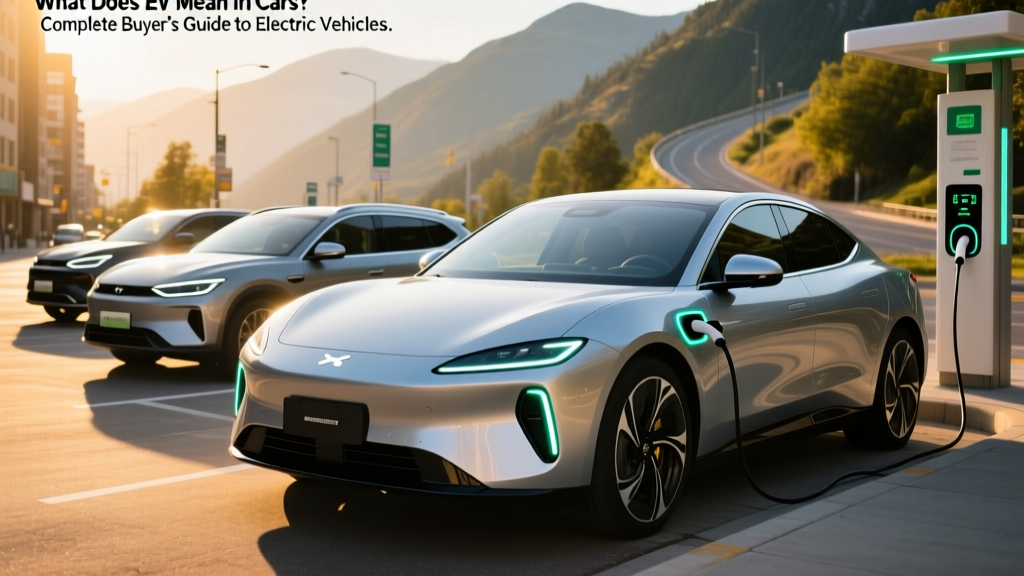
EV stands for "Electric Vehicle" — any car that uses an electric motor powered by a rechargeable battery instead of (or in addition to) a gasoline engine. In 2026, the term covers three main categories:
- BEV (Battery Electric Vehicle): 100% electric, no gas engine. Examples: Tesla Model Y, Hyundai Ioniq 5, Ford Mustang Mach-E.
- PHEV (Plug-in Hybrid Electric Vehicle): Has both a battery/motor and a gas engine. Plugs in for 25–45 miles of electric-only range, then operates as a hybrid. Examples: Toyota RAV4 Prime, Jeep Wrangler 4xe.
- HEV (Hybrid Electric Vehicle): Uses a small battery and motor to assist a gas engine but does not plug in. Examples: Toyota Prius, Honda CR-V Hybrid.
When most people say "EV" today, they mean a BEV — a fully electric car you charge from the grid. This guide focuses primarily on BEVs, with PHEV context where useful.
How a Battery Electric Vehicle Actually Works
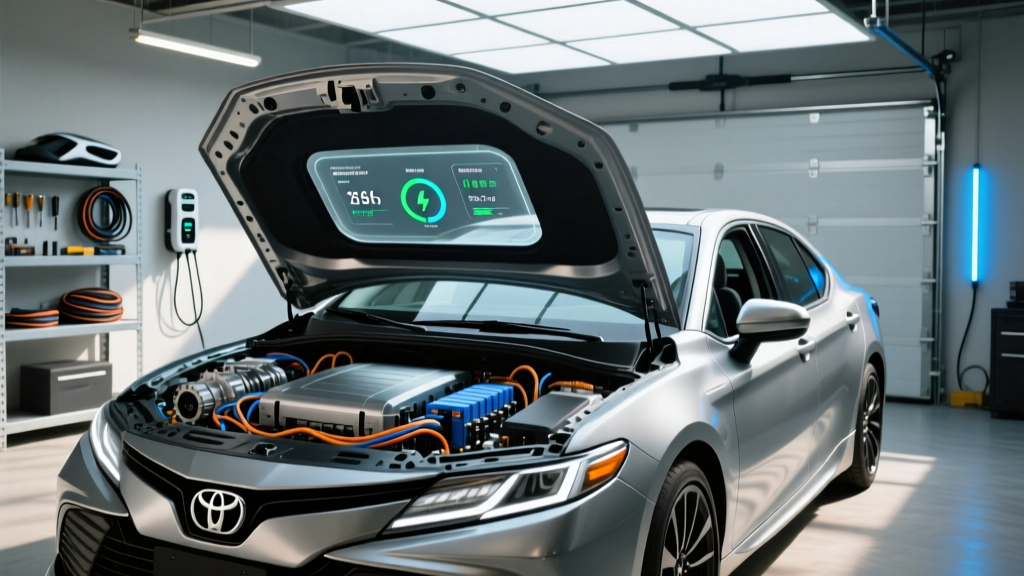
A BEV replaces the internal combustion engine, fuel tank, exhaust system, and multi-speed transmission with three core components:
- Traction battery pack: Stores electrical energy measured in kilowatt-hours (kWh). A 2026 Chevrolet Equinox EV carries an 85 kWh (usable) NMC lithium-ion pack; a base Tesla Model 3 uses a ~60 kWh LFP pack.
- Electric motor(s): Converts stored energy into motion. Output is measured in horsepower and kilowatts (kW). A dual-motor Hyundai Ioniq 5 produces 320 hp (239 kW).
- Power electronics / inverter: Manages the flow of DC battery power to AC motor power and controls regenerative braking.
The critical distinction every buyer must learn early: kWh is energy capacity (like gallons in a tank), while kW is power (like horsepower or charging speed). A 250 kW charger delivers power fast; a 75 kWh battery stores energy. These are never interchangeable.
EV vs Gas vs Hybrid: The Numbers Side by Side
Understanding what EV means in cars requires comparing real ownership data against gasoline and hybrid alternatives. Here's how a mainstream 2026 BEV stacks up:
| Metric | BEV (2026 Hyundai Ioniq 5 SEL AWD) | Gas (2026 Toyota RAV4 AWD) | PHEV (2026 Toyota RAV4 Prime) |
|---|---|---|---|
| EPA Range / Tank | 290 mi (EPA) | ~400 mi (14.5 gal × 28 MPG) | 42 mi electric + ~480 mi gas |
| Energy Efficiency | 110 MPGe combined | 30 MPG combined | 94 MPGe (EV mode) |
| "Fuel" Cost per Mile | ~$0.045 (home charging at $0.16/kWh) | ~$0.12 (at $3.40/gal) | ~$0.04 (EV) / ~$0.12 (gas) |
| Base MSRP | $46,250 | $32,500 | $45,500 |
| Federal Tax Credit (§30D) | Up to $7,500 (eligibility varies) | $0 | Up to $7,500 (eligibility varies) |
| Annual Maintenance | ~$300–$400 | ~$900–$1,200 | ~$700–$900 |
| 0–60 mph | 5.2 seconds | 8.1 seconds | 5.7 seconds |
| Battery Warranty | 10 yr / 100,000 mi | N/A | 10 yr / 150,000 mi |
Sources: fueleconomy.gov, manufacturer spec sheets. Tax credit eligibility depends on buyer income, vehicle MSRP caps, and battery-sourcing requirements under IRS §30D rules. Consult a tax professional.
Real Costs of EV Ownership: A 5-Year Breakdown
What EV means for your wallet goes beyond the sticker price. Here's a realistic 5-year / 75,000-mile ownership comparison for a mid-size crossover BEV vs a comparable gas vehicle, assuming 15,000 miles/year, home Level 2 charging at the national average of $0.16/kWh, and gas at $3.40/gallon:
| Cost Category | BEV (e.g., Ioniq 5) | Gas (e.g., RAV4 AWD) |
|---|---|---|
| Purchase Price (after credit) | $38,750 ($46,250 − $7,500) | $32,500 |
| Energy / Fuel (5 years) | $3,375 | $9,000 |
| Maintenance (5 years) | $1,750 | $5,250 |
| Insurance (5 years, est.) | $8,500 | $6,800 |
| Home Charger Install (L2) | $1,200–$2,500 (one-time) | $0 |
| Depreciation (est. 5-yr) | $16,500 | $13,000 |
| Total 5-Year Cost | ~$70,075–$71,375 | ~$66,550 |
Key takeaway: The BEV saves roughly $7,600 on energy and maintenance over 5 years but starts ~$6,250 higher (after the tax credit) and costs more in insurance and depreciation. The break-even point typically arrives around year 4–5 if you qualify for the full §30D credit and charge primarily at home. Without home charging, the economics shift significantly — public DC fast charging at $0.35–$0.50/kWh can double or triple your per-mile energy cost.
Charging an EV: What First-Time Buyers Must Understand
Charging is where EV ownership diverges most from gas cars. Three levels exist:
| Level | Power (kW) | Miles Added per Hour | Where You Find It |
|---|---|---|---|
| Level 1 (120V outlet) | 1.0–1.4 kW | 3–5 mi/hr | Any standard household outlet |
| Level 2 (240V) | 7.2–19.2 kW | 25–60 mi/hr | Home (installed), workplaces, malls |
| DC Fast Charge | 50–350 kW | 150–1,000+ mi/hr (peak) | Highway corridors, Electrify America, Tesla Superchargers |
Real-world charging nuance: A 2026 Ioniq 5 peaks at 240 kW on a DC fast charger and reaches 10–80% State of Charge (SoC) in approximately 18 minutes. But peak rate is not sustained rate — above 80%, the battery management system throttles current to protect cell health, so that final 20% can take another 20+ minutes. This is called the charge curve taper, and it's why road-trippers plan stops around the 80% mark.
Home charging access is the linchpin. A Level 2 home installation typically costs $1,200–$2,500 (charger unit + 240V circuit + electrician labor + permit), though older homes may need a $2,000–$5,000 panel upgrade from 100A to 200A service. If you can't install at home — apartment living, street parking — rely on public infrastructure and budget accordingly. Check afdc.energy.gov for charger density in your area.
Common EV Misconceptions — Myth vs Fact
| Myth | Fact |
|---|---|
| "EV batteries need replacing every 5 years" | Modern NMC and LFP packs are warrantied for 8–10 years / 100,000+ miles at ≥70% capacity. Real-world data from Recurrent shows most packs retain 90%+ after 100k miles. |
| "EVs don't work in cold weather" | Cold reduces range 20–35% at 20°F due to battery chemistry and cabin heating. A 290-mi EPA Ioniq 5 may deliver ~200 mi in deep winter. Preconditioning the battery while plugged in mitigates this. Heat pumps (standard on many 2026 models) recover 10–15% of that loss. |
| "The power grid can't handle EVs" | Most EVs charge overnight at 7–11 kW — equivalent to running a clothes dryer. Utility time-of-use rates and smart chargers shift load to off-peak hours. Grid impact is manageable with current infrastructure for projected adoption rates. |
| "EVs are worse for the environment because of battery mining" | Lifecycle analyses from Argonne National Lab show BEVs produce 50–70% fewer lifetime emissions than gas cars in the US grid mix, even accounting for battery manufacturing. The gap widens as grids decarbonize. |
| "All EVs qualify for the $7,500 tax credit" | Under current §30D rules, eligibility requires: MSRP under $55,000 (sedans) or $80,000 (SUVs/trucks), buyer AGI under $150k (single) / $300k (joint), and strict battery mineral sourcing and assembly requirements. Many popular models qualify for partial or no credit. Always verify on irs.gov. |
Real-World Ownership Considerations Before You Buy
Beyond specs and tax credits, EV ownership is shaped by three practical factors:
Driving Patterns
If your daily commute is under 60 miles round-trip, even a modest 200-mile BEV covers your week with home charging. If you regularly drive 300+ miles in a single trip, prioritize 300+ mile EPA range and 200+ kW DC fast charging — or consider a PHEV as a bridge.
Climate
Buyers in northern states (Minnesota, Maine, Colorado) should budget 25–35% winter range loss and seek models with heat pumps and battery preconditioning. LFP battery chemistry (used in base Tesla Model 3/Y, some Ford models) tolerates daily 100% charging better than NMC but loses slightly more range in extreme cold.
Charging Infrastructure Access
Urban apartment dwellers without dedicated parking face the hardest EV ownership scenario. Before buying, map your realistic charging options: workplace Level 2, nearby public chargers, and DC fast-charger density on your most common road-trip routes. Tesla's NACS (North American Charging Standard) has become the dominant connector for 2026 — Ford, GM, Rivian, Hyundai, and others now ship with native NACS ports, granting access to 25,000+ Superchargers nationwide.
Decision Framework: Is an EV Right for You?
Choose a BEV (Full Electric) If:
- You can install Level 2 charging at home or have reliable workplace charging
- Your daily driving is under 80 miles and you take road trips fewer than 6 times/year
- You qualify for the federal §30D credit (check income, MSRP, and sourcing rules)
- You want minimal maintenance — no oil changes, fewer brake replacements (regen braking saves pads), no exhaust system
- You value instant torque and quiet, vibration-free driving
Choose a PHEV (Plug-in Hybrid) If:
- You want 30–45 miles of electric commuting but need 400+ mile gas range for frequent long trips
- You lack reliable home or workplace charging and need gas as a fallback
- You live in a rural area with sparse public DC charging infrastructure
- You want to reduce fuel consumption without fully committing to electric
Stick with a Gas Car or HEV If:
- You have zero access to any form of plug-in charging (home, work, or public)
- You regularly tow heavy loads (towing can cut BEV range by 40–50%)
- Your budget is firmly under $28,000 and you need a new vehicle (the most affordable BEVs start around $30,000 before credits in 2026)
- You drive in extreme cold (below 0°F) for long distances where range loss is most severe
Frequently Asked Questions
What does EV mean on a car badge or listing?
When you see "EV" on a car, it means the vehicle is fully battery-electric — no gasoline engine at all. You'll fuel it exclusively by plugging into an electrical source. Some automakers use specific branding (Tesla, Ioniq, bZ, e-Tron), but they're all BEVs.
Is an EV cheaper than a gas car over time?
It depends. A BEV typically has a higher purchase price but lower fueling (~$0.04–$0.05/mile at home vs ~$0.12/mile for gas) and maintenance costs (~$350/yr vs ~$1,000/yr). Most buyers who qualify for the §30D credit and charge at home break even by year 4–5. Without the credit or with exclusively public charging, a gas car or HEV may remain cheaper overall.
How long do EV batteries last before replacement?
Federal law mandates a minimum 8-year / 100,000-mile battery warranty (10 years / 150,000 miles in CARB states like California). Most manufacturers guarantee ≥70% capacity retention over that period. Real-world degradation data suggests modern packs last 150,000–200,000+ miles before dropping below 80% capacity. Full battery replacement on a 2026 mid-size BEV runs $8,000–$18,000 out of warranty — but is rarely needed within the first decade.
Can I charge an EV from a regular household outlet?
Yes — that's Level 1 charging at ~1.2 kW, adding 3–5 miles of range per hour. For a 250-mile battery, a full charge takes roughly 50–60 hours. It works for overnight top-ups if your daily driving is under 30 miles, but most buyers install a 240V Level 2 circuit for 25–60 miles of range per hour of charging.
Do EVs lose range in winter?
Yes. At 20°F, expect a 20–35% range reduction depending on the model, whether it has a heat pump, and whether you precondition the battery while plugged in. A 290-mile EPA BEV may deliver 190–230 miles in cold highway driving. This is a real limitation, not a myth — plan accordingly if you live in a cold climate.
What's the difference between kW and kWh?
kW (kilowatt) measures power — the rate at which energy flows. A 150 kW charger delivers energy quickly. kWh (kilowatt-hour) measures energy capacity — how much the battery stores. A 75 kWh battery holds 75 kilowatt-hours of energy. Think of kW as the width of a hose and kWh as the size of the bucket.