Who Is Behind Rivian? The Company Making Headlines in Electric Trucks and SUVs
If you've been searching what company makes Rivian cars, the answer is straightforward but layered with history: Rivian Automotive, Inc. designs, engineers, and manufactures its own vehicles at a repurposed 3.3-million-square-foot factory in Normal, Illinois. Founded in 2009 by MIT graduate RJ Scaringe (originally as Mainstream Motors, later Avera Automotive, then Rivian), the company went public in November 2021 and has since become one of the few American automakers to bring a ground-up electric platform to mass production without legacy-ICE baggage.
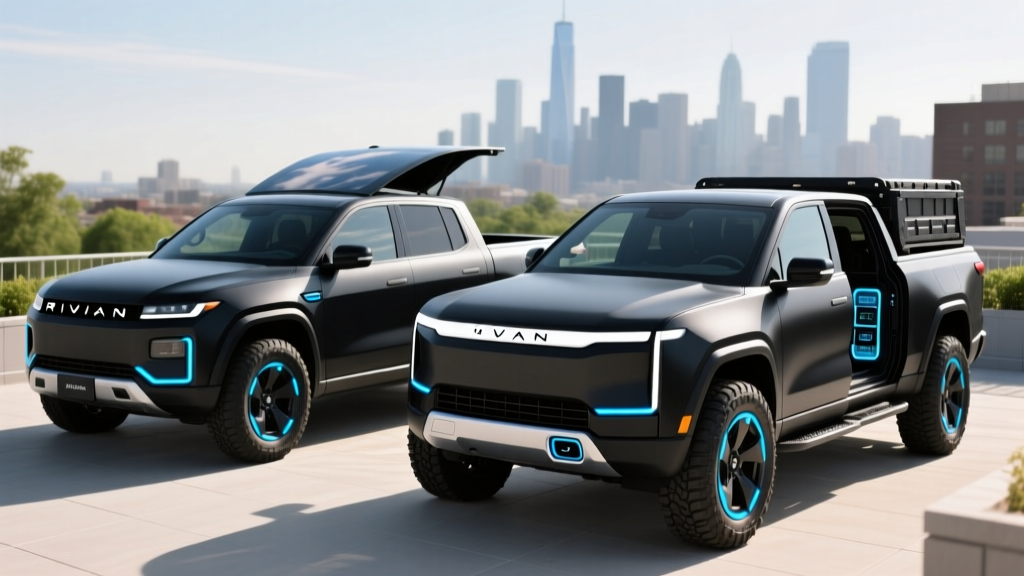
Unlike contract-manufactured EVs, Rivian controls its entire stack — from the skateboard chassis and battery pack architecture to the software and driver-assistance systems. As of the 2026 model year, Rivian produces two consumer vehicles: the R1S three-row SUV and the R1T crew-cab pickup, both riding on the second-generation "Gen 2" platform introduced for 2025. A smaller, more affordable R2 SUV is slated for 2026 production at a new Georgia facility, but as of this writing, only the R1S and R1T are available for purchase.
2026 Rivian R1S and R1T: Core Specs at a Glance
Rivian offers multiple battery and drivetrain configurations. Below are the headline numbers for the current lineup, sourced from fueleconomy.gov and Rivian's official spec pages.
| Spec | R1S (SUV) | R1T (Truck) |
|---|---|---|
| Drivetrain | Dual-Motor AWD (Tri- & Quad-Motor available) | Dual-Motor AWD (Tri- & Quad-Motor available) |
| Horsepower (Dual-Motor) | 533 hp | 533 hp |
| 0–60 mph (Dual-Motor) | 4.5 sec | 4.5 sec |
| Battery (Standard Pack) | ~95 kWh usable, LFP | ~95 kWh usable, LFP |
| Battery (Large / Max Pack) | ~109 kWh NMC / ~141 kWh NMC | ~109 kWh NMC / ~141 kWh NMC |
| EPA Range (Standard) | 270 mi | 270 mi |
| EPA Range (Large) | 330 mi | 328 mi |
| EPA Range (Max) | 410 mi | 415 mi |
| Efficiency (Dual-Motor Large) | 73 MPGe / 46 kWh/100mi | 73 MPGe / 46 kWh/100mi |
| Max DC Fast Charge | 220 kW (Standard/Large), 190 kW (Max) | 220 kW (Standard/Large), 190 kW (Max) |
| 10–80% DC Time | ~21 min (Large) | ~21 min (Large) |
| Level 2 Home Charging | 11.5 kW (~25 mi/hr) | 11.5 kW (~25 mi/hr) |
| Cargo (R1S behind 3rd / 2nd / 1st) | 10.4 / 45.2 / 88.2 cu ft | N/A |
| Bed Length (R1T) | N/A | 54.0 in (bed) + 11.0 cu ft Gear Tunnel |
| Towing Capacity | 7,700 lb | 11,000 lb |
| Battery/Powertrain Warranty | 8 yr / 100,000 mi | 8 yr / 100,000 mi |
Real-World Range: What the EPA Sticker Doesn't Tell You
Rivian's LFP (lithium iron phosphate) Standard Pack deserves a note: LFP cells sacrifice some energy density (hence the 270-mile EPA rating) in exchange for a longer cycle life, better thermal stability, and the ability to charge to 100% daily without accelerating degradation. If your commute is under 200 miles round-trip and you charge at home nightly, the LFP pack is arguably the smarter long-term choice. For road-trippers, the NMC Large or Max Pack delivers the highway legs you need — but plan to charge to 80% for daily use and 100% only before long trips.
Charging Speed: Home, Public, and the Curve Reality
| Charging Level | Power | Speed (Approx.) | Use Case |
|---|---|---|---|
| Level 1 (120V) | ~1.4 kW | ~3 mi/hr | Emergency / overnight trickle |
| Level 2 (240V, 48A) | 11.5 kW | ~25 mi/hr | Home daily charging (full in ~10–12 hr) |
| DC Fast (Standard/Large) | Peak 220 kW | 10–80% in ~21 min | Road trips; tapers above 80% |
| DC Fast (Max Pack) | Peak 190 kW | 10–80% in ~28 min | Larger battery = longer session |
A critical detail many spec sheets gloss over: peak charge rate is not sustained charge rate. The R1T Dual-Motor Large Pack will hit 220 kW only between roughly 15–40% state of charge. From 40–65%, it steps down to ~150 kW, and from 65–80% it drops further to ~90 kW. That's why the 10–80% time is 21 minutes rather than the theoretical ~15 minutes a flat 220 kW rate would suggest. Rivian's Gen 2 thermal management handles this taper more gracefully than the first-generation R1 platform, but the physics of NMC charging remain unchanged.
Rivian also provides access to the Rivian Adventure Network — its proprietary DC fast-charging network at trailheads, national parks, and key road-trip corridors — plus full compatibility with Tesla Superchargers via the built-in NACS charge port (standard on all 2025+ Rivians, no adapter required).
Pricing, Trims, and the Federal Tax Credit Picture
| Configuration | Base MSRP | Federal §30D Credit | Effective Price |
|---|---|---|---|
| R1S Dual-Motor Standard | $75,900 | Up to $7,500* | ~$68,400 |
| R1S Dual-Motor Large | $81,900 | Up to $7,500* | ~$74,400 |
| R1S Tri-Motor Large | $99,900 | Up to $7,500* | ~$92,400 |
| R1T Dual-Motor Standard | $69,900 | Up to $7,500* | ~$62,400 |
| R1T Dual-Motor Large | $75,900 | Up to $7,500* | ~$68,400 |
| R1T Quad-Motor Max | $99,500 | Up to $7,500* | ~$92,000 |
*Federal tax credit eligibility under IRS §30D is not guaranteed. Requirements include: buyer AGI under $150,000 (single) / $300,000 (joint), vehicle MSRP under $80,000 for SUVs and vans (R1S qualifies) or $80,000 for trucks (R1T qualifies), and battery critical-mineral and component sourcing thresholds that shift annually. Rivian's Dual-Motor and Tri-Motor configurations have historically qualified for the full $7,500, but Quad-Motor trims exceeding the $80,000 truck cap do not. The credit can now be transferred at point of sale as a down-payment reduction. Always confirm current-year eligibility with your tax professional and the IRS before purchasing.
Performance and Capability: More Than a Straight-Line Story
Rivian's quad-motor configurations (available on both R1S and R1T) push output to 1,025 hp and drop the 0–60 time to a supercar-rivaling 2.5 seconds. But the more relevant everyday configuration is the dual-motor, which still delivers 533 hp, confident highway merging, and a low center of gravity thanks to the under-floor battery pack.
Where Rivian separates from competitors is off-road and adventure capability. Both vehicles offer up to 14.9 inches of ground clearance in Off-Road mode (air suspension), approach/departure/breakover angles that rival a Jeep Wrangler Rubicon, and a wading depth of over 3 feet. The R1T's Gear Tunnel — an 11-cubic-foot pass-through compartment behind the rear seats — is a genuinely clever storage solution you won't find on any other pickup, electric or gas.
Towing is a mixed story. The R1T's 11,000-pound rating is best-in-class for electric pickups, but towing at or near max capacity will cut range roughly in half. Plan for 150–170 miles between charges when pulling a heavy trailer — a reality common to all EVs but worth internalizing before you commit to a long tow.
Interior, Tech, and Driver Assistance
Rivian runs its own vertically integrated infotainment system on a 15.6-inch center touchscreen and a 12.3-inch driver display. The UI is clean, over-the-air updatable, and integrates navigation with charging-route planning (similar to Tesla's trip planner). Wireless Apple CarPlay and Android Auto are standard.
Driver assistance falls under the Rivian Driver+ suite, which includes adaptive cruise control, lane-centering, and automatic lane changes on divided highways. This is a Level 2 SAE driver-assist system — not self-driving. You must keep your hands on the wheel and eyes on the road at all times. Rivian does not currently offer a hands-free system comparable to GM's Super Cruise or Ford's BlueCruise, which is a notable gap for buyers who prioritize highway driver aids.
Interior materials are premium but utilitarian — think Scandinavian minimalism rather than Mercedes luxury. Vegan leather is standard; real leather is not offered. The third row in the R1S is usable for adults on short trips but best reserved for children on longer journeys, with 30.4 inches of third-row legroom.
Pros and Cons: The Honest Verdict
Pros
- Best-in-class off-road capability for an EV SUV/truck
- LFP Standard Pack offers daily 100% charging without degradation worry
- NACS port = native Tesla Supercharger access, no adapter
- R1T Gear Tunnel is a unique, practical feature
- Strong OTA update cadence; vehicle improves over time
- 8-year/100,000-mile battery warranty
Cons
- No hands-free driving mode (Level 2 only, no Super Cruise rival)
- Towing severely cuts range — ~50% reduction at max load
- High MSRPs; Quad-Motor trims lose federal credit eligibility
- Third-row space in R1S is tight for adults
- Service center network still expanding — wait times can be long in rural areas
- Real-world highway range trails EPA by 10–15%
Who Should Buy a Rivian — And Who Should Look Elsewhere?
Choose Rivian if: You need genuine off-road capability, you want an electric truck or three-row SUV with adventure DNA, you have home Level 2 charging, and you value a vertically integrated tech experience with NACS Supercharger access.
Look elsewhere if: You prioritize hands-free highway driving (consider GM with Super Cruise or Ford with BlueCruise), you need maximum range at the lowest price (the Hyundai Ioniq 5 or Chevy Silverado EV may fit better), or you live far from a Rivian service center and can't tolerate potential repair wait times.
Frequently Asked Questions
What company makes Rivian cars?
Rivian Automotive, Inc. — an American EV manufacturer headquartered in Irvine, California, with production in Normal, Illinois. Rivian designs, engineers, and builds its vehicles in-house and is publicly traded on NASDAQ (ticker: RIVN).
What is the real-world range of a Rivian?
The R1S/R1T Dual-Motor Large Pack is EPA-rated at 328–330 miles. Expect 275–295 miles in real-world highway driving at 70 mph, and 220–250 miles in freezing winter conditions. The Max Pack extends the EPA figure to 410–415 miles, with real-world highway results around 340–360 miles.
How fast does a Rivian charge?
At a DC fast charger, the Standard and Large Packs peak at 220 kW and charge from 10–80% in about 21 minutes. The Max Pack peaks at 190 kW with a 10–80% time of roughly 28 minutes. At home on a Level 2 (240V/48A) charger, expect about 25 miles of range added per hour, or a full charge in 10–12 hours.
Does the Rivian R1S or R1T qualify for the federal EV tax credit?
Many configurations do, but eligibility depends on your income, the trim's MSRP, and current battery-sourcing rules. Dual-Motor and Tri-Motor trims under the $80,000 MSRP cap have historically qualified for the full $7,500 credit under IRS §30D. Quad-Motor trims that exceed the cap do not. Confirm with a tax professional before purchasing.
Is Rivian worth buying vs. the Tesla Model X, Ford F-150 Lightning, or Chevy Silverado EV?
Rivian's edge is off-road capability, build quality, and adventure-focused design. The Model X offers more range and the Supercharger network (though Rivian now has native NACS access). The F-150 Lightning is less expensive and has BlueCruise hands-free driving. The Silverado EV offers longer range at a lower price point but less premium interior refinement. If adventure capability and unique design matter to you, Rivian earns its premium.
What battery chemistry does Rivian use?
The Standard Pack uses LFP (lithium iron phosphate) — more durable for daily full charges but with less energy density. The Large and Max Packs use NMC (nickel manganese cobalt) — higher energy density for longer range but best kept between 20–80% for daily use to minimize degradation.