Why the Weight of Tesla Model X Matters More Than You Think
Step on the scale and the 2026 Tesla Model X registers between 5,185 and 5,390 pounds, depending on trim. That puts it squarely in full-size SUV territory — heavier than a Ford F-150 Lightning standard-range and nearly 1,000 pounds more than a Tesla Model Y. For an electric vehicle, mass is the single most consequential engineering variable after battery chemistry. It dictates how far each kilowatt-hour carries you, how quickly you can stop, how aggressively the tires wear, and whether the 250 kW DC fast-charge curve actually sustains or tapers early under thermal load.
This review unpacks the weight of Tesla Model X variants against the SUV's real-world range, charging behavior, ownership costs, and IRS §30D tax-credit eligibility — the data points that actually determine whether this six- or seven-seat flagship makes sense in 2026.
The Long Range AWD carries a 335-mile EPA estimate; the Plaid drops to 320 miles. Expect 275–295 miles on highway road trips at 70–75 mph, and 230–255 miles in sub-freezing winter conditions where the heat pump and battery preconditioning can't fully offset cold-soak losses. Heavy mass amplifies these penalties — kinetic energy recovery is less effective when the pack is cold and the vehicle weighs over 5,000 lbs.
Spec Table: Weight of Tesla Model X by Trim (2026)
| Spec | Model X Long Range AWD | Model X Plaid |
|---|---|---|
| Curb Weight | 5,185 lbs | 5,390 lbs |
| Battery (usable) | ~100 kWh, NMC | ~100 kWh, NMC |
| EPA Range | 335 mi | 320 mi |
| MPGe (combined) | 104 MPGe | 98 MPGe |
| Efficiency | 32 kWh/100 mi | 34 kWh/100 mi |
| 0–60 mph | 3.8 sec | 2.5 sec |
| Horsepower | 670 hp | 1,020 hp |
| Drivetrain | Dual-motor AWD | Tri-motor AWD |
| Max DC Charge | 250 kW | 250 kW |
| 10–80% DC Time | ~30 min | ~30 min |
| Level 2 Rate | 11.5 kW (~44 mi/hr) | 11.5 kW (~44 mi/hr) |
| Base MSRP | $81,630 | $96,630 |
| Battery Warranty | 8 yr / 150,000 mi | 8 yr / 150,000 mi |
Sources: fueleconomy.gov, Tesla specifications.
Battery, Chemistry, and the Mass Penalty
The Model X uses an NMC (nickel-manganese-cobalt) pack with roughly 100 kWh usable. Tesla chose NMC over LFP here because energy density matters when you're pushing 5,300+ pounds — LFP's lower Wh/kg would require either a heavier pack or reduced range. The trade-off: NMC cells degrade slightly faster under high-SoC storage, so daily charging to 80% rather than 100% is recommended unless you're leaving on a trip.
Weight compounds the efficiency penalty. At 32–34 kWh per 100 miles, the Model X consumes roughly 20% more energy per mile than a Model Y Long Range (about 26 kWh/100 mi). On a 300-mile road trip, that translates to roughly 102 kWh versus 78 kWh — a meaningful difference when you're paying $0.48/kWh at Electrify America peak-rate stations.
Charging Speed: 250 kW Peak, but Watch the Curve
| Charging Level | Power | Miles Added per Hour | Notes |
|---|---|---|---|
| Level 1 (120V) | ~1.4 kW | ~3–4 mi/hr | Emergency/top-up only |
| Level 2 (240V, 48A) | 11.5 kW | ~44 mi/hr | Full overnight charge in ~9 hrs |
| DC Fast (V3 Supercharger) | Peak 250 kW | ~200 mi in 15 min | Sustains ~150 kW avg to 80% |
| DC Fast (80–100%) | Tapers to ~40 kW | ~25 mi/hr | Avoid unless necessary |
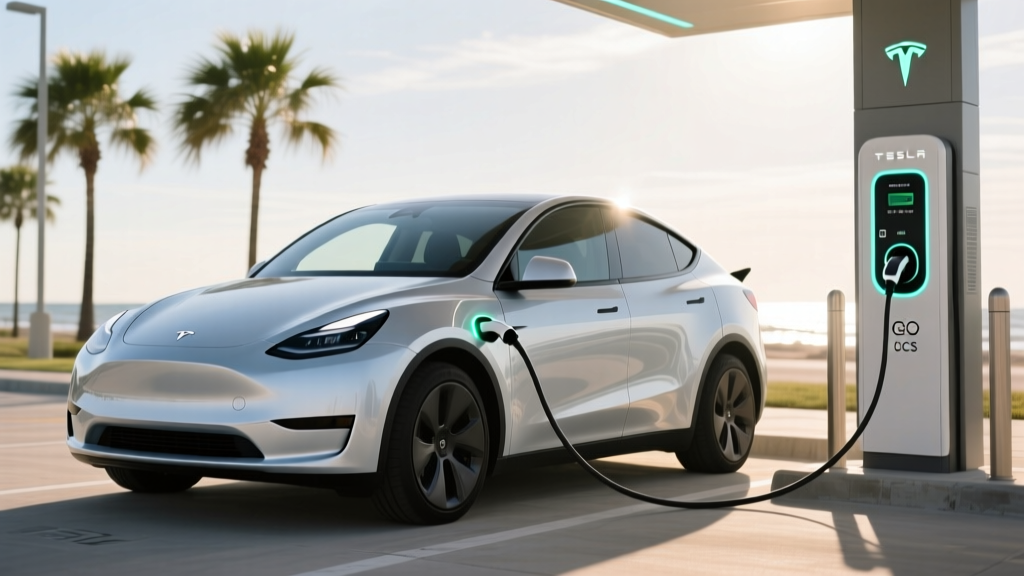
The 250 kW peak is real, but only below ~35% SoC. By 60%, the curve tapers to roughly 150 kW; by 80%, you're down to 70 kW. This is typical for NMC packs at this capacity, and the Model X's thermal management handles it well — provided you precondition via navigation routing. Arriving at a Supercharger without preconditioning (e.g., pulling in off a local road) can add 5–8 minutes to a 10–80% session.
Home charging on a Wall Connector at 11.5 kW replenishes roughly 44 miles of range per hour, meaning a full 0–100% session takes about 9 hours. That's practical for overnight charging but slower than the Hyundai Ioniq 9's 10.9 kW acceptance paired with a lighter vehicle.
Performance and the Heavy-SUV Paradox
Physics shouldn't allow a 5,390-pound vehicle to hit 60 mph in 2.5 seconds, but the Plaid's tri-motor setup (one front, two rear) delivers 1,020 hp with torque-vectoring precision. The Long Range dual-motor is no slouch at 3.8 seconds and 670 hp. Both feel remarkably composed for their mass, thanks to the low-slung battery pack that drops the center of gravity below most sedans.
Where weight shows up is in braking distance (heavier than a Model S by several car lengths at 70–0 mph) and tire wear. Expect to replace the 22-inch tires every 20,000–25,000 miles under normal driving — an ownership cost that catches some buyers off guard.
Pricing, Tax Credits, and the §30D Reality
| Trim | Base MSRP | As-Tested (typical) | Federal Credit Eligibility |
|---|---|---|---|
| Long Range AWD | $81,630 | $89,000–$95,000 | NOT eligible (MSRP cap $80,000) |
| Plaid | $96,630 | $105,000+ | NOT eligible (MSRP cap $80,000) |
The IRS §30D clean vehicle credit caps SUV eligibility at an $80,000 MSRP. Both Model X trims exceed that threshold, so no federal tax credit applies — regardless of buyer income or battery sourcing. For reference, the credit also requires modified adjusted gross income below $300,000 (joint) / $150,000 (single) and compliant critical-mineral and battery-component sourcing. See IRS.gov §30D guidance for current-year rules.
Some states offer separate rebates (California's CVRP, for instance, has its own income and price caps), but these vary by jurisdiction and change frequently — consult your state's energy office for current programs.
Cargo, Passenger Space, and Daily Practicality
The Model X offers 88.1 cu ft of total cargo volume behind the front seats in five-seat config, dropping to 81.7 cu ft in six-seat (with second-row captains) and 77.3 cu ft in seven-seat. The front trunk (frunk) adds 6.5 cu ft — enough for charging cables and a soft bag.
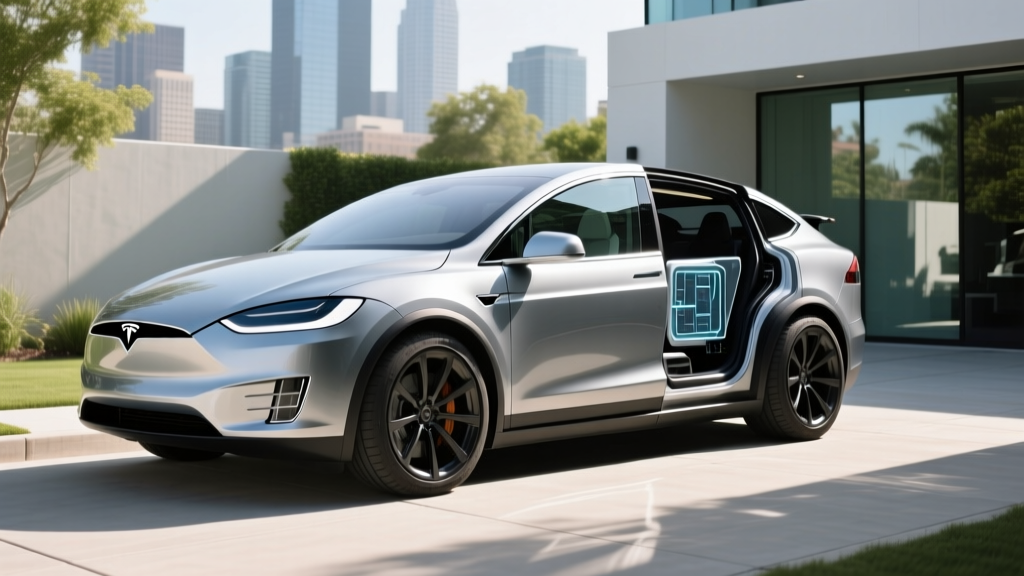
Second-row legroom measures 41.1 inches (five-seat bench) or 39.8 inches (captains' chairs), and third-row legroom is a tight 30.0 inches — best suited for children or short trips. The falcon-wing rear doors require less lateral clearance than conventional doors (useful in tight garages) but add mechanical complexity that Tesla has improved in recent model years, though service visits for hinge calibration remain a known occurrence.
Towing capacity is rated at 5,000 pounds with the optional tow package — adequate for a small boat or light camper, but the mass penalty on range is severe. Expect 50–60% of rated range when towing at highway speed.
Tech, Driver Assists, and Standout Features
The 17-inch center touchscreen runs Tesla's latest infotainment stack with excellent responsiveness, wireless phone mirroring, and a rear 8-inch screen for climate and media control. The yoke steering wheel (standard on Plaid, optional on Long Range) remains polarizing — useful for screen visibility, awkward for three-point turns.
Tesla's Autopilot and Full Self-Driving (Supervised) are SAE Level 2 driver-assist features, not autonomous driving. The driver must remain engaged, hands on wheel (or torque-monitored), eyes on road. Only Level 4 services like Waymo operate without a human driver in defined geofenced areas.
FSD (Supervised) costs $8,000 one-time or $99/month in 2026. Its city-street capability has improved markedly, but it remains a supervised system — expect occasional disengagements in construction zones, unmapped roads, and adverse weather. Basic Autopilot (lane-keep + adaptive cruise) comes standard.
Who Should Buy the Model X — and Who Shouldn't
- You need six or seven seats with genuine Supercharger-network road-trip capability
- You want tri-motor performance (Plaid) in a family hauler
- You value the falcon-wing doors for tight urban garage access
- MSRP above $80K and no federal credit is acceptable in your budget
- Tax-credit eligibility is a deal-breaker (see Rivian R1S, which has qualifying trims)
- You prioritize efficiency over seating capacity (Model Y or Ioniq 9)
- You want the longest possible range per dollar (Lucid Gravity offers ~440 mi EPA)
- Third-row adults are a regular requirement (Rivian R1S or Cadillac Escalade IQ are roomier)
- 335-mile EPA range is competitive for a 3-row EV SUV
- 250 kW Supercharger access with reliable network uptime
- Plaid tri-motor performance defies the 5,390-lb curb weight
- Over-the-air updates continue to add features post-purchase
- 8-year / 150,000-mile battery warranty
- No federal tax credit — MSRP exceeds §30D $80K SUV cap
- 32–34 kWh/100 mi efficiency is thirstier than lighter rivals
- Third-row legroom (30.0 in) is cramped for adults
- Falcon-wing doors add repair complexity and cost
- Tire wear accelerated by 5,000+ lb mass and instant torque
Frequently Asked Questions
What is the real-world range of the Tesla Model X?
The EPA rates the Long Range at 335 miles and the Plaid at 320 miles. In real-world highway driving at 70–75 mph, expect 275–295 miles. In sub-freezing winter conditions, plan for 230–255 miles — the 5,000+ lb weight amplifies cold-weather losses because more energy is spent moving mass and the pack takes longer to reach optimal temperature.
How fast does the Model X charge at home and on the road?
On a 250 kW V3 Supercharger, 10–80% takes about 30 minutes with proper preconditioning. At home on a 48-amp Level 2 Wall Connector (11.5 kW), you'll add roughly 44 miles of range per hour — a full charge takes around 9 hours. Level 1 (120V) is impractical beyond emergency top-ups at ~3–4 miles per hour.
Does the Tesla Model X qualify for the federal EV tax credit?
No. Under current IRS §30D rules, SUVs must have an MSRP at or below $80,000 to qualify. The Model X Long Range starts at $81,630 and the Plaid at $96,630 — both above the cap. Buyer income limits ($300K joint / $150K single) and battery-sourcing requirements would further constrain eligibility even if the price cap were met. Consult IRS.gov or a tax professional for your specific situation.
Is the Model X worth buying versus the Rivian R1S or Lucid Gravity?
It depends on priority. The R1S offers more off-road capability, genuine third-row adult space, and qualifying trims for the §30D credit. The Lucid Gravity delivers up to ~440 miles EPA with a more spacious cabin. The Model X wins on Supercharger network reliability (though NACS adoption is broadening access), tri-motor Plaid performance, and Tesla's software ecosystem. Test-drive all three before deciding.
How does the weight of Tesla Model X affect tire wear and maintenance?
At 5,185–5,390 lbs with instant electric torque, expect tire life of 20,000–25,000 miles on the 22-inch wheels — roughly 30% shorter than a comparable ICE SUV. Rotation every 6,250 miles is critical. Brake wear, conversely, is minimal thanks to regenerative braking; many owners report original pads beyond 80,000 miles.
What's the battery warranty coverage?
Tesla covers the Model X battery and drive unit for 8 years or 150,000 miles, whichever comes first, with a minimum 70% capacity retention threshold. If the pack falls below that retention within the warranty window, Tesla will repair or replace it to meet the threshold. Out-of-warranty replacement for a ~100 kWh NMC pack currently runs $18,000–$25,000 including labor.