Quick Answer: Electric water bikes (also called electric jet bikes or e-foils) are personal watercraft powered by lithium-ion batteries and electric jet pumps instead of gasoline engines. As of 2026, leading models like the Lampuga Air, Radinn, and Jetsurf Electric offer ride times between 30–50 minutes per charge, top speeds of 30–37 mph, and battery capacities ranging from 3–7 kWh. Prices start around $8,500 and climb past $18,000 for premium race-spec boards. They are classified as personal watercraft by the U.S. Coast Guard and must follow PWC registration rules. They are not eligible for the federal §30D EV tax credit, which applies to on-road vehicles only.
What Is an Electric Water Bike (And What It Isn't)
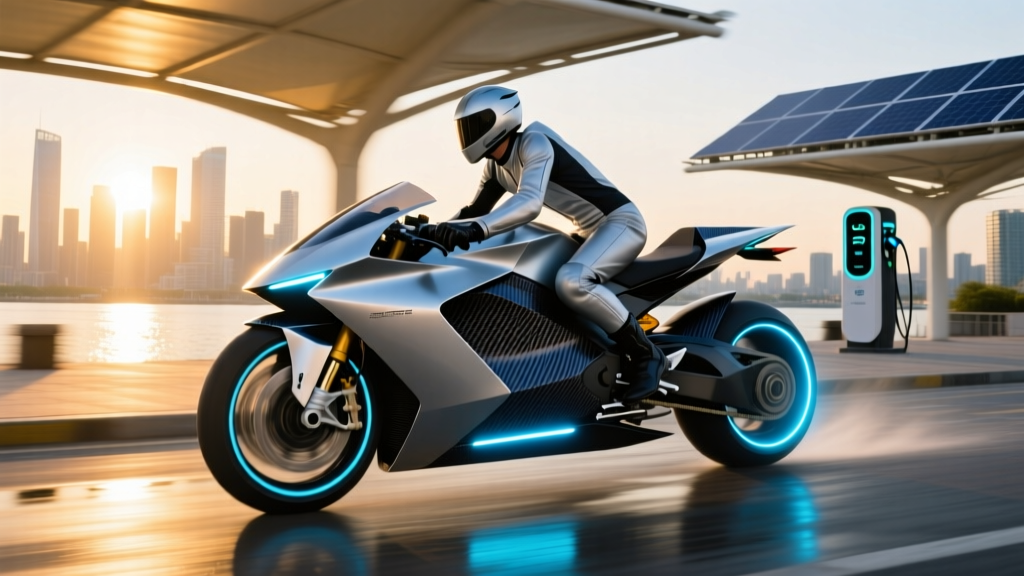
The term "water bike electric" covers a category of motorized boards that use battery-electric powertrains to propel a rider across water via a jet pump or propeller. Unlike gasoline-powered jet skis from Sea-Doo or Yamaha, these craft produce zero tailpipe emissions, operate nearly silently, and require minimal mechanical maintenance. The main subtypes in 2026 include:
- Electric surfboards / motorized boards — flat boards you stand or kneel on (Radinn, Onean, Awake)
- E-foils — hydrofoil-mounted boards that lift above the water (Fliteboard, Lift Foils)
- Electric jet bikes — seated or kneeling craft resembling small jet skis (Jetsurf Electric, Lampuga)
All share a core architecture: a waterproof lithium-ion battery pack (typically NMC chemistry for energy density), a brushless DC motor, an impeller or propeller, and a handheld or foot-strap remote throttle. None currently use LFP chemistry due to weight sensitivity on planing hulls.
2026 Electric Water Bike Specs: Range, Speed, and Battery
Unlike road-going EVs rated by the EPA, electric water bikes don't have a standardized federal range test. Manufacturers quote ride time in minutes, which varies dramatically with rider weight, water conditions, and throttle use. Below is a spec comparison of representative 2026 models:
| Model | Battery (kWh) | Claimed Ride Time | Top Speed | Motor Power | Weight | MSRP |
|---|---|---|---|---|---|---|
| Radinn Carve | 4.3 kWh (NMC) | ~45 min | 35 mph | 11 kW peak | 62 lbs | $12,900 |
| Fliteboard Ultra L | 3.0 kWh (NMC) | ~90 min (cruise) | 28 mph | 5.6 kW peak | 62 lbs | $13,495 |
| Lampuga Air | 5.3 kWh (NMC) | ~50 min | 31 mph | 11 kW peak | 110 lbs | $14,900 |
| Jetsurf Electric GP | 6.1 kWh (NMC) | ~35 min (race) | 37 mph | 15 kW peak | 88 lbs | $17,800 |
| Awake Ravik 300 | 5.2 kWh (NMC) | ~40 min | 34 mph | 12 kW peak | 75 lbs | $15,500 |
Real-world caveat: "Ride time" figures assume moderate throttle use. Full-throttle aggressive riding can cut times by 40–50%. A 45-minute claimed session may yield 25 minutes of hard riding. Cold water (below 55°F) also reduces battery output by roughly 10–15%, mirroring the cold-weather losses seen in road EVs.
Charging: Times, Equipment, and Practical Setup
Electric water bikes charge from standard 120V household outlets using proprietary waterproof chargers. There is no Level 2 or DC fast-charging ecosystem for this category — you charge the removable battery pack on a dedicated cradle, typically in a garage or boat house.
| Model | Charger Output | 0–100% Charge Time | Charger Included? |
|---|---|---|---|
| Radinn Carve | 0.65 kW | ~6.5 hours | Yes |
| Fliteboard Ultra L | 0.5 kW | ~6 hours | Yes |
| Lampuga Air | 1.0 kW | ~5.5 hours | Yes |
| Jetsurf Electric GP | 1.5 kW | ~4 hours | Yes |
| Awake Ravik 300 | 1.2 kW | ~4.5 hours | Yes |
Key distinction: kW (kilowatts) measures the charger's power output — how fast energy flows. kWh (kilowatt-hours) measures the battery's total energy capacity — how much it holds. A 5 kWh battery charged at 1 kW takes roughly 5 hours; at 0.5 kW it takes 10. No model in this category supports rapid charging, so plan for overnight top-ups between sessions.
Practical tip: If you ride at a lake house or marina, confirm you have access to a grounded 120V/15A outlet within 25 feet of your charging area. The chargers are not rated for outdoor wet-location use — you need a dry, ventilated indoor space.
Electric Water Bike vs. Gas Jet Ski: Cost and Ownership Comparison
The most common buyer question is whether an electric water bike makes financial sense compared to a gasoline personal watercraft. Here's a head-to-head cost breakdown using a mid-range electric board versus a comparable gas-powered Sea-Doo Spark Trixx:
| Factor | Electric Water Bike (e.g., Radinn Carve) | Gas PWC (e.g., Sea-Doo Spark Trixx) |
|---|---|---|
| Purchase Price | $12,900 | $7,899 |
| Fuel/Energy Cost per Hour | ~$0.45 (at $0.13/kWh, ~3.5 kWh used) | ~$12–15 (at ~2.5 gal/hr, $4.80/gal) |
| Annual Fuel (50 hrs/yr) | ~$23 | ~$600–750 |
| Annual Maintenance | ~$50 (impeller inspection, seals) | ~$400–700 (oil, spark plugs, winterization) |
| Registration (varies by state) | Required as PWC (~$25–75/yr) | Required as PWC (~$25–75/yr) |
| Insurance (annual) | ~$300–500 | ~$300–500 |
| 5-Year Total Cost (purchase + operating) | ~$14,600–16,650 | ~$12,900–15,650 |
| Battery Replacement (year 5–7) | $2,500–4,000 | N/A |
The math: Electric water bikes cost significantly more upfront ($5,000+ more) but save $500–700/year in fuel and maintenance. The break-even point versus a gas PWC is roughly 7–10 years — longer than the typical battery lifespan. This is a purchase driven by experience (silence, zero exhaust, instant torque) rather than pure economics.
For comparison to road-going EVs: a 2026 Tesla Model Y Rear-Wheel Drive starts at $44,990, qualifies for up to $7,500 under the IRS §30D federal tax credit (subject to income, MSRP, and battery-sourcing rules), and saves owners an average of $1,000–1,500/year in fuel according to fueleconomy.gov. Water bikes receive no federal incentives.
Real-World Ownership: What First-Time Buyers Must Know
Battery Degradation and Lifespan
NMC lithium-ion packs in water bikes degrade similarly to road EVs but face harsher thermal and moisture stress. Expect 80% state of health (SoH) after 500–800 full charge cycles. For a rider using the board 50 times per year with partial discharges, that translates to roughly 5–7 years before noticeable range loss. Replacement batteries cost $2,500–4,000 depending on the model.
Care tips that extend life:
- Never store at 100% SoC for more than 48 hours — store at 50–60% between sessions
- Rinse the battery contacts with fresh water after saltwater use, then dry completely before charging
- Avoid charging immediately after a hard ride — let the pack cool for 30 minutes
- Never leave the battery in direct sunlight or in a hot car trunk
Registration and Legal Requirements
The U.S. Coast Guard classifies motorized surfboards and electric jet bikes as personal watercraft. This means:
- Registration with your state's boating authority is mandatory
- Operators must carry a valid boater education card (requirements vary by state)
- A Coast Guard-approved life jacket is required for each rider
- A fire extinguisher is not required for electric-only PWC (unlike gas models)
- Kill-switch lanyards must be attached to the rider
Always check your state's specific boating laws before operating. Some lakes and reservoirs prohibit motorized watercraft entirely; others restrict them to certain zones or hours.
Storage and Transport
Most electric water bikes weigh 60–110 lbs and can be transported on a roof rack, in a truck bed, or on a small trailer. Unlike a 600-lb gas jet ski, you don't need a dedicated trailer or tow vehicle. However, the battery pack alone can weigh 15–30 lbs — plan for two-person lifting on larger models. Store batteries indoors in a climate-controlled space; freezing temperatures can cause permanent cell damage.
Common Misconceptions: Myth vs. Fact
| Myth | Fact |
|---|---|
| "Electric water bikes get the $7,500 federal EV tax credit" | False. The §30D credit applies only to on-road vehicles meeting specific MSRP, income, and battery-sourcing criteria. Watercraft are excluded. |
| "They're silent so no one will hear me coming" | Partially true at low speed. At planing speed, the hull slap and water displacement are audible. A whistle or horn is still legally required in many jurisdictions. |
| "The battery will die if it gets wet" | Modern packs are IP67 or IP68 rated — submersible to 1 meter for 30 minutes. Seals do degrade over time; inspect gaskets annually. |
| "You can ride for 2 hours on a charge" | Only at very low cruise speeds on e-foils. Motorized surfboards at moderate throttle deliver 30–50 minutes. Full throttle: 20–30 minutes. |
| "They're maintenance-free" | Lower maintenance than gas, yes — but impellers wear, jet pump bearings need inspection, seals need replacement, and firmware updates are periodic. |
Decision Framework: Should You Buy an Electric Water Bike?
Choose an electric water bike if:
- You ride on lakes or quiet waterways where noise restrictions matter
- You want instant throttle response and near-silent operation
- You have reliable access to a 120V outlet for overnight charging
- You value portability (car-toppable, no trailer needed) over extended ride time
- Your budget accommodates $10,000–18,000 upfront with no tax-credit offset
- You ride 1–3 hours per session and can swap or recharge between outings
Stick with a gas PWC if:
- You need 3–6+ hours of continuous riding without stopping
- You ride in remote areas with no electrical access
- Your budget is under $8,000
- You want established dealer service networks and widely available parts
- You tow wakeboarders or carry passengers (electric models are single-rider only in most cases)
Frequently Asked Questions
Can I use an electric water bike in saltwater?
Yes, most 2026 models are rated for saltwater use. However, you must rinse the board, battery contacts, and jet pump with fresh water after every saltwater session. Salt corrosion accelerates seal degradation and can void warranties if maintenance logs aren't kept.
How fast do electric water bikes actually go?
Most consumer models top out between 28–37 mph. The Jetsurf Electric GP reaches 37 mph but with only ~35 minutes of race-pace ride time. For comparison, a gas Sea-Doo RXP-X 325 hits 67+ mph. Electric water bikes trade top speed for torque, silence, and simplicity.
What happens if the battery dies on the water?
You paddle or swim. Electric water bikes have no backup propulsion. Always ride within swimming distance of shore or with a support boat. Most boards include a low-battery warning at 15% SoH and will limit power at 5% to help you reach shore.
Are electric water bikes safe for beginners?
They are generally easier to learn than gas PWCs due to linear throttle response and no exhaust-rev lag. However, speeds above 20 mph on a standing board require significant balance skill. Most manufacturers recommend a certified instructor for first-time riders. Safety data from the NHTSA and Coast Guard does not yet track electric water bike incidents separately from general PWC accidents.
Will prices come down?
Battery costs continue to decline — NMC cell prices have dropped roughly 15% since 2023. However, electric water bikes remain a niche market with low production volumes, so dramatic price cuts are unlikely before 2028. Expect incremental improvements in ride time and charge speed rather than major price reductions.