The Short Answer on Walmart Electric Trucks
Walmart does not manufacture its own electric truck. When shoppers search for a Walmart electric truck, they're typically looking for one of two things: (1) the battery-electric pickups available through Walmart's auto department and Walmart.com — primarily the Chevrolet Silverado EV and GMC Sierra EV — or (2) Walmart's well-publicized fleet of electric delivery semi-trucks (the Tesla Semi and Freightliner eCascadia), which aren't available to consumers. For retail buyers in 2026, the Silverado EV and Sierra EV are the electric trucks you can actually order or find at Walmart-affiliated dealerships, with pricing starting around $39,900 before incentives.
Which Electric Trucks Can You Actually Buy Through Walmart?
Walmart's automotive presence operates through its website marketplace and partnerships with dealerships. The two consumer-available electric pickups most associated with the Walmart retail ecosystem are General Motors' Ultium-platform trucks:
| Spec | 2026 Chevy Silverado EV (4WT / LT) | 2026 GMC Sierra EV (Elevation / AT4) |
|---|---|---|
| EPA Range | ~390 mi (4WT Max Range); ~360 mi (LT) | ~390 mi (Elevation Max Range); ~350 mi (AT4) |
| Real-World Range Expectation | ~310–340 mi highway; ~260–290 mi in cold weather | ~310–340 mi highway; ~260–290 mi in cold weather |
| Battery Capacity | ~200 kWh usable (Max Range); ~170 kWh (Standard) | ~200 kWh usable (Max Range); ~170 kWh (Standard) |
| Battery Chemistry | NMC (Ultium pouch cells) | NMC (Ultium pouch cells) |
| Peak DC Fast Charge | ~350 kW (Max Range); ~200 kW (Standard) | ~350 kW (Max Range); ~200 kW (Standard) |
| 10–80% Charge Time | ~20 min (350 kW charger) | ~20 min (350 kW charger) |
| Level 2 Home Charging | 19.2 kW onboard (optional); 11.5 kW standard | 19.2 kW onboard (optional); 11.5 kW standard |
| Horsepower | 510 hp (4WT); up to 754 hp (Trail Boss) | 510 hp (Elevation); up to 754 hp (Denali) |
| 0–60 mph | ~5.0 sec (4WT); ~4.5 sec (Trail Boss) | ~5.0 sec (Elevation); ~4.5 sec (Denali) |
| Max Towing | 12,500 lbs (4WT) | 12,500 lbs (Elevation) |
| Starting MSRP | ~$39,900 (4WT base) | ~$52,700 (Elevation) |
| Battery/Powertrain Warranty | 8 years / 100,000 miles | 8 years / 100,000 miles |
Both trucks ride on GM's Ultium platform and share core architecture. The Silverado EV leans value-oriented with the 4WT work trim, while the Sierra EV positions itself as the premium option. Neither is sold directly on Walmart.com as a vehicle listing, but Walmart's auto services portal and affiliated dealerships make them accessible to the Walmart-shopping demographic.
Electric Truck vs. Gas Truck: The Real Cost Comparison
The decision between an electric pickup and a conventional gas truck like the Ford F-150 or Chevy Silverado 1500 ICE comes down to how you drive, where you charge, and how long you plan to own.
| Cost Category | Silverado EV 4WT | Silverado 1500 Gas (4WD LT) |
|---|---|---|
| Base MSRP | $39,900 | $44,600 |
| Fed. Tax Credit (§30D) | Up to $7,500 (see eligibility below) | $0 |
| Effective Purchase Price | ~$32,400 (if full credit applies) | $44,600 |
| Energy/Fuel Cost (5 yrs) | ~$4,200 (home L2 at $0.14/kWh) | ~$13,500 (at $3.50/gal, 19 MPG combined) |
| Maintenance (5 yrs) | ~$1,800 (no oil changes, less brake wear) | ~$4,200 (oil, filters, transmission, brakes) |
| Insurance (5 yrs avg) | ~$11,500 (EV premium ~15–20% higher) | ~$9,800 |
| Estimated 5-Yr Depreciation | ~$16,000 (EV truck depreciation still settling) | ~$18,500 |
| Total 5-Year Cost | ~$65,900 | ~$90,600 |
The EV wins on operating cost by a wide margin — roughly $9,300 less in energy and maintenance over five years. The tax credit, when eligible, can close the upfront gap entirely. But insurance runs higher, and the real-world advantage depends heavily on whether you can charge at home at residential electricity rates. Public DC fast charging at $0.35–$0.50/kWh erodes much of the energy savings.
Source: Efficiency data from fueleconomy.gov; tax credit rules from IRS §30D clean vehicle credits.
Charging Reality: Home, Public, and the Walmart Connection
Walmart has been one of the most aggressive retail hosts for EV charging infrastructure. As of 2026, hundreds of Walmart and Sam's Club locations across the U.S. feature DC fast chargers — primarily through partnerships with Electrify America, EVgo, and Tesla Superchargers. This matters for electric truck owners in two ways:
Home Charging (Where 80%+ of Charging Happens)
The Silverado EV and Sierra EV both support Level 2 charging at up to 19.2 kW (with the optional onboard charger) or 11.5 kW standard. On a 200 kWh battery pack:
- 11.5 kW (standard): ~17.4 hours from 0–100% — adequate for overnight top-ups from 20–80%.
- 19.2 kW (optional): ~10.4 hours from 0–100% — better for high-mileage drivers who drain the pack daily.
- Level 1 (120V household): ~1.4 kW, adding roughly 3–4 miles per hour — only viable for emergencies or very low daily mileage.
Home Level 2 installation typically costs $800–$2,500 for the charger and electrician labor if your panel has capacity. A 200-amp panel upgrade can add $1,500–$3,500. Get a quote from a licensed electrician before committing to a truck with a 200 kWh battery — you'll want at least a 48-amp (11.5 kW) circuit.
Public DC Fast Charging
The 350 kW peak charge rate on Max Range trims is impressive on paper. In practice, the charging curve tapers significantly above 80% state of charge. Expect:
- 10–80%: ~20 minutes at a 350 kW station (if the battery is preconditioned)
- 80–100%: An additional 25–35 minutes due to taper
- Cold weather impact: Add 5–10 minutes to 10–80% times if the battery is below 50°F, even with preconditioning
Walmart-hosted Electrify America stations typically offer 150–350 kW CCS/NACS chargers. Both GM trucks now use the NACS connector natively in 2026, though CCS adapters are widely available.
Federal Tax Credit: Do You Qualify for §30D?
The §30D clean vehicle credit can reduce your tax liability by up to $7,500 for a new qualifying EV. But eligibility is not automatic. Here's what determines whether you can claim it on a Silverado EV or Sierra EV:
| Requirement | Threshold | Silverado EV / Sierra EV Status |
|---|---|---|
| Vehicle MSRP Cap (trucks) | ≤ $80,000 | ✅ Most trims qualify; high-end Denali/Trail Boss may exceed |
| Buyer AGI Limit (married filing jointly) | ≤ $300,000 | Check your modified AGI |
| Buyer AGI Limit (single filer) | ≤ $150,000 | Check your modified AGI |
| Battery Component Sourcing (N. America) | Phase-in % increases annually | ⚠️ Check IRS qualified vehicle list — GM sources many components domestically |
| Critical Minerals Sourcing | Phase-in % increases annually | ⚠️ Verify on fueleconomy.gov at time of purchase |
| Point-of-Sale Transfer | Available — reduces purchase price directly | ✅ If dealer is registered with IRS |
The sourcing requirements tighten each year. A truck that qualified in 2024 may not qualify in 2026 if its battery supply chain doesn't meet the updated thresholds. Always verify the specific VIN on the IRS qualified vehicles list before purchasing. The credit can be transferred to the dealer at point of sale, effectively reducing your out-of-pocket cost by up to $7,500 — but you must meet the income cap, and the dealer must be registered in the IRS Energy Credits Online system.
Real-World Ownership: What First-Time EV Truck Buyers Get Wrong
Electric trucks introduce ownership patterns that differ sharply from gas pickups. Here are the considerations that don't show up in a spec table:
Range Loss Is Real — Especially for Trucks
The Silverado EV's 390-mile EPA estimate is measured under mixed driving conditions. In real-world use:
- Highway driving at 75 mph: Expect 15–20% reduction (~310–330 miles)
- Towing a 5,000-lb trailer: Expect 40–50% reduction (~200–235 miles)
- Cold weather (below 30°F): Expect 20–30% reduction (~270–310 miles) even with a heat pump
- Combined highway + cold + loaded bed: Could see range drop to 220–250 miles
If your daily driving exceeds 250 miles or you tow frequently, the Max Range 200 kWh pack is essential. The standard ~170 kWh pack works for commuters and light-duty users who charge nightly.
Charging Deserts Still Exist
Despite Walmart's charging buildout, rural corridors in the Mountain West, Great Plains, and parts of the South still have sparse DC fast-charging coverage. Before buying, map your most common long-distance routes on PlugShare or the Electrify America app. A 390-mile range provides a comfortable buffer, but if your route has 150+ mile gaps between reliable chargers, plan accordingly.
Insurance Costs More
EV truck insurance premiums run 15–25% higher than equivalent gas trucks, driven by higher repair costs for battery packs and specialized body panels. Get a quote from your insurer before purchasing — the $100–$200/month difference can offset some of the fuel savings.
Decision Framework: Should You Buy an Electric Truck?
Choose an Electric Truck (Silverado EV / Sierra EV) If:
- You have access to Level 2 home charging (garage or driveway with a 240V circuit)
- Your daily driving is under 250 miles and you can charge overnight
- You want to eliminate oil changes, transmission fluid, and most routine powertrain maintenance
- You qualify for the §30D tax credit (check income caps and sourcing requirements)
- You value instant torque for light towing, job-site power (Pro Power Onboard-style V2L), and a quiet cabin
- You drive 15,000+ miles per year, making the energy savings meaningful
Stick with a Gas or Hybrid Truck If:
- You tow heavy loads (8,000+ lbs) regularly — range loss makes EV impractical for daily towing
- You live in an apartment or lack any access to home or workplace charging
- Your routes regularly pass through charging deserts with 150+ mile gaps
- You need maximum range certainty in extreme cold without planning charging stops
- Your budget can't absorb the higher upfront cost even after the tax credit
Consider a PHEV or Hybrid Instead If:
- You want some electric driving for short commutes but gas flexibility for long hauls
- You're not ready to commit to full EV infrastructure requirements
- You need a truck now and the specific EV trim/configuration you want has a long wait
Walmart's Fleet Electric Trucks: What Consumers Should Know
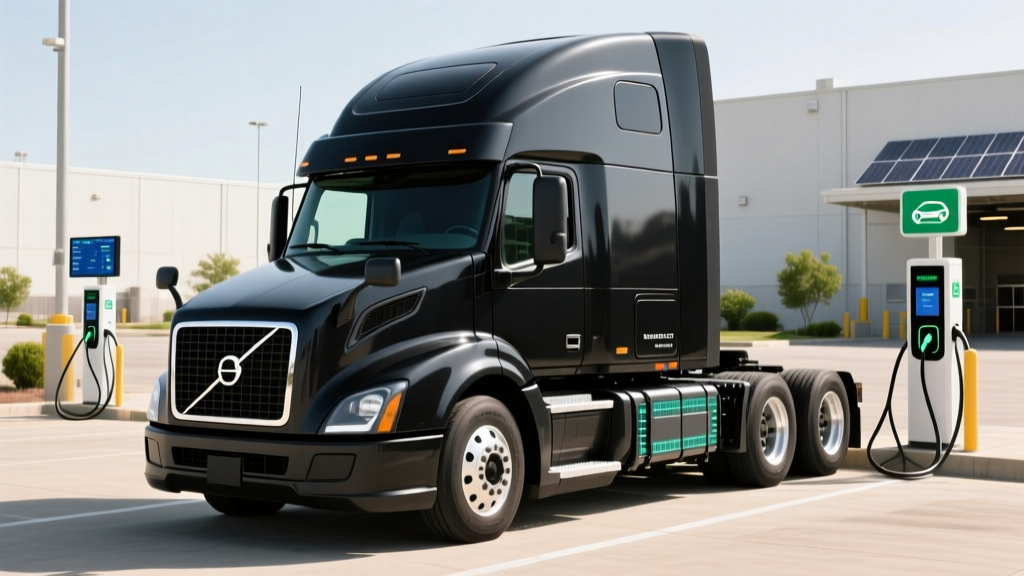
For context on why "Walmart electric truck" generates search interest: Walmart has committed to a zero-emissions logistics fleet by 2040 and has taken delivery of Tesla Semi Class 8 trucks and Freightliner eCascadia day cabs for regional distribution routes. These are commercial vehicles not available to retail consumers. However, Walmart's fleet commitment has accelerated charging infrastructure deployment at distribution centers and retail locations — a direct benefit to consumer EV truck owners who charge at Walmart-hosted stations.
Frequently Asked Questions
Does Walmart sell electric trucks directly?
No. Walmart does not sell vehicles directly. The "Walmart electric truck" search usually refers to the Chevy Silverado EV or GMC Sierra EV available through Walmart-affiliated dealerships and referenced on Walmart's auto services portal. Walmart also hosts EV chargers at many store locations.
How much does it cost to charge a Silverado EV at home?
At the U.S. average residential rate of ~$0.14/kWh, fully charging the 200 kWh Max Range pack costs about $28. A typical 20–80% daily charge uses ~120 kWh, costing ~$16.80. That's roughly equivalent to $1.12 per gallon of gasoline in energy cost per mile.
Can I tow a camper with the Silverado EV?
Yes, with caveats. The 4WT is rated for up to 12,500 lbs. However, towing a 6,000–8,000 lb trailer will cut your range by roughly 40–50%. A truck with 390 miles of range will deliver approximately 200–235 miles while towing — plan charging stops accordingly and expect longer travel times.
Will the battery need replacement during ownership?
GM warrants the Ultium battery for 8 years / 100,000 miles against defects and excessive capacity loss (typically below 70% state of health). Real-world data from GM's Ultium fleet suggests NMC packs lose roughly 5–10% capacity over the first 100,000 miles under normal use. Full battery replacement outside warranty would cost an estimated $15,000–$25,000, but is rarely needed within the first 10–15 years of typical ownership.
Is the Silverado EV eligible for the full $7,500 tax credit in 2026?
It depends on the specific trim, your income, and the battery sourcing compliance at time of purchase. The §30D critical minerals and battery component thresholds increase annually. Always check the VIN on the fueleconomy.gov qualified vehicle list and confirm with a tax professional before relying on the credit.