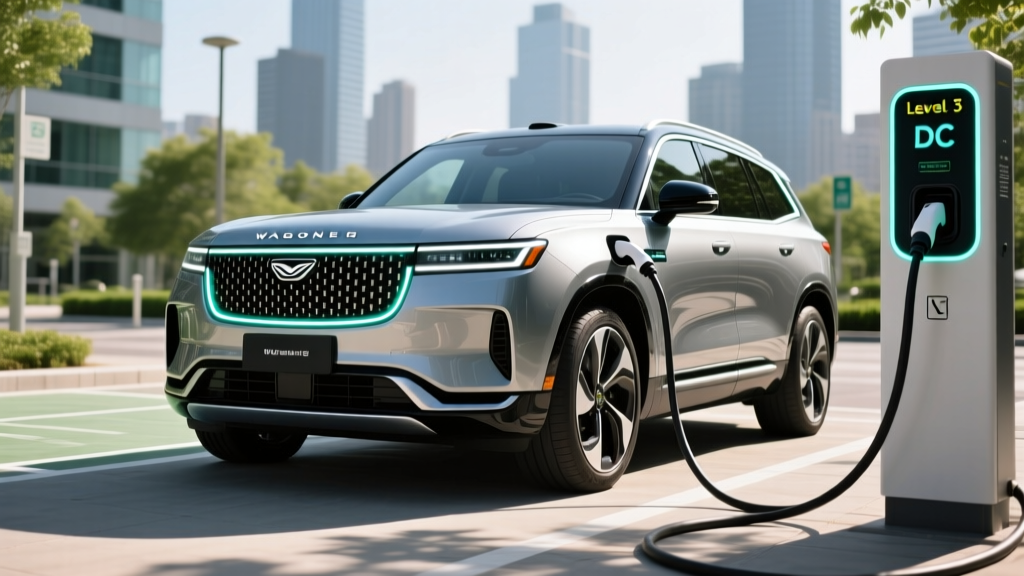
The 2026 Jeep Wagoneer S is Stellantis' first battery-electric vehicle built on the dedicated STLA Large platform, and it arrives with a clear mission: deliver premium SUV comfort with serious straight-line speed and a usable 300-mile range. For shoppers researching a Wagoneer S lease, the numbers tell a compelling story — but also reveal trade-offs in charging speed, real-world efficiency, and tax-credit eligibility that you need to weigh before signing.
We've spent time with the specs, cross-referenced EPA data, and mapped the ownership economics so you don't have to. Here's everything that matters.
Quick Verdict: Who the Wagoneer S Is For
The Wagoneer S targets premium-SUV buyers who want electric propulsion without sacrificing the aggressive styling and horsepower bragging rights traditionally associated with Jeep's top-trim ICE models. With up to 600 hp in the Launch Edition, standard all-wheel drive, and a spacious five-seat cabin, it slots between the BMW iX and the Tesla Model X in spirit, if not quite in price.
Best for: Daily commuters with home Level 2 charging, families needing five-seat luxury with cargo room, and buyers who want a distinctive American EV badge. Less ideal for: High-mileage road trippers who need 350 kW-class charging speeds, or budget-focused buyers who need the full $7,500 federal tax credit.
Range, Efficiency, and Real-World Expectations
| Metric | Value |
|---|---|
| EPA Estimated Range | 300 miles |
| Battery Capacity (Usable) | ~100 kWh (NMC lithium-ion) |
| Combined MPGe | ~88 MPGe (estimated) |
| Efficiency | ~38 kWh / 100 mi |
| Drivetrain | Dual-motor AWD |
Real-World Range vs. EPA Sticker
The EPA rates the Wagoneer S at 300 miles. In mixed driving, expect:
- City / moderate climate: 280–310 miles (regen braking helps in stop-and-go)
- Highway (70–75 mph sustained): 240–265 miles — the boxy SUV profile and 5,400+ lb curb weight work against it at speed
- Cold weather (below 32°F): 210–240 miles — NMC chemistry loses roughly 20–30% range in freezing temps without consistent preconditioning
The heat pump is standard, which mitigates cold-weather cabin draw, but battery thermal mass still takes a hit. Plan road trips around 220-mile segments in winter to keep a safety buffer.
According to fueleconomy.gov, the Wagoneer S's efficiency sits in the middle of the premium electric SUV pack — behind the more aerodynamic BMW iX xDrive50 (~89 MPGe combined) but ahead of heavier body-on-frame competitors. The 100 kWh NMC pack provides a large energy buffer, though its weight contributes to the 38 kWh/100 mi consumption figure.
Charging Speed: DC Fast, Level 2, and Level 1
| Charging Level | Power / Rate | Time / Miles Added |
|---|---|---|
| DC Fast Charge (Peak) | ~100 kW max | 10–80% in ~35–40 minutes |
| DC Fast (Sustained avg.) | ~75–85 kW | ~2.5 mi/min above 50% SoC |
| Level 2 (Home, 48A / 11.5 kW) | 11.5 kW | ~28–30 mi/hr; full charge ~9 hrs |
| Level 2 (Home, 32A / 7.7 kW) | 7.7 kW | ~19 mi/hr; full charge ~13 hrs |
| Level 1 (120V / 1.4 kW) | 1.4 kW | ~3–4 mi/hr; emergency top-up only |
The Wagoneer S uses a CCS1 connector for DC fast charging. The ~100 kW peak charge rate is the most significant compromise in this vehicle. For context, the Hyundai Ioniq 5 and Kia EV6 peak at 240+ kW on 800V architecture, achieving 10–80% in roughly 18 minutes. The Wagoneer S's 400V system means longer stops on road trips.
Charge curve reality: The Wagoneer S will likely sustain its peak rate between 10–50% SoC, then taper progressively. Expect 50–80% to take roughly as long as 10–50%. On a long trip, charging from 20–80% at an Electrify America or EVgo 150 kW+ station will take approximately 35–40 minutes — plan accordingly.
For home charging, a 48-amp Level 2 wall connector on a 60-amp dedicated circuit adds roughly 28–30 miles per hour of charging. An overnight 8–9 hour session replenishes the full battery. We recommend a hardwired Level 2 station (ChargePoint Home Flex, Emporia Vue, or Wallbox Pulsar Plus) rather than a NEMA 14-50 outlet for daily reliability.
Performance and Drivetrain
| Metric | Value |
|---|---|
| Horsepower | 600 hp (Launch Edition) / ~500 hp (base) |
| Torque | 617 lb-ft (Launch Edition) |
| 0–60 mph | 3.4 seconds (Launch Edition) |
| Drivetrain | Dual-motor AWD |
| Top Speed | Electronically limited ~124 mph |
The Launch Edition's 3.4-second 0–60 time puts it squarely in performance-SUV territory, rivaling the Tesla Model X Long Range and handily beating the BMW iX xDrive50 (4.4 sec). The dual-motor all-wheel-drive system provides confident traction in rain and light snow, and Jeep includes selectable drive modes (Auto, Sport, Snow, Sand) through the Selec-Terrain system.
Regenerative braking offers adjustable levels through the infotainment system, though true one-pedal driving (complete stop without brake pedal) is limited compared to competitors. Expect to use the friction brakes in the final few mph of deceleration.
Pricing, Trims, and Federal Tax Credit Eligibility
| Trim | Base MSRP | Est. §30D Credit | Effective Price |
|---|---|---|---|
| Wagoneer S (base) | $65,200 | $3,750–$7,500* | $57,700–$61,450 |
| Wagoneer S Launch Edition | $70,200 | $3,750–$7,500* | $62,700–$66,450 |
*Federal tax credit eligibility under IRS §30D depends on multiple factors that change annually. The Wagoneer S qualifies under the SUV MSRP cap of $80,000, but buyers must also meet:
- Income caps: Modified AGI ≤ $300,000 (joint), $225,000 (head of household), $150,000 (single)
- Battery sourcing: Critical minerals and battery component requirements phase in annually — for 2026, both thresholds tighten, which may reduce the credit from $7,500 to $3,750 depending on Stellantis supply chain compliance
- Point-of-sale transfer: Eligible buyers can apply the credit as a down-payment reduction at the dealer rather than waiting for a tax refund
Lease loophole: Under current IRS guidance, vehicles leased (not purchased) may qualify for the commercial clean vehicle credit (§45W) on the lessor's side, which some leasing companies pass through as a reduced monthly payment. This can sidestep the income and sourcing requirements — but the lessor is not obligated to pass the savings on. Always ask the dealer for the "lease cash" or "capital cost reduction" breakdown to confirm.
Interior, Cargo, and Technology
| Metric | Value |
|---|---|
| Seating | 5 passengers (2 rows) |
| Cargo (behind 2nd row) | ~30 cu ft |
| Cargo (2nd row folded) | ~60 cu ft |
| Front legroom | ~40.9 in |
| Rear legroom | ~38.5 in |
| Infotainment | 12.3" cluster + 12.3" center + 10.25" passenger screen |
| Audio | 19-speaker McIntosh (Launch Edition) |
| ADAS | Active Driving Assist (SAE Level 2) |
The cabin uses Stellantis' Uconnect 5 system with wireless Apple CarPlay and Android Auto, over-the-air updates, and an integrated navigation system that factors in charging stops. The triple-screen dashboard and available head-up display are competitive with German rivals. The Launch Edition's McIntosh audio system is a genuine differentiator in the segment.
ADAS Limitations — Active Driving Assist
The Wagoneer S's Active Driving Assist is an SAE Level 2 driver-assistance system. It combines adaptive cruise control and lane-centering on divided highways, but the driver must remain fully engaged with hands on the wheel and eyes on the road at all times. This is not autonomous or "self-driving" capability. Hands-free driving (like GM's Super Cruise or Ford's BlueCruise) is not currently offered on the Wagoneer S.
Warranty and Ownership Costs
| Coverage | Term |
|---|---|
| Basic / Bumper-to-Bumper | 3 years / 36,000 miles |
| Powertrain | 5 years / 60,000 miles |
| Battery Pack | 8 years / 100,000 miles (≥70% capacity retention) |
| Roadside Assistance | 5 years / 60,000 miles |
The 8-year/100,000-mile battery warranty with a 70% capacity-retention threshold is standard for the industry and aligns with federal mandates. NMC chemistry typically degrades 10–15% over the first 100,000 miles under normal use — most owners will never need a warranty claim. However, frequent DC fast charging above 100 kW and routinely charging to 100% SoC will accelerate degradation. For battery longevity, daily charge to 80% and use DC fast charging primarily for road trips.
Wagoneer S vs. Key Competitors
| Spec | Wagoneer S | BMW iX xDrive50 | Tesla Model X LR | Cadillac Lyriq AWD |
|---|---|---|---|---|
| EPA Range | 300 mi | 324 mi | 335 mi | 307 mi |
| Battery | ~100 kWh NMC | 105.2 kWh NMC | 100 kWh NMC | 102 kWh NMC |
| Peak DC Charge | ~100 kW | ~150 kW | ~250 kW | ~190 kW |
| 0–60 mph | 3.4 sec | 4.4 sec | 3.8 sec | 4.6 sec |
| Base MSRP | $65,200 | $87,250 | $79,990 | $62,695 |
| Cargo (rear seats up) | ~30 cu ft | 35.5 cu ft | ~34 cu ft (5-seat) | 28 cu ft |
Choose the Wagoneer S If:
- You want the quickest 0–60 in the segment at a price below the Model X
- You prefer American-made with Jeep brand cachet and dealer network
- Most driving is within 200 miles of home with Level 2 charging available
- You value distinctive styling and McIntosh audio over maximum cargo volume
Choose a Competitor If:
- Frequent road trips: Tesla Model X (250 kW Supercharger network) or BMW iX (150 kW, IONITY in Europe)
- Maximum cargo space: BMW iX offers 35.5 cu ft behind the second row
- Lowest entry price: Cadillac Lyriq AWD starts at $62,695 with comparable range
- Hands-free highway driving: Look at vehicles offering GM Super Cruise or Ford BlueCruise
Pros and Cons
Pros
- 3.4-sec 0–60 in Launch Edition — quickest in its price bracket
- 300-mile EPA range is practical for most daily and weekend use
- Standard AWD with Selec-Terrain modes
- Distinctive design, premium McIntosh audio (Launch Edition)
- Under $80,000 MSRP — qualifies for §30D SUV cap
- Lease may unlock commercial credit, bypassing income/sourcing rules
Cons
- ~100 kW peak DC charge rate — slowest in the premium EV SUV class
- Real-world highway range drops to ~240–265 mi at 70+ mph
- CCS1 connector only — no native NACS; Tesla Supercharger access requires adapter
- No hands-free driving assist (Level 2 only)
- Full $7,500 tax credit not guaranteed — depends on battery sourcing compliance
- Stellantis EV reliability track record is unproven at scale
Leasing the Wagoneer S: What to Know
A Wagoneer S lease can be financially attractive for several reasons beyond monthly payment. The key advantages:
- Lease credit pass-through: If Stellantis Financial (or the captive lessor) claims the §45W commercial clean vehicle credit, some of that savings may reduce your capitalized cost — effectively lowering your lease payment. Always ask the dealer for the lease cash breakdown.
- Battery risk avoidance: You return the vehicle at lease end, sidestepping any long-term degradation concerns or residual-value uncertainty on a first-generation EV platform.
- Technology refresh: EV tech moves fast. A 36-month lease lets you upgrade to a next-gen platform with faster charging or solid-state batteries when available.
Typical lease terms run 24–39 months with 10,000–15,000 miles/year. Expect a money factor in the 0.00200–0.00280 range (roughly 4.8–6.7% APR equivalent) depending on credit tier, with a residual value of 50–55% at 36 months. Negotiate the capitalized cost just as you would a purchase price — dealer markups above MSRP are common on new EV launches.
Frequently Asked Questions
What is the real-world range of the Wagoneer S?
The EPA rates it at 300 miles. Expect 280–310 miles in city driving, 240–265 miles on sustained highway trips at 70+ mph, and 210–240 miles in freezing weather. The 100 kWh battery gives a large buffer, but the heavy, boxy SUV shape works against efficiency at speed.
How fast does the Wagoneer S charge?
DC fast charging peaks at approximately 100 kW, achieving 10–80% in roughly 35–40 minutes. Home Level 2 charging at 48 amps (11.5 kW) adds about 28–30 miles per hour, fully replenishing the battery overnight in ~9 hours. This is slower than most competitors — the Tesla Model X charges at up to 250 kW, and the BMW iX at 150 kW.
Does the Wagoneer S qualify for the federal EV tax credit?
It qualifies under the §30D MSRP cap for SUVs ($80,000). However, the full $7,500 credit depends on 2026 battery-sourcing and critical-mineral requirements, which tighten annually. Some buyers may receive $3,750 instead. Income caps also apply ($300K joint / $150K single). Leasing may bypass these restrictions via the §45W commercial credit. Consult a tax professional and check IRS.gov for current rules.
Is the Wagoneer S worth it vs. the Tesla Model X or BMW iX?
If you prioritize straight-line performance and distinctive American styling at a lower base price than the Model X, yes. If frequent long-distance travel and fastest possible charging are priorities, the Model X (250 kW Supercharger access) or BMW iX (150 kW, 324-mi range) are stronger choices. The Cadillac Lyriq AWD is also worth a look at a lower starting price with similar range.
What connector does the Wagoneer S use?
The Wagoneer S uses a CCS1 connector for DC fast charging and a J1772 inlet for Level 2 AC charging. It does not have a native NACS (Tesla) port. Stellantis has indicated future Supercharger adapter compatibility, but as of early 2026, public charging relies on the CCS network (Electrify America, EVgo, ChargePoint).
What is the battery warranty?
Stellantis covers the battery pack for 8 years or 100,000 miles, whichever comes first, with a minimum 70% capacity retention guarantee. This is standard across the industry. NMC chemistry in a thermally managed pack should comfortably exceed this threshold under normal use.
Can I tow with the Wagoneer S?
Official towing capacity has not been prominently published as of early 2026. Given the STLA Large platform and dual-motor AWD, expect a rating in the 3,500–5,000 lb range when officially confirmed — adequate for a small trailer or pair of jet skis, but not a large boat or camper. Towing will significantly reduce range (expect 40–50% loss at max load).