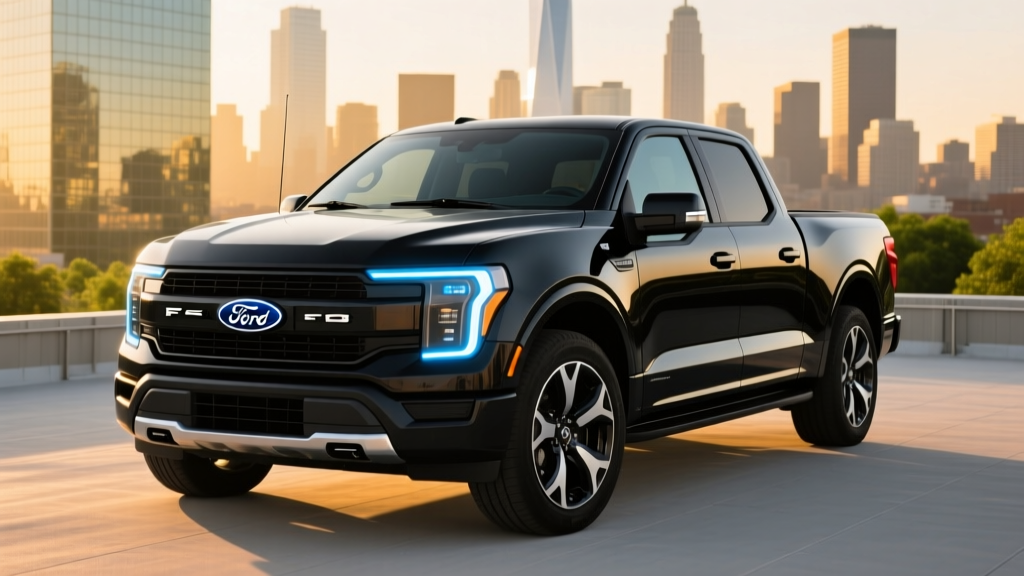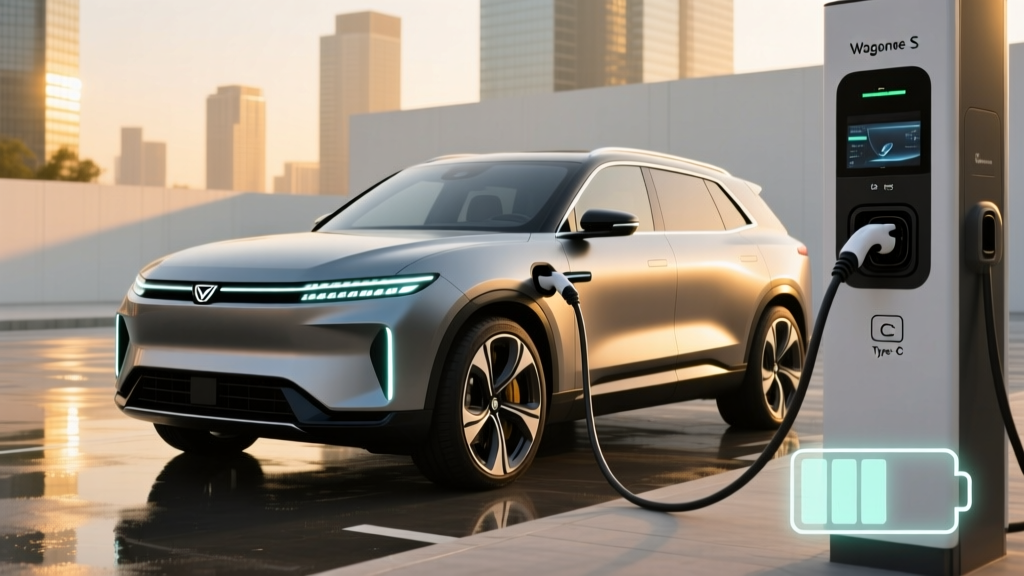
The 2026 Wagoneer S at a Glance
If you're researching the EV Wagoneer — officially the 2026 Wagoneer S — here's the practical summary: It's Jeep/Wagoneer's first all-electric SUV, built on Stellantis' STLA Large platform. Expect an EPA-estimated range around 300 miles from a ~100 kWh (usable) NMC battery pack, DC fast charging up to ~270 kW (10–80% in roughly 23 minutes under ideal conditions), and dual-motor AWD producing approximately 600 hp. Base pricing starts near $65,200 (before incentives), and as a large SUV from a legacy OEM, federal §30D tax credit eligibility depends on current-year battery sourcing, MSRP caps, and buyer income limits. It competes directly with the Rivian R1S, Tesla Model X, BMW iX, and the gas Wagoneer/Grand Wagoneer lineup.
Range, Battery, and Real-World Efficiency
The Wagoneer S uses a dual-motor all-wheel-drive powertrain paired with a large lithium-ion pack (NMC chemistry, ~100 kWh usable capacity). Stellantis targets an EPA-estimated 300+ miles of range, though final certification figures may shift slightly by trim.
EPA vs. Real-World Range: What to Actually Expect
| Condition | Estimated Range |
|---|---|
| EPA combined (sticker) | ~300 miles |
| Highway driving (70–80 mph, warm) | ~250–270 miles |
| Cold weather (below 32°F, highway) | ~210–240 miles |
| City / stop-and-go (mild temps) | ~300–320 miles |
Like all EVs, the Wagoneer S loses range at sustained highway speeds and in freezing temperatures. The large frontal area of a three-row SUV increases aerodynamic drag, which hits efficiency harder at 75+ mph. If your commute is mostly highway, budget for ~250 miles of usable range before needing a charge stop.
Efficiency should land in the mid-to-high 80s MPGe combined (roughly 34–38 kWh/100 mi), which is typical for a large, heavy electric SUV. For comparison, the Rivian R1S (Dual-Motor) achieves about 2.0–2.2 kWh/mi in mixed driving per fueleconomy.gov.
Charging Speed and Infrastructure
Charging capability is where the STLA Large platform shows its engineering. The Wagoneer S supports:
| Level | Power | Miles Added Per Hour | Use Case |
|---|---|---|---|
| Level 1 (120V) | ~1.4 kW | ~3–4 mi/hr | Emergency / trickle |
| Level 2 (240V, 48A) | ~11.5 kW | ~30–35 mi/hr | Home / workplace overnight |
| DC Fast Charge | Peak ~270 kW | N/A (session-based) | Road trips, 10–80% in ~23 min |
kW vs. kWh refresher: kW (kilowatts) is the rate of power delivery — think of it as the "speed" of charging. kWh (kilowatt-hours) is the total energy stored in the battery — the "tank size." The Wagoneer S has ~100 kWh of capacity and can accept up to ~270 kW of charging power.
The Charging Curve Reality
The advertised ~270 kW is a peak rate, achieved roughly between 10–35% State of Charge (SoC). As the battery fills, the charge rate tapers to protect cell health. Expect:
- 10–35% SoC: Near peak (~250–270 kW)
- 35–60% SoC: ~150–180 kW sustained
- 60–80% SoC: ~80–120 kW
- Above 80%: Sharp taper — only charge past 80% at DC stations when you truly need the extra range
Preconditioning the battery (navigating to a charger in the infotainment system) warms the pack and enables faster charging. Skipping preconditioning in cold weather can add 10+ minutes to your session.
Connector: NACS Adoption
Stellantis has committed to the North American Charging Standard (NACS) for its EVs. The 2026 Wagoneer S should ship with a native NACS charge port, granting access to Tesla Supercharger stations (now open to non-Tesla EVs via NACS) in addition to Electrify America, EVgo, and other networks. Always verify the specific connector on your trim before purchase, as early production vehicles may ship with a CCS-to-NACS adapter.
Performance and Powertrain
The dual-motor AWD layout delivers serious acceleration for a vehicle this size:
| Spec | 2026 Wagoneer S |
|---|---|
| Powertrain | Dual-motor AWD |
| Horsepower | ~600 hp |
| 0–60 mph | ~3.4 seconds (est.) |
| Battery (usable) | ~100 kWh, NMC |
| EPA Range | ~300 miles |
| Max DC Fast Charge | ~270 kW peak |
| 10–80% DC Charge Time | ~23 minutes (ideal) |
| Level 2 Onboard Charger | ~11.5 kW |
| Towing Capacity | ~5,000 lbs (est.) |
| Seating | 5 passengers (2-row) |
| Base MSRP | ~$65,200 |
| Battery/Powertrain Warranty | 8 yr / 100,000 mi |
The 3.4-second 0–60 time puts it in sports-car territory, though real-world launches on all-season tires and non-prepped surfaces will feel slightly slower. The low center of gravity from the underfloor battery pack helps cornering composure, but at ~5,800+ lbs curb weight, this is a grand-touring cruiser, not a canyon carver.
Pricing, Trims, and Federal Tax Credit Eligibility
The 2026 Wagoneer S is positioned as a premium electric SUV, starting around $65,200 for the base Launch Edition or equivalent entry trim. Higher trims (likely including a Summit Reserve or similar) could push past $75,000–$80,000 fully loaded.
Federal §30D Tax Credit: The Fine Print
The IRS §30D clean vehicle credit offers up to $7,500, but eligibility for the Wagoneer S depends on several conditions that change frequently:
- MSRP cap: SUVs/vans/pickups must be at or below $80,000 MSRP. Base trims qualify; fully loaded trims may exceed the cap.
- Buyer income limits: AGI must not exceed $300K (married filing jointly), $225K (head of household), or $150K (single).
- Battery sourcing: Critical minerals and battery components must meet phased-in domestic/free-trade-partner sourcing requirements that tighten each year through 2030.
- Point-of-sale transfer: Eligible buyers can transfer the credit to the dealer at purchase, reducing the drive-off price immediately.
- FEOC restriction: Vehicles with battery components from a "foreign entity of concern" (primarily Chinese-linked supply chains) are disqualified.
Always verify current-year eligibility on irs.gov or with a tax professional before relying on the credit in your purchase math.
Wagoneer S (EV) vs. Gas Wagoneer: Cost & Capability Comparison
How does the EV Wagoneer S stack up against its internal-combustion sibling? Here's a data-driven breakdown comparing the Wagoneer S against the gas-powered 2026 Wagoneer (Hurricane inline-six):
| Factor | 2026 Wagoneer S (EV) | 2026 Wagoneer (Gas, I-6) |
|---|---|---|
| Base MSRP | ~$65,200 | ~$62,500 |
| EPA Range / Fuel Economy | ~300 mi / ~88 MPGe | ~420 mi / ~19 MPG combined |
| "Fuel" Cost Per Mile | ~$0.04–0.06 (home L2) | ~$0.18–0.22 (gas at $3.50/gal) |
| Annual Fuel/Energy (12K mi) | ~$500–$720 | ~$2,160–$2,640 |
| 5-Year Energy Cost | ~$2,500–$3,600 | ~$10,800–$13,200 |
| Maintenance (5 yr) | ~$1,200–$1,800 | ~$3,000–$4,500 |
| 0–60 mph | ~3.4 sec | ~5.8 sec |
| Towing | ~5,000 lbs | ~10,000 lbs |
| Seating | 5 | 7–8 |
| Federal Tax Credit | Up to $7,500 (if eligible) | $0 |
Key takeaways:
- The EV saves roughly $7,000–$9,000 in energy costs over five years at 12,000 miles/year, assuming mostly home charging at $0.14/kWh national average.
- Maintenance savings add another $1,500–$2,700 — no oil changes, fewer brake replacements (regen braking), no transmission fluid.
- The gas Wagoneer wins decisively on towing (10K vs ~5K lbs), seating (7–8 vs 5), and refueling speed for long rural trips.
- If the $7,500 credit applies, the EV's effective purchase price drops below the gas model.
Real-World Ownership Considerations
Home Charging Access Is Non-Negotiable for Convenience
The Wagoneer S makes the most financial and practical sense if you can charge at home. A Level 2 home charger (240V, 48A) adds ~30–35 miles per hour of charging, meaning a full overnight replenishment is easy. Installation costs vary:
| Item | Estimated Cost |
|---|---|
| Level 2 charger hardware | $400–$800 |
| Electrician labor (240V run, 50A circuit) | $800–$2,500 |
| Permit / inspection | $100–$400 |
| Electrical panel upgrade (if needed, 200A) | $1,500–$3,500 |
| Total (no panel upgrade) | $1,300–$3,700 |
| Total (with panel upgrade) | $2,800–$7,200 |
Hire a licensed electrician to assess your panel capacity before purchasing. A 100 kWh battery on a 48A Level 2 circuit takes roughly 9–10 hours from near-empty — ideal for overnight charging.
Public Charging: Progress, But Plan Ahead
With NACS compatibility, the Wagoneer S accesses the expanding Tesla Supercharger network (15,000+ stalls in the US) plus Electrify America, EVgo, and others. However:
- Charging deserts still exist in rural areas, particularly in the Mountain West and parts of the Southeast.
- Reliability at non-Tesla networks remains inconsistent — expect ~5–10% of sessions to encounter a faulty stall.
- DC fast charging costs $0.30–$0.50/kWh at public stations, making road-trip "fuel" costs closer to $0.10–$0.15/mile — still cheaper than gas, but not the bargain that home charging provides.
Cold-Weather Impact
If you live where winters regularly drop below freezing, plan for 20–30% range loss. The Wagoneer S should include a heat pump for cabin heating (which is more efficient than resistive heaters), but the battery still loses effective capacity in cold. Preconditioning while plugged in at home mitigates this significantly.
Common Misconceptions About the EV Wagoneer
| Myth | Fact |
|---|---|
| "EV batteries need replacing every few years and cost $20K+" | Modern NMC packs are warrantied for 8 years / 100,000 miles (minimum 70% capacity retention). Real-world degradation data from similar platforms shows ~10–15% capacity loss over 150K+ miles. Full replacement (rare) runs $12,000–$20,000, but most packs outlast the vehicle. |
| "I can tow my boat just as far on a charge" | Towing cuts EV range by 40–60%. Expect ~130–170 miles while towing 4,000+ lbs. The gas Wagoneer is far more practical for heavy, frequent towing. |
| "It qualifies for the full $7,500 tax credit, no questions" | Credit eligibility depends on MSRP cap, buyer income, and battery sourcing rules that tighten annually. Verify on irs.gov before counting on it. |
| "DC fast charging damages the battery" | Modern thermal management systems mitigate most DC fast-charging degradation. Occasional road-trip fast charging has minimal impact. Daily DC fast charging does accelerate wear slightly, but home Level 2 is the norm for most owners. |
| "The Wagoneer S has three rows of seats" | The Wagoneer S is a two-row, 5-passenger SUV. If you need three rows, the gas Wagoneer/Grand Wagoneer or a Rivian R1S (3-row option) is the better fit. |
Decision Framework: Is the EV Wagoneer Right for You?
Choose the Wagoneer S (EV) If:
- You have home Level 2 charging (or can install it).
- Your daily driving is under 200 miles round-trip, and road trips are occasional.
- You want sports-car acceleration in a luxury SUV package.
- You value lower running costs ($1,500–$2,000/year savings vs gas) and minimal maintenance.
- You don't need three-row seating or heavy towing above ~5,000 lbs.
- You live in an area with adequate public DC fast charging for your road-trip routes.
Choose the Gas Wagoneer (or a Hybrid/PHEV Alternative) If:
- You tow frequently above 5,000 lbs or need max towing range.
- You regularly drive long rural routes through charging deserts.
- You need three-row, 7–8 passenger seating.
- You cannot install home charging and public infrastructure near you is sparse.
- You live in an area with extreme cold and can't precondition at home.
Frequently Asked Questions
What is the real-world range of the Wagoneer S EV?
EPA-estimated at ~300 miles, but expect ~250–270 miles on the highway in warm weather, and ~210–240 miles in freezing conditions. City driving with regenerative braking can match or slightly exceed the EPA figure.
How long does it take to charge the Wagoneer S at home?
On a 48A Level 2 home charger (~11.5 kW), a full charge from near-empty takes roughly 9–10 hours. In practice, most owners plug in nightly and only need to replenish 50–100 miles of range, taking 2–4 hours.
Does the Wagoneer S qualify for the $7,500 federal EV tax credit?
It may, depending on the trim MSRP (must be ≤$80,000 for SUVs), your adjusted gross income, and current-year battery sourcing compliance. Check the IRS clean vehicle credit page for the latest eligibility list before purchasing.
Can the Wagoneer S use Tesla Superchargers?
Yes — the Wagoneer S ships with a NACS charge port, giving it native access to the Tesla Supercharger network (now open to NACS-equipped non-Tesla EVs). It also works with Electrify America, EVgo, and other CCS networks via adapter if needed.
Is the Wagoneer S good for towing?
It can tow an estimated ~5,000 lbs, but range drops by 40–60% while towing. That means ~130–170 miles between charges when pulling a trailer. For heavy or long-distance towing, the gas Wagoneer (10,000 lb capacity) is the better tool.
How does insurance cost compare to the gas Wagoneer?
EVs typically carry 10–20% higher insurance premiums due to higher repair costs and vehicle values. Expect the Wagoneer S to cost roughly $150–$300 more per year to insure than a comparably priced gas Wagoneer, though this varies heavily by driver profile, state, and insurer.
What's the 5-year total cost of ownership?
Assuming $65,200 MSRP, a $7,500 credit (if eligible), $0.14/kWh home electricity, and 12,000 miles/year:
- Purchase (net): ~$57,700
- Energy (5 yr): ~$2,500–$3,600
- Maintenance (5 yr): ~$1,200–$1,800
- Insurance (5 yr): ~$9,000–$12,000
- Estimated 5-yr total: ~$70,400–$75,100 (before depreciation)
The gas Wagoneer over the same period runs ~$75,000–$82,000 in comparable costs, with the gap widening if gas prices rise.