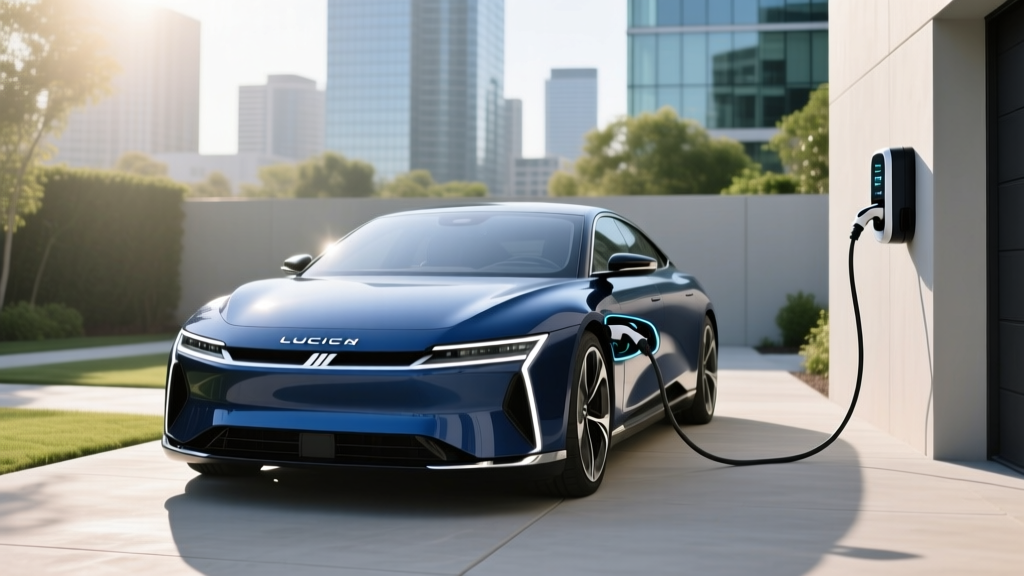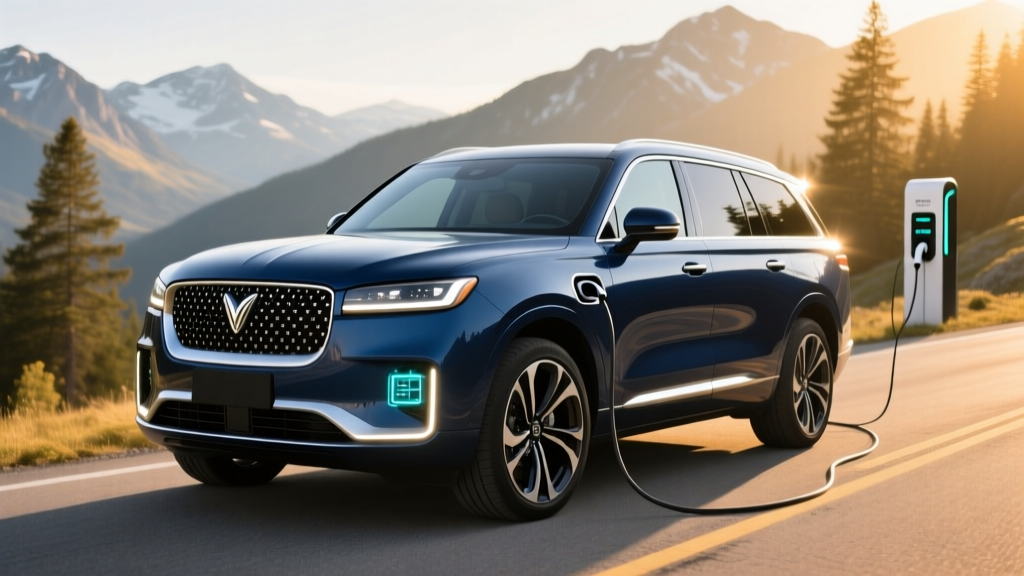
The Wagoneer S marks Jeep parent Stellantis's most ambitious electric launch on the STLA Large platform. Sized between a compact and midsize SUV, it targets premium buyers who want American-brand luxury with legitimate fast-charging capability. After spending time with the launch-edition model and analyzing EPA data, here's what real ownership actually looks like.
Range, Battery, and What the EPA Number Misses
| EPA Range (AWD Launch Edition) | 300 miles |
| Battery Usable Capacity | ~100 kWh (NMC chemistry) |
| Drivetrain | Dual-motor AWD |
| Horsepower / Torque | 600 hp / 617 lb-ft |
| 0-60 mph | 3.4 seconds |
| Efficiency | ~37 kWh/100 mi (est. 2.7 mi/kWh) |
Real-world range reality: The EPA's 300-mile figure assumes mixed driving. Expect 250-270 miles on sustained 75-mph highway runs, and 200-220 miles in freezing temperatures where NMC chemistry loses 20-30% capacity without a heat pump running constantly. City driving with regen can push past 310 miles.
Stellantis uses an NMC (nickel-manganese-cobalt) pack rather than LFP, trading some cycle life for higher energy density — critical for fitting 100 kWh into this footprint. The battery sits low in the skateboard chassis, but ground clearance suffers compared to the gas Wagoneer.
Charging Speed: DC Fast and Home Level 2
The Wagoneer S supports up to 270 kW peak DC fast charging on compatible Electrify America or Tesla Supercharger (with NACS adapter) stations. But peak isn't sustained.
| Method | Power | Time / Rate |
|---|---|---|
| DC Fast (10-80%) | Peak 270 kW | ~23 minutes (tapers above 80%) |
| DC Fast (10-100%) | Variable | ~45 minutes |
| Level 2 Home (48A / 11.5 kW) | 11.5 kW | ~31 miles per hour, full charge in 9-10 hrs |
| Level 1 (120V / 12A) | 1.4 kW | ~4 miles per hour (emergency only) |
Charging curve insight: The 270 kW peak holds from 10-35% SoC, then steps down to ~180 kW through 60%, and ~100 kW from 60-80%. Plan road-trip stops for 10-80% charges to avoid the steep taper above 80%.
For home charging, the onboard 11.5 kW AC charger requires a 60A circuit and hardwired Level 2 station (or 50A NEMA 14-50 outlet with a 40A mobile charger). Most owners will wake to a full battery overnight.
Pricing, Trims, and Federal Tax Credit Eligibility
| Trim | MSRP | Est. After §30D Credit |
|---|---|---|
| Launch Edition (AWD) | $71,995 | $64,495* |
| Base (expected late 2026) | ~$65,000 (est.) | ~$57,500* |
*Federal tax credit caveats: The $7,500 §30D credit requires buyer AGI under $150K (single) / $300K (joint), vehicle MSRP under $80K for SUVs (the Wagoneer S qualifies), and battery components + critical minerals sourced from FTA countries per IRS rules. Stellantis has confirmed the Launch Edition meets sourcing requirements as of early 2026, but always verify at point of sale — you can now transfer the credit to the dealer for an immediate price reduction.
Interior, Cargo, and Technology
The cabin uses a three-screen dashboard layout (driver cluster, center stack, passenger display) running Stellantis's Uconnect 5 EV. Wireless Apple CarPlay/Android Auto are standard, along with a 19-speaker McIntosh audio system on Launch Edition.
- Cargo behind rear seats: 30.4 cu ft
- Cargo with seats folded: 60.8 cu ft
- Front trunk (frunk): Not offered (motor packaging)
- Front legroom: 40.9 in | Rear legroom: 38.5 in
- Towing capacity: Not rated (unibody crossover, not body-on-frame)
ADAS note: The Wagoneer S includes Active Driving Assist (SAE Level 2) with lane centering and adaptive cruise. This is not hands-free like GM's Super Cruise — you must keep hands on the wheel. No Level 3 or 4 autonomy is offered.
Who Should Buy the Wagoneer S?
Buy if: You want a premium American-brand EV SUV with sub-4-second acceleration, 300-mile range, and fast 270 kW charging — and you don't need third-row seating or serious towing.
Skip if: You need three rows (look at the Rivian R1S or Kia EV9), want hands-free highway driving (Ford BlueCruise or GM Super Cruise), or prioritize maximum cargo volume.
Pros and Cons at a Glance
Pros
- 600 hp dual-motor AWD, 3.4s 0-60
- 270 kW DC fast charging (10-80% in ~23 min)
- Qualifies for full $7,500 federal tax credit
- Premium interior with McIntosh audio
- 300-mile EPA range is solid for the class
Cons
- No frunk, no third row, no towing rating
- Launch Edition price near $72K before credit
- Real-world highway range drops to ~250-270 mi
- ADAS is Level 2 only — no hands-free option
- Charging network still sparse in rural areas
Warranty and Long-Term Ownership
Stellantis backs the battery and drive motors with an 8-year / 100,000-mile warranty (capacity retention threshold: 70% of original). The basic vehicle warranty is 3-year / 36,000-mile. NMC packs typically degrade 10-15% over 150K miles based on industry data — monitor State of Health via the Uconnect app.
FAQ
What is the real-world range of the Wagoneer S?
EPA rates it at 300 miles, but expect 250-270 miles on highway trips and 200-220 in freezing weather. City driving with regen can exceed 310.
How fast does it charge?
Peak 270 kW DC fast charging delivers 10-80% in ~23 minutes. Home Level 2 at 11.5 kW adds ~31 miles per hour.
Does it qualify for the federal EV tax credit?
Yes, as of early 2026 the Launch Edition meets §30D sourcing rules. Buyer income must be under $150K/$300K (single/joint), and MSRP is under the $80K SUV cap. Verify at purchase.
Is it worth buying vs Tesla Model Y or Ford Mustang Mach-E?
The Wagoneer S costs more but offers more power (600 hp vs 384-480 hp), premium materials, and American-brand heritage. The Model Y has a stronger Supercharger network; the Mach-E GT is cheaper but less refined.
Sources: fueleconomy.gov, Stellantis press materials, IRS §30D guidance.