Quick Answer: Does a VW Tiguan EV Exist?
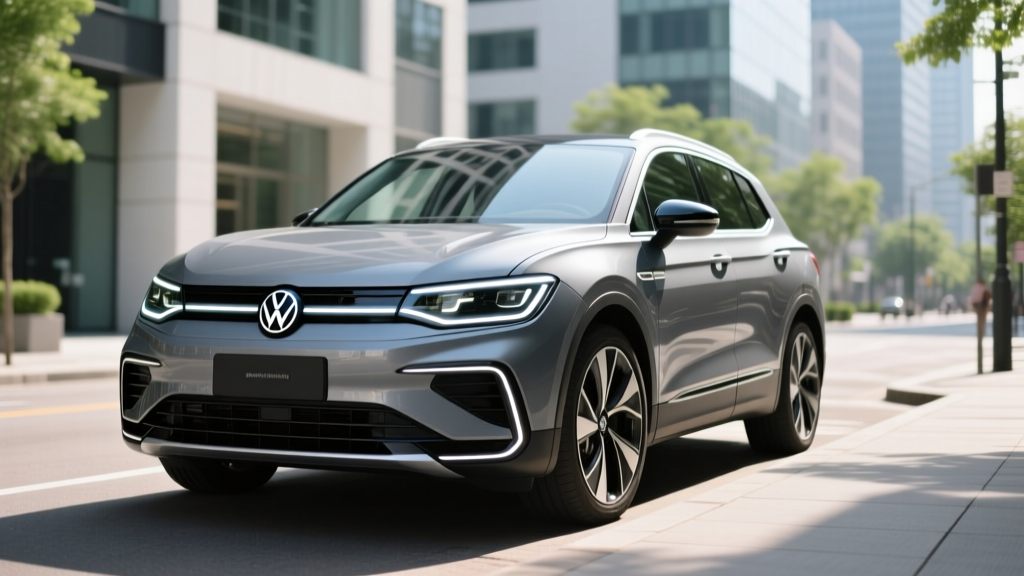
As of 2026, Volkswagen has not released a vehicle officially named the "Tiguan EV." However, the search for a Tiguan EV reflects a real buyer need: a compact, practical electric SUV wearing a Volkswagen badge. That role is currently filled by the VW ID.4, VW's dedicated battery-electric compact crossover built on the MEB platform. Meanwhile, VW has signaled that future electric models may adopt familiar nameplates — and European reports have referenced a potential "ID. Tiguan" as part of VW's next-generation EV lineup. If you're shopping for an electric Volkswagen SUV today, the ID.4 is your option. If you're waiting for a rebadged or next-gen electric Tiguan, here's what we know.
Why Buyers Are Searching for a Tiguan EV
The Tiguan has been one of Volkswagen's best-selling nameplates globally — a compact SUV with a reputation for European driving dynamics, a usable cargo area, and a relatively premium interior at a mainstream price. When shoppers begin their EV transition, many search for electric versions of vehicles they already trust. The term "Tiguan EV" captures that intent: buyers want a VW electric SUV that matches the Tiguan's size, practicality, and price point.
Volkswagen's current answer to that demand is the ID.4, which slots into roughly the same compact crossover segment. But the ID.4 has drawn mixed reactions — praised for ride comfort and interior space, criticized for its touch-capacitive controls and software quirks. That gap between what Tiguan buyers expect and what the ID.4 delivers likely fuels continued interest in a "Tiguan EV" that may feel more like a traditional VW.
The ID.4: VW's Current Electric SUV (2026 Specs)
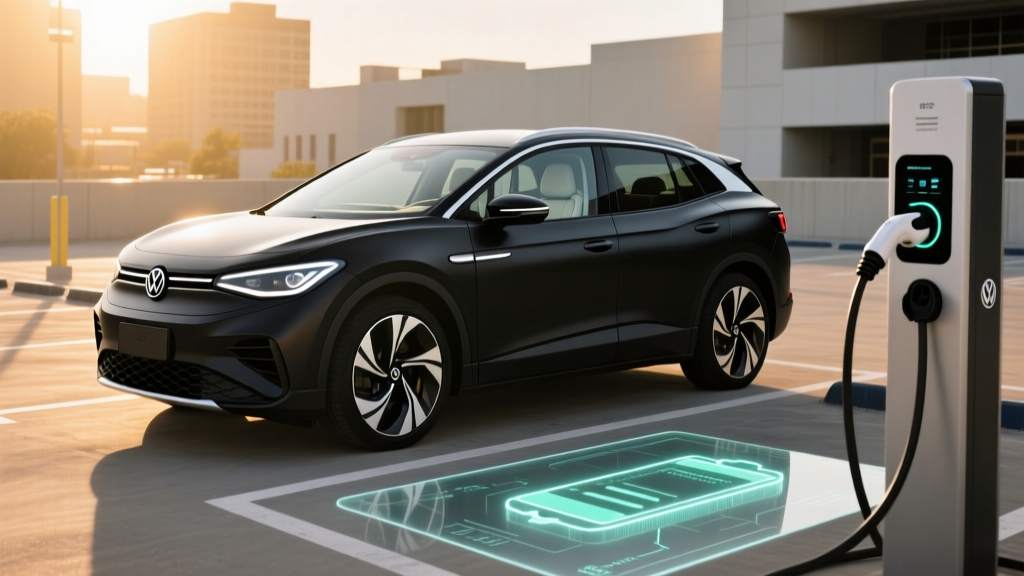
If you need a VW electric SUV now, the ID.4 is the production model to evaluate. Here's where the 2026 ID.4 stands on the metrics that matter:
| Spec | ID.4 Standard Range (RWD) | ID.4 Pro S AWD |
|---|---|---|
| EPA Range | ~206 mi | ~263 mi |
| Battery (usable) | 62 kWh (LFP) | 77 kWh (NMC) |
| Horsepower | 201 hp | 335 hp |
| 0–60 mph | ~7.7 sec | ~4.9 sec |
| Peak DC Fast Charge | 135 kW | 175 kW |
| 10–80% DC Charge | ~28 min | ~28 min |
| Level 2 (240V) Rate | 11 kW | 11 kW |
| Cargo Volume | 30.3 cu ft (rear seats up) | 30.3 cu ft |
| Base MSRP | ~$39,995 | ~$49,995 |
| Battery/Powertrain Warranty | 8 yr / 100,000 mi | 8 yr / 100,000 mi |
Real-World Range Check
The ID.4 Pro S AWD's EPA rating of 263 miles is achievable in mixed suburban driving at moderate temperatures. Expect ~220–240 miles on sustained highway trips at 70+ mph, and ~180–200 miles in freezing temperatures without preconditioning. The Standard Range model's 206-mile EPA figure drops to roughly 160–175 miles in cold-weather highway driving — tight for road trips but fine for daily commuting under 60 miles round-trip.
ID. Tiguan: What VW Has Signaled
Volkswagen's 2024–2025 strategic announcements confirmed that future EVs could carry established nameplates rather than "ID." designations alone. European automotive press has reported internal references to an "ID. Tiguan" — essentially a next-generation electric compact SUV that could replace or supplement the ID.4 in certain markets. This would align with VW Group's broader pattern: the ID.3 has been discussed as a potential "Golf Electric" successor, and the ID.7 maps to a Passat-sized electric sedan.
Key unknowns for a potential Tiguan EV / ID. Tiguan:
- Platform: Likely VW's upcoming SSP (Scalable Systems Platform), supporting 800V architecture and faster charging than the current MEB platform.
- Timeline: SSP-based models are expected to arrive no earlier than 2027–2028 for the U.S. market. Nothing is confirmed for sale today.
- Naming: VW has not officially confirmed "Tiguan EV" or "ID. Tiguan" for the U.S. market. Treat all references as preliminary.
ID.4 vs. Gas Tiguan: Cost and Efficiency Comparison
For buyers cross-shopping VW's current electric SUV against the gas Tiguan, here's how the numbers stack up over a typical 5-year ownership period at 15,000 miles per year:
| Category | 2026 ID.4 Pro (RWD) | 2026 Tiguan 2.0T (FWD) |
|---|---|---|
| Base MSRP | ~$39,995 | ~$30,095 |
| Est. Federal Tax Credit (§30D) | Up to $7,500* | $0 |
| Effective Price After Credit | ~$32,495 | ~$30,095 |
| Fuel/Energy Cost (5 yr) | ~$3,400 (home charging) | ~$9,750 (gas at $3.25/gal, 26 MPG combined) |
| Maintenance (5 yr) | ~$1,200 | ~$3,800 |
| Insurance (5 yr est.) | ~$9,500 | ~$7,800 |
| 5-Year Total Cost (purchase + fuel + maint + insurance) | ~$46,595 | ~$51,445 |
*Federal §30D credit eligibility depends on buyer income limits (≤$150K single / ≤$300K joint), vehicle MSRP caps (≤$80K for SUVs), and battery component/critical-mineral sourcing requirements. Rules can change — verify current eligibility at IRS.gov or consult a tax professional.
Common Tiguan EV Misconceptions
| Myth | Fact |
|---|---|
| "The Tiguan EV is available now." | No vehicle officially named Tiguan EV is in production. The ID.4 is VW's current electric compact SUV. |
| "VW electric SUVs can't handle cold weather." | The ID.4 uses a heat pump (standard on most trims) to reduce HVAC energy draw. Expect 20–30% range loss in freezing temps — comparable to most EVs, not a VW-specific flaw. |
| "The ID.4 qualifies for the full $7,500 credit for everyone." | Credit eligibility depends on your income, the vehicle's MSRP, and battery sourcing. Some buyers will qualify for partial or no credit. Check IRS §30D rules. |
| "I can charge an ID.4 on any fast charger." | The ID.4 uses the CCS1 connector. Tesla Superchargers with NACS connectors require an adapter (VW has been expanding compatibility — check your model year for included adapter status). |
| "EV batteries need replacing every few years." | VW covers the ID.4 battery for 8 years / 100,000 miles with a 70% capacity retention guarantee. Real-world degradation data from MEB-platform vehicles shows ~5–8% loss over 100K miles. |
Real-World Ownership: What First-Time EV Buyers Should Know
If you're considering the ID.4 (or waiting for a future Tiguan EV), these practical factors determine whether an EV works for your life:
Home Charging Access Is the Biggest Variable
Charging at home on a Level 2 (240V) outlet at 11 kW adds roughly 30–35 miles of range per hour. A full overnight charge from 20% to 80% takes about 5–6 hours. If you can install a Level 2 charger in your garage or driveway, daily EV ownership is largely frictionless — you wake up "full" every morning.
Installation costs vary widely:
| Item | Typical Cost Range |
|---|---|
| Level 2 Charger (hardware) | $350–$700 |
| Electrician labor (240V/50A circuit) | $800–$2,500 |
| Panel upgrade (if needed, 100A→200A) | $1,500–$3,500 |
| Permit & inspection | $100–$400 |
| Total (no panel upgrade) | $1,250–$3,600 |
| Total (with panel upgrade) | $2,750–$7,100 |
If you cannot charge at home — apartment living, street parking, or landlord restrictions — EV ownership becomes significantly harder. Public DC fast charging costs more per mile (typically $0.30–$0.48/kWh vs. $0.12–$0.18/kWh at home) and requires planning around your schedule. For apartment dwellers, a PHEV like the gas Tiguan or a competing plug-in hybrid may be more practical until workplace or public charging improves.
Climate and Driving Patterns Matter
EVs lose range in cold weather — this is chemistry, not a defect. Lithium-ion batteries operate less efficiently below freezing, and cabin heating draws significant energy. The ID.4's heat pump mitigates this, but plan for:
- Mild climate (40–80°F): Near-EPA range is realistic.
- Cold climate (below 32°F): Expect 20–30% range reduction. A 263-mile ID.4 Pro S AWD may deliver 185–210 miles in January highway driving.
- Hot climate (above 95°F with A/C): 5–10% reduction, less severe than cold.
For drivers with one-way commutes under 40 miles, even cold-weather range is more than sufficient. For frequent 200+ mile road trips, plan DC fast-charging stops — the ID.4's 10–80% time of ~28 minutes at 175 kW is adequate but not class-leading.
The Charging Curve Reality
Peak charge rate (175 kW on the ID.4 Pro S AWD) is sustained only between roughly 10–40% State of Charge. Above 50%, the rate tapers significantly — by 80%, you're charging at roughly 50–60 kW. This is normal lithium-ion behavior to protect battery longevity, but it means the last 20% of a charge session takes nearly as long as the first 60%. On road trips, charge to 80% and go — don't wait for 100%.
Decision Framework: Should You Buy the ID.4, Wait, or Look Elsewhere?
If-Then Guide for Tiguan EV Shoppers
- If you need a VW electric SUV now and have home charging → the ID.4 Pro S AWD ($49,995 MSRP, ~263 mi range) is a comfortable, practical choice. Apply the §30D credit if eligible and negotiate from invoice.
- If you need a VW electric SUV now but budget is tight → the ID.4 Standard Range (~$39,995, ~206 mi, LFP battery) works for commutes under 50 miles round-trip and offers an LFP chemistry advantage (longer cycle life, less degradation concern).
- If you specifically want the Tiguan nameplate and driving feel → the current gas Tiguan remains a strong compact SUV. Pair it with a future EV purchase when VW's next-gen platform arrives.
- If you're willing to wait 2–3 years for a potential ID. Tiguan or next-gen VW electric SUV on the SSP platform → monitor VW's official U.S. announcements. Expect 800V architecture, faster charging, and potentially the Tiguan name.
- If you don't need VW specifically → competitors like the Hyundai Ioniq 5 (305 mi range, 350 kW peak charging on NACS adapter), Tesla Model Y (320 mi, Supercharger access), and Kia EV6 (310 mi, 800V architecture) offer faster charging and longer range in the same price bracket.
- If you can't charge at home → consider a PHEV instead. The EV-only range (typically 30–40 miles) covers most commutes, and you won't depend on public charging infrastructure.
Frequently Asked Questions
Will VW release a Tiguan EV in the United States?
Volkswagen has not officially confirmed a "Tiguan EV" for the U.S. market. European reports reference an "ID. Tiguan" as a potential future model on the SSP platform, likely arriving no earlier than 2027–2028. Until VW makes a formal announcement, the ID.4 remains VW's U.S. electric SUV.
Is the VW ID.4 the same size as the Tiguan?
The ID.4 and Tiguan are both compact crossovers, but the ID.4 is slightly larger overall. The ID.4 offers 30.3 cu ft of cargo space behind the rear seats vs. the gas Tiguan's ~33.0 cu ft. Passenger volume is comparable, with the ID.4 benefiting from a flat floor (no transmission tunnel) that improves rear-seat comfort.
Does the VW ID.4 qualify for the $7,500 federal tax credit?
The ID.4 has been eligible for up to $7,500 under IRS §30D in recent years, but eligibility depends on battery sourcing requirements, buyer income (≤$150K single / ≤$300K joint), and MSRP caps (≤$80K for SUVs). Rules change periodically — verify at IRS.gov before purchasing. The credit can now be transferred to the dealer at point of sale, reducing your out-of-pocket cost immediately.
How does ID.4 charging speed compare to competitors?
The ID.4 Pro S AWD peaks at 175 kW — adequate but behind competitors. The Hyundai Ioniq 5 and Kia EV6 (on 800V architecture) can peak at 240–350 kW, achieving 10–80% in ~18 minutes. The Tesla Model Y peaks around 250 kW. If fast-charging speed is a priority, the ID.4 is mid-pack, not class-leading.
What's the difference between LFP and NMC batteries in the ID.4?
The Standard Range ID.4 uses an LFP (lithium iron phosphate) battery — heavier but with longer cycle life, less degradation over time, and no concern about charging to 100% regularly. The Pro/Pro S models use NMC (nickel manganese cobalt) — higher energy density (more range per kg) but slightly faster long-term degradation. For daily commuting with home charging, LFP is arguably the better long-term choice.
Is the ID.4 good in snow and cold weather?
The ID.4 AWD models provide competent traction in snow, and the heat pump reduces HVAC energy consumption in cold weather. Expect 20–30% range loss below freezing. With winter tires and preconditioning (warming the battery while plugged in before departure), the ID.4 performs well in cold climates — but plan routes with range loss in mind.