The Short Answer: What Is the VW Tiguan Electric?
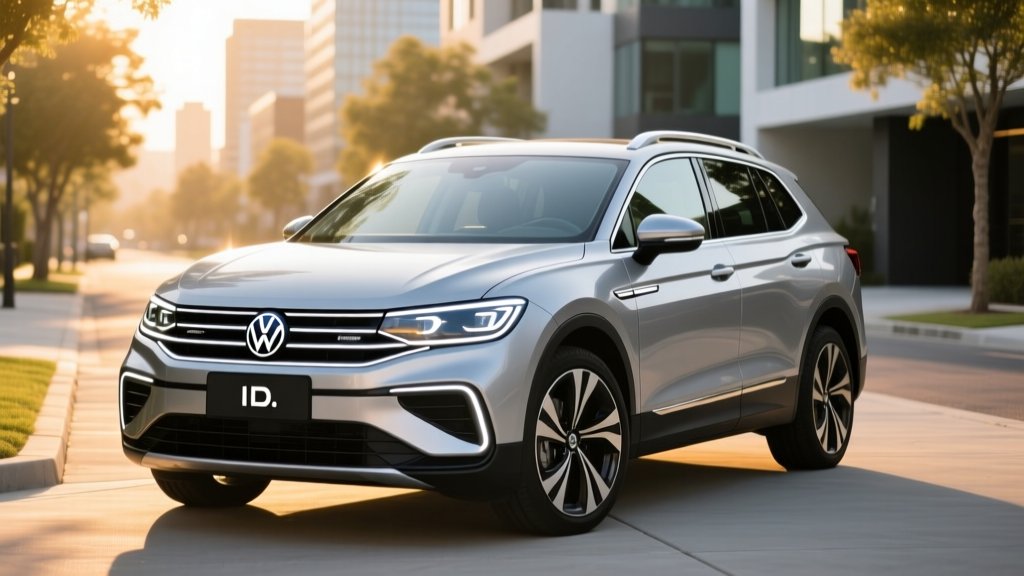
The VW Tiguan electric is Volkswagen's ID. Tiguan, an all-electric compact SUV built on VW's MEB+ platform and positioned as the battery-electric counterpart to the gas-powered Tiguan. For the 2026 model year, the ID. Tiguan targets buyers who want Tiguan familiarity — upright SUV stance, practical cargo space, family-friendly dimensions — with a battery-electric powertrain. Expected EPA range sits around 280–320 miles depending on trim and battery configuration, with DC fast charging peaking near 175–200 kW. Pricing is anticipated to start in the $40,000–$44,000 range before incentives. If you're cross-shopping the ID. Tiguan against the gas Tiguan, a Tesla Model Y, or a Hyundai Ioniq 5, this guide breaks down the real numbers that matter.
ID. Tiguan Specs: Range, Battery, and Charging at a Glance
Volkswagen has been rolling out the ID. Tiguan in European markets (where it's also referenced alongside the ID.4 successor strategy), and North American specifications for the 2026 model year are being finalized. Below are the anticipated specs based on VW's published MEB+ platform data and European homologation figures, converted to EPA-equivalent estimates.
| Specification | ID. Tiguan Standard Range (est.) | ID. Tiguan Long Range (est.) |
|---|---|---|
| Battery Capacity (usable) | ~63 kWh (NMC) | ~82 kWh (NMC) |
| EPA Range (estimated) | ~240–260 mi | ~290–320 mi |
| Real-World Highway Range | ~200–220 mi | ~245–270 mi |
| Cold-Weather Range (20°F) | ~175–195 mi | ~215–240 mi |
| Peak DC Fast Charge Rate | ~175 kW | ~200 kW |
| 10–80% DC Fast Charge Time | ~25 min | ~26 min |
| Level 2 Charge Rate (AC) | 11 kW | 11 kW |
| Level 2 Full Charge Time | ~6.5 hours | ~8.5 hours |
| Horsepower (RWD) | ~201 hp | ~282 hp |
| 0–60 mph (est.) | ~8.0 sec | ~6.5 sec |
| Starting MSRP (est.) | $40,000–$42,000 | $44,000–$47,000 |
Real-World Range Reality: The EPA sticker will show a single number, but actual range varies significantly. On a 75°F day at city speeds, you may match or exceed EPA estimates. On a 70-mph highway run in 35°F weather with the heat on, expect to lose 25–35% of rated range. The ID. Tiguan's available heat pump (confirm standard vs. optional for your trim) helps mitigate cold-weather losses but doesn't eliminate them. Plan road trips around ~240 miles of usable range on the Long Range model to keep a comfortable buffer.
ID. Tiguan vs. Gas Tiguan: Cost and Capability Comparison
The most common cross-shop for the VW Tiguan electric is the gas Tiguan itself. Here's how the two stack up on the metrics that affect your wallet and daily driving.
| Metric | 2026 VW ID. Tiguan (Long Range est.) | 2026 VW Tiguan (Gas, FWD) |
|---|---|---|
| Starting MSRP | $44,000–$47,000 | $30,000–$33,000 |
| Federal Tax Credit (§30D) | Up to $7,500 (eligibility varies) | $0 |
| Effective Starting Price | $36,500–$39,500 | $30,000–$33,000 |
| Energy/Fuel Cost per Mile | $0.04–$0.06 (home charging) | $0.14–$0.17 (gas at $3.40/gal, 27 MPG) |
| Annual Fuel/Energy Cost (12k mi) | $480–$720 | $1,680–$2,040 |
| 5-Year Fuel/Energy Savings | ID. Tiguan saves ~$6,000–$8,000 | |
| Scheduled Maintenance (5 yr) | ~$500–$800 | ~$2,000–$3,000 |
| EPA Efficiency | ~100–110 MPGe | ~27 MPG combined |
| Cargo Volume | ~30–33 cu ft (rear seats up) | ~33–37 cu ft (rear seats up) |
The math is straightforward: the ID. Tiguan carries a higher sticker price, but the federal §30D tax credit can close much of that gap — if you meet the income caps ($150K single / $300K joint), the vehicle's MSRP falls under the $80,000 SUV cap, and the battery meets critical-mineral and component sourcing requirements. Always verify current-year eligibility on IRS.gov before counting on the credit. As a point-of-sale transfer, the credit can reduce your upfront cost at the dealer rather than waiting until tax filing.
Charging the ID. Tiguan: Home, Public, and What It Costs
Charging access is the single biggest ownership variable. Here's what the ID. Tiguan's charging profile looks like in practice.
| Charging Level | Power (kW) | Miles Added per Hour | Use Case |
|---|---|---|---|
| Level 1 (120V household outlet) | ~1.4 kW | ~4–5 mi/hr | Overnight top-up, low-mileage drivers |
| Level 2 (240V home charger) | ~11 kW | ~33–38 mi/hr | Daily primary charging |
| DC Fast Charging | Up to ~200 kW peak | ~180+ mi in 15 min | Road trips, quick stops |
Home Charging Installation: What to Budget
If you're installing a Level 2 home charger (strongly recommended for any EV owner with garage or driveway access), here's a realistic cost breakdown:
| Item | Typical Cost Range |
|---|---|
| Level 2 Charger (hardware) | $400–$700 |
| Electrician labor (240V/50A circuit) | $800–$2,000 |
| Permit and inspection | $100–$300 |
| Electrical panel upgrade (if needed) | $1,500–$3,500 |
| Total (no panel upgrade) | $1,300–$3,000 |
| Total (with panel upgrade) | $2,800–$6,500 |
The ID. Tiguan's 11 kW onboard charger means it can fully utilize a 48-amp Level 2 circuit. If your home has a 200-amp panel with spare capacity, installation is usually straightforward. Older homes with 100-amp panels may need an upgrade — get a quote from a licensed electrician before purchasing the vehicle.
On public DC fast chargers, the ID. Tiguan's charge curve peaks around 200 kW at a low state of charge (SoC) but tapers significantly above 80%. That 10–80% time of roughly 26 minutes assumes optimal battery temperature (preconditioning activated via navigation to the charger) and a capable station. On Electrify America or Tesla Supercharger stations (with NACS adapter, if VW provides one for the North American market), expect real-world sessions of 28–35 minutes including plug-in and ramp-up time.
5-Year Ownership Cost Breakdown: ID. Tiguan vs. Gas Tiguan
Purchase price tells only part of the story. Here's a five-year total cost of ownership (TCO) estimate assuming 12,000 miles per year, home charging at $0.14/kWh national average, and gas at $3.40/gallon.
| Cost Category | ID. Tiguan Long Range | Gas Tiguan FWD |
|---|---|---|
| Purchase Price (after credit) | $39,500 | $31,500 |
| Energy/Fuel (5 years) | $3,000 | $9,200 |
| Maintenance (5 years) | $700 | $2,500 |
| Insurance (5 years, est.) | $8,500 | $7,000 |
| Depreciation (est. 5-yr) | $16,000 | $13,000 |
| Total 5-Year Cost | $67,700 | $63,200 |
| Cost per Mile | $0.56 | $0.53 |
Key takeaways: EV insurance premiums tend to run 15–25% higher than equivalent gas vehicles, and EV depreciation remains less predictable as the market matures. However, the energy and maintenance savings are substantial and predictable. If you charge primarily at home with low electricity rates (under $0.12/kWh), the ID. Tiguan's energy cost drops further — potentially under $2,500 over five years. If you rely exclusively on public DC fast charging at $0.35–$0.50/kWh, your energy costs could approach gas-car levels, erasing the advantage.
Common Misconceptions About the VW Tiguan Electric
| Myth | Fact |
|---|---|
| "The battery will need replacing in a few years." | VW's MEB+ battery packs carry an 8-year/100,000-mile warranty with a capacity retention threshold (typically 70%). Real-world degradation data from MEB vehicles shows ~8–12% loss over 100K miles. Full battery replacement costs, if ever needed out of warranty, range from $8,000–$15,000 but are rare within the first decade. |
| "I can't take road trips because charging takes too long." | A 10–80% DC fast charge takes ~26 minutes. Plan stops around rest breaks and meals. The EPA's fueleconomy.gov site lets you compare real efficiency data across EVs and gas cars. |
| "EVs are worse in cold weather." | Range drops 20–35% in freezing temps — real, but manageable. Preconditioning while plugged in preserves range, and the cabin heats instantly without waiting for engine coolant. Remote start via the VW app means a warm car without idling emissions. |
| "The $7,500 tax credit is guaranteed." | Eligibility under IRS §30D depends on your income, the vehicle's MSRP, and battery sourcing requirements that tighten annually. Verify before purchasing. |
| "Home charging is too expensive to install." | Most homes with a 200A panel need $1,300–$3,000 for a Level 2 install. Some utilities offer rebates of $250–$1,000. Federal 30C charging credit covers up to $1,000 (30%) of home charging equipment and installation costs in eligible census tracts. |
Battery Chemistry and Longevity: What ID. Tiguan Buyers Should Know
The ID. Tiguan uses NMC (nickel manganese cobalt) battery chemistry across its MEB+ lineup. NMC offers higher energy density than LFP (lithium iron phosphate), which translates to more range in a smaller, lighter pack — critical for an SUV that needs to balance interior space with efficiency.
| Factor | NMC (ID. Tiguan) | LFP (some competitors) |
|---|---|---|
| Energy Density | Higher — more range per kg | Lower — heavier pack for same range |
| Recommended Daily Charge Limit | 80% for longevity | 100% OK daily |
| Cold-Weather Performance | Better at low temps | More range loss in extreme cold |
| Cycle Life | ~1,500–2,000 full cycles | ~3,000+ full cycles |
| Cobalt Content | Some cobalt (supply chain concern) | No cobalt |
For daily driving, set your charge limit to 80% and charge to 100% only before long trips. This practice can extend NMC battery life well beyond the warranty period. VW's battery management system includes a buffer (you never access the true 0% or 100% of the cells), which provides additional degradation protection.
Decision Framework: Is the VW Tiguan Electric Right for You?
Choose the ID. Tiguan (VW Tiguan Electric) If:
- You have access to Level 2 home charging (garage, driveway, or workplace)
- Your daily commute is under 80 miles round-trip
- You want a compact SUV with VW driving dynamics and build quality
- You qualify for the §30D tax credit, closing the price gap with the gas Tiguan
- You drive 12,000+ miles/year, maximizing fuel savings
- You take 2–4 road trips per year and are comfortable planning DC fast-charge stops
Stick with the Gas Tiguan (or Consider a PHEV) If:
- You live in an apartment or lack reliable home/workplace charging access
- You regularly drive 300+ miles in a single day in areas with sparse charging infrastructure
- You live in extreme cold (below 0°F routinely) and cannot garage the vehicle
- Your budget is strictly under $32,000 and you don't qualify for incentives
- You tow frequently (the ID. Tiguan's towing capacity is expected at ~2,200 lbs vs. the gas Tiguan's similar or slightly higher rating — check final specs)
Consider the Tesla Model Y or Hyundai Ioniq 5 Instead If:
- Charging speed is your top priority (Model Y peaks at ~250 kW; Ioniq 5 at ~240 kW with 800V architecture)
- You want access to the Tesla Supercharger network natively (though NACS adoption is broadening)
- You need the longest possible EPA range in this segment (Model Y Long Range: ~320+ mi EPA)
Frequently Asked Questions
Is the VW ID. Tiguan the same as the ID.4?
No. The ID. Tiguan is a separate model positioned as the electric equivalent of the Tiguan nameplate, with distinct styling, potentially updated MEB+ platform improvements, and different interior packaging. The ID.4 continues as VW's global electric compact SUV, but the ID. Tiguan targets buyers specifically loyal to the Tiguan brand in markets where it's sold.
Will the ID. Tiguan qualify for the $7,500 federal tax credit?
Eligibility depends on three factors per IRS §30D rules: (1) your adjusted gross income must be under $150K single / $225K head of household / $300K joint; (2) the vehicle MSRP must be under $80,000 for SUVs; and (3) the battery must meet critical-mineral and battery-component sourcing thresholds that increase each year. Check the IRS qualified vehicles list before purchasing, as eligibility can change mid-year.
How long does it take to charge the ID. Tiguan at home?
On a Level 2 (240V) home charger at 11 kW, a full charge from empty takes roughly 6.5 hours (Standard Range) to 8.5 hours (Long Range). In practice, most owners plug in nightly and add 30–40 miles of range per hour of charging, waking to a full battery every morning.
What is the ID. Tiguan's real-world highway range?
Expect approximately 10–15% less than the EPA sticker on sustained highway driving at 70+ mph. For the Long Range model with an estimated 300-mile EPA rating, plan for roughly 250–270 miles of real highway range in moderate temperatures, and 215–240 miles in freezing conditions.
Does the ID. Tiguan support NACS (Tesla-style) charging?
Volkswagen has announced NACS adoption for its North American lineup. The 2026 ID. Tiguan is expected to either ship with a native NACS port or include a CCS-to-NACS adapter for Supercharger access. Confirm the connector configuration with your dealer at purchase, as transition-year vehicles may vary.
Is the ID. Tiguan self-driving?
No. The ID. Tiguan comes equipped with VW's IQ.DRIVE suite — a SAE Level 2 driver-assistance system that includes adaptive cruise control, lane centering, and emergency braking. You must keep your hands on the wheel and eyes on the road at all times. This is not autonomous driving; it's advanced cruise assistance.
What does ID. Tiguan maintenance look like?
Minimal compared to the gas Tiguan. No oil changes, no spark plugs, no transmission fluid. You'll rotate tires every 6,000–8,000 miles, replace cabin air filters annually, top off washer fluid, and eventually replace brake pads (though regenerative braking extends pad life significantly — often 80,000+ miles). Budget roughly $100–$200 per year for basic maintenance.