Why the VW ID.4 Weight Matters for Range, Charging, and Efficiency
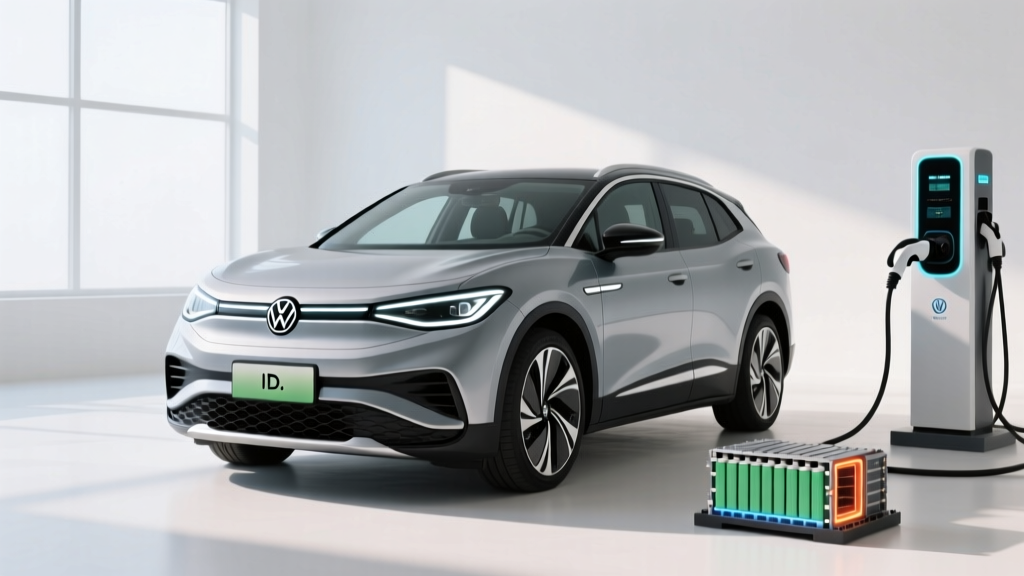
If you've been searching for ID.4 weight data before pulling the trigger on Volkswagen's compact electric SUV, you're asking the right question. Curb weight influences everything from real-world range and tire wear to braking distances and energy consumption on the highway. The 2026 VW ID.4 tips the scales at approximately 4,682 lbs (RWD Standard Range) and up to 4,927 lbs (AWD Pro S Plus) — competitive for the segment but heavy enough that it shapes the ownership experience in measurable ways.
This review covers every spec a data-driven buyer needs: EPA range versus what you'll actually see on a road trip, DC fast-charging curves, battery chemistry, cargo space, and whether the ID.4 still qualifies for the federal EV tax credit under current IRS §30D rules.
2026 VW ID.4 Core Specs at a Glance
| Specification | RWD Standard Range | RWD Pro / Pro S | AWD Pro S / Pro S Plus |
|---|---|---|---|
| Curb Weight | ~4,682 lbs | ~4,812 lbs | ~4,927 lbs |
| Battery (Usable) | 62 kWh (NMC) | 82 kWh (NMC) | 82 kWh (NMC) |
| EPA Range | 206 mi | 291 mi | 263 mi |
| Horsepower | 201 hp | 282 hp | 335 hp (dual-motor) |
| 0–60 mph | ~7.7 sec | ~7.0 sec | ~5.3 sec |
| Drivetrain | RWD | RWD | AWD (dual-motor) |
| Max DC Fast Charge | 140 kW | 175 kW | 175 kW |
| 10–80% DC Time | ~28 min | ~28 min | ~28 min |
| Level 2 Home Charge | 11 kW (~37 mi/hr) | 11 kW (~37 mi/hr) | 11 kW (~37 mi/hr) |
| EPA Efficiency (Combined) | 104 MPGe | 107 MPGe | 98 MPGe |
| Base MSRP | $39,735 | $44,735 | $51,235 |
Sources: EPA fueleconomy.gov, Volkswagen USA. Specs reflect 2026 model year. MSRP excludes destination.
Real-World Range: What the EPA Sticker Doesn't Tell You
Real-World Expectation: Plan for 250–270 miles on a mixed highway road trip at 70–75 mph. In freezing temperatures (below 32°F), expect a 20–30% reduction, bringing usable range down to roughly 200–230 miles on the 82 kWh pack. City driving with regenerative braking can match or slightly exceed the EPA number.
The 82 kWh NMC (nickel manganese cobalt) battery pack in the Pro and Pro S trims is the sweet spot for range-conscious buyers. The smaller 62 kWh pack in the Standard Range trim limits you to 206 EPA miles — adequate for commuting but tight for road trips without careful planning.
The ID.4's weight plays a direct role here. At nearly 4,900 lbs for the AWD variant, energy consumption climbs noticeably at sustained highway speeds compared to lighter competitors like the Hyundai Ioniq 5 (~4,400 lbs). VW's thermal management system and standard heat pump help mitigate cold-weather losses, but physics wins: heavier vehicles require more energy to accelerate and maintain speed.
Charging Speed: DC Fast Charging and Home Level 2
| Charging Level | Power / Rate | Miles Added per Hour | Notes |
|---|---|---|---|
| Level 1 (120V household) | ~1.4 kW | ~4 mi/hr | Emergency/trickle only |
| Level 2 (240V home) | 11 kW | ~37 mi/hr | Full charge in ~8 hrs (82 kWh) |
| DC Fast Charge (peak) | 175 kW (82 kWh) / 140 kW (62 kWh) | ~200+ mi in 30 min | 10–80% in ~28 min; tapers above 80% |
The 2026 ID.4 with the 82 kWh pack peaks at 175 kW on a DC fast charger — an improvement over early 2021–2023 models limited to 125 kW. In practice, the ID.4 sustains roughly 150–170 kW between 10% and 40% state of charge, then gradually tapers. You'll hit 80% in approximately 28 minutes under ideal conditions (preconditioned battery, warm ambient temps, a 350 kW-capable station).
Above 80% SoC, the charge rate drops sharply — typical for NMC chemistry. Charging from 80% to 100% can take an additional 25–30 minutes. For road trips, the practical strategy is to charge to 80% and go, unless you need the full pack for the next leg.
At home on a Level 2 charger (48-amp circuit recommended), the onboard 11 kW charger replenishes roughly 37 miles of range per hour. A full overnight charge is easily achievable. Installation note: Most homes need a 50-amp or 60-amp dedicated circuit for optimal Level 2 charging. Budget $800–$2,500 for professional installation depending on panel proximity and whether your electrical panel needs an upgrade to 200 amps.
Performance, Weight, and Driving Dynamics
The ID.4's weight distribution is a bright spot. With the battery pack mounted low in the skateboard chassis, the center of gravity is well below that of a comparable gas SUV, and the near 50/50 front-rear weight balance gives it composed handling for a vehicle pushing 4,900 lbs. The AWD dual-motor variant delivers 335 hp and a 5.3-second 0–60 mph time — genuinely quick for a family crossover.
The RWD models are more sedate at 7.0–7.7 seconds to 60, but the instant torque from the rear-mounted permanent-magnet synchronous motor makes city driving feel punchy. The turning circle of 31.5 feet is remarkably tight for the segment, aided by the rear-wheel-drive architecture — a genuine advantage in urban parking.
Regenerative braking offers multiple levels adjustable via steering-wheel paddles, but VW still doesn't offer true one-pedal driving in the US market (the car creeps at low speeds rather than coming to a full stop). This frustrates some EV veterans but is a non-issue for buyers transitioning from gas vehicles.
Pricing, Trims, and Federal Tax Credit Eligibility
| Trim | Drivetrain | Base MSRP | Est. After §30D Credit* |
|---|---|---|---|
| Standard Range | RWD | $39,735 | ~$32,235 |
| Pro | RWD | $44,735 | ~$37,235 |
| Pro S | RWD | $47,735 | ~$40,235 |
| AWD Pro S | AWD | $51,235 | ~$43,735 |
| AWD Pro S Plus | AWD | $54,735 | ~$47,235 |
*Assumes full $7,500 federal tax credit under IRS §30D. Eligibility depends on buyer income, battery sourcing, and MSRP caps. See checklist below. Point-of-sale transfer is available at participating dealers.
- MSRP cap: SUVs/vans/pickups must be ≤$80,000 (ID.4 qualifies on all trims)
- Buyer income cap: AGI ≤$150,000 (single) / ≤$300,000 (joint) / ≤$225,000 (head of household)
- Battery sourcing: Critical minerals and battery components must meet phased-in domestic/free-trade-area sourcing thresholds — verify current-year compliance on IRS.gov
- Point-of-sale transfer: Eligible buyers can apply the credit as a down-payment reduction at participating dealerships
- VIN verification: Confirm your specific vehicle's eligibility via the IRS VIN lookup tool before purchase
Tax rules change. Consult a tax professional and verify on irs.gov before relying on credit eligibility.
Cargo Space, Interior, and Daily Practicality
The ID.4 offers 30.3 cubic feet of cargo space behind the rear seats and 64.2 cubic feet with the rear seats folded — competitive with the Toyota RAV4 Hybrid and slightly behind the Hyundai Ioniq 5 (which offers a front trunk/frunk that the ID.4 lacks). Rear legroom is a generous 37.6 inches, and the flat floor (no transmission tunnel) makes the middle seat usable for adults on short trips.
The interior materials are a mixed bag. VW uses some hard, scratchy plastics on the lower door panels and center console that feel out of step with the price point. The 12.9-inch infotainment screen (standard on Pro and above) is responsive, but the capacitive-touch steering wheel controls and lack of physical climate knobs remain a common complaint among owners. Wireless Apple CarPlay and Android Auto are standard.
Notably, there is no frunk (front trunk). The space under the hood houses electronics and the HVAC system. For buyers who prioritize organized cargo storage, this is a missed opportunity versus the Ioniq 5, Ford Mustang Mach-E, and Rivian R2.
Driver Assistance and Technology
The ID.4's IQ.DRIVE suite (Travel Assist, Lane Assist, Adaptive Cruise Control) is a Level 2 driver-assistance system. You must keep your hands on the wheel and remain fully engaged at all times. This is not autonomous or self-driving.
VW's IQ.DRIVE includes adaptive cruise control with stop-and-go, lane-keeping assist, automatic emergency braking with pedestrian detection, and blind-spot monitoring. Travel Assist combines adaptive cruise and lane centering for hands-on highway driving. It works well on well-marked interstates but can be hesitant in construction zones and on faded lane markings.
Parking Assist Plus with memory parking is available on higher trims — it can learn and repeat a specific parking maneuver (e.g., pulling into a tight garage). It's a genuinely useful feature for daily use, not a gimmick.
Battery Warranty and Long-Term Ownership
Volkswagen covers the ID.4's high-voltage battery with an 8-year / 100,000-mile warranty (whichever comes first), guaranteeing a minimum of 70% capacity retention. The general vehicle warranty is 4 years / 50,000 miles, and roadside assistance is included for 3 years / 36,000 miles.
The NMC chemistry in the ID.4 is well-proven but does degrade slightly faster than LFP (lithium iron phosphate) packs found in some competitors' base trims. Real-world data from European ID.4 fleets suggests approximately 5–8% degradation over the first 60,000 miles, with the curve flattening thereafter. VW's 70% threshold at 100,000 miles is conservative — most packs will retain well above that.
Replacement cost for the 82 kWh pack, should it be needed out of warranty, is estimated at $15,000–$20,000 (parts and labor) based on current VW parts pricing — in line with industry averages for packs of this capacity.
Pros and Cons
- Spacious rear seat and flat floor
- Competitive 291-mile EPA range (Pro S RWD)
- Tight 31.5-ft turning circle — great for cities
- Composed ride quality despite 4,900-lb weight
- Heat pump standard (cold-weather efficiency)
- All trims under $80K MSRP cap for tax credit
- No frunk — lost cargo opportunity
- Capacitive-touch steering controls are frustrating
- Hard interior plastics at this price point
- No true one-pedal driving (US market)
- 175 kW peak charge rate trails Ioniq 5 (350 kW)
- AWD trims are heavy — efficiency drops to 98 MPGe
Who Should Buy the 2026 VW ID.4?
- You want a mainstream compact EV SUV with a comfortable ride and strong rear-seat space
- You primarily charge at home and need 250+ real-world highway miles for occasional road trips
- You value a tight turning radius for urban driving and parking
- You want a European-brand EV with competitive pricing and federal tax credit eligibility
- Fastest possible DC charging is your top priority (Hyundai Ioniq 5 charges at 350 kW / 10–80% in ~18 min)
- You need a frunk for organized cargo storage
- You prefer one-pedal driving as a default behavior
- You frequently tow — the ID.4 is rated for only 2,700 lbs (AWD), less than many competitors
Frequently Asked Questions
What is the curb weight of the 2026 VW ID.4?
The 2026 ID.4 ranges from approximately 4,682 lbs (RWD Standard Range) to 4,927 lbs (AWD Pro S Plus). The weight difference is driven primarily by the larger 82 kWh battery pack (~285 lbs heavier than the 62 kWh pack) and the front motor assembly on AWD models.
What is the real-world range of the VW ID.4?
The EPA rates the RWD Pro S at 291 miles. In real-world highway driving at 70–75 mph, expect 250–270 miles. In freezing weather, range drops to roughly 200–230 miles. The Standard Range model (206 EPA) realistically delivers 170–185 highway miles.
How fast does the ID.4 charge at home and on DC fast chargers?
On DC fast charging, the 82 kWh models peak at 175 kW, reaching 10–80% in about 28 minutes under ideal conditions. At home on Level 2 (240V, 48A), the 11 kW onboard charger adds roughly 37 miles per hour, fully replenishing the 82 kWh pack in about 8 hours.
Does the 2026 VW ID.4 qualify for the $7,500 federal EV tax credit?
The ID.4 qualifies on MSRP (all trims are under the $80,000 SUV cap). Buyer eligibility depends on income limits (≤$150K single / ≤$300K joint) and current-year battery sourcing requirements under IRS §30D. Verify your specific vehicle's VIN on irs.gov before purchase. Point-of-sale transfer is available at participating dealers.
Is the VW ID.4 worth buying versus the Hyundai Ioniq 5 or Tesla Model Y?
The ID.4 wins on ride comfort, rear-seat space, and turning radius. The Ioniq 5 charges significantly faster (350 kW peak, 10–80% in ~18 min) and has a frunk. The Model Y offers more range (up to 320 mi EPA), Supercharger access, and a more advanced (though subscription-based) driver-assist system. If comfort and value matter more than peak charging speed, the ID.4 is a strong pick.
What battery chemistry does the ID.4 use?
The ID.4 uses NMC (nickel manganese cobalt) lithium-ion cells across all trims. NMC offers higher energy density than LFP, which is why the ID.4 achieves 291 EPA miles in an 82 kWh pack. The trade-off is slightly faster long-term degradation compared to LFP, though VW's 8-year/100,000-mile warranty with a 70% retention guarantee provides protection.
How does the ID.4's weight affect tire wear and maintenance?
At nearly 4,900 lbs (AWD), the ID.4 puts more stress on tires than a comparable gas SUV. Expect tire replacement every 25,000–35,000 miles depending on driving style and regen settings. VW specifies EV-rated tires with higher load ratings — don't substitute standard SUV tires, as they'll wear prematurely and may not handle the instant torque.