The Production Pivot: Why Volkswagen Paused US ID.4 Assembly
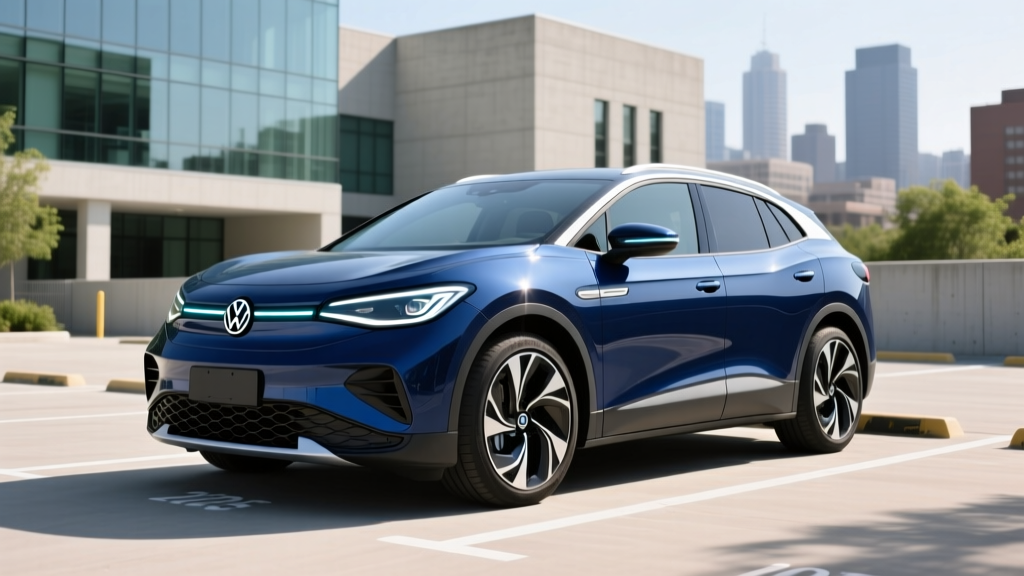
In a move that caught many EV shoppers off guard, Volkswagen halted US ID.4 production at its Chattanooga, Tennessee plant to prioritize gas-powered Atlas SUVs. The decision reflects a broader recalibration of VW's North American strategy as the company navigates softer-than-expected EV demand alongside strong profitability from its internal-combustion three-row crossover. For buyers, this doesn't mean the ID.4 is discontinued — imported units from VW's Emden, Germany factory continue to flow to US dealers — but it does tighten supply, limit trim availability, and raise questions about the model's long-term future in the American market.
Despite the production shift, the 2026 Volkswagen ID.4 remains on sale and continues to be one of the more practical, affordable compact electric SUVs available. Below, we break down exactly what you're getting — and what you're giving up — if you're considering one.
Range, Efficiency, and the Real-World Reality Check
Real-World Expectation: Expect 235–250 miles on mixed highway driving in moderate temperatures for the Pro S RWD. In sub-freezing winter conditions, plan for 185–210 miles — a 20–30% reduction typical of NMC chemistry without a dedicated heat pump on lower trims.
The 2026 ID.4 is offered with two battery sizes. The Standard Range model uses a 62 kWh usable battery pack, while the Pro and Pro S trims step up to an 82 kWh usable pack. Both use nickel-manganese-cobalt (NMC) lithium-ion chemistry, which offers strong energy density but is more sensitive to extreme temperatures than the LFP packs found in some competitors like the base Tesla Model Y.
Efficiency lands at approximately 104 MPGe combined (roughly 32 kWh/100 miles) for the Pro S RWD according to fueleconomy.gov. That's competitive within the compact EV SUV segment, though it trails the Hyundai Ioniq 5's 114 MPGe and the Tesla Model Y's 122 MPGe. If you're a lead-foot highway driver, expect efficiency to drop to around 35–37 kWh/100 miles, which compresses range accordingly.
Charging Speed: DC Fast, Level 2, and the Curve
| Charging Level | Power / Rate | Speed / Notes |
|---|---|---|
| Level 1 (120V household) | ~1.4 kW | ~4 miles per hour — emergency/trickle only |
| Level 2 (240V home/public) | 11 kW (onboard charger) | ~33 miles per hour; full charge in ~8.5 hours (82 kWh pack) |
| DC Fast Charging (Standard Range) | Peak 140 kW | 10–80% in ~30 minutes |
| DC Fast Charging (Pro / Pro S) | Peak 175 kW | 10–80% in ~28 minutes; tapers significantly above 80% |
The ID.4's DC fast-charging performance is adequate but not class-leading. The 175 kW peak on Pro trims is respectable, but the charging curve is relatively flat — meaning you won't see the dramatic 250+ kW peaks of an Ioniq 5 or Model Y. In real-world testing at Electrify America and CCS-compatible stations, sustained rates hover around 120–140 kW through the 20–60% window before tapering to 50–60 kW as you approach 80%.
One practical note: preconditioning the battery (via the vehicle's navigation-routed charging prep) is essential for hitting peak charge rates. Without it, especially in cold weather, your first 10–15 minutes at a DC fast charger may be limited to under 80 kW.
For home charging, the 11 kW onboard AC charger is a strong point — it's faster than the 7.7 kW chargers on some rivals, meaning you'll replenish roughly 33 miles of range per hour on a 48-amp Level 2 home station. Most owners will wake up to a full battery every morning.
Performance and Drivetrain
| Specification | Standard Range RWD | Pro S RWD | AWD Pro S |
|---|---|---|---|
| Horsepower | 201 hp | 282 hp | 335 hp |
| 0–60 mph | ~7.7 sec | ~6.7 sec | ~5.4 sec |
| Drivetrain | Rear-wheel drive | Rear-wheel drive | Dual-motor AWD |
| Battery (usable) | 62 kWh (NMC) | 82 kWh (NMC) | 82 kWh (NMC) |
| Towing Capacity | 2,200 lbs | 2,700 lbs | 2,700 lbs |
The ID.4 is not a performance EV, and that's fine — it's tuned for comfort and daily drivability. The rear-wheel-drive layout gives it a surprisingly tight turning radius and composed handling for a compact SUV. The AWD Pro S with its dual-motor setup adds genuine all-weather confidence and a 5.4-second 0–60 time that makes highway merging effortless, though it costs you roughly 12 miles of EPA range compared to the RWD Pro S.
Regenerative braking is adjustable via steering-wheel paddles, offering everything from coasting to near one-pedal driving. It's not as aggressive as Nissan's e-Pedal or Tesla's hold mode, but most owners adapt quickly.
Interior, Cargo, and Technology
Inside, the ID.4 leans minimalist. The 12-inch infotainment touchscreen (12.9-inch on Pro S Plus) runs VW's ID. Software 4.0, which has improved markedly over the buggy early-2021 launch version. Wireless Apple CarPlay and Android Auto are standard. However, the touch-capacitive steering wheel controls and lack of physical HVAC buttons remain a common complaint — you'll find yourself looking down to adjust cabin temperature more than you'd like.
Passenger and cargo dimensions:
- Front legroom: 41.1 inches
- Rear legroom: 37.6 inches
- Cargo behind rear seats: 30.3 cubic feet
- Cargo with rear seats folded: 64.2 cubic feet
- No front trunk (frunk) — the space houses HVAC and electronics components
The rear seat is genuinely comfortable for adults on longer trips, a notable advantage over the tighter rear quarters of the Hyundai Kona Electric. However, the Ford Mustang Mach-E offers more cargo volume (29.7 cu ft behind rear seats but a broader floor), and the Tesla Model Y provides both a frunk and a more usable cargo area.
Driver-assistance tech includes VW's IQ.Drive suite: adaptive cruise control with stop-and-go, lane-centering assist, automatic emergency braking, and blind-spot monitoring. This is an SAE Level 2 system — it requires continuous driver attention and hands-on-wheel supervision. It does not offer hands-free driving like GM's Super Cruise or Ford's BlueCruise on mapped highways.
Pricing, Tax Credits, and Ownership Cost
| Trim | MSRP | Est. After §30D Credit* |
|---|---|---|
| Standard Range | $39,735 | ~$32,235 |
| Pro | $43,735 | ~$36,235 |
| Pro S | $47,735 | ~$40,235 |
| AWD Pro S | $51,335 | ~$43,835 |
| AWD Pro S Plus | $55,235 | ~$47,735 |
*Federal §30D credit eligibility requires meeting all IRS criteria. See checklist below.
- Vehicle MSRP must not exceed $80,000 for SUVs — all ID.4 trims qualify ✓
- Buyer AGI must not exceed $150,000 (single) / $300,000 (joint) — verify with your tax professional
- Battery must meet critical-mineral and component-sourcing thresholds — VW's German-built ID.4 battery sourcing has been in flux; confirm current-year eligibility at IRS.gov qualified vehicles list
- Credit can be transferred to the dealer at point of sale as an upfront price reduction
Warranty coverage: The ID.4 includes a 4-year/50,000-mile bumper-to-bumper warranty and an 8-year/100,000-mile battery warranty that guarantees at least 70% capacity retention. This is industry-standard, matching Hyundai, Kia, and Ford, though it falls short of Tesla's 8-year/120,000-mile battery coverage.
What the Production Halt Means for You
Volkswagen's decision to halt US ID.4 production to prioritize gas-powered Atlas SUVs signals where VW sees near-term profit. The Atlas, with its higher margins and strong demand from families not yet ready to electrify, simply makes more financial sense for the Chattanooga plant in the current market.
For ID.4 buyers, this creates a few practical realities:
- Supply may be tighter: German-imported units mean longer wait times and fewer dealer-lot options. You may need to order rather than browse.
- Dealer incentives could be stronger: VW may offer attractive lease deals or cash-back to move imported inventory — worth negotiating.
- Resale value uncertainty: A model with uncertain domestic production may depreciate faster than a segment leader like the Model Y. Factor this into total cost of ownership.
- Service and parts: VW's US dealer network is robust, but EV-specific service capacity varies by location. Confirm your local dealer has certified EV technicians before committing.
How It Stacks Up Against Key Competitors
| Spec | 2026 VW ID.4 Pro S RWD | 2026 Tesla Model Y Long Range | 2026 Hyundai Ioniq 5 SEL AWD |
|---|---|---|---|
| EPA Range | 275 mi | 320 mi | 290 mi |
| Battery | 82 kWh (NMC) | ~78 kWh (NMC) | 77.4 kWh (NMC) |
| Peak DC Charge | 175 kW | 250 kW | 233 kW |
| 10–80% Time | ~28 min | ~20 min | ~18 min |
| 0–60 mph | 6.7 sec | 5.0 sec | 5.1 sec |
| Base MSRP (comparable trim) | $47,735 | $47,990 | $49,500 |
| Cargo (rear seats up) | 30.3 cu ft | 30.2 cu ft (+ frunk) | 27.2 cu ft (+ frunk) |
- Comfortable ride quality and quiet cabin at highway speeds
- Competitive pricing, especially after potential §30D credit
- Strong 11 kW Level 2 onboard charging for home use
- Spacious rear seat with genuine adult comfort
- Intuitive IQ.Drive Level 2 ADAS suite
- DC fast charging is slower than key rivals (175 kW vs 233–250 kW)
- Touch-capacitive controls frustrate many owners
- No front trunk (frunk)
- German-built supply may be limited after US production halt
- Infotainment still lags Tesla and Hyundai in responsiveness
Who Should Buy the ID.4 — and Who Should Look Elsewhere
- You prioritize ride comfort and cabin quietness over sporty performance
- You can charge at home and rarely need DC fast charging on road trips
- You want a mainstream-brand EV with a traditional dealer service network
- You find a strong lease deal or negotiate below MSRP due to import inventory
- You take frequent road trips and need the fastest possible DC charging (Ioniq 5, Model Y)
- You want maximum range per charge (Model Y Long Range at 320+ miles)
- You need hands-free highway driving (Ford Mustang Mach-E with BlueCruise, Chevy Equinox EV with Super Cruise)
- Resale value certainty matters to you (Tesla's track record is stronger)
Frequently Asked Questions
What is the real-world range of the 2026 Volkswagen ID.4?
The Pro S RWD carries a 275-mile EPA estimate. In real-world mixed driving at 70°F, expect 240–255 miles. In winter highway driving below 30°F, plan for 185–210 miles. The AWD version drops to a 263-mile EPA estimate with similar proportional real-world reductions.
How fast does the ID.4 charge at home and on the road?
At home on a 240V Level 2 station, the ID.4 charges at up to 11 kW, adding roughly 33 miles of range per hour — a full charge overnight. On DC fast chargers, the Pro S peaks at 175 kW and reaches 10–80% in about 28 minutes. This is slower than the Hyundai Ioniq 5 (~18 minutes) and Tesla Model Y (~20 minutes).
Does the 2026 ID.4 qualify for the federal EV tax credit?
It may, but eligibility depends on current-year battery sourcing rules under IRS §30D. The ID.4's MSRP falls well under the $80,000 SUV cap, and most buyers fall within income limits. However, because production shifted to Germany, battery component and critical-mineral sourcing may affect credit eligibility. Always verify on the IRS qualified clean vehicles list before purchasing.
Is the ID.4 worth buying now that VW halted US production?
The ID.4 remains a solid, comfortable compact EV SUV — especially if you find competitive pricing or lease incentives. However, the production halt introduces supply uncertainty and potential resale-value risk. If you can secure one at a good price and your driving needs align with its 275-mile range and moderate fast-charging speed, it's a rational choice. If you need maximum range, fastest charging, or stronger long-term value retention, the Tesla Model Y or Hyundai Ioniq 5 may serve you better.
What are the biggest drawbacks of the ID.4?
The primary complaints are the touch-capacitive steering wheel and climate controls (no physical buttons), slower DC fast-charging compared to rivals, lack of a frunk, and infotainment that, while improved, still isn't as responsive as Tesla's or Hyundai's systems. Additionally, the US production halt may limit trim availability and affect long-term parts support.