Quick Verdict: A Practical Electric SUV That Actually Tow
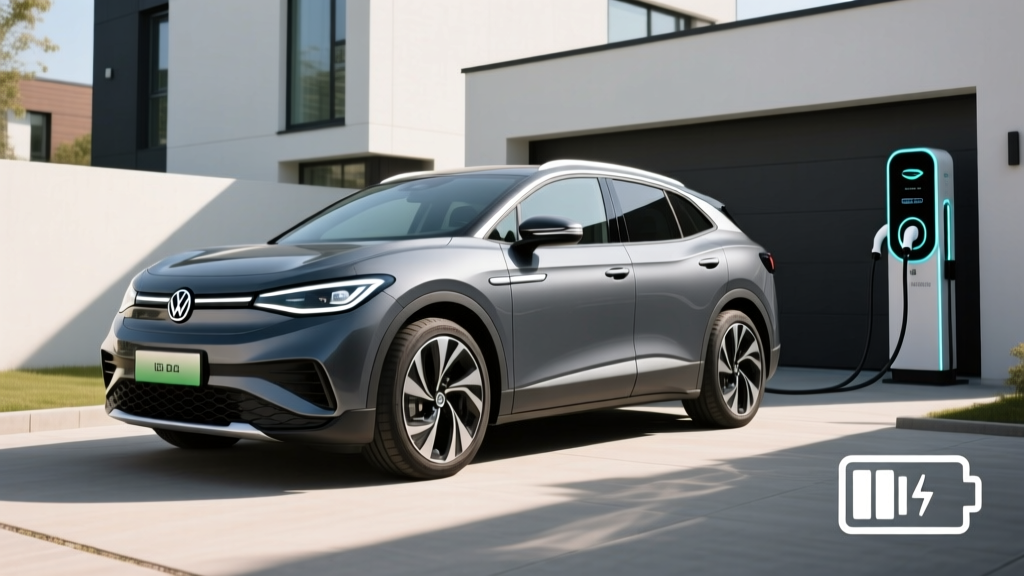
The Volkswagen ID.4 occupies a specific niche in the EV market: a mainstream compact electric crossover that doesn't ask you to sacrifice utility for electrification. For buyers researching VW ID.4 tow capacity, the answer is straightforward — the AWD Pro S variants are rated for 2,700 pounds when properly equipped with the factory tow hitch, enough for a light teardrop trailer, a pair of dirt bikes on a flatbed, or a small aluminum boat. Rear-wheel-drive trims, however, carry a much lower 1,500-pound limit.
Beyond towing, the 2026 ID.4 continues to offer a comfortable ride, competitive range up to 291 miles EPA, and one of the longest battery warranties in the segment. It isn't the quickest-charging or most tech-forward EV in its class, but its blend of cargo space, pricing, and dealer accessibility make it a pragmatic choice for families eyeing their first EV.
| Spec | RWD Pro | AWD Pro S |
|---|---|---|
| EPA Range | 291 mi | 263 mi |
| Battery (usable) | 86 kWh (NMC) | 86 kWh (NMC) |
| Horsepower | 282 hp | 335 hp |
| 0-60 mph | 7.7 sec | 5.4 sec |
| Max DC Fast Charge | 170 kW | 170 kW |
| 10-80% DC Time | ~30 min | ~30 min |
| Level 2 Home Charge | 11 kW (~37 mi/hr) | 11 kW (~37 mi/hr) |
| Tow Capacity | 1,500 lbs | 2,700 lbs |
| Base MSRP | $40,790 | $48,790 |
| MPGe (combined) | 107 MPGe | 98 MPGe |
Range, Efficiency, and Real-World Expectations
The 2026 VW ID.4 uses an 86 kWh usable (91 kWh gross) nickel-manganese-cobalt (NMC) lithium-ion battery pack. NMC chemistry prioritizes energy density, giving the ID.4 competitive range in a compact SUV footprint, though it doesn't offer the extreme cycle-life longevity of LFP packs found in some competitors.
RWD Pro: EPA-estimated 291 miles. In mixed highway driving at 70-75 mph, expect approximately 250-265 miles. In freezing temperatures (below 30°F), range can drop to 200-220 miles due to cabin heating demands and reduced battery efficiency.
AWD Pro S: EPA-estimated 263 miles. Highway real-world drops to roughly 225-240 miles, and cold weather can pull this down to 185-200 miles.
The ID.4 includes a heat pump on AWD trims (standard on Pro S and above), which recovers waste heat from the drivetrain to warm the cabin — reducing cold-weather range loss by roughly 10-15% compared to resistive heating.
Efficiency lands at 107 MPGe combined (RWD) and 98 MPGe combined (AWD), translating to roughly 31-34 kWh per 100 miles depending on trim. That's mid-pack for the compact EV SUV segment — the Hyundai Ioniq 5 and Tesla Model Y edge ahead on efficiency, while the Subaru Solterra trails behind. Source: fueleconomy.gov.
Charging Speed: DC Fast Charging and Home Level 2
VW upgraded the ID.4's DC fast-charging capability to a peak of 175 kW for 2025, a figure that carries into the 2026 model year. That's a meaningful improvement over the original 125 kW cap on 2021-2023 models, though it still falls short of the 250 kW+ peaks offered by the Hyundai Ioniq 5 and Kia EV6 on their 800-volt architectures.
| Charging Level | Power | Speed | Notes |
|---|---|---|---|
| Level 1 (120V) | ~1.4 kW | ~4-5 mi/hr | Emergency/top-up only |
| Level 2 (240V, 48A) | 11 kW | ~37 mi/hr | Full charge in ~9 hours |
| DC Fast Charge | Peak 175 kW | 10-80% in ~30 min | Tapers above 80%; sustained avg ~110 kW |
Charge curve reality check: The 175 kW peak is available only between roughly 10-30% state of charge. Above 50%, the curve tapers progressively, and above 80% it drops sharply to protect the NMC cells. A 10-80% session takes approximately 30 minutes at a capable 180+ kW charger (such as Electrify America's 350 kW stalls), but a full 10-100% session can stretch to 55-60 minutes. Plan your road-trip stops accordingly — charging to 80% and moving on is almost always faster than waiting for the last 20%.
At home, the 11 kW onboard charger means a full 0-100% charge takes about 9 hours on a 48-amp Level 2 circuit (hardwired, 60-amp breaker). This is adequate for overnight replenishment but slightly slower than the 11.5 kW chargers on some rivals. A licensed electrician will typically need to install a NEMA 14-50 outlet or hardwire a wall connector on a dedicated 60A circuit — budget $800-$2,000 for installation depending on your panel's proximity to the garage.
Performance and Towing: What 2,700 Pounds Looks Like
The rear-wheel-drive ID.4 Pro sends 282 horsepower to the rear axle via a single permanent-magnet motor, delivering a 0-60 mph time of 7.7 seconds. It's adequate for merging and passing but never feels urgent.
Step up to the dual-motor AWD configuration (available on Pro S and Pro S Plus trims) and output rises to 335 hp with a 0-60 time of 5.4 seconds. The additional front motor provides confident all-weather traction and the extra thrust makes highway overtaking effortless.
Towing specifics:
- RWD trims: 1,500 lbs max — suitable for a small cargo trailer or bike rack
- AWD trims (properly equipped): 2,700 lbs max — handles teardrop campers (~1,500-2,000 lbs), jet skis on a dual trailer, or a 16-foot aluminum boat
- Factory-installed tow hitch with 7-pin connector is available as a dealer accessory (~$500-$700 installed)
- Trailer sway control is integrated into the stability management system
Keep in mind that towing significantly impacts range. Based on owner reports and testing with light trailers (1,500-2,000 lbs), expect range to decrease by 30-45% depending on trailer aerodynamics and terrain. A 263-mile AWD ID.4 towing a teardrop camper may realistically deliver 150-180 miles between charges. Route planning around DC fast chargers becomes essential on longer towing trips.
Pricing, Trims, and Federal Tax Credit Eligibility
The 2026 VW ID.4 lineup starts at $40,790 (including destination) for the RWD Pro trim and climbs to approximately $53,290 for the fully loaded AWD Pro S Plus with gradient package. VW has kept pricing relatively stable, making the ID.4 one of the more accessible electric SUVs with competitive range.
| Trim | Drivetrain | MSRP | Est. After §30D Credit |
|---|---|---|---|
| Pro | RWD | $40,790 | $33,290* |
| Pro S | RWD | $45,290 | $37,790* |
| Pro S | AWD | $48,790 | $41,290* |
| Pro S Plus | AWD | $53,290 | $45,790* |
*Estimated price assumes full $7,500 federal tax credit under IRS §30D. Eligibility is NOT universal.
- MSRP cap: SUVs must have a manufacturer's suggested retail price at or below $80,000 (all ID.4 trims qualify)
- Buyer income cap: Modified adjusted gross income must not exceed $150,000 (single), $225,000 (head of household), or $300,000 (joint filers)
- Battery sourcing: A percentage of critical minerals and battery components must be sourced from the U.S. or free-trade-agreement countries — this requirement tightens annually; verify current-year compliance on the IRS qualified vehicles list
- Point-of-sale transfer: Buyers can transfer the credit to the dealer for an upfront price reduction at purchase, rather than waiting to claim it on their tax return
- Assembly: Vehicle must undergo final assembly in North America (the ID.4 for the U.S. market is built in Chattanooga, Tennessee)
The Chattanooga-built ID.4 has historically qualified for the full $7,500 credit, but battery-sourcing requirements tighten each year under the Inflation Reduction Act. Always verify the specific trim on the IRS qualified plug-in electric vehicles list before purchasing. Consult a tax professional for your personal eligibility.
Interior, Cargo, and Technology
The ID.4's cabin prioritizes function over flash. Passenger space is generous for the compact SUV class: 41.1 inches of front legroom and 37.6 inches of rear legroom, with a flat floor that makes the middle rear seat genuinely usable. Headroom is excellent front and rear thanks to the EV skateboard platform.
Cargo volume measures 30.3 cubic feet behind the rear seats and 64.2 cubic feet with the rear seats folded — competitive with the Toyota RAV4 Hybrid and slightly less than the Hyundai Ioniq 5 (with its rear seats slid forward). There is no front trunk (frunk) on the ID.4; VW uses that space for power electronics, which is a missed opportunity for additional enclosed storage.
Technology highlights:
- 12.9-inch center touchscreen (upgraded from the original 10-inch) running VW's latest ID. Software 4.0
- Wireless Apple CarPlay and Android Auto
- Wireless phone charging pad (Pro S and above)
- IQ.DRIVE suite: Travel Assist (adaptive cruise + lane centering), Front Assist with automatic emergency braking, Side Assist blind-spot monitoring
- Augmented-reality head-up display (Pro S Plus) projecting navigation arrows onto the windshield
- Park Assist Plus with memory parking — the car learns and replays your parking maneuvers
Notable drawbacks: The ID.4's infotainment system, while improved with Software 4.0, still draws criticism for capacitive touch sliders (volume and climate) that lack backlighting and are fiddly to use while driving. The absence of physical buttons for core functions remains a pain point compared to Hyundai/Kia's more intuitive layouts. Rear drum brakes (used for efficiency via reduced drag) may concern some buyers, though they're common on EVs and typically last well beyond 100,000 miles due to regenerative braking handling most deceleration.
Warranty and Long-Term Ownership
Volkswagen backs the ID.4 with one of the strongest warranty packages in the mainstream EV segment:
- High-voltage battery: 8 years / 100,000 miles (whichever comes first), with a capacity retention threshold of 70% — if the battery degrades below 70% of original capacity within this period, VW will repair or replace it
- Electric drive components: 8 years / 100,000 miles
- New vehicle limited warranty: 4 years / 50,000 miles
- Roadside assistance: 4 years / 50,000 miles
- Complimentary maintenance: 2 years / 20,000 miles (covers cabin air filter, tire rotation, multi-point inspection)
The 8-year/100,000-mile battery warranty with a 70% threshold aligns with the industry standard set by federal emissions warranty requirements. In practice, NMC battery packs in liquid-cooled systems like the ID.4's have shown degradation of roughly 8-12% over the first 100,000 miles based on fleet data from similar VW MEB-platform vehicles, well within the warranty buffer. Full battery replacement out of warranty is estimated at $12,000-$16,000 based on current parts pricing, though this figure is expected to decrease as battery costs continue their long-term decline.
How the ID.4 Compares to Key Competitors
The compact electric SUV segment is crowded. Here's how the ID.4 stacks up against its most common cross-shops:
- vs. Tesla Model Y: The Model Y offers more range (up to 320 mi), faster Supercharger access, and a more extensive charging network, but starts higher in price and lacks the ID.4's traditional dealership service experience. The Model Y's tow rating is 3,500 lbs — 800 lbs more than the ID.4 AWD.
- vs. Hyundai Ioniq 5: The Ioniq 5 charges dramatically faster (10-80% in ~18 minutes on 800V architecture vs. the ID.4's ~30 minutes) and offers a frunk, but provides less cargo volume and a slightly firmer ride. Tow capacity is similar at 2,300 lbs (AWD).
- vs. Ford Mustang Mach-E: The Mach-E is sportier to drive and offers a hands-free BlueCruise highway system, but its rear seat is tighter and its base price runs higher for equivalent range. Tow capacity is comparable at 2,300-3,000 lbs depending on configuration.
- vs. Subaru Solterra / Toyota bZ4X: Both share a platform and offer standard AWD, but their EPA range (222-228 mi) falls well short of the ID.4, and DC charging is slower.
Choose the ID.4 if: You want a comfortable, dealer-supported electric SUV with competitive range, need 2,700-lb towing for light trailers (AWD), value the long battery warranty, and prefer a traditional dealership purchase and service experience.
Look elsewhere if: You need maximum DC charging speed for frequent road trips (Ioniq 5/EV6), require over 3,500-lb towing (Model Y), want hands-free highway driving (Mach-E with BlueCruise), or prioritize the lowest possible price (consider the Chevy Equinox EV).
Pros and Cons at a Glance
- Comfortable ride quality and quiet cabin
- 2,700-lb tow rating on AWD trims
- Competitive EPA range up to 291 miles (RWD)
- Strong 8-yr/100,000-mi battery warranty
- Built in Tennessee — strong §30D credit eligibility
- Spacious rear seat and flat floor
- DC charging slower than 800V competitors
- Capacitive touch controls frustrate some drivers
- No front trunk (frunk)
- Towing significantly reduces range (30-45% loss)
- Infotainment learning curve despite improvements
- Rear drum brakes may concern traditionalists
Frequently Asked Questions
What is the VW ID.4 tow capacity?
The 2026 VW ID.4 can tow up to 2,700 pounds on AWD trims when properly equipped with the factory tow hitch. Rear-wheel-drive trims are limited to 1,500 pounds. This covers light utility trailers, teardrop campers, small boats, and motorcycle flatbeds.
What is the real-world range of the VW ID.4?
The RWD ID.4 Pro achieves an EPA-estimated 291 miles, but real-world highway driving at 70+ mph typically yields 250-265 miles. In cold weather (below 30°F), expect 200-220 miles. The AWD Pro S drops to 263 miles EPA, with real-world highway figures around 225-240 miles.
How fast does the ID.4 charge at home and on the road?
At home on a 48-amp Level 2 charger (240V), the ID.4 charges at 11 kW, adding roughly 37 miles of range per hour and reaching a full charge in about 9 hours. On DC fast chargers, it peaks at 175 kW and achieves a 10-80% charge in approximately 30 minutes, though the charge curve tapers significantly above 80%.
Does the VW ID.4 qualify for the $7,500 federal tax credit?
The ID.4 is built in Chattanooga, Tennessee, and has historically qualified for the full $7,500 federal tax credit under IRS §30D. However, eligibility depends on your income (caps of $150K/$225K/$300K by filing status), the vehicle's MSRP (must be under $80K for SUVs — all trims qualify), and current-year battery sourcing requirements. Verify on the IRS qualified vehicles list and consult a tax professional.
Is the VW ID.4 worth buying over the Tesla Model Y or Ioniq 5?
The ID.4 is worth considering if you prioritize ride comfort, dealer service accessibility, and strong warranty coverage. Choose the Model Y if you need maximum range and charging network access, or the Ioniq 5 if fast DC charging speed is your top priority for road trips. The ID.4 wins on comfort and warranty, but trails on charging speed and tech innovation.
How much does towing reduce the ID.4's range?
Towing a trailer typically reduces the ID.4's range by 30-45%, depending on trailer weight, aerodynamics, and terrain. An AWD Pro S rated at 263 miles EPA may deliver 150-180 miles when towing a 2,000-pound teardrop camper at highway speeds. Plan charging stops carefully on towing trips.