The ID.4 at a Crossroads: Production Shifts and What Buyers Need to Know
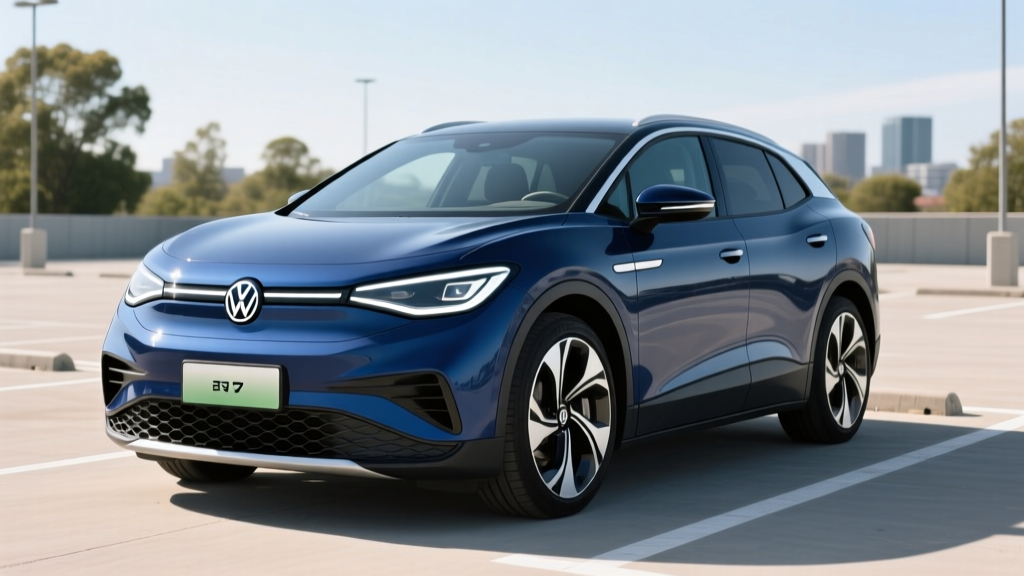
Reports that Volkswagen is ending ID.4 electric vehicle production in Tennessee have rattled prospective buyers and industry watchers alike. The Chattanooga assembly plant, which began building U.S.-spec ID.4 crossovers in 2022, has been central to VW's American electrification strategy — and to the SUV's eligibility for federal tax incentives tied to North American assembly. As Volkswagen restructures its EV operations heading into the 2026 model year, the question isn't just about manufacturing logistics; it's about whether the ID.4 remains a competitive, credit-eligible, and practical electric SUV for American families.
This review covers everything you need to know about the 2026 Volkswagen ID.4 — from its EPA-rated range and charging behavior to real-world ownership economics — so you can make an informed decision regardless of where the vehicle rolls off the line.
| Spec | RWD (Standard Range) | RWD (Pro) | AWD (Pro S) |
|---|---|---|---|
| EPA Range | 206 mi | 275 mi | 254 mi |
| Battery (Usable) | 62 kWh (NMC) | 82 kWh (NMC) | 82 kWh (NMC) |
| Horsepower | 201 hp | 282 hp | 335 hp |
| 0–60 mph | 7.7 sec | 6.7 sec | 5.4 sec |
| Peak DC Fast Charge | 135 kW | 170 kW | 170 kW |
| 10–80% DC Time | ~30 min | ~28 min | ~28 min |
| Level 2 Charge Rate | 11 kW (~37 mi/hr) | 11 kW (~37 mi/hr) | 11 kW (~37 mi/hr) |
| MPGe (Combined) | 104 MPGe | 107 MPGe | 98 MPGe |
| Base MSRP | $40,790 | $45,290 | $51,790 |
Range and Efficiency: EPA Numbers vs. Reality
The 2026 ID.4 Pro with the larger 82 kWh (usable) NMC lithium-ion battery carries an EPA-estimated range of 275 miles in rear-wheel-drive form. The dual-motor AWD Pro S drops to 254 miles, while the Standard Range RWD model sits at 206 miles on its smaller 62 kWh pack.
In mixed highway-and-city driving at 70–75 mph, expect the ID.4 Pro RWD to deliver approximately 235–250 miles before needing a charge. In cold weather (below 30°F), range can drop 20–30%, putting realistic winter highway range closer to 185–210 miles for the Pro. The AWD model loses efficiency to drivetrain drag and added weight, returning roughly 215–230 miles in fair conditions. The ID.4's standard heat pump helps mitigate cold-weather losses compared to EVs without one, but physics still wins in deep winter.
Efficiency for the Pro RWD clocks in at 107 MPGe combined, or about 31 kWh per 100 miles. That's mid-pack for the compact electric SUV segment — the Hyundai Ioniq 5 and Tesla Model Y both edge ahead on efficiency thanks to more aerodynamic profiles and, in Tesla's case, a lighter silicon-carbide inverter architecture. The ID.4's boxy crossover shape creates more drag at highway speeds, which is why real-world highway efficiency falls noticeably short of the combined EPA figure.
Charging Speed: DC Fast Charging and Home Level 2
Charging capability remains one of the ID.4's more debated attributes. The Pro and AWD models peak at 170 kW on DC fast chargers, while the Standard Range model tops out at 135 kW. On a 350 kW Electrify America or compatible station, the 82 kWh pack can charge from 10% to 80% in roughly 28 minutes under ideal thermal conditions.
| Charge Level | Power | Miles Added per Hour | Notes |
|---|---|---|---|
| Level 1 (120V) | ~1.4 kW | ~4–5 mi/hr | Emergency/top-up only |
| Level 2 (240V, 48A) | 11 kW | ~37 mi/hr | Full charge overnight (~9 hr for 82 kWh) |
| DC Fast (Peak) | 170 kW | ~210 mi in 30 min | Tapers significantly above 80% SoC |
Charging-curve reality: The 170 kW peak is not sustained. The ID.4 holds its highest charge rate between roughly 10–40% state of charge, then progressively tapers. From 80–100%, charging slows to under 40 kW — a session from 10–100% will take closer to 50 minutes. For road-trip planning, plan your stops around 10–80% sessions to avoid the painful upper-SoC taper.
The ID.4 uses the CCS1 connector standard. Volkswagen has confirmed that future models will adopt NACS (Tesla's connector), and adapters for Supercharger access are expected to broaden the ID.4's charging network options. At home, the 11 kW onboard charger means a full Level 2 session replenishes the 82 kWh pack in about 9 hours — adequate for overnight charging on a properly installed 240V/48A circuit.
Performance and Drivetrain
The ID.4 was never engineered to chase Tesla Model Y Performance lap times, and that's by design. The RWD Pro's 282 horsepower and 6.7-second 0–60 mph time deliver confident highway merging and adequate passing power. The AWD Pro S, with its dual-motor setup producing 335 hp, drops the sprint to 5.4 seconds — genuinely quick for a family crossover.
Ride quality is where the ID.4 earns its keep. The MEB platform provides a low center of gravity and fully independent suspension, resulting in composed handling and a ride that absorbs rough pavement better than most competitors in this price range. The steering is light and numb by enthusiast standards, but it's predictable and well-suited to daily commuting. Regenerative braking offers moderate one-pedal capability, though it doesn't quite bring the vehicle to a full stop like Nissan's e-Pedal or GM's one-pedal driving mode — you'll still use the brake pedal in stop-and-go traffic.
Interior, Cargo, and Technology
Inside, the ID.4 continues with VW's minimalist approach: a 12-inch infotainment touchscreen (on Pro and above), a compact digital instrument cluster, and capacitive touch controls on the steering wheel. The cabin materials are acceptable for the price point but don't match the premium feel of a Hyundai Ioniq 5 or the minimalist appeal of the Tesla Model Y.
Cargo and passenger space:
- Cargo volume behind rear seats: 30.3 cu ft
- Cargo volume with rear seats folded: 64.2 cu ft
- Rear legroom: 37.6 inches
- Front headroom: 41.1 inches
These figures put the ID.4 in the middle of the compact EV SUV class. It comfortably seats four adults, with the rear bench better suited to two passengers than three on long trips. There is no front trunk (frunk) — the space under the hood houses HVAC and power electronics, a packaging choice that costs the ID.4 several cubic feet of bonus storage compared to the Ioniq 5 and F-150 Lightning.
Driver assistance: The ID.4 comes equipped with VW's IQ.DRIVE suite, including adaptive cruise control with stop-and-go, lane centering, blind-spot monitoring, and automatic emergency braking. This is an SAE Level 2 system — the driver must remain attentive and keep hands on the wheel. It works well on highways but lacks the hands-free capability of GM's Super Cruise or Ford's BlueCruise. Travel Assist, VW's combined lane-and-speed system, performs competently but can be overly sensitive with its hands-on-wheel detection.
Pricing, Trim Levels, and Federal Tax Credit Eligibility
The 2026 ID.4 lineup starts at $40,790 for the Standard Range RWD and climbs to $51,790 for the AWD Pro S, before destination charges and options. A well-equipped Pro RWD — the volume trim — typically lands around $47,000–$49,000 out the door.
| Trim | Base MSRP | Est. §30D Credit* | Effective Price |
|---|---|---|---|
| Standard Range RWD | $40,790 | Up to $7,500 | ~$33,290 |
| Pro RWD | $45,290 | Up to $7,500 | ~$37,790 |
| Pro S AWD | $51,790 | Up to $7,500 | ~$44,290 |
*Federal §30D credit eligibility depends on battery component sourcing, critical minerals requirements, buyer income caps ($150K single / $300K joint), and MSRP caps ($80K for SUVs). Verify current-year rules at IRS.gov before purchasing. Point-of-sale transfer is available through registered dealers.
The Tennessee production question matters here. North American final assembly has been a key requirement for §30D eligibility since the Inflation Reduction Act took effect. If Volkswagen shifts ID.4 production offshore or consolidates it at a non-U.S. facility, future model-year vehicles may lose credit eligibility — a significant blow to the ID.4's value proposition. Buyers considering a 2026 ID.4 should confirm with their dealer that the specific VIN qualifies under current IRS §30D rules before signing paperwork.
Battery Warranty, Longevity, and Chemistry
The ID.4 uses NMC (nickel-manganese-cobalt) lithium-ion cells, which offer higher energy density than LFP (lithium iron phosphate) chemistry but are more sensitive to sustained high state-of-charge and extreme temperatures. Volkswagen provides an 8-year/100,000-mile battery warranty covering defects and capacity loss below 70% of original capacity — an industry-standard threshold.
Real-world degradation data from European ID.4 fleets suggests approximately 5–8% capacity loss over the first 100,000 miles under normal use. To maximize longevity, VW recommends keeping daily charge limits at 80% (configurable in the vehicle's charging settings) and using DC fast charging sparingly rather than as a daily routine. The 82 kWh pack's thermal management system is liquid-cooled, which helps moderate temperatures during both fast charging and hot-weather driving.
Who Should Buy the ID.4 — And Who Should Look Elsewhere
- Comfortable ride quality and composed handling for a crossover
- Spacious rear seat with 37.6 inches of legroom
- Competitive pricing before incentives
- Standard heat pump improves cold-weather usability
- Strong dealer network for service and warranty work
- Charging speed (170 kW peak) trails class leaders like Ioniq 5 (240 kW) and Model Y (250 kW)
- No front trunk (frunk) reduces cargo versatility
- Infotainment software remains sluggish and occasionally buggy
- Capacitive steering-wheel controls frustrate many owners
- Production-location uncertainty may affect future tax-credit eligibility
The ID.4 is best for: Families and commuters who prioritize ride comfort, interior space, and dealer accessibility over bleeding-edge charging speeds or tech-forward interiors. If your daily drive is under 60 miles and you can charge at home, the ID.4 Pro RWD delivers strong value after the federal credit — particularly if you confirm §30D eligibility on your specific VIN.
Look elsewhere if: You take frequent road trips and want the fastest possible DC charging (Hyundai Ioniq 5 or Kia EV6), you need hands-free highway driving (GM Equinox EV with Super Cruise), or you want the Supercharger network without adapter hassles (Tesla Model Y).
Frequently Asked Questions
What is the real-world range of the 2026 Volkswagen ID.4?
The EPA rates the ID.4 Pro RWD at 275 miles, but real-world highway driving at 70+ mph typically yields 235–250 miles. In cold weather below 30°F, expect 185–210 miles from a full charge. The AWD model returns roughly 215–230 miles in moderate conditions.
How fast does the ID.4 charge at home and on DC fast chargers?
On a Level 2 home charger (240V, 48A), the ID.4 charges at 11 kW, adding about 37 miles of range per hour — a full charge takes roughly 9 hours for the 82 kWh pack. On DC fast chargers, it peaks at 170 kW and charges from 10–80% in approximately 28 minutes under ideal conditions, though the charge curve tapers significantly above 80%.
Does the 2026 ID.4 qualify for the federal EV tax credit?
Eligibility for the §30D federal tax credit (up to $7,500) depends on battery sourcing requirements, buyer income limits ($150K single / $300K joint AGI), and the MSRP cap ($80K for SUVs). Because Volkswagen is ending ID.4 production in Tennessee, future model-year eligibility may change depending on where assembly is relocated. Always verify your specific VIN's eligibility on the IRS Clean Vehicle Credit portal before purchase.
Is the ID.4 worth buying vs. the Hyundai Ioniq 5 or Tesla Model Y?
The ID.4 offers a more comfortable ride and lower starting price than the Ioniq 5 and Model Y, but it falls short on charging speed (170 kW vs. 240–250 kW), lacks a frunk, and has a less polished infotainment system. If ride comfort and value matter most, the ID.4 is competitive. If charging speed and tech are priorities, the Ioniq 5 or Model Y are stronger choices.
What are the biggest drawbacks of owning an ID.4?
Owners consistently cite the sluggish infotainment interface, overly sensitive capacitive steering-wheel controls, lack of a frunk, and relatively slow DC fast-charging speeds as the ID.4's main frustrations. The production-location uncertainty also creates anxiety about long-term tax-credit eligibility for future buyers.
How long will the ID.4 battery last?
Volkswagen warranties the ID.4 battery for 8 years or 100,000 miles against defects and capacity loss below 70%. Real-world fleet data suggests 5–8% degradation over 100,000 miles with normal use. Keeping daily charges to 80% and minimizing frequent DC fast charging will help maximize long-term battery health.