Quick Verdict: The ID.4 Is a Pragmatic Family EV — If the Price Is Right
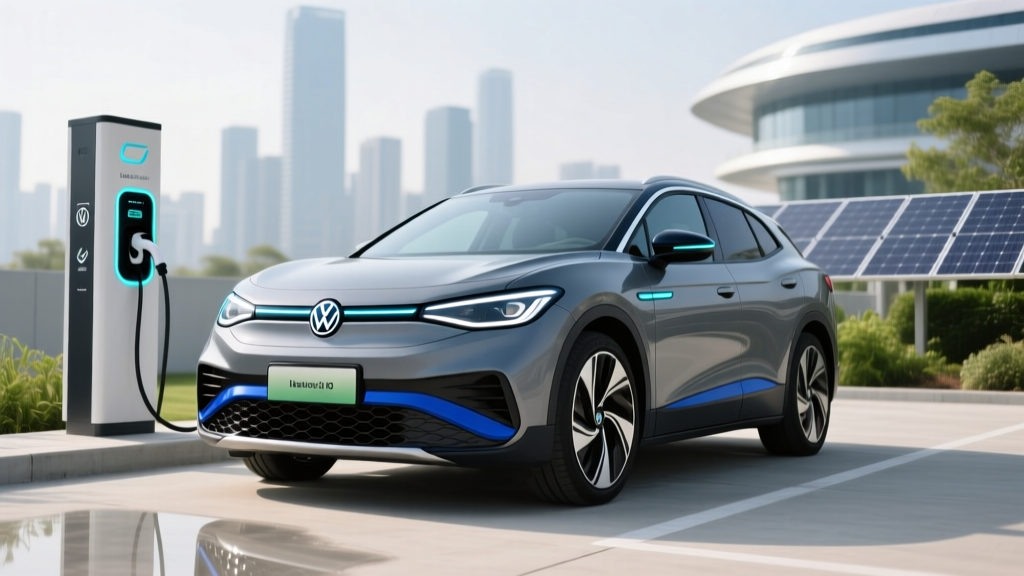
The Volkswagen ID.4 occupies a specific niche in the compact electric SUV segment: it isn't the fastest, the longest-range, or the most technologically flashy. What it is, is a roomy, comfortable, well-built crossover that drives like a conventional car and — critically for budget-minded buyers — has historically qualified for the full federal EV tax credit when assembled at VW's Chattanooga, Tennessee plant. For 2026, the ID.4 continues with incremental updates to infotainment software and battery management, but the core formula remains the same: a 77 kWh (usable) NMC lithium-ion battery, rear-wheel or all-wheel drive, and EPA ranges up to 291 miles.
Whether the VW ID.4 tax credit applies to your specific purchase depends on a web of IRS §30D rules — your income, the vehicle's MSRP, and battery-component and critical-mineral sourcing requirements that tighten annually. This review gives you the exact numbers you need to make the call.
Range, Efficiency, and the Real-World Reality Check
Real-World Expectation: 230–260 miles on mixed highway driving; 190–220 miles in sustained sub-30°F cold weather without preconditioning. City driving with regen braking can match or slightly exceed the EPA sticker.
The ID.4's EPA range varies by trim and drivetrain. The base Pro with rear-wheel drive and 19-inch wheels achieves the highest rating, while the AWD Pro S with larger 20-inch wheels drops to around 263 miles on the EPA cycle. According to fueleconomy.gov, the RWD ID.4 posts a combined rating of 107 MPGe (31 kWh/100mi), which is competitive but not class-leading — the Hyundai Ioniq 5 and Tesla Model Y both edge it out on efficiency.
In our experience, the ID.4's range is honest but unspectacular. On a 70-mph highway loop in 65°F weather, expect roughly 250 miles before hitting 10% state of charge. In winter conditions, the resistive cabin heater (VW does not offer a heat pump on all trims — check your specific build) can push consumption above 3.5 kWh/mile, cutting effective range to around 200 miles. If you're a cold-climate buyer, preconditioning while plugged in is essential.
| Spec | Pro (RWD) | Pro S (RWD) | Pro S AWD |
|---|---|---|---|
| Battery (usable) | 77 kWh NMC | 77 kWh NMC | 77 kWh NMC |
| EPA Range | ~291 mi | ~275 mi | ~263 mi |
| Horsepower | 201 hp | 201 hp | 295 hp |
| 0–60 mph | ~7.7 sec | ~7.7 sec | ~5.4 sec |
| MPGe (combined) | 107 | 104 | 98 |
| Drivetrain | RWD single motor | RWD single motor | AWD dual motor |
| Max DC Fast Charge | 175 kW | 175 kW | 175 kW |
| Base MSRP (est.) | ~$39,735 | ~$44,735 | ~$48,735 |
Charging Speed: DC Fast, Level 2, and What to Expect
The ID.4 supports a peak DC fast-charge rate of 175 kW on compatible CCS or NACS-equipped stations (VW has been transitioning to NACS for newer model years — confirm your connector at purchase). At a 175+ kW charger with battery preconditioning active, the ID.4 can add roughly 70 miles of range in 10 minutes and charge from 10% to 80% in approximately 30 minutes.
Here's the charging-curve reality: the 175 kW peak is a maximum, not a sustained rate. The ID.4 holds strong charging speeds through roughly 40–50% SoC, then tapers progressively. Above 80%, charging slows dramatically to protect the NMC cells — expect 80–100% to take nearly as long as 10–80%. This is normal for lithium-ion but means road-trip strategy should target 10–80% top-ups rather than full charges at DC stations.
| Charging Level | Power | Estimated Rate | Notes |
|---|---|---|---|
| Level 1 (120V) | ~1.4 kW | ~4 mi/hr | Emergency/top-up only |
| Level 2 (240V, 48A) | 11.5 kW | ~35 mi/hr | Full charge in ~7–8 hours |
| DC Fast (peak) | 175 kW | ~70 mi in 10 min | 10–80% in ~30 min (preconditioned) |
For home charging, the ID.4's onboard charger accepts up to 11.5 kW on a Level 2, 240-volt circuit. That means a dedicated 60-amp circuit with a quality Level 2 station (ChargePoint Home Flex, Emporia, or Tesla Wall Connector with J1772 adapter) will replenish the battery from near-empty to full overnight. Installation costs for a Level 2 setup typically run $500–$2,000 depending on panel proximity and whether your electrical panel needs an upgrade to support the additional load.
2026 VW ID.4 Tax Credit: Do You Qualify Under §30D?
The federal EV tax credit under IRS §30D remains one of the most impactful purchase incentives available — up to $7,500 off your federal tax liability, now transferable to the dealer at point of sale as an instant discount. The VW ID.4, assembled in Chattanooga, Tennessee, has historically qualified because it meets the North American final-assembly requirement. However, qualification for the full credit depends on two moving targets that tighten each year:
- Battery component sourcing: A percentage of battery components must be manufactured or assembled in North America. This threshold increases annually.
- Critical minerals sourcing: A percentage of critical minerals (lithium, cobalt, nickel, manganese) must be extracted or processed in the U.S. or a free-trade-agreement country. This threshold also increases annually.
- MSRP cap: SUVs like the ID.4 must have an MSRP at or below $80,000. All current ID.4 trims clear this bar comfortably.
- Buyer income cap: Modified adjusted gross income must not exceed $150,000 (single), $225,000 (head of household), or $300,000 (joint filing).
- Point-of-sale transfer: Since 2024, buyers can transfer the credit to the dealer for an immediate price reduction rather than waiting to claim it at tax time.
| Trim | Base MSRP (est.) | After $7,500 Credit | After $3,750 Credit |
|---|---|---|---|
| Pro (RWD) | $39,735 | $32,235 | $35,985 |
| Pro S (RWD) | $44,735 | $37,235 | $40,985 |
| AWD Pro S | $48,735 | $41,235 | $44,985 |
| AWD Pro S Plus | $53,735 | $46,235 | $50,085 |
Important: Battery sourcing rules change annually. The ID.4 may qualify for the full $7,500, a partial $3,750, or potentially no credit depending on the specific model year's supply chain. Always verify current eligibility at fueleconomy.gov before signing paperwork. State and local incentives may stack on top — check your state energy office or DSIRE database for details.
Performance, Interior Space, and Daily Livability
The ID.4 doesn't try to be a performance EV, and that's intentional. The RWD model's 201 hp and 7.7-second 0–60 time are perfectly adequate for merging and passing but won't pin you to the seat. The dual-motor AWD variant bumps output to 295 hp and drops 0–60 to roughly 5.4 seconds — noticeably quicker and confidence-inspiring in rain and snow. Ride quality is a genuine strength: VW tuned the suspension for comfort over sportiness, and the ID.4 absorbs highway expansion joints and potholes with a maturity that some competitors lack.
Interior space is where the ID.4 earns its family-SUV credentials:
- Rear legroom: 37.6 inches — generous for the segment
- Cargo volume (rear seats up): 30.3 cu ft
- Cargo volume (rear seats folded): 64.2 cu ft
- Frunk: Not available on AWD trims; small storage compartment on RWD
The cabin materials are solid mid-market — soft-touch surfaces on the dash, durable cloth or available leatherette on seats. The 12.9-inch infotainment touchscreen runs VW's latest ID. Software, which has improved substantially from early-model complaints about lag and capacitive-touch sliders. Wireless Apple CarPlay and Android Auto are standard. The IQ.DRIVE suite includes adaptive cruise control, lane-centering assist, automatic emergency braking, and blind-spot monitoring — all Level 2 driver-assistance features that require continuous driver supervision.
Warranty, Battery Longevity, and Ownership Costs
VW backs the ID.4 with a competitive warranty package:
- Limited vehicle warranty: 4 years / 50,000 miles
- Battery & powertrain warranty: 8 years / 100,000 miles (covers battery capacity below 70% of original)
- Roadside assistance: 4 years / 50,000 miles
The 8-year/100,000-mile battery warranty with a 70% capacity-retention threshold is industry-standard and aligns with federal requirements. NMC chemistry in the ID.4 typically sees degradation of roughly 8–12% over the first 100,000 miles based on fleet data from earlier model years. For most owners who charge to 80% daily and avoid repeated DC fast-charging in extreme heat, long-term degradation should remain manageable within the warranty period.
Insurance costs for the ID.4 tend to run 10–20% higher than a comparable gas-powered Tiguan, reflecting EV repair-cost patterns. Get quotes before purchasing — your mileage will vary significantly by state, age, and driving record.
VW ID.4 vs. the Competition: Is It Worth It?
The compact electric SUV segment is crowded. Here's how the ID.4 stacks up against three key rivals:
| Spec | VW ID.4 Pro S RWD | Tesla Model Y LR | Hyundai Ioniq 5 SEL | Ford Mustang Mach-E Select |
|---|---|---|---|---|
| EPA Range | ~275 mi | ~320 mi | ~303 mi | ~250 mi |
| Battery (usable) | 77 kWh | ~75 kWh | 77.4 kWh | ~70 kWh |
| Peak DC Charge | 175 kW | 250 kW | 240 kW | 150 kW |
| 10–80% Time | ~30 min | ~22 min | ~18 min | ~38 min |
| Base MSRP (est.) | $44,735 | ~$44,990 | ~$45,500 | ~$42,995 |
| Federal Credit Eligible | Likely (verify) | Likely partial | Likely partial | Likely partial |
The ID.4's advantages are straightforward: it's often one of the most credit-eligible EVs on the market thanks to U.S. assembly and supply-chain positioning, its ride comfort is excellent, and interior space is generous. Its disadvantages are equally clear — it charges slower than the Ioniq 5 and Model Y, its range trails both, and its infotainment, while improved, still isn't as responsive as Tesla's or Hyundai's interfaces.
Choose a competitor if: You road-trip frequently and need faster DC charging (Ioniq 5), maximum range (Model Y), or sportier driving dynamics (Mach-E GT).
Pros and Cons
Pros
- Strong federal tax credit eligibility (U.S.-assembled)
- Comfortable, composed ride quality
- Spacious rear seat and cargo area
- Straightforward, car-like driving feel
- Competitive pricing after credit application
- 8-year/100,000-mile battery warranty
Cons
- DC fast charging slower than Korean and Tesla rivals
- No front trunk (frunk) on AWD trims
- Efficiency (MPGe) trails segment leaders
- No heat pump on all trims (cold-weather range impact)
- Infotainment still a step behind best-in-class
- Rear drum brakes (regenerative system, but unusual at this price)
Who the VW ID.4 Suits Best
The ID.4 is optimized for families and commuters who charge primarily at home and want a no-drama transition to electric. If your daily drive is under 60 miles round-trip, you'll rarely touch the battery's full capacity and will enjoy fuel costs equivalent to roughly $1.00–$1.50 per gallon of gasoline (depending on your local electricity rate). The roomy back seat fits child car seats easily, and the 30.3 cu ft cargo hold handles strollers, groceries, and weekend luggage without complaint.
It's less ideal for frequent long-distance road trippers who prioritize minimal charging stops, or for performance-oriented buyers who want instant-torque thrills. For towing, the AWD ID.4 is rated for up to 2,700 pounds — enough for a small utility trailer or a pair of dirt bikes, but not a camper.
Frequently Asked Questions
Does the 2026 VW ID.4 qualify for the $7,500 federal EV tax credit?
The ID.4 is assembled in Chattanooga, TN, meeting the North American final-assembly requirement. Whether it qualifies for the full $7,500, a partial $3,750, or no credit depends on your income, the MSRP of your chosen trim (all clear the $80,000 SUV cap), and current-year battery-sourcing thresholds. Verify at fueleconomy.gov and consult a tax professional before relying on the credit.
What is the real-world range of the VW ID.4?
EPA estimates range from 263 to 291 miles depending on trim. In real-world mixed driving at highway speeds, expect 230–260 miles. In cold weather below 30°F, effective range can drop to 190–220 miles, especially without battery preconditioning.
How fast does the ID.4 charge at home and on road trips?
On a Level 2 home charger (11.5 kW), the ID.4 adds roughly 35 miles of range per hour and fully charges overnight in 7–8 hours. On a DC fast charger, it peaks at 175 kW, reaching 10–80% in about 30 minutes with preconditioning.
Is the VW ID.4 worth buying over a Tesla Model Y or Hyundai Ioniq 5?
If the full $7,500 tax credit applies, the ID.4 becomes one of the most affordable vehicles in its class. It trades range and charging speed for ride comfort, interior space, and a traditional driving feel. If road-trip charging speed is your top priority, the Ioniq 5 charges significantly faster. If range and Supercharger access matter most, the Model Y wins.
What battery chemistry does the ID.4 use, and how long will it last?
The ID.4 uses NMC (nickel manganese cobalt) lithium-ion chemistry with a 77 kWh usable capacity. VW warranties the battery for 8 years or 100,000 miles against capacity dropping below 70%. Real-world fleet data suggests 8–12% degradation over 100,000 miles under normal use patterns.
Can I transfer the tax credit to the dealer for an instant discount?
Yes. Since January 2024, the IRS allows point-of-sale transfer of the §30D credit to the dealer, effectively reducing your purchase price at signing rather than waiting to claim it on your tax return. The dealer must be registered with the IRS energy credits portal.