The Quick Answer: Does the VW ID.4 Qualify for the Federal Tax Credit?
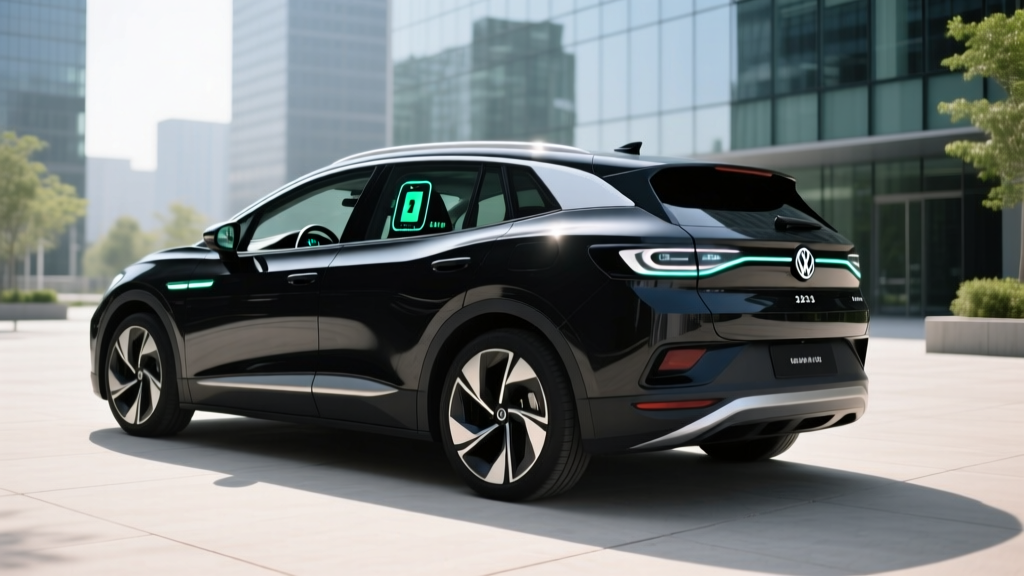
For the 2026 model year, the Volkswagen ID.4 does qualify for the full $7,500 federal EV tax credit under IRS §30D — but only if you meet specific income thresholds, purchase it new (not leased, unless you use the point-of-sale lease loophole), and the vehicle's MSRP stays under the SUV cap. Volkswagen shifted ID.4 production to its Chattanooga, Tennessee plant in late 2022, which satisfied the North American final-assembly requirement that disqualifies many imported EVs. The ID.4's battery sourcing and critical-mineral content have continued to meet evolving IRS thresholds through 2026, keeping it on the eligible list at IRS.gov.
However, eligibility is personal. Your modified adjusted gross income (MAGI) must not exceed $150,000 (single), $225,000 (head of household), or $300,000 (joint). The vehicle MSRP must not exceed $80,000 for SUVs. And the credit is non-refundable unless you take the point-of-sale transfer at a registered dealer, which reduces your purchase price upfront. Let's break down what this means for your wallet — and whether the ID.4 earns its place in your garage beyond the credit.
2026 VW ID.4: Full Spec Sheet
| Specification | Standard Range (63 kWh) | Pro / Pro S (82 kWh RWD) | Pro S Plus (AWD) |
|---|---|---|---|
| EPA Range | 206 mi | 275 mi | 263 mi |
| Battery (usable) | 63 kWh (NMC) | 82 kWh (NMC) | 82 kWh (NMC) |
| Drivetrain | RWD | RWD | Dual-motor AWD |
| Horsepower | 201 hp | 282 hp | 335 hp |
| 0–60 mph | ~7.7 sec | ~7.0 sec | ~5.4 sec |
| Max DC Fast Charge | 140 kW | 175 kW | 175 kW |
| 10–80% DCFC Time | ~28 min | ~28 min | ~28 min |
| Level 2 Charge Rate | 10.9 kW | 10.9 kW | 10.9 kW |
| MPGe (combined) | 107 MPGe | 107 MPGe | 101 MPGe |
| Efficiency | 31 kWh/100mi | 31 kWh/100mi | 33 kWh/100mi |
| Base MSRP (incl. dest.) | $39,735 | $44,735 | $52,735 |
| After $7,500 Credit | $32,235 | $37,235 | $45,235 |
Source: fueleconomy.gov and VW Newsroom. Pricing reflects base MSRP plus destination. Trim availability subject to change.
Real-World Range: What to Actually Expect
Real-World Highway (70 mph): ~220–240 miles
Real-World City/Mixed: ~250–265 miles (regen-friendly)
Cold Weather (below 32°F): ~180–210 miles (30–35% reduction)
Hot Climate w/ AC: ~245–260 miles
The ID.4's 82 kWh (gross) battery pack delivers 77 kWh usable, housed in a liquid-cooled NMC (nickel manganese cobalt) pack beneath the floor. In our experience and aggregated owner data, the 275-mile EPA figure holds up reasonably in suburban and city driving where regenerative braking recaptures energy. On sustained highway runs at 70–75 mph, expect to burn through the pack faster — the ID.4's bluff-front SUV shape carries more aero drag than a sedan like the Hyundai Ioniq 6.
Cold weather is the ID.4's Achilles' heel. Unlike Hyundai/Kia's E-GMP platform or Tesla's heat-pump-equipped models, earlier ID.4s used resistive cabin heating. VW added a heat pump to cold-climate packages starting in 2024, which mitigates some range loss, but you should still plan for a 25–35% range reduction in sub-freezing temperatures. If you live in the Upper Midwest or Northeast and lack home charging, this matters significantly for daily usability.
Charging Speed: DC Fast and Home Level 2
Volkswagen rates the 82 kWh ID.4 at a peak 175 kW on DC fast chargers — an improvement over the original 125 kW cap on 2021–2022 models. However, peak rate is not sustained rate. The ID.4's charge curve holds near 175 kW only between roughly 10–30% state of charge, then tapers progressively: ~130 kW through 50%, ~90 kW through 70%, and below 50 kW past 85%. The 10–80% session takes approximately 28 minutes at a capable 350 kW station.
| Charging Level | Power (kW) | Miles Added per Hour | Full Charge Time |
|---|---|---|---|
| Level 1 (120V outlet) | ~1.4 kW | ~3–4 mi/hr | ~55+ hours |
| Level 2 (240V, 48A) | 10.9 kW | ~31 mi/hr | ~8.5 hours (0–100%) |
| DC Fast Charge | 175 kW peak | ~185 mi in 10 min (peak) | ~28 min (10–80%) |
At home on a Level 2 charger, the ID.4's 10.9 kW onboard charger is solid — it'll replenish roughly 31 miles of range per hour, meaning a depleted 82 kWh pack charges overnight in about 8.5 hours. The ID.4 uses the CCS1 connector natively. As VW has committed to adopting NACS (Tesla's connector) for future models, 2026 ID.4s still ship with CCS1 but are compatible with Tesla Superchargers via VW-supplied adapters under the automaker's charging-network access agreement.
One ownership note: VW includes three years of complimentary 30-minute charging sessions on Electrify America's network, which remains the largest DC fast-charging provider in the U.S. Reliability of EA stations has improved since 2023 but still trails Tesla's Supercharger network in uptime consistency.
Pricing, Tax Credit Math, and What You'll Actually Pay
The 2026 VW ID.4 lineup starts at $39,735 for the Standard Range (63 kWh, RWD) and tops out around $55,000 for a fully loaded Pro S Plus AWD with the Gradient package. The sweet spot for most buyers is the Pro S at $44,735 — you get the 82 kWh battery, 275-mile range, heated seats, panoramic roof, and a well-equipped interior without crossing into luxury-SUV pricing.
- ✅ Final assembly: Chattanooga, TN (North America) — passes
- ✅ MSRP cap: All trims under $80,000 SUV cap — passes
- ✅ Battery sourcing / critical minerals: Meets 2026 thresholds per IRS — passes
- ⚠️ Buyer income cap: MAGI ≤ $150K single / $225K HOH / $300K joint
- ⚠️ Credit type: Non-refundable — you must owe ≥ $7,500 in federal tax, OR use point-of-sale transfer at a registered dealer
- ⚠️ New vehicle only: Used ID.4s fall under §25E (up to $4,000 credit, different rules)
Rules per IRS.gov §30D. Verify current eligibility before purchase — sourcing requirements tighten annually.
If you qualify and take the point-of-sale transfer (available through registered dealers since Jan 2024), the Pro S effectively costs $37,235 out the door — putting it in direct competition with the base Tesla Model Y and Hyundai Ioniq 5. If your tax liability is below $7,500 and your dealer isn't set up for POS transfer, you'll claim the credit on your tax return and only benefit up to your actual tax owed.
Driving Experience, Tech, and Interior
The ID.4 rides on VW's MEB platform and delivers a comfortable, composed driving experience that prioritizes ride quality over sportiness. The RWD models feel adequately quick around town (0–60 in ~7 seconds), while the dual-motor AWD Pro S Plus drops that to 5.4 seconds — genuinely brisk for a family crossover. Steering is light and precise, and the turning circle is impressively tight at 33.5 feet thanks to the rear-drive-biased architecture.
Inside, the ID.4 offers a spacious cabin with 30.3 cubic feet of cargo space behind the rear seats (64.2 cu ft with seats folded) and generous rear legroom of 37.6 inches. The 12.9-inch infotainment touchscreen (upgraded from the problematic 12-inch unit in early models) runs VW's latest software, which has resolved most of the lag and capacitive-touch frustrations that plagued 2021–2023 models. Wireless Apple CarPlay and Android Auto are standard.
Driver assistance comes via VW's IQ.DRIVE suite — a Level 2 system per SAE classification that includes adaptive cruise control with stop-and-go, lane centering, and emergency braking. It's competent on highways but requires hands-on-wheel supervision and does not approach the capability of GM's Super Cruise or Ford's BlueCruise for hands-free driving on mapped roads.
Notable drawbacks: The ID.4 lacks a front trunk (frunk), which costs you sealed storage for charging cables. Rear drum brakes (chosen for efficiency/regen optimization) draw criticism from enthusiasts despite performing adequately in testing. And while VW's software has improved dramatically, it still trails Tesla and Hyundai in responsiveness and feature depth.
Pros and Cons at a Glance
✅ Pros
- Full $7,500 federal tax credit eligibility — drops effective price to ~$37K
- Comfortable ride, tight turning circle, composed handling
- Spacious cabin with 30.3 cu ft cargo, excellent rear legroom
- Free Electrify America charging for 3 years
- Improved infotainment software over earlier model years
- Solid 275-mile EPA range (82 kWh RWD)
❌ Cons
- DC fast charging (175 kW peak) trails Hyundai Ioniq 5 (240 kW) and Tesla Model Y (250 kW)
- No frunk — costs sealed cable storage
- Significant cold-weather range loss without optional heat pump
- Rear drum brakes (functional but optics issue at this price)
- Electrify America reliability still inconsistent vs Superchargers
- Infotainment still not best-in-class despite improvements
ID.4 vs. the Competition: Is It Worth Buying?
The ID.4 occupies a competitive middle ground. Against the Tesla Model Y, it trades charging speed and software sophistication for a more traditional driving feel, better build quality consistency, and (for many buyers) a more approachable dealership experience. The Model Y still wins on Supercharger access and efficiency (27–29 kWh/100mi vs the ID.4's 31–33).
Against the Hyundai Ioniq 5, the ID.4 loses on DC fast charging (175 kW vs 240 kW with preconditioning) and 800V architecture, but offers slightly more cargo volume and a softer ride. The Ioniq 5's tax credit situation is more complex — its U.S. assembly in Georgia qualifies it, but battery sourcing compliance should be verified at purchase.
Against the Ford Mustang Mach-E, the ID.4 offers a more spacious rear seat and cargo area, while the Mach-E delivers sportier driving dynamics and a more engaging infotainment system. Both qualify for the credit; both hover in the same price band after incentives.
Choose the Tesla Model Y if: Road-trip charging infrastructure (Superchargers) is your top priority, or you value over-the-air updates and software features.
Choose the Hyundai Ioniq 5 if: You DC fast-charge frequently and want the fastest 10–80% sessions in this segment (~18 minutes).
Battery Warranty and Long-Term Ownership
Volkswagen covers the ID.4's high-voltage battery for 8 years or 100,000 miles (whichever comes first), guaranteeing a minimum of 70% capacity retention. This is industry-standard and matches Tesla, Hyundai, and Ford. The powertrain warranty is 4 years/50,000 miles, and the basic vehicle warranty is 4 years/50,000 miles with 2 years of scheduled Carefree Maintenance included.
NMC battery chemistry in the ID.4 has shown moderate degradation rates in owner-reported data — typically 5–8% loss over the first 50,000 miles, which is consistent with liquid-cooled packs in this segment. VW recommends charging to 80% for daily use and only charging to 100% before long trips, which helps preserve long-term State of Health (SoH). The vehicle's battery management system includes a top and bottom buffer to protect against deep cycling.
Frequently Asked Questions
Does the VW ID.4 qualify for the full $7,500 federal tax credit in 2026?
Yes, the 2026 ID.4 qualifies for the full $7,500 credit under §30D, provided you meet the income caps ($150K single / $300K joint) and take delivery from a registered dealer. You can apply it as a point-of-sale reduction or claim it on your tax return.
What is the real-world range of the VW ID.4?
The 82 kWh RWD model is EPA-rated at 275 miles. Expect ~220–240 miles on sustained highway driving, ~250–265 in mixed city use, and 180–210 in cold weather below freezing.
How fast does the ID.4 charge at home and on the road?
At home on Level 2 (240V), it charges at 10.9 kW, adding ~31 miles per hour (~8.5 hours for a full charge). On DC fast chargers, it peaks at 175 kW and charges from 10–80% in about 28 minutes.
Does the ID.4 work with Tesla Superchargers?
Yes, VW provides a NACS adapter for access to Tesla's Supercharger network. The ID.4 natively uses CCS1 and is also compatible with Electrify America, EVgo, and other CCS networks.
Is the VW ID.4 a good EV for cold climates?
It's acceptable but not best-in-class. Without the optional heat pump, cold-weather range loss can reach 30–35%. With the heat pump, loss is reduced to roughly 20–25%. If you live in a cold climate and lack home charging, consider an EV with a standard heat pump (Tesla, Hyundai/Kia).
How much does the ID.4 cost after the tax credit?
The base Standard Range starts at $39,735, dropping to ~$32,235 after the credit. The popular Pro S (275-mi range) starts at $44,735, effectively ~$37,235 after the credit. The AWD Pro S Plus starts at $52,735, effectively ~$45,235.
Should I lease or buy the ID.4?
If you don't qualify for the §30D credit due to income limits or tax liability, leasing may allow you to benefit from the commercial clean vehicle credit (§45W), which dealers often pass through as a lease incentive. Compare the lease terms against the purchase price minus $7,500 to see which is cheaper over your intended ownership period.
Editorial note: Tax credit eligibility rules evolve annually as battery-sourcing and critical-mineral requirements tighten under the Inflation Reduction Act. Always verify current eligibility at IRS.gov and consult a tax professional for your specific situation. Pricing and specs reflect 2026 model year information available at time of publication.