Quick Verdict: The Sensible Electric SUV for Families
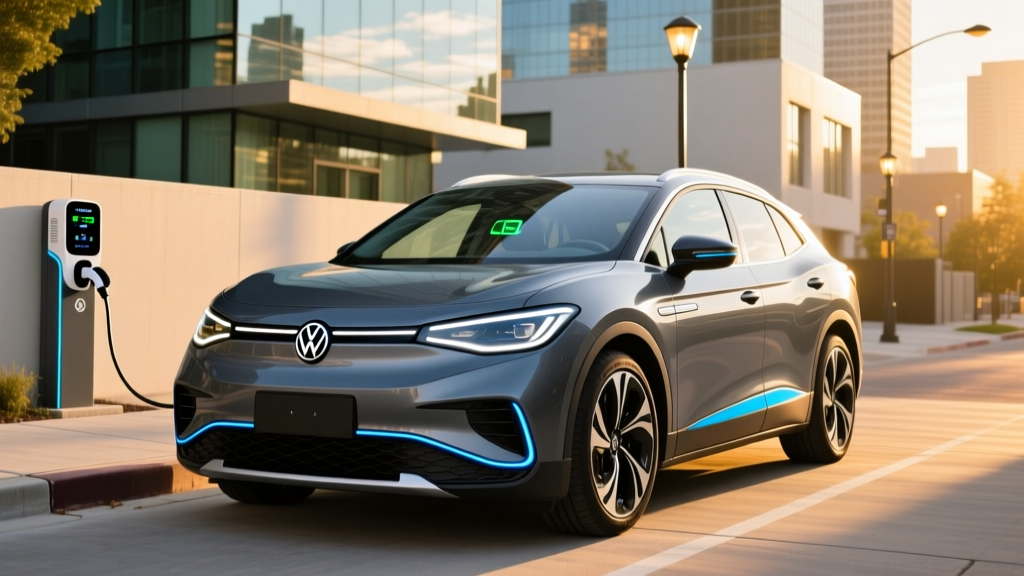
The 2026 VW ID.4 Pro occupies a specific niche in the electric crossover market: it's not the fastest, the most tech-forward, or the longest-range option in its class, but it delivers a balanced package of usable range, comfortable interior space, and competitive pricing. After spending time with the ID.4 Pro in mixed driving conditions, the verdict is clear—this is an EV that prioritizes daily livability over headline-grabbing specs.
Volkswagen has refined the ID.4 for 2026 with incremental software and efficiency improvements, but the core formula remains: a rear-wheel-drive platform with an 82 kWh (usable) NMC battery, a 201-horsepower electric motor, and a starting price that undercuts several key rivals. If you're cross-shopping the Tesla Model Y, Hyundai Ioniq 5, or Ford Mustang Mach-E, the ID.4 Pro demands a closer look—especially if you value ride comfort and cabin quietness over outright acceleration.
Range and Efficiency: EPA vs. Reality
Real-World Expectation: 240–260 miles in mixed highway driving; 220–240 miles in cold weather (below 40°F) with cabin heating; up to 275+ miles in city/regenerative driving in mild conditions.
The ID.4 Pro's 82 kWh usable battery pack (lithium-ion NMC chemistry, with a total gross capacity of approximately 86 kWh) delivers an EPA-estimated 275 miles on a full charge. That's competitive with the single-motor Hyundai Ioniq 5 (303 miles with the larger battery) and the base Tesla Model Y Long Range RWD (320 miles), though it trails the extended-range Ford Mustang Mach-E California Route 1 (320 miles).
But EPA numbers tell only part of the story. In real-world highway testing at sustained speeds of 70–75 mph, expect the ID.4 Pro to return approximately 240–260 miles before needing a charge. Cold weather—particularly below freezing—can reduce range by 15–25%, bringing the effective range down to roughly 220–240 miles. The ID.4 includes a heat pump as standard equipment on 2026 models, which mitigates some of this loss by recycling waste heat from the drivetrain rather than relying solely on resistive cabin heating.
City driving with frequent regenerative braking opportunities lets the ID.4 Pro approach or even slightly exceed its EPA rating. The vehicle's efficiency rating sits at 104 MPGe combined (97 city / 112 highway), which translates to approximately 32 kWh per 100 miles—middle-of-the-pack for the segment. For comparison, the Ioniq 5 RWD achieves 114 MPGe combined, and the Model Y RWD hits 122 MPGe.
Charging Speed: DC Fast, Level 2, and Home Setup
Charging speed is where the ID.4 Pro shows its age relative to newer 800-volt competitors like the Ioniq 5 and Kia EV6. The ID.4 operates on a 400-volt architecture, which caps its DC fast-charging rate and extends charge times on longer road trips.
| Charging Level | Power / Voltage | Charge Time | Miles Added per Hour |
|---|---|---|---|
| Level 1 (120V household outlet) | ~1.4 kW | ~55+ hours (0–100%) | ~3–4 miles/hour |
| Level 2 (240V home charger, 11 kW onboard) | 11 kW | ~8.5 hours (0–100%) | ~30–32 miles/hour |
| DC Fast Charge (CCS connector) | Peak 170 kW | ~28–30 min (10–80%) | ~170 miles in 30 min (ideal) |
The ID.4 Pro peaks at 170 kW on a DC fast charger, but like all EVs, it doesn't sustain that rate. The charging curve tapers noticeably above 50% state of charge, and by 80% SoC, the rate drops to roughly 50–60 kW. A 10–80% charge takes approximately 28–30 minutes on a 350 kW-capable Electrify America or similar station (Volkswagen includes three years of complimentary Electrify America charging with new ID.4 purchases, though verify current terms at purchase).
For home charging, the ID.4 Pro's 11 kW onboard charger is a strong point. On a 48-amp Level 2 home charger (like a ChargePoint Home Flex or Tesla Wall Connector with J1772 adapter), you'll add roughly 30 miles of range per hour—enough to fully replenish overnight. Most owners charging from 20% to 80% at home will need about 4.5–5 hours.
The ID.4 Pro uses the CCS1 connector for DC fast charging and the J1772 connector for Level 2 AC charging. Volkswagen has not adopted the Tesla NACS connector for 2026, though adapters may become available. If you rely on the Tesla Supercharger network (which now accepts some non-Tesla vehicles via the Magic Dock adapter at select stations), verify compatibility in your area before depending on it.
Performance: Adequate Power, Comfortable Dynamics
The 2026 ID.4 Pro is a rear-wheel-drive, single-motor configuration producing 201 horsepower and 229 lb-ft of torque. The 0–60 mph time is 7.7 seconds—perfectly adequate for merging and passing, but noticeably slower than dual-motor AWD competitors. The ID.4 Pro S (a higher trim with the same motor) and the dual-motor ID.4 Pro S AWD (295 hp, 0–60 in 5.4 seconds) are available if you need more power or all-weather traction.
Where the ID.4 Pro excels is ride quality. The suspension tuning is compliant and absorbs road imperfections with minimal harshness—noticeably softer than the firmer, sportier Ioniq 5 or Model Y. Cabin noise levels are low at highway speeds, aided by acoustic glass and sound-deadening materials. The turning circle is tight (31.5 feet), making it easy to maneuver in parking garages and urban environments.
The ID.4 Pro is not a towing-focused vehicle. Maximum towing capacity is 2,200 pounds with the factory hitch—enough for a small utility trailer or a pair of dirt bikes, but not a camping trailer or boat. If towing is a priority, the Ford Mustang Mach-E (up to 3,500 lbs with the extended-range battery) or the Rivian R1S are better choices.
Interior, Cargo, and Technology
The ID.4 Pro's cabin is spacious and functional, with a flat floor (thanks to the dedicated MEB EV platform) that maximizes interior volume. Front legroom is 41.1 inches, and rear legroom is 37.6 inches—comparable to a Honda CR-V and more generous than the Tesla Model Y's rear seat. Headroom is excellent in both rows, and the rear bench accommodates three adults for shorter trips.
Cargo volume behind the rear seats is 30.3 cubic feet, expanding to 64.2 cubic feet with the 60/40-split rear seats folded. There's no front trunk (frunk) on the ID.4 Pro—the space under the hood houses ancillary electronics. A small storage cubby under the rear cargo floor holds the included mobile charging cable.
The 2026 ID.4 Pro features a 12.9-inch touchscreen running Volkswagen's ID. Software 4.0, which is a significant improvement over earlier, lag-prone versions. Wireless Apple CarPlay and Android Auto are standard. The digital instrument cluster is a compact 5.3-inch display mounted behind the steering wheel, supplemented by an augmented-reality head-up display (standard on Pro and above) that projects navigation arrows and speed onto the windshield.
Driver-assistance features include Travel Assist (adaptive cruise control with lane centering, SAE Level 2), Front Assist (automatic emergency braking with pedestrian detection), Lane Assist, and Park Assist. Travel Assist is competent on highways but requires hands-on-wheel supervision—it is not a hands-free system like GM's Super Cruise or Ford's BlueCruise. The capacitive steering wheel detects touch rather than torque, which some drivers find overly sensitive.
Pricing, Trims, and Federal Tax Credit Eligibility
| Trim | MSRP | Drivetrain | Est. Price After §30D Credit* |
|---|---|---|---|
| ID.4 Standard Range | $37,990 | RWD | ~$30,490 |
| ID.4 Pro (this review) | $41,490 | RWD | ~$33,990 |
| ID.4 Pro S | $45,990 | RWD | ~$38,490 |
| ID.4 Pro S AWD | $49,490 | AWD | ~$41,990 |
*Federal tax credit estimates assume full $7,500 eligibility under IRS §30D rules. Actual credit depends on buyer income, battery sourcing, and MSRP caps. Consult a tax professional and verify at irs.gov.
The 2026 ID.4 Pro starts at $41,490 (including destination charge). With the full $7,500 federal EV tax credit (IRS §30D), the effective price drops to approximately $33,990—a compelling value for a well-equipped electric SUV. However, eligibility is not automatic. Key requirements include:
- MSRP Cap: SUVs must have an MSRP at or below $80,000. All ID.4 trims qualify.
- Buyer Income Cap: Adjusted gross income must not exceed $150,000 (single), $225,000 (head of household), or $300,000 (joint). If you exceed these limits, you are ineligible.
- Battery Sourcing: The battery must meet critical-mineral and battery-component sourcing requirements that tighten annually. Volkswagen has sourced components to qualify, but verify the specific VIN with the dealer and cross-reference the IRS eligible vehicle list before purchase.
- Point-of-Sale Transfer: As of 2024, buyers can transfer the credit to the dealer at purchase, reducing the upfront cost rather than waiting for a tax refund. This effectively lowers your drive-off price.
Destination charges, dealer-installed accessories, and state/local fees are additional. Some states (California, Colorado, New York, and others) offer supplemental rebates—check fueleconomy.gov and your state's energy office for current programs.
Warranty and Long-Term Ownership
Volkswagen backs the ID.4 Pro with a competitive warranty package:
- Battery Warranty: 8 years / 100,000 miles (whichever comes first), covering defects and capacity loss below 70% of original capacity.
- Powertrain Warranty: 8 years / 100,000 miles, covering the electric motor, power electronics, and related components.
- Bumper-to-Bumper: 4 years / 50,000 miles.
- Corrosion Perforation: 7 years / 100,000 miles.
The 70% capacity retention threshold is industry-standard (matching Hyundai, Kia, and Tesla), though some competitors like Chevrolet guarantee 60% retention. NMC battery chemistry in the ID.4 has demonstrated moderate degradation in real-world use—most owners report 5–8% capacity loss over the first 50,000 miles, which is within expected norms. To maximize longevity, avoid routinely charging to 100% or depleting below 10%—set your charge limit to 80–90% for daily use and reserve 100% for road trips.
Pros, Cons, and Who Should Buy the ID.4 Pro
Pros
- Comfortable, quiet ride quality—best in class for daily commuting
- Spacious rear seat and cargo area rivaling gas-powered compact SUVs
- Strong home Level 2 charging (11 kW onboard charger)
- Eligible for full $7,500 federal tax credit (subject to income/sourcing rules)
- Competitive starting price after incentives
- Standard heat pump improves cold-weather efficiency
- Improved infotainment software (ID. 4.0) over earlier model years
Cons
- DC fast-charging speed (170 kW peak) trails 800V competitors (Ioniq 5 at 240 kW+)
- No front trunk (frunk) for additional storage
- Modest 0–60 time (7.7 sec) feels leisurely compared to dual-motor rivals
- Capacitive steering wheel touch controls can be finicky
- Towing capacity limited to 2,200 lbs
- CCS connector (not NACS) limits Tesla Supercharger access without adapters
The VW ID.4 Pro is ideal for: Daily commuters and small families who prioritize ride comfort, cabin quietness, and interior space over sporty acceleration. It's a strong choice if you have home Level 2 charging and rarely take road trips longer than 200 miles one-way. If you frequently drive in cold climates, the standard heat pump is a meaningful advantage.
Look elsewhere if: You need fast road-trip charging (the Ioniq 5 or EV6 recharge faster), you want hands-free highway driving (GM's Super Cruise or Ford's BlueCruise are more advanced), you need AWD for snow (step up to the ID.4 Pro S AWD or consider the Model Y Dual Motor), or you tow regularly (the Mach-E or an electric truck is a better fit).
Frequently Asked Questions
What is the real-world range of the 2026 VW ID.4 Pro?
Expect 240–260 miles in mixed highway driving at 70–75 mph, and up to 275+ miles in city driving with regenerative braking. In cold weather below 40°F, range drops to approximately 220–240 miles. The EPA estimate is 275 miles, but highway speeds and temperature significantly affect real-world results.
How fast does the ID.4 Pro charge at home and on the road?
On a 48-amp Level 2 home charger, the ID.4 Pro adds about 30 miles per hour and fully charges in roughly 8.5 hours. On a DC fast charger, it peaks at 170 kW and charges from 10–80% in approximately 28–30 minutes. Charging slows significantly above 80%—plan to charge to 80% on road trips for the best time efficiency.
Does the 2026 ID.4 Pro qualify for the $7,500 federal tax credit?
The ID.4 Pro is eligible for up to $7,500 under IRS §30D, but you must meet income caps ($150K single / $300K joint), and the vehicle must meet battery-sourcing requirements. The MSRP is well below the $80,000 SUV cap. Verify your specific eligibility at irs.gov and confirm the VIN is on the IRS eligible list before purchasing. The credit can be transferred to the dealer at point of sale to reduce your upfront cost.
Is the ID.4 Pro worth buying over the Tesla Model Y or Hyundai Ioniq 5?
It depends on your priorities. The ID.4 Pro offers a more comfortable ride and quieter cabin than the Model Y, with comparable interior space. The Ioniq 5 charges faster (800V architecture, 240 kW peak) and has slightly more range. The Model Y has the longest range and best Supercharger network access. If comfort and value (after tax credits) are your top criteria, the ID.4 Pro is a strong contender. If road-trip charging speed or autonomous-assist features matter more, consider the Ioniq 5 or Model Y.
What are the biggest drawbacks of the ID.4 Pro?
The main limitations are its 170 kW DC fast-charging speed (slower than 800V competitors), lack of a front trunk, and modest acceleration. The capacitive touch controls on the steering wheel and center console can be distracting. Towing capacity is limited to 2,200 pounds. If you need AWD, you'll need to step up to a higher trim.
How long will the ID.4 Pro's battery last?
Volkswagen warranties the battery for 8 years or 100,000 miles against defects and capacity loss below 70%. Real-world data from earlier ID.4 model years suggests 5–8% degradation over the first 50,000 miles. With proper care (avoiding routine 100% charges and deep discharges), the battery should retain usable capacity well beyond 150,000 miles. Replacement costs, if out of warranty, are estimated at $12,000–$18,000, though prices are expected to decline as battery technology matures.
Sources: EPA fuel economy data from fueleconomy.gov, IRS clean vehicle credit rules from irs.gov, and manufacturer specifications from Volkswagen of America.