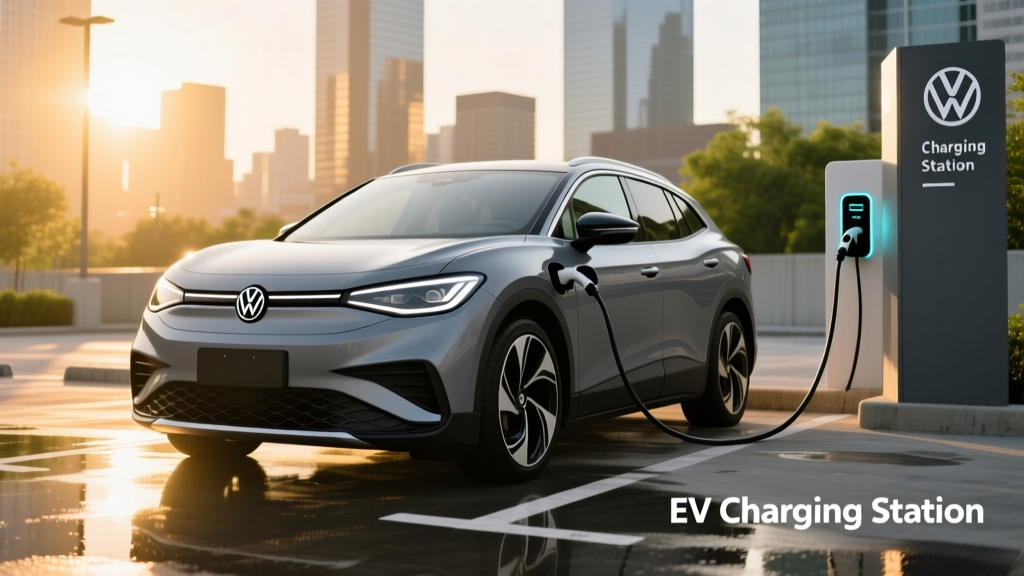
The Volkswagen ID.4 occupies a rare position in the compact electric SUV segment: it offers competitive range, usable cargo space, and a comfortable ride at a price point that undercuts rivals like the Tesla Model Y and Hyundai Ioniq 5. For buyers weighing whether to buy or lease, the 2026 ID.4 presents a compelling case — particularly when federal incentives and Volkswagen's aggressive lease offers are factored in.
This guide breaks down everything you need to know about VW ID.4 leasing in 2026, including real-world range expectations, charging speeds, tax credit mechanics, and whether this electric SUV fits your daily driving needs.
2026 VW ID.4 at a Glance: Key Specifications
| Spec | RWD (Standard) | AWD (Pro S/Pro S Plus) |
|---|---|---|
| EPA Range | 291 miles | 263 miles |
| Battery (usable) | 82 kWh (NMC) | 82 kWh (NMC) |
| Horsepower | 282 hp | 335 hp |
| 0–60 mph | 7.3 sec | 5.4 sec |
| DC Fast Charge (peak) | 170 kW | 170 kW |
| 10–80% DCFC Time | ~30 min | ~30 min |
| Level 2 Charge Rate | 11 kW (~37 mi/hr) | 11 kW (~37 mi/hr) |
| MPGe (combined) | 107 MPGe | 99 MPGe |
| Energy Consumption | 31 kWh/100 mi | 34 kWh/100 mi |
| Cargo Volume (rear seats up) | 30.3 cu ft | 30.3 cu ft |
| Cargo Volume (rear seats down) | 64.2 cu ft | 64.2 cu ft |
| Rear Legroom | 37.6 in | 37.6 in |
| Base MSRP (Standard) | $40,790 | $48,790 (Pro S AWD) |
| Battery Warranty | 8 yr / 100,000 mi | 8 yr / 100,000 mi |
Source: EPA Fuel Economy and Volkswagen USA.
Real-World Range: What to Actually Expect
Real-World Highway (70–75 mph): ~230–250 miles (RWD)
Cold Weather (below 32°F): ~190–220 miles (RWD), expect 20–30% reduction
Mixed City/Suburban: ~260–280 miles (closest to EPA estimate)
The ID.4's EPA ratings assume a mix of city and highway driving under moderate conditions. In practice, highway efficiency suffers — as it does for all EVs — because aerodynamic drag increases exponentially with speed. On a flat, 70-mph highway run in 65°F weather, expect roughly 230–250 miles from the RWD model before needing a charge stop.
Cold weather compounds this. The ID.4 uses a resistive PTC heater rather than a heat pump (a notable omission versus competitors like the Hyundai Ioniq 5 and Tesla Model Y, which use heat pumps). In sub-freezing temperatures, battery efficiency drops and cabin heating draws significant power. Plan for 190–220 miles of usable range in winter conditions if you're relying on cabin heat.
For daily commuting under 60 miles round-trip, range is a non-issue — you'll charge at home overnight and rarely think about it. But road-trippers should plan charging stops every 200–220 miles to stay in the battery's optimal charging window (20–80% SoC).
Charging Speed: DC Fast Charging and Home Setup
| Charging Level | Power (kW) | Miles Added per Hour | Notes |
|---|---|---|---|
| Level 1 (120V household) | ~1.4 kW | ~4–5 mi/hr | Emergency/trickle only |
| Level 2 (240V, 48A) | 11 kW | ~37 mi/hr | Full charge in ~9 hours |
| DC Fast Charge (peak) | 170 kW | ~200+ mi in 30 min | 10–80% in ~30 min; tapers above 80% |
The ID.4's 170 kW peak DC fast-charging rate is respectable but trails the segment leaders. The Hyundai Ioniq 5 peaks at 240 kW (10–80% in ~18 minutes), and the Tesla Model Y can sustain high charge rates up to 250 kW on V3 Superchargers.
Understanding the charge curve: The 170 kW figure is a peak, not a sustained rate. The ID.4 holds close to peak power from roughly 10% to 50% SoC, then progressively tapers. From 80% to 100%, charging slows dramatically to protect battery health — this is normal for all lithium-ion batteries. For road trips, charge from 10% to 80% (roughly 30 minutes) and move on rather than waiting for a full top-off.
For home charging, the 11 kW onboard charger means a Level 2 wall connector on a 48-amp circuit will add about 37 miles of range per hour. A full 0–100% charge takes roughly 9 hours — easily accomplished overnight. Installation costs for a Level 2 home charger typically run $500–$2,000 depending on panel capacity and wiring distance. If your electrical panel is near capacity, a panel upgrade can add $1,500–$3,000; consult a licensed electrician for a site assessment.
Performance and Driving Dynamics
The 2026 ID.4 is tuned for comfort, not sportiness. The RWD single-motor setup delivers 282 horsepower and a 7.3-second 0–60 time — adequate for merging and passing but not thrilling. The AWD dual-motor variant bumps output to 335 hp and drops the 0–60 to 5.4 seconds, which feels genuinely quick for a family crossover.
Ride quality is a strength. The ID.4 absorbs road imperfections well, and cabin noise is low at highway speeds. The turning circle is remarkably tight (31.5 feet), making it easy to maneuver in parking lots and urban streets. Regenerative braking offers moderate one-pedal driving capability, though it doesn't come to a complete stop like some competitors — you'll still use the brake pedal at low speeds.
One practical note: the ID.4 has a 2,700-pound towing capacity (AWD models with factory hitch), sufficient for a small utility trailer or bike rack but not for serious hauling.
Pricing, Trims, and Federal Tax Credit Eligibility
| Trim | Drivetrain | MSRP | Est. After §30D Credit |
|---|---|---|---|
| Standard | RWD | $40,790 | $33,290* |
| Pro | RWD | $43,790 | $36,290* |
| Pro S | RWD | $47,290 | $39,790* |
| Pro S | AWD | $48,790 | $41,290* |
| Pro S Plus | AWD | $53,290 | $45,790* |
*Estimated prices assume full $7,500 federal tax credit eligibility. Actual credit depends on buyer income, tax liability, and battery-sourcing compliance. See IRS rules below.
- MSRP Cap: SUVs/crossovers must be under $80,000 — all ID.4 trims qualify.
- Buyer Income Cap: Modified AGI must not exceed $150,000 (single), $225,000 (head of household), or $300,000 (joint filing).
- Battery Sourcing: Critical minerals and battery components must meet phased-in domestic/free-trade sourcing thresholds. Volkswagen has worked to qualify ID.4 batteries, but verify current-year compliance on IRS.gov before purchase.
- Point-of-Sale Transfer: The $7,500 credit can be transferred to the dealer at purchase, reducing your out-of-pocket cost immediately (requires dealer registration and buyer attestation).
- Tax Liability: If purchasing (not leasing), the credit is non-refundable — you must owe at least $7,500 in federal tax to claim the full amount.
Leasing vs. Buying: When you lease an ID.4, the tax credit technically goes to the leasing company (the vehicle's legal owner). However, Volkswagen Financial Services typically passes this savings through as a capitalized cost reduction, effectively lowering your monthly payment. Leasing also sidesteps the buyer income cap and battery-sourcing restrictions — the commercial clean vehicle credit (§45W) applies to the lessor instead. This makes leasing an attractive path for buyers who might not qualify for the full §30D credit on a purchase.
Typical 36-month lease offers on the ID.4 Standard trim have ranged from $299–$399/month with $2,500–$3,500 due at signing, depending on region and incentives. Always confirm current lease terms with your local dealer, as offers vary by market and change monthly.
Interior, Technology, and Daily Usability
The ID.4's interior is spacious and minimalist, with a 12.9-inch touchscreen (on Pro S and above) running Volkswagen's ID. Software 4.0. Wireless Apple CarPlay and Android Auto are standard. The digital instrument cluster is compact but readable, and a head-up display with augmented-reality navigation is available on higher trims.
Practical highlights:
- Cargo space: 30.3 cu ft behind the rear seats, expanding to 64.2 cu ft with seats folded — competitive with the Toyota RAV4 and slightly less than the Model Y (76 cu ft).
- Rear legroom: 37.6 inches — generous for adults on longer trips.
- No frunk: Unlike the Ioniq 5 or Model Y, the ID.4 lacks a front trunk, losing a few cubic feet of secure storage.
- Panoramic glass roof: Standard on Pro S and above; includes a power shade.
Driver Assistance (SAE Level 2): The ID.4 comes equipped with VW's IQ.DRIVE suite, which includes adaptive cruise control with stop-and-go, lane-keeping assist, and emergency braking. This is a Level 2 driver-assist system — you must keep your hands on the wheel and remain fully engaged. It is not autonomous driving. The system is competent for highway cruising but requires periodic steering input to confirm driver attention.
Pros and Cons: The Honest Assessment
- Competitive EPA range (291 mi RWD) at an accessible price point
- Comfortable, quiet ride with tight turning radius
- Spacious rear seat and usable cargo area
- Strong battery warranty (8 yr/100,000 mi)
- All trims under $80K MSRP cap for §30D tax credit
- Leasing can bypass buyer income/sourcing restrictions
- DC fast charging (170 kW peak) slower than Ioniq 5 (240 kW) and Model Y (250 kW)
- No heat pump — cold-weather range loss is significant
- Infotainment software has historically lagged competitors in responsiveness
- No front trunk (frunk)
- Regenerative braking doesn't enable full one-pedal driving
- AWD models sacrifice ~28 miles of range
Who Should Lease the VW ID.4?
- You want a comfortable, practical electric SUV for daily commuting and occasional road trips under 250 miles.
- You prioritize ride comfort and cabin quietness over sporty handling.
- You can install a Level 2 home charger and will do most charging overnight.
- You want to leverage lease structures to access EV incentives without income/sourcing restrictions.
- You frequently drive 300+ miles between charging stops and need the fastest DC charging available (consider Ioniq 5 or Model Y).
- You live in a cold climate and need maximum winter range (a heat pump-equipped EV will serve you better).
- You need maximum cargo space or a frunk for gear (Model Y offers more total volume).
Frequently Asked Questions
What is the real-world range of the 2026 VW ID.4?
The EPA rates the RWD ID.4 at 291 miles and the AWD at 263 miles. In real-world highway driving at 70–75 mph, expect 230–250 miles (RWD). In cold weather below freezing, plan for 190–220 miles due to battery efficiency loss and cabin heating demand.
How fast does the ID.4 charge at home and on DC fast chargers?
On a Level 2 home charger (240V, 48A), the ID.4 charges at 11 kW, adding about 37 miles of range per hour — a full charge takes roughly 9 hours. On DC fast chargers, it peaks at 170 kW, achieving a 10–80% charge in approximately 30 minutes. Charging tapers significantly above 80% SoC to protect battery health.
Does the VW ID.4 qualify for the $7,500 federal tax credit?
All 2026 ID.4 trims fall under the $80,000 MSRP cap for SUVs. Eligibility for the full $7,500 §30D credit depends on your modified adjusted gross income (under $150K single / $300K joint), the vehicle's battery-sourcing compliance for the current year, and your federal tax liability. When leasing, the credit typically passes through as a cap cost reduction, and buyer income/sourcing rules may not apply. Verify current eligibility at IRS.gov.
Is it better to lease or buy the ID.4?
Leasing offers advantages: the lessor claims the commercial EV credit and often passes savings via lower monthly payments; buyer income caps and battery-sourcing rules may not apply; and you avoid long-term depreciation risk. Buying makes sense if you plan to keep the vehicle 6+ years, want to claim the §30D credit directly (if eligible), and drive enough miles that lease limits (typically 10,000–15,000 mi/yr) would be restrictive.
How does the ID.4 compare to the Tesla Model Y and Hyundai Ioniq 5?
The Model Y offers more range (320+ mi), faster Supercharging, and more cargo space but at a higher price and with a firmer ride. The Ioniq 5 charges significantly faster (240 kW peak, ~18 min 10–80%) and has a heat pump but slightly less cargo room. The ID.4's advantage is ride comfort, interior space, and aggressive lease pricing that can make it the most affordable option in the segment when incentives are applied.
What is the ID.4's battery warranty?
Volkswagen covers the ID.4's high-voltage battery for 8 years or 100,000 miles (whichever comes first), warranting it against capacity loss below 70% of original capacity. The powertrain and basic vehicle warranty is 4 years/50,000 miles. Volkswagen also includes 2 years of complimentary scheduled maintenance and 3 years of roadside assistance.
Editorial note: Tax credit rules, lease offers, and vehicle specifications are subject to change. Always verify current pricing and eligibility with your dealer and consult IRS.gov or a tax professional for credit qualification. All specifications sourced from EPA and Volkswagen USA as of publication.