2026 Volkswagen ID.4: The Pragmatic Electric SUV Under the Lease Deals
Volkswagen's ID.4 has been the brand's electric-volume play in the U.S. since 2021, and heading into the 2026 model year, aggressive lease incentives are pulling it back into the conversation against newer rivals like the Hyundai Ioniq 5, Ford Mustang Mach-E, and Tesla Model Y. But a low monthly payment only matters if the underlying vehicle fits your daily driving. This review breaks down the 2026 ID.4's real-world range, charging behavior, cabin practicality, and total cost — so you can evaluate those ID.4 lease specials on substance, not just sticker shock.
EPA Estimated: 291 miles (RWD Pro, 82 kWh usable) / 263 miles (AWD Pro S)
Real-World Expectation: 240–270 mi mixed highway driving; 200–230 mi at sustained 75+ mph in winter (below 32°F). City/regen-heavy routes can approach or exceed EPA figures in mild weather.
Core Specs: What You're Actually Getting
| Specification | 2026 ID.4 Pro (RWD) | 2026 ID.4 Pro S AWD |
|---|---|---|
| EPA Range | 291 mi | 263 mi |
| Battery (usable) | 82 kWh, NMC | 82 kWh, NMC |
| Horsepower | 282 hp | 335 hp |
| 0–60 mph | ~7.3 sec | ~5.4 sec |
| Max DC Charge | 170 kW | 170 kW |
| 10–80% DCFC | ~28 min | ~28 min |
| Efficiency (MPGe) | 107 MPGe combined | 98 MPGe combined |
| kWh/100 mi | 31 kWh | 34 kWh |
| Cargo (rear seats up) | 30.3 cu ft | 30.3 cu ft |
| Cargo (seats folded) | 64.2 cu ft | 64.2 cu ft |
| Base MSRP | ~$40,790 | ~$48,790 |
Source: fueleconomy.gov and Volkswagen of America. Prices exclude destination (~$1,395). Specs reflect 2026 model-year data.
Charging Speed: Home and on the Road
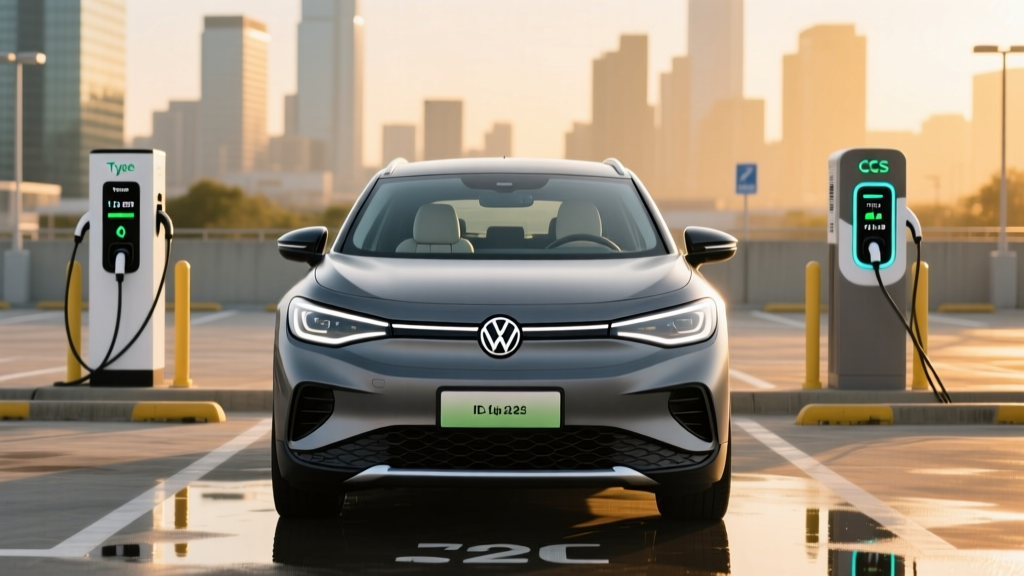
The ID.4's charging profile is competent but not class-leading. Its 170 kW peak DC fast-charge rate means you'll add roughly 70% of the battery (10–80%) in about 28 minutes on a capable 350 kW Electrify America or Tesla Supercharger (NACS-adapter) station. The charge curve is the important nuance: VW sustains near-peak power up to roughly 55% SoC, then tapers progressively. Charging from 80–100% can take nearly as long as 10–80%, so plan road-trip stops to 80% and keep moving.
| Charge Level | Power | Miles Added per Hour | Best Use Case |
|---|---|---|---|
| Level 1 (120V) | ~1.4 kW | ~4–5 mi/hr | Overnight trickle, emergencies |
| Level 2 (240V, 48A) | ~11.5 kW | ~35–38 mi/hr | Home/workplace daily charging |
| DC Fast Charge | 170 kW peak | ~70% in 28 min | Road trips, quick top-ups |
At home on a Level 2 wallbox, a full 0–100% charge takes roughly 7.5 hours. VW includes three years of complimentary 30-minute charging sessions on Electrify America's network with new ID.4 purchases and leases — a meaningful offset for renters or apartment dwellers who can't install a home charger.
Pricing, Lease Specials, and the §30D Tax Credit Question
The headline reason buyers search for ID.4 lease specials is that Volkswagen of America has consistently subsidized the ID.4 with dealer cash, customer rebates, and subvented lease rates — often stacking with federal incentives to produce monthly payments well below the sticker price would suggest. But understanding what you're actually paying requires separating the lease structure from the purchase math.
| Scenario | ID.4 Pro RWD | ID.4 Pro S AWD |
|---|---|---|
| Base MSRP | ~$40,790 | ~$48,790 |
| Destination | +$1,395 | +$1,395 |
| As-Tested (w/ options) | ~$44,500 | ~$53,000 |
| Federal §30D Credit (purchase) | Up to $7,500* | Up to $7,500* |
| Effective Price After Credit | ~$37,000 | ~$45,500 |
| Typical Lease (36 mo, 10k/yr)** | $249–$349/mo | $349–$449/mo |
*§30D credit eligibility requires meeting IRS income caps ($150k single / $300k joint MAGI), MSRP caps ($55,000 for SUVs), and critical-mineral/battery-component sourcing thresholds. Credit can be transferred to the dealer at point-of-sale as a price reduction. Always verify with your tax professional and the IRS §30D guidance.
**Lease payments vary by region, dealer, credit tier, and down payment. VW often applies the §30D credit as a capitalized-cost reduction through the lessor, which is how leases can undercut purchase pricing significantly. Confirm with your dealer whether the current month's incentive stack includes the federal credit pass-through.
- ✅ MSRP ≤ $55,000 for SUVs (ID.4 qualifies on most trims; Pro S AWD Plus may exceed — verify window sticker)
- ✅ Buyer MAGI ≤ $150,000 (single) / $225,000 (HOH) / $300,000 (joint)
- ⚠️ Battery critical-mineral and component sourcing thresholds tighten annually — confirm current-year compliance on fueleconomy.gov
- ✅ Point-of-sale transfer available — reduces your out-of-pocket at signing
- ✅ VIN must be verified via the IRS Energy Credits portal before delivery
Daily Driving: Interior, Tech, and Practicality
The ID.4's cabin is where it either wins you over or reveals its compromises. Passenger space is generous: 41.1 inches of front legroom and 37.6 inches in the rear, which outpaces the Ioniq 5 and rivals the Model Y for adult comfort. The 30.3 cu ft cargo area behind the second row is deep and square, swallowing a week's groceries or two large suitcases without folding a seat. VW ditched the ID.4's early touch-capacitive steering wheel controls for tactile buttons on 2025+ models — a welcome correction that carries into 2026.
The 12.9-inch center infotainment screen runs VW's ID. Software 4.0, which is meaningfully faster and more responsive than the frustrating 2.x versions that plagued 2021–2023 models. Wireless Apple CarPlay and Android Auto are standard. However, the HVAC and volume controls remain on a touch-sensitive slider below the screen — still prone to accidental inputs and less intuitive than a physical knob.
Driver-assistance tech includes VW's IQ.DRIVE suite: adaptive cruise with stop-and-go, lane centering, and Travel Assist (hands-on-wheel highway driving support). This is an SAE Level 2 system — you must remain attentive with hands on the wheel. It's competent for highway commutes but not a hands-free system like GM's Super Cruise or Ford's BlueCruise on prequalified routes.
Pros, Cons, and Honest Trade-Offs
- Strong real-world range (291 mi EPA RWD) with usable 82 kWh NMC pack
- Spacious rear seat and cargo area — genuine family SUV utility
- Aggressive lease incentives often stack with §30D credit pass-through
- Complimentary Electrify America charging (3 years) offsets public-charging cost
- Comfortable ride quality; well-damped and quiet at highway speed
- Improved infotainment responsiveness (ID. Software 4.0)
- Standard heat pump on 2026 models (preserves winter range)
- 170 kW peak DC charging trails Ioniq 5 (240 kW) and Model Y (~250 kW)
- Touch-sensitive HVAC sliders remain frustrating in daily use
- AWD variants lose ~28 miles of range vs RWD
- Infotainment still lacks a physical home button — menu diving required
- Pro S AWD trims can push past $55K MSRP cap, risking §30D eligibility
- Acceleration adequate but unremarkable (7.3s RWD) vs sportier rivals
- Residual values uncertain — aggressive leasing may depress long-term resale
Battery Longevity and Warranty Coverage
Volkswagen backs the ID.4's 82 kWh NMC (nickel-manganese-cobalt) battery with an 8-year/100,000-mile warranty against defects and capacity loss below 70% of original capacity. NMC chemistry offers higher energy density than LFP (lithium iron phosphate), which is why the ID.4 achieves 291 miles from a relatively compact pack — but NMC degrades slightly faster over time and is more sensitive to repeated 100% charges and DC fast-charging heat.
Practical longevity advice: set your daily charge limit to 80% (configurable in the vehicle's charging menu), use DC fast charging primarily for road trips rather than daily top-ups, and take advantage of the ID.4's preconditioning feature — the car will warm or cool the battery when you navigate to a charger, improving charge speed and reducing stress on the cells. Most NMC packs in the VW MEB platform (ID.4, Audi Q4 e-tron) are showing less than 5% degradation at 60,000 miles in European fleet data, which is reassuring for long-term owners.
Is the ID.4 Worth It vs. the Competition?
The ID.4 occupies a specific lane: it's the comfortable, spacious, practical family EV that wins on value when lease incentives are strong — not on performance or charging speed. Here's how it stacks up against the three rivals you'll cross-shop:
- vs. Hyundai Ioniq 5: The Ioniq 5 charges faster (240 kW, 10–80% in ~18 min) and has a slightly more engaging drive, but its rear seat and cargo area are tighter. If road-trip charging speed is a priority, the Ioniq 5 wins. If passenger and cargo space matter more, the ID.4 does.
- vs. Tesla Model Y: The Model Y's Supercharger network access, efficiency, and software ecosystem remain benchmarks, but its ride quality is firmer, its cabin more minimalist (no instrument cluster), and its pricing less incentivized. The ID.4 is the more traditional, comfort-oriented choice.
- vs. Ford Mustang Mach-E: The Mach-E is sportier to drive and offers a BlueCruise hands-free option on highways, but its rear seat is noticeably tighter and its cargo area smaller. The ID.4 is the better family hauler; the Mach-E is the driver's pick.
Frequently Asked Questions
What is the real-world range of the 2026 VW ID.4?
The EPA rates the ID.4 Pro RWD at 291 miles and the AWD Pro S at 263 miles. In real-world mixed driving at highway speeds (65–75 mph) in moderate temperatures, expect 240–270 miles. In winter conditions below 32°F, range drops to roughly 200–230 miles due to battery chemistry and cabin heating demands. The 2026 model's standard heat pump mitigates some of this loss compared to earlier ID.4s without one.
How fast does the ID.4 charge at home and on DC fast chargers?
At home on a Level 2 (240V, 48A) wallbox, the ID.4 charges at roughly 11.5 kW, adding about 35–38 miles of range per hour — a full charge takes approximately 7.5 hours. On a DC fast charger, it peaks at 170 kW and reaches 10–80% in about 28 minutes. The charge curve tapers significantly above 80%, so plan road-trip stops to 80% rather than waiting for a full charge.
Does the 2026 ID.4 qualify for the $7,500 federal EV tax credit?
The ID.4 qualifies for up to $7,500 under IRS §30D, provided you meet income caps ($150K single / $300K joint MAGI), the vehicle's MSRP is at or below $55,000 (SUV threshold), and the battery meets current-year critical-mineral and component sourcing rules. Most ID.4 trims fall under the MSRP cap, but fully optioned Pro S AWD Plus models can exceed it — always check the window sticker. The credit can be transferred to the dealer at point-of-sale, reducing your out-of-pocket cost. Consult IRS guidance and a tax professional for your specific situation.
Are ID.4 lease specials actually a better deal than buying?
Often, yes — when Volkswagen structures aggressive lease incentives, the lessor (typically VW Credit) can capture the §30D credit and apply it as a capitalized-cost reduction, lowering your monthly payment in a way that's difficult to replicate with a purchase loan. The trade-off: you don't own the vehicle at the end, and mileage overages (typically $0.20–$0.25/mile) can add up. If you drive under 12,000 miles per year and like swapping vehicles every 36 months, the lease is usually the math winner. If you plan to keep the car 5+ years, purchasing with the §30D credit applied upfront typically costs less long-term.
How does the ID.4 compare to the Hyundai Ioniq 5 and Tesla Model Y?
The ID.4 wins on rear-seat space, cargo volume, and ride comfort. The Ioniq 5 charges significantly faster (240 kW vs. 170 kW) and is the better road-trip vehicle. The Model Y leads in efficiency, software, and Supercharger network access. Choose the ID.4 if family practicality and lease value are your top priorities; choose the Ioniq 5 for charging speed; choose the Model Y for the tech ecosystem and efficiency.
What's the biggest drawback of the ID.4?
The most consistent owner complaint is the infotainment interface: touch-sensitive HVAC sliders, lack of physical shortcut buttons, and occasional software lag (improved but not eliminated in ID. Software 4.0). The 170 kW DC charging rate also trails key competitors, adding 5–10 minutes to road-trip stops compared to an Ioniq 5 or Model Y.