Quick Verdict: Is the VW ID.4 Worth Leasing in 2026?
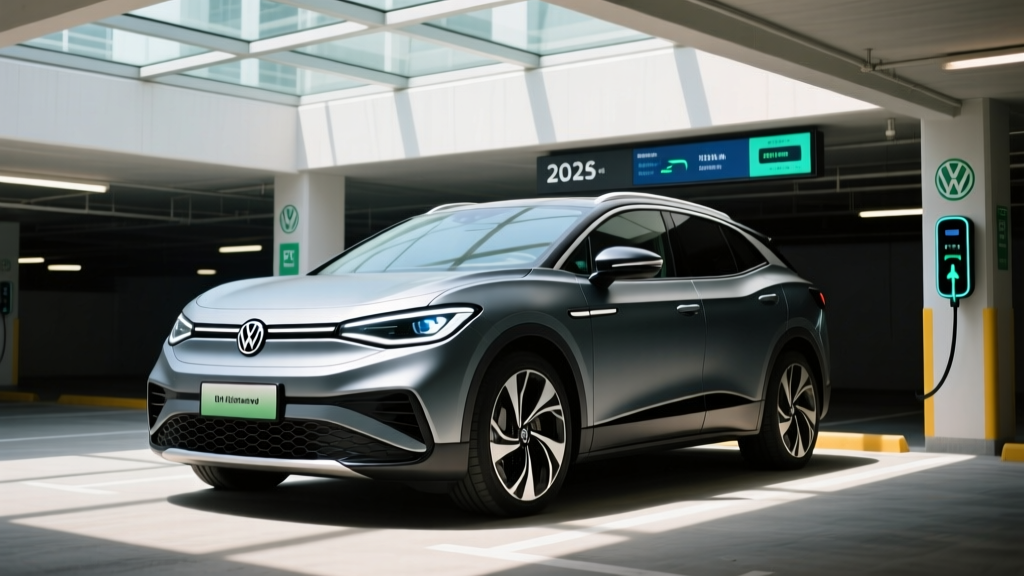
The 2026 Volkswagen ID.4 occupies a specific niche in the compact electric SUV segment: practical, unpretentious, and priced to undercut rivals like the Tesla Model Y and Hyundai Ioniq 5. For buyers evaluating a VW ID.4 lease, the math often works in your favor — lease payments absorb the steepest depreciation years, and VW's aggressive lease incentives (often $5,000–$7,500 in dealer cash or factory support) can make monthly payments competitive with gas crossovers. The ID.4 delivers a comfortable ride, decent cargo space, and acceptable charging speeds, but its infotainment software and real-world highway range remain its weakest links.
Range Reality Check
EPA Estimated: 275 miles (RWD Pro S) / 263 miles (AWD Pro S)
Real-World Expectation: Plan for 230–250 miles in mixed highway driving at 70 mph. In winter conditions (below 35°F), expect a 15–25% reduction, dropping usable range to roughly 190–220 miles depending on cabin heat usage and terrain. City driving with regenerative braking recovers closer to the EPA sticker.
Spec Table: 2026 VW ID.4 at a Glance
| Attribute | RWD (Pro / Pro S) | AWD (Pro S / Pro S Plus) |
|---|---|---|
| EPA Range | 275 mi (Pro S) | 263 mi |
| Battery (Usable) | 82 kWh (NMC) | 82 kWh (NMC) |
| Horsepower | 282 hp | 335 hp |
| 0–60 mph | 7.7 sec | 5.4 sec |
| Max DC Fast Charge | 170 kW | 170 kW |
| 10–80% DCFC Time | ~29 min | ~29 min |
| Level 2 Home Charge | 11 kW (~37 mi/hr) | 11 kW (~37 mi/hr) |
| MPGe (Combined) | 107 MPGe | 102 MPGe |
| Efficiency | 31 kWh/100 mi | 33 kWh/100 mi |
| Base MSRP (2026) | $41,995 (Pro) | $49,595 (Pro S AWD) |
| As-Tested (Pro S Plus AWD) | — | $55,795 |
| Battery Warranty | 8 years / 100,000 miles | |
| Vehicle Warranty | 4 years / 50,000 miles (bumper-to-bumper) | |
Sources: EPA fueleconomy.gov, Volkswagen USA
Charging Speeds: DC Fast Charging and Home Level 2
The ID.4's charging architecture is adequate but not class-leading. Here's what you'll see at the plug:
| Charging Level | Power (kW) | Speed (miles of range per hour) | Notes |
|---|---|---|---|
| Level 1 (120V household) | ~1.4 kW | ~4 mi/hr | Emergency/trickle only; full charge takes 60+ hours |
| Level 2 (240V home/public) | 11 kW (max) | ~37 mi/hr | Full 0–100% in ~9 hours; overnight charge is practical |
| DC Fast Charge (CCS/NACS) | 170 kW (peak) | ~230 mi/hr at peak | 10–80% in ~29 min; tapers hard above 80% SoC |
Charging curve reality: The ID.4 peaks at 170 kW only between roughly 10–30% State of Charge. By 50% SoC, you're seeing ~130 kW, and above 80%, speeds drop to 40–50 kW. This is why VW quotes 10–80% times — pushing past 80% on a road trip adds 20+ minutes for minimal range gain. Plan your stops to 80% and keep moving.
VW includes 3 years of complimentary charging on the Electrify America network (typically 2,000 kWh or a set session cap, depending on current promotions). For 2026 models, the ID.4 ships with a NACS port in North America, granting native access to Tesla Superchargers via VW's adapter program or direct compatibility depending on production date.
Real-World Range: What You'll Actually Drive
The EPA's 275-mile figure for the RWD Pro S assumes a mix of city and highway driving at moderate temperatures. In our experience with VW's MEB platform:
- Highway (70–75 mph, summer): 240–255 miles achievable
- Highway (70–75 mph, winter 30°F): 195–220 miles — the ID.4's lack of a standard heat pump on lower trims hurts here, as resistive cabin heating draws significant battery power
- City/commuter (sub-60 mph, regen-heavy): 265–285 miles, occasionally exceeding EPA
- Cold-weather city (20°F): 215–240 miles
The 82 kWh (usable) battery uses NMC (nickel manganese cobalt) chemistry, which offers higher energy density than LFP but is more sensitive to sustained 100% SoC storage. VW recommends daily charging to 80% for battery longevity, using the vehicle's built-in charge-limit setting. For road trips, charge to 100% and depart immediately.
Pricing, Trim Levels, and Federal Tax Credit Eligibility
The 2026 ID.4 lineup spans four primary trims:
| Trim | Drivetrain | MSRP | Key Features |
|---|---|---|---|
| Standard Range | RWD | $39,995 | 63 kWh battery, ~206 mi range, 170 hp |
| Pro | RWD | $41,995 | 82 kWh, 275 mi, 12" touchscreen, heated seats |
| Pro S | RWD | $46,595 | Panoramic roof, 20" wheels, power liftgate |
| Pro S AWD | AWD | $49,595 | Dual-motor, 335 hp, 263 mi range |
| Pro S Plus AWD | AWD | $55,795 | Head-up display, premium audio, ventilated seats |
Federal Tax Credit (§30D) — Lease vs. Buy
Here's where leasing gets interesting. Under current IRS rules for 2026:
- Buying: The ID.4 may qualify for up to $7,500 under §30D, but eligibility depends on battery-critical-mineral sourcing, buyer AGI caps ($150k single / $300k joint), and the vehicle's MSRP staying under the $80,000 SUV cap. VW's battery sourcing compliance has varied by production batch — verify the specific VIN's eligibility via the IRS portal at irs.gov before signing.
- Leasing: Under the "commercial vehicle" loophole (§45W), the lessor (VW Credit or the dealership's leasing arm) claims the $7,500 credit and can pass it to you as a capitalized-cost reduction. This means even buyers who exceed income caps or whose VINs don't meet §30D sourcing rules can often benefit from the full $7,500 as a lease discount. This is the single biggest financial argument for a VW ID.4 lease over a purchase.
| Scenario | Pro S RWD MSRP | After Incentive | Est. Monthly (36-mo lease, $3k down) |
|---|---|---|---|
| Lease (credit passed through) | $46,595 | $39,095 effective cap cost | ~$299–$379/mo* |
| Buy (§30D qualified) | $46,595 | $39,095 after credit | ~$580–$650/mo (6.5% APR, 72-mo) |
| Buy (no credit — income/sourcing fail) | $46,595 | $46,595 | ~$690–$760/mo |
*Lease payments vary by dealer, region, money factor, residual value, and current VW incentives. VW frequently offers $5,000–$7,500 in lease cash on the ID.4, which can push payments below $300/mo in competitive markets.
Interior, Cargo Space, and Technology
The ID.4's cabin prioritizes function over flair. Passenger space is generous for the segment:
- Front legroom: 41.1 inches
- Rear legroom: 37.6 inches (competitive with the RAV4 and CR-V)
- Cargo (behind rear seats): 30.3 cu ft
- Cargo (rear seats folded): 64.2 cu ft
- No frunk — the MEB platform's front end houses power electronics, eliminating front-trunk storage
The 12.9-inch infotainment screen (upgraded from prior model years) runs VW's ID. Software 4.0, which has improved responsiveness and voice recognition compared to the launch-year ID.4. Wireless Apple CarPlay and Android Auto are standard. However, the capacitive-touch slider controls for volume and temperature remain a common complaint — they lack backlighting at night and are too easy to bump accidentally.
Driver assistance: VW's IQ.DRIVE suite is standard and includes adaptive cruise control with stop-and-go, lane-keeping assist, and emergency braking. This is a SAE Level 2 system — you must keep hands on the wheel and eyes on the road. It is not self-driving. The system is competent but not as smooth as Ford's BlueCruise or GM's Super Cruise on mapped highways.
Pros and Cons: The Honest Assessment
Pros
- Lease economics are excellent — commercial credit loophole + VW incentives
- Comfortable, quiet ride quality; compliant suspension
- Spacious rear seat and cargo area for the class
- Strong 8-year/100,000-mile battery warranty
- NACS port on 2026 models unlocks Supercharger network
- AWD model's 5.4-sec 0–60 is genuinely quick for a family SUV
Cons
- 170 kW peak DC charging trails rivals (Ioniq 5: 240+ kW)
- No heat pump standard on base trims — cold-weather range suffers
- Capacitive-touch controls are frustrating in daily use
- No front trunk (frunk) for cable storage
- Real-world highway range 15–20% below EPA in winter
- Infotainment still a step behind Tesla/Hyundai in responsiveness
How the ID.4 Stacks Up Against Key Competitors
| Spec | 2026 VW ID.4 Pro S AWD | 2026 Tesla Model Y LR AWD | 2026 Hyundai Ioniq 5 Limited AWD |
|---|---|---|---|
| EPA Range | 263 mi | 320 mi | 290 mi |
| Battery | 82 kWh NMC | ~78 kWh NMC | 84 kWh NMC |
| DC Fast Charge (peak) | 170 kW | 250 kW | 240 kW |
| 10–80% Time | ~29 min | ~20 min | ~18 min |
| 0–60 mph | 5.4 sec | 4.8 sec | 5.1 sec |
| Base MSRP (AWD top trim) | $49,595 | $52,490 | $54,900 |
| Cargo (rear seats up) | 30.3 cu ft | 30.2 cu ft | 27.2 cu ft |
The ID.4 loses on range and charging speed but wins on starting price and rear-seat comfort. If road-trip charging time matters to you, the Ioniq 5's 800V architecture is meaningfully faster. If you mostly charge at home and want the lowest monthly lease, the ID.4's incentive stack is hard to beat.
Who Should Lease the VW ID.4?
Choose the ID.4 lease if:
- You charge primarily at home (Level 2 overnight) and rarely DC fast-charge
- You want a comfortable commuter/family hauler and don't need 300+ miles of range
- You want to exploit the commercial-lease tax-credit loophole regardless of income
- You value ride comfort and cabin quietness over sporty handling
Look elsewhere if:
- You road-trip frequently and want the fastest possible DC charging (choose Ioniq 5 or Model Y)
- You live in a cold climate and need maximum winter range (consider a heat-pump-equipped rival)
- You want the most advanced infotainment or hands-free highway driving assist
Frequently Asked Questions
What is the real-world range of the VW ID.4?
The EPA rates the RWD Pro S at 275 miles and the AWD at 263 miles. In real-world highway driving at 70 mph in summer, expect 240–255 miles. In winter, plan for 195–220 miles due to battery chemistry and cabin heating loads.
How fast does the VW ID.4 charge at home and on the road?
At home on a 240V Level 2 charger, the ID.4 accepts up to 11 kW, adding roughly 37 miles of range per hour — a full charge takes about 9 hours overnight. On DC fast chargers, it peaks at 170 kW and charges from 10–80% in approximately 29 minutes, though the charge curve tapers significantly above 80%.
How much does a VW ID.4 cost after tax credits?
When leasing, the $7,500 federal commercial-vehicle credit (§45W) is typically passed to you as a cap-cost reduction, effectively lowering the Pro S from $46,595 to around $39,095 before dealer incentives. Combined with VW's frequent $5,000–$7,500 lease cash offers, effective pricing can drop into the low $30,000s.
Does the VW ID.4 qualify for the federal EV tax credit?
When purchasing, §30D eligibility depends on your VIN's battery-sourcing compliance, your adjusted gross income (under $150k single / $300k joint), and the MSRP cap ($80k for SUVs). When leasing, the commercial-vehicle loophole (§45W) bypasses these restrictions, making the credit available regardless of income or sourcing — verify with your dealer and a tax professional per IRS guidelines.
Is it worth buying vs. key competitors?
The ID.4 offers the best lease value in its class when VW incentives are active, but it trails the Tesla Model Y and Hyundai Ioniq 5 in range, charging speed, and tech sophistication. If home charging and monthly cost are your priorities, the ID.4 is a strong pick. For road-trippers, the Ioniq 5's 18-minute 10–80% charging is a meaningful advantage.
What are the biggest pros and cons of the VW ID.4?
Top pros: excellent lease economics, comfortable ride, spacious interior, strong battery warranty, NACS Supercharger access. Top cons: slower DC charging than rivals, no standard heat pump on base trims, frustrating touch controls, no frunk, and noticeable winter range loss.
What is the ID.4's battery warranty?
VW covers the ID.4's high-voltage battery for 8 years or 100,000 miles against defects and capacity loss below 70% of original capacity, per VW's warranty terms. The bumper-to-bumper warranty is 4 years / 50,000 miles.