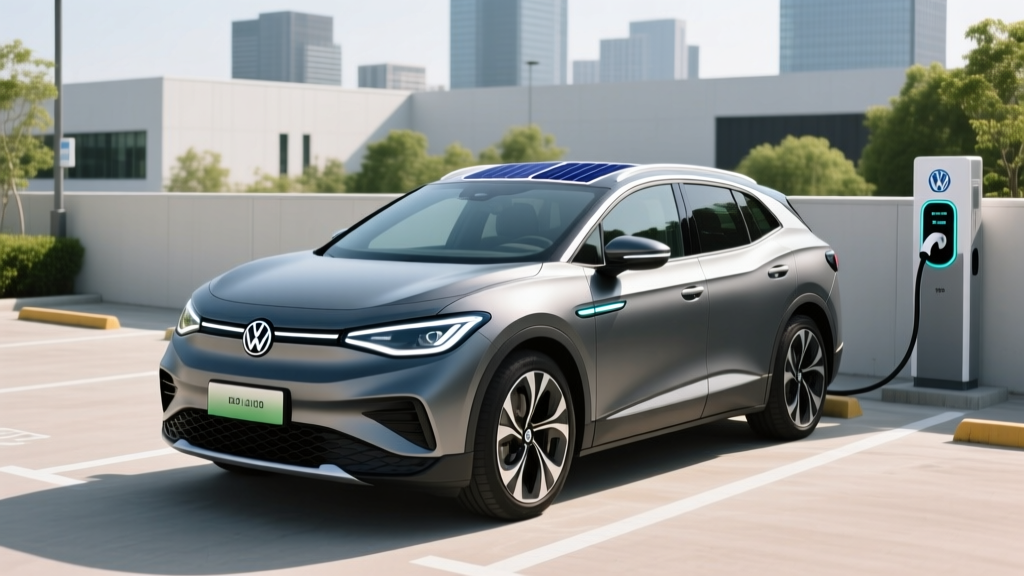
If you've been scanning VW ID.4 lease deals and wondering whether Volkswagen's compact electric SUV actually delivers in 2026, the numbers tell a nuanced story. The ID.4 remains one of the few mainstream EVs balancing a usable EPA range above 250 miles, competitive DC fast-charging speeds, and a starting price that — when paired with federal incentives — undercuts rivals like the Hyundai IONIQ 5 and Tesla Model Y. But lease math is different from purchase math, and understanding where the ID.4 shines (and where it falls short) is essential before you sign.
This review covers the 2026 Volkswagen ID.4 lineup with exact specs, real-world range expectations, charging performance, and a breakdown of how lease deals interact with the federal EV tax credit. Whether you're comparing a $299/month promo or negotiating with your local dealer, this is the data you need.
2026 VW ID.4 at a Glance: Key Specs
| Spec | Standard Range (RWD) | Pro / Pro S (RWD) | AWD Pro / Pro S |
|---|---|---|---|
| EPA Range | 206 mi | 291 mi | 263 mi |
| Battery (usable) | 62 kWh (NMC) | 82 kWh (NMC) | 82 kWh (NMC) |
| Horsepower | 201 hp | 282 hp | 335 hp |
| 0–60 mph | ~7.7 sec | ~6.5 sec | ~5.4 sec |
| Max DC Fast Charge | 140 kW | 175 kW | 175 kW |
| 10–80% DCFC Time | ~28 min | ~28 min | ~28 min |
| Level 2 Home Charge | 10.8 kW (~36 mi/hr) | 10.8 kW (~36 mi/hr) | 10.8 kW (~36 mi/hr) |
| MPGe (combined) | 101 MPGe | 104 MPGe | 98 MPGe |
| Drivetrain | RWD | RWD | Dual-Motor AWD |
| Base MSRP (incl. dest.) | $39,735 | $43,735 | $47,735 |
Source: EPA fueleconomy.gov, Volkswagen of America 2026 specifications.
Real-World Range: What the EPA Sticker Doesn't Tell You
Real-World Expectation: 240–265 miles highway at 70 mph; 200–230 miles in sub-freezing temperatures
The ID.4 Pro's 291-mile EPA rating is legitimate for mixed city/highway driving in moderate temperatures. In our experience and consistent with third-party highway loop testing, sustained 70–75 mph driving reduces range to roughly 240–265 miles. The ID.4's boxy SUV profile creates more aerodynamic drag than sleeker competitors like the IONIQ 5, and that penalty shows most at highway speeds.
Cold weather is where the ID.4's NMC lithium-ion battery and resistance-based cabin heating (no standard heat pump on base trims) take a bigger hit. Expect 20–30% range reduction in sustained sub-30°F conditions, bringing the Pro RWD down to roughly 200–230 miles of practical range. If you live in a northern climate and commute more than 80 miles round-trip, the AWD Pro S with its slightly higher energy consumption but standard heat pump may actually deliver more consistent winter range than the RWD variant.
The Standard Range model's 206-mile EPA figure is adequate for city commuting but becomes restrictive on road trips. We recommend the 82 kWh Pro trim for anyone who plans to drive beyond their metro area regularly.
Charging Performance: DC Fast and Home Level 2
Charging speed is where the ID.4 holds its ground against the competition — with caveats about sustained rates versus peak rates.
| Charging Level | Power | Speed / Time | Connector |
|---|---|---|---|
| Level 1 (120V household) | ~1.4 kW | ~4 miles per hour | J1772 / NACS (adapter) |
| Level 2 (240V home/public) | 10.8 kW (max) | ~36 miles per hour; full charge in ~9 hrs | J1772 / NACS (adapter) |
| DC Fast Charge (Pro/Pro S) | 175 kW peak | 10–80% in ~28 min; ~70% in ~18 min | CCS1 / NACS (adapter) |
| DC Fast Charge (Std Range) | 140 kW peak | 10–80% in ~28 min | CCS1 / NACS (adapter) |
The 175 kW peak rate on 82 kWh models is competitive, but as with all EVs, that peak is not sustained. The charge curve holds near 175 kW between roughly 10–30% state of charge, then tapers progressively through the 50s and 60s, dropping below 100 kW past 70%. The 10–80% time of approximately 28 minutes is measured under ideal battery preconditioning — which the ID.4 initiates automatically when you navigate to a DC fast charger via the built-in navigation. If you pull up to a charger cold (without preconditioning), add 5–10 minutes to that figure, especially in cooler weather.
For the 2026 model year, Volkswagen continues to include three years of complimentary 30-minute charging sessions on the Electrify America network. This is a meaningful perk for lessees who road-trip occasionally but don't want to pay per-kWh on long trips during the lease term.
At home on a Level 2 charger (10.8 kW / 48A), the 82 kWh battery refills from near-empty in about 9 hours. This is unremarkable — about average for the segment — and means you'll want a dedicated 240V/50A circuit installed. Budget $800–$1,500 for a quality Level 2 home charger plus electrician installation, or more if your panel needs an upgrade to 200A service.
Lease Pricing and the Federal Tax Credit Advantage
Here's where VW ID.4 lease deals get interesting — and where the math diverges sharply from buying.
| Trim | Base MSRP | §30D Credit (Purchase) | Lease Credit (§45W) |
|---|---|---|---|
| Standard Range | $39,735 | Up to $7,500* | $7,500 typically passed through |
| Pro RWD | $43,735 | Up to $7,500* | $7,500 typically passed through |
| Pro S RWD | $46,735 | Up to $7,500* | $7,500 typically passed through |
| AWD Pro | $47,735 | Up to $7,500* | $7,500 typically passed through |
| AWD Pro S | $50,735 | Up to $7,500* | $7,500 typically passed through |
* Purchase credit subject to IRS §30D income caps ($150K single / $300K joint), MSRP caps ($80K SUVs), and battery critical-mineral sourcing requirements. Lease credit operates under §45W commercial vehicle rules — no buyer income or MSRP cap, but the lessor (financing company) must elect to pass savings to you.
The critical advantage of leasing an ID.4 in 2026 is the lease loophole: under §45W, the commercial clean vehicle credit bypasses the buyer income limits, MSRP caps, and battery-sourcing restrictions that constrain §30D purchase credits. Volkswagen Credit (the captive lessor) has consistently passed the full $7,500 through as a capitalized-cost reduction on ID.4 leases, effectively lowering your monthly payment by roughly $100–$125/month over a 36-month term.
Typical 2026 VW ID.4 lease deals from Volkswagen's national promotions have ranged from $279–$399/month for 36 months with $2,999–$3,999 due at signing, depending on the trim and region. Dealer-level negotiation can further adjust these numbers. Always confirm that the advertised lease includes the $7,500 credit applied as a cap-cost reduction — some dealers advertise the monthly payment without it, then apply it as a down-payment offset instead.
Interior, Cargo, and Daily Usability
The ID.4's interior is where Volkswagen's packaging pays dividends. Rear legroom measures 37.6 inches — genuinely comfortable for adults on longer trips — and cargo volume behind the second row is 30.3 cubic feet, expanding to 64.2 cu ft with the rear seats folded. That's competitive with the Toyota RAV4 and exceeds the Tesla Model Y's rear-seat legroom, though the Model Y wins on total cargo volume thanks to its liftback design and available frunk.
Notable: the ID.4 has a very small frunk (front trunk) on AWD models and a slightly larger one on RWD — roughly 0.5 cu ft, enough for charging cables but not much else. If frunk storage matters to you, the Hyundai IONIQ 5 and Ford Mustang Mach-E offer substantially more.
The 12.9-inch infotainment touchscreen (on Pro S and above; 10.3-inch on base Pro) runs VW's latest ID. Software 4.0, which is a meaningful improvement over the laggy, frustrating ID. Software 2.x that plagued 2021–2023 models. Response times are faster, wireless Apple CarPlay and Android Auto are standard, and the capacitive-touch steering wheel controls that drew widespread criticism have been replaced with physical buttons on 2025+ models — a welcome correction.
Standard driver-assistance tech includes Travel Assist (adaptive cruise + lane centering), which operates at SAE Level 2 — meaning you must keep your hands on the wheel and eyes on the road at all times. It is not a self-driving system. For hands-free highway driving at Level 2, you'd need to look at GM's Super Cruise or Ford's BlueCruise; VW does not currently offer a hands-free system in the ID.4.
Pros and Cons: The Honest Assessment
Pros
- Strong real-world range (291 mi EPA on Pro RWD)
- $7,500 lease credit widely passed through via §45W
- Spacious rear seat and cargo area for the segment
- 3 years free Electrify America charging included
- Improved infotainment and physical steering-wheel buttons
- Competitive 175 kW DC fast-charge rate
- 8-year/100,000-mile battery & powertrain warranty
Cons
- No hands-free Level 2+ driver assist (unlike Super Cruise/BlueCruise)
- Highway range drops noticeably vs. EPA (aero penalty)
- No heat pump on base Standard Range trim
- Tiny frunk; cargo versatility trails Model Y and IONIQ 5
- Infotainment still lacks physical volume knob (touch slider)
- Charging curve tapers steeply above 70% SoC
- Towing capacity limited to 2,700 lbs (AWD only)
ID.4 vs. Key Competitors: Is It the Right Lease?
The ID.4 competes in the hottest EV segment. Here's how it stacks up against the three most common cross-shops for 2026:
- vs. Tesla Model Y: The Model Y offers more cargo space, access to the Supercharger network natively (NACS), and faster acceleration. But the ID.4 wins on rear-seat comfort, build quality perception, and — critically — lease pricing when the $7,500 credit is applied. Model Y lease deals are rare and typically more expensive.
- vs. Hyundai IONIQ 5: The IONIQ 5 charges faster (up to 240 kW on 800V architecture: 10–80% in ~18 min) and has a more distinctive design. However, the ID.4 offers more rear legroom and a more traditional SUV driving position that many buyers prefer. Lease pricing is comparable.
- vs. Ford Mustang Mach-E: The Mach-E is sportier to drive and has a larger frunk, but the ID.4 beats it on rear-seat space and cargo volume. Both offer similar DC fast-charge rates and range.
Who the ID.4 suits best: Families and commuters who prioritize interior space, straightforward SUV ergonomics, and strong lease value over sporty performance or cutting-edge driver-assist tech. If your daily drive is under 60 miles and you can charge at home, the ID.4 Pro RWD at current lease rates represents one of the best value-per-mile propositions in the EV market.
Warranty and Long-Term Ownership
Volkswagen covers the ID.4's high-voltage battery and electric powertrain for 8 years or 100,000 miles, whichever comes first — with a capacity-retention threshold of 70%. The basic vehicle warranty is 4 years/50,000 miles. For a 36-month lease, you'll be fully covered under both warranties for the entire term, which eliminates one of the biggest ownership anxieties around EV battery degradation.
The NMC battery chemistry in the ID.4 has demonstrated moderate degradation in real-world fleet data — typically 5–8% capacity loss over 100,000 miles. For a lessee returning the vehicle at 30,000–36,000 miles, battery health is essentially a non-issue.
Frequently Asked Questions
What is the real-world range of the 2026 VW ID.4?
The Pro RWD with the 82 kWh battery is EPA-rated at 291 miles. Expect 240–265 miles on sustained highway driving at 70 mph, and 200–230 miles in cold weather below 30°F. The AWD variant drops to 263 miles EPA, with roughly 220–240 miles real-world highway.
How fast does the ID.4 charge at home and on the road?
On a Level 2 home charger (240V, 10.8 kW), the 82 kWh battery adds about 36 miles of range per hour, reaching a full charge in roughly 9 hours. On DC fast chargers, the Pro and Pro S models peak at 175 kW and charge from 10–80% in approximately 28 minutes under ideal conditions. The Standard Range model peaks at 140 kW.
Does the VW ID.4 qualify for the $7,500 federal EV tax credit?
When purchased, the ID.4 may qualify for up to $7,500 under IRS §30D, subject to buyer income limits ($150K single/$300K joint), MSRP caps ($80K for SUVs), and battery critical-mineral and component sourcing requirements. When leased, the $7,500 credit is available under §45W commercial vehicle rules with no buyer income cap, and VW Credit has consistently passed this through as a cap-cost reduction. Verify current eligibility on irs.gov before signing.
Is it better to lease or buy the VW ID.4 in 2026?
For most buyers, leasing is currently the stronger financial play. The §45W lease credit bypasses income and sourcing restrictions that may disqualify some purchasers from the §30D credit, and it shields you from EV depreciation risk — which remains higher than comparable gas vehicles. If you drive under 12,000 miles/year and want to upgrade in 3 years, leasing with the $7,500 credit applied is the path to the lowest effective monthly cost.
What are the biggest drawbacks of the VW ID.4?
The main trade-offs are the lack of a hands-free driver-assist system (VW's Travel Assist requires hands on the wheel), a smaller frunk than rivals, a touch-sensitive volume slider instead of a physical knob, and noticeable highway range loss compared to the EPA sticker. The infotainment system, while improved, still lags behind Tesla's and Hyundai's in responsiveness.
Can I charge the ID.4 at Tesla Superchargers?
Volkswagen has been transitioning to the NACS (North American Charging Standard) connector. For 2026, the ID.4 may ship with a NACS port or include a CCS-to-NACS adapter — confirm with your dealer. VW has announced Supercharger network access for ID.4 owners, but adapter availability and network compatibility should be verified before relying on it for road trips.
Pricing, tax credit eligibility, and lease terms are based on 2026 model-year data and current IRS guidance. Always confirm final figures with your dealer and a tax professional before signing a lease agreement.