Quick Verdict: Is the VW ID.4 Lease Worth It in 2026?
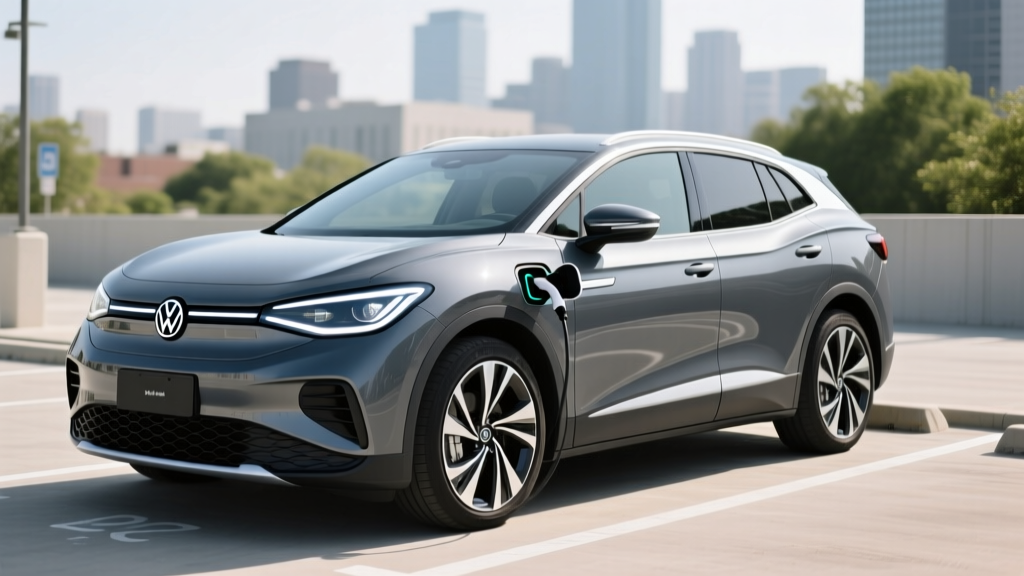
The Volkswagen ID.4 occupies a specific niche in the EV market: a practical, comfortable compact electric crossover that prioritizes daily usability over performance bragging rights. For 2026, VW continues to refine the ID.4 with updated infotainment software and competitive pricing that makes it one of the more accessible all-electric SUVs available. If you've been searching for a strong VW ID.4 lease deal, the math can be compelling — especially when you factor in federal incentives that VW often passes through as lease credits.
But before you sign, you need the real numbers: what range you'll actually see on the highway in January, how fast it charges on a road trip, and whether the total monthly cost beats a Tesla Model Y or Hyundai Ioniq 5 lease. This review gives you the exact data to decide.
Range, Battery & Real-World Efficiency
The 2026 VW ID.4 is offered with two battery configurations. The Standard Range (Pro S trim and below) uses a 62 kWh usable lithium-ion NMC (nickel manganese cobalt) pack, while the Pro and AWD Pro models carry an 82 kWh usable NMC battery. Volkswagen does not currently offer an LFP (lithium iron phosphate) option in the ID.4 lineup, which means you're getting higher energy density but should follow the 80% daily charge recommendation to maximize long-term battery health.
| Specification | Standard Range (RWD) | Pro (RWD) | AWD Pro |
|---|---|---|---|
| Battery (usable) | 62 kWh (NMC) | 82 kWh (NMC) | 82 kWh (NMC) |
| EPA Range | 206 mi | 275 mi | 263 mi |
| EPA Efficiency | 104 MPGe | 107 MPGe | 102 MPGe |
| kWh/100 mi | 32 | 31 | 33 |
Real-World Range Reality Check
EPA sticker: 275 miles (Pro RWD) / 263 miles (AWD Pro)
What to expect: In mixed driving at moderate temperatures, plan for roughly 240–260 miles from the Pro RWD. On sustained highway trips at 70–75 mph, expect 220–240 miles before you're hunting for a charger. In cold weather (below 30°F), range can drop 20–30%, meaning a winter highway drive might yield 185–210 miles from a full charge. The ID.4's heat pump (standard on most trims) helps mitigate this compared to EVs without one, but physics still applies.
For context, fueleconomy.gov lists the ID.4 Pro RWD at 107 MPGe combined, which translates to roughly 31 kWh per 100 miles — competitive with the Hyundai Ioniq 5 but slightly less efficient than the Tesla Model Y due to the VW's boxier aerodynamics and heavier curb weight.
Charging Speed: DC Fast Charge & Home Level 2
Charging speed is where the ID.4 shows both its strengths and its limits. The Pro models with the 82 kWh pack support up to 175 kW peak DC fast charging on a CCS connector (or NACS with VW's included adapter on 2025+ models). Volkswagen quotes a 10–80% charge time of approximately 28 minutes under ideal conditions.
| Charging Level | Power / Rate | Time / Miles Added |
|---|---|---|
| Level 1 (120V household) | ~1.4 kW | ~4–5 miles per hour |
| Level 2 (240V home, 48A) | 11 kW | ~32 miles per hour; full charge in ~9 hrs (82 kWh) |
| DC Fast Charge (peak) | 175 kW (CCS/NACS) | 10–80% in ~28 min; ~190 mi added in 30 min (ideal) |
Here's what the spec sheet doesn't tell you: the ID.4's charge curve tapers noticeably after 80%. Charging from 80–100% on DC fast charge can add another 20+ minutes. On road trips, the most time-efficient strategy is to charge from 10–80% and then hit the road — a pattern that works well given the 275-mile EPA range. The ID.4 also supports battery preconditioning when you navigate to a DC fast charger in the infotainment system, warming the pack for faster charging in cold weather. Always use this feature; skipping it can add 10+ minutes to your charge time in winter.
At home on a Level 2 charger (11 kW onboard charger), the 82 kWh pack replenishes fully in roughly 9 hours. This means an overnight charge easily covers even heavy daily driving. If your home electrical panel supports a 60A circuit (48A continuous), you'll get the full 11 kW. On a 40A circuit (32A continuous), expect about 7.7 kW, which still refills the pack in roughly 11 hours — sufficient for most commuters.
Performance, Drivetrain & What It's Like to Drive
The 2026 ID.4 is not a performance EV, and it doesn't pretend to be. The rear-wheel-drive Pro produces 282 horsepower and hits 0–60 mph in approximately 7.3 seconds. The AWD Pro adds a front motor for a combined 335 horsepower and a 0–60 time of about 5.4 seconds. Both versions are electronically limited to a top speed around 112 mph.
| Metric | Standard Range RWD | Pro RWD | AWD Pro |
|---|---|---|---|
| Horsepower | 201 hp | 282 hp | 335 hp |
| 0–60 mph | ~9.0 sec | ~7.3 sec | ~5.4 sec |
| Drivetrain | Rear-wheel drive | Rear-wheel drive | Dual-motor AWD |
| Towing Capacity | N/A (not rated) | 2,200 lbs (braked) | 2,700 lbs (braked) |
On the road, the ID.4 rides with the composed, slightly firm character you'd expect from a German-engineered crossover. The rear-wheel-drive layout gives it a tighter turning circle (31.5 feet curb-to-curb) than many competitors, which makes parking-lot maneuvering surprisingly easy. Regenerative braking is adjustable via steering-wheel paddles, though the ID.4 does not offer true one-pedal driving to a full stop like some rivals. You'll still use the brake pedal in stop-and-go traffic — a minor annoyance for EV veterans accustomed to one-pedal setups.
Pricing, Lease Deals & Federal Tax Credit
The 2026 VW ID.4 starts at approximately $39,735 MSRP for the Standard Range trim and climbs to around $48,000–$52,000 for a fully loaded AWD Pro S Plus with options. Here's the trim-level breakdown:
| Trim | Drivetrain | MSRP (approx.) |
|---|---|---|
| Standard Range | RWD | $39,735 |
| Pro | RWD | $43,735 |
| Pro S | RWD | $46,235 |
| AWD Pro | AWD | $47,735 |
| AWD Pro S Plus | AWD | $51,735 |
Federal Tax Credit & Lease Credit Eligibility
Under IRS §30D rules, the VW ID.4 may qualify for up to $7,500 in federal clean vehicle credits, but eligibility depends on three factors:
- MSRP cap: The ID.4 is classified as an SUV, so the cap is $80,000 — all trims qualify.
- Buyer income cap: Modified AGI must not exceed $150,000 (single), $225,000 (head of household), or $300,000 (joint). If you exceed these, the purchase credit phases out.
- Battery sourcing: Critical mineral and battery component requirements must be met for the full $7,500. VW has worked to shift sourcing, but the exact credit amount ($3,750 or $7,500) can vary by model year and production batch. Verify with your dealer and a tax professional.
The lease advantage: When you lease an ID.4, the §30D credit goes to the lessor (Volkswagen's financing arm), which typically passes it through as a lease capital cost reduction — effectively lowering your monthly payment. This bypasses the buyer income caps entirely, making the lease deal attractive even for higher-income shoppers who wouldn't qualify for the purchase credit. Many VW ID.4 lease deals in 2026 advertise this $7,500 lease credit baked into the monthly price. Always confirm with the dealer that the lease quote reflects the credit.
| Scenario | Approx. Monthly Payment |
|---|---|
| Without lease credit applied | $480–$550 |
| With $7,500 lease credit applied | $280–$350 |
Estimates vary by region, dealer, credit score, and money factor. Always get a detailed lease breakdown before signing.
Interior, Cargo Space & Technology
The ID.4's cabin is spacious and practical, if not luxurious. The flat floor (a benefit of the dedicated MEB EV platform) creates generous rear legroom, and the overall interior volume competes favorably with compact gas crossovers.
| Dimension | Measurement |
|---|---|
| Front headroom | 41.1 in |
| Rear legroom | 37.6 in |
| Cargo (behind rear seats) | 30.3 cu ft |
| Cargo (rear seats folded) | 64.2 cu ft |
| Front trunk (frunk) | Not available (AWD models); small storage on RWD |
The 2026 ID.4 runs VW's latest ID. Software 4.0 infotainment on a 12.9-inch touchscreen. Improvements over earlier model years include faster response times, a revised menu structure, and wireless Apple CarPlay/Android Auto. The digital instrument cluster is compact (5.3 inches) and mounted behind the steering wheel, supplemented by an available augmented-reality head-up display that projects navigation arrows onto the windshield.
Driver-assistance technology includes VW's IQ.DRIVE suite: adaptive cruise control with stop-and-go, lane centering (Travel Assist), automatic emergency braking, and blind-spot monitoring. This is an SAE Level 2 system — it assists with steering and speed but requires the driver to remain fully engaged at all times. It is not self-driving, and it does not compare to GM's Super Cruise for hands-free highway capability.
Battery Warranty & Long-Term Ownership
Volkswagen backs the ID.4's high-voltage battery with an 8-year/100,000-mile warranty (whichever comes first), covering defects and capacity loss below 70% of original capacity. The limited vehicle warranty covers 4 years/50,000 miles. If you're leasing for 36 months, you'll be well within both warranty periods.
For long-term owners, the NMC chemistry in the ID.4 has demonstrated moderate degradation in real-world data from earlier model years — typically 5–8% capacity loss over the first 100,000 miles, which is within industry norms. Following best practices (avoiding frequent 100% charges, using preconditioning, minimizing DC fast charging in extreme cold) can help preserve battery state of health over time.
Pros
- Comfortable ride quality and quiet cabin at highway speeds
- Tight turning circle makes city driving easy
- Competitive lease pricing with $7,500 credit applied
- Spacious rear seat and cargo area for the class
- Heat pump standard on most trims (cold-weather efficiency)
- Free Electrify America charging (typically 2 years/limited kWh)
Cons
- DC fast charging peaks at 175 kW — slower than Hyundai/Kia's 800V architecture
- No true one-pedal driving to a full stop
- Infotainment, while improved, still lags Tesla and Hyundai in responsiveness
- RWD models lack towing capability
- Real-world highway range falls notably short of EPA in cold weather
- No frunk on AWD models
How It Compares: ID.4 vs. Key Competitors
The ID.4 competes directly with the Tesla Model Y, Hyundai Ioniq 5, and Ford Mustang Mach-E. Here's how the numbers stack up:
| Spec | VW ID.4 Pro RWD | Tesla Model Y LR | Hyundai Ioniq 5 LR RWD |
|---|---|---|---|
| EPA Range | 275 mi | 320 mi | 303 mi |
| Battery | 82 kWh (NMC) | ~78 kWh (NMC) | 77.4 kWh (NMC) |
| Peak DC Charge | 175 kW | 250 kW | 235 kW (800V capable) |
| 10–80% DC Time | ~28 min | ~22 min | ~18 min |
| 0–60 mph | 7.3 sec | 5.0 sec | 7.0 sec |
| Cargo (rear seats up) | 30.3 cu ft | 30.2 cu ft | 27.2 cu ft |
| Starting MSRP | ~$43,735 | ~$44,990 | ~$45,500 |
The ID.4's advantage is rarely in raw specs — it's in lease pricing and comfort. VW dealerships frequently discount the ID.4 more aggressively than Tesla or Hyundai discount their models, and the lease credit application can make the monthly payment meaningfully lower. If you prioritize ride comfort, a quiet cabin, and a non-Tesla brand, the ID.4 is the value play. If you need maximum range and the fastest charging, the Ioniq 5 or Model Y wins on paper.
Who Should Lease the VW ID.4?
The ID.4 is best suited for:
- Daily commuters with home Level 2 charging who drive under 60 miles round-trip and want a comfortable, quiet ride.
- Small families who need rear-seat space for car seats and cargo room for strollers and groceries, but don't need three rows.
- Value-conscious EV shoppers who find a strong VW ID.4 lease deal with the $7,500 credit applied, making the monthly cost competitive with gas crossovers.
- Drivers in moderate climates where the 275-mile EPA range is sufficient for most trips without range anxiety.
It is less ideal for frequent long-distance road trippers (the 175 kW charge rate adds time vs. competitors), performance enthusiasts, or those in very cold regions where range loss could push real-world miles below 200 on highway drives.
Frequently Asked Questions
What is the real-world range of the VW ID.4?
The EPA rates the ID.4 Pro RWD at 275 miles and the AWD Pro at 263 miles. In real-world mixed driving, expect 240–260 miles (RWD) in mild weather. Sustained highway driving at 75 mph drops this to roughly 220–240 miles. In cold weather below 30°F, plan for 185–210 miles on the highway. Always precondition the battery before fast charging in cold conditions.
How fast does the ID.4 charge at home and on DC fast chargers?
On a Level 2 home charger at 11 kW, the 82 kWh battery fully charges in about 9 hours. On a DC fast charger, it peaks at 175 kW and charges from 10–80% in approximately 28 minutes under ideal conditions. Charging slows significantly above 80% — plan your road-trip stops around the 10–80% window for efficiency.
Does the VW ID.4 qualify for the $7,500 federal tax credit?
The ID.4 may qualify for up to $7,500 under IRS §30D, subject to buyer income caps ($150K single / $300K joint), the $80K SUV MSRP cap (all trims qualify), and battery-sourcing requirements that can vary by production batch. When leased, the credit typically goes to the lessor and is applied as a capital cost reduction, bypassing buyer income limits. Verify current eligibility on irs.gov and with your dealer.
Is the VW ID.4 worth leasing vs. buying?
Leasing the ID.4 is often the better financial move because the $7,500 lease credit is applied regardless of your income level, battery-sourcing complexities are the lessor's concern, and you avoid long-term depreciation risk on the battery. If you plan to keep the vehicle 6+ years and qualify for the purchase credit, buying may work — but run the numbers with your tax advisor first.
How does the ID.4 compare to the Tesla Model Y for a lease?
The Model Y offers more range (320 vs. 275 mi), faster charging (250 vs. 175 kW), and access to the Supercharger network natively. However, VW ID.4 lease deals are often cheaper monthly due to more aggressive dealer incentives and the lease credit application. If charging speed and range are your top priorities, the Model Y wins. If monthly cost and ride comfort matter more, the ID.4 lease is compelling.
What are the biggest drawbacks of the VW ID.4?
The main limitations are its 175 kW peak DC charging speed (slower than Hyundai/Kia's 800V platform), the lack of true one-pedal driving, real-world range that falls short of the EPA sticker in cold or highway driving, and an infotainment system that, while improved, still trails competitors in responsiveness. For the price and comfort, these are acceptable trade-offs for many buyers — but know them before you sign.