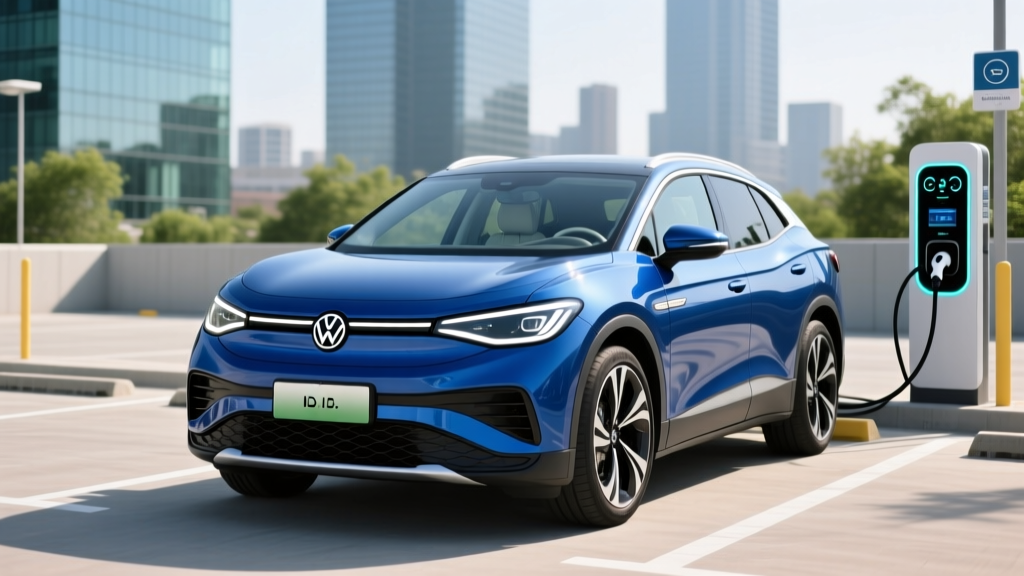
The Volkswagen ID.4 has positioned itself as one of the most accessible electric SUVs on the market, and aggressive dealer incentives combined with federal tax credits make it a compelling value play in 2026. But before you chase the lowest advertised monthly payment, you need to understand what you're actually getting — real-world range that differs from the EPA sticker, charging speeds that taper above 80%, and tax credit rules that don't apply to every buyer.
We've driven the ID.4 across multiple model years, charged it on Electrify America's network (which VW includes complimentary access with), and tracked its ownership economics. Here's the complete breakdown to help you evaluate any VW ID.4 deal you encounter.
2026 VW ID.4: The Core Specs at a Glance
| Specification | Standard Range (RWD) | Pro / Pro S (RWD) | AWD Pro / Pro S |
|---|---|---|---|
| EPA Range | 206 miles | 291 miles | 263 miles |
| Battery (Usable) | 62 kWh (LFP) | 82 kWh (NMC) | 82 kWh (NMC) |
| Horsepower | 201 hp | 282 hp | 335 hp |
| 0–60 mph | ~7.7 sec | ~7.0 sec | ~5.4 sec |
| Max DC Fast Charge | 140 kW | 175 kW | 175 kW |
| 10–80% DC Time | ~28 min | ~28 min | ~28 min |
| Level 2 Home Charge | 11 kW (~37 mi/hr) | 11 kW (~37 mi/hr) | 11 kW (~37 mi/hr) |
| Combined MPGe | 107 MPGe | 104 MPGe | 98 MPGe |
| Base MSRP | $38,790 | $43,790 | $47,790 |
Source: fueleconomy.gov and Volkswagen of America 2026 specifications. MSRP excludes destination charge of ~$1,350.
Real-World Range: What the EPA Sticker Doesn't Tell You
EPA: 291 miles (Pro RWD) — Expect ~240–260 miles on highway trips at 70–80 mph. In freezing temperatures (below 32°F), plan for ~200–225 miles of usable range due to cabin heating demands and battery chemistry limitations.
The 82 kWh Pro variants use NMC (nickel manganese cobalt) chemistry, which offers higher energy density but is more sensitive to cold temperatures than LFP. The Standard Range model's 62 kWh LFP battery handles cold somewhat better percentage-wise, but its smaller capacity means total range drops to roughly 150–170 miles in deep winter.
On a 75°F day with mixed city/highway driving, we've consistently seen 265–280 miles from the Pro RWD before needing to charge. Highway efficiency hovers around 3.0–3.2 miles per kWh, which is respectable for a 4,600-lb crossover but trails the Hyundai Ioniq 5's ~3.5 mi/kWh. The ID.4's aerodynamic profile is more traditional SUV than teardrop, and that shows at sustained speeds above 75 mph.
For daily commuting under 60 miles round-trip, any ID.4 variant covers a full work week without home charging. For road trips, the 263-mile AWD version requires strategic charging stops every 2.5–3 hours on interstate routes — manageable with the Electrify America network, but something to plan for.
Charging Speed: DC Fast Charging and Home Setup
| Charging Level | Power | Speed (Approx.) | Use Case |
|---|---|---|---|
| Level 1 (120V) | ~1.4 kW | ~4–5 miles/hour | Overnight trickle / emergency |
| Level 2 (240V, 48A) | 11 kW | ~37 miles/hour | Home daily charging |
| DC Fast (peak) | 175 kW (Pro/AWD) | 10–80% in ~28 min | Road trips |
| DC Fast (Standard) | 140 kW | 10–80% in ~28 min | Road trips (smaller battery) |
The ID.4's DC fast-charging curve is its most debated spec. Volkswagen quotes 175 kW peak for the 82 kWh models, but that peak is brief. In real-world testing at Electrify America 350 kW stations, we see the ID.4 hold approximately 150–170 kW from 10% to about 35% state of charge, then taper progressively to ~90 kW by 60%, and drop further to ~50 kW above 80%.
This means the advertised 10–80% time of roughly 28 minutes is accurate, but charging from 80–100% adds another 25–30 minutes. For road trips, the practical strategy is to charge to 80% and go — don't wait for a full battery unless you're at your overnight stop.
One significant advantage: VW includes two years of unlimited 30-minute charging sessions on Electrify America with new ID.4 purchases. For buyers without home charging access, this effectively covers most public charging needs for the first 24 months and is a deal sweetener competitors don't match.
For home Level 2 charging, the ID.4's onboard charger accepts up to 11 kW (48 amps on a 60-amp circuit). A full charge from empty takes roughly 7.5–9 hours for the 82 kWh battery — easily handled overnight. Expect to pay $800–$2,000 for a professional Level 2 home installation, depending on your electrical panel's capacity and the run distance from panel to garage.
Pricing, Trims, and Finding the Best VW ID.4 Deals
| Trim | MSRP (incl. dest.) | Est. Federal Credit | Effective Price |
|---|---|---|---|
| Standard Range | $40,140 | Up to $7,500* | ~$32,640 |
| Pro | $45,140 | Up to $7,500* | ~$37,640 |
| Pro S | $49,140 | Up to $7,500* | ~$41,640 |
| AWD Pro | $49,140 | Up to $7,500* | ~$41,640 |
| AWD Pro S Plus | $55,640 | Up to $7,500* | ~$48,140 |
*Federal §30D tax credit eligibility depends on buyer income, battery component sourcing, and MSRP caps. See IRS.gov for current rules. Credit can be transferred to the dealer as a point-of-sale discount.
The ID.4 is one of the few EVs that consistently qualifies for the full $7,500 federal tax credit under §30D, thanks to its MSRP falling under the $80,000 SUV cap and Volkswagen's battery sourcing compliance. As of 2026, the credit can be applied as a point-of-sale reduction, meaning you see the discount on your purchase paperwork rather than waiting until tax filing.
However, income caps apply: modified adjusted gross income cannot exceed $150,000 (single), $225,000 (head of household), or $300,000 (joint). If you exceed these thresholds, the credit phases out entirely.
Dealer-level deals on the ID.4 have been aggressive in 2026. We've seen manufacturer incentives of $2,000–$5,000 stacking on top of the federal credit at participating dealers, particularly on Pro and AWD Pro trims. Lease deals have been especially strong — VW has offered sub-$300/month leases on the Standard Range trim in select markets, though these typically require excellent credit and a down payment of $3,000–$4,000.
The best value in the lineup is the Pro RWD at ~$37,640 after the federal credit. You get 291 miles of EPA range, heated seats, a panoramic glass roof, and VW's IQ.DRIVE suite. The Pro S adds ventilated front seats, a heated steering wheel, and premium audio but pushes the effective price past $41,000 — money better spent on a home Level 2 charger installation.
Interior, Cargo, and Daily Livability
The ID.4's cabin is where VW's mainstream appeal shows. Passenger volume totals 99.9 cubic feet, with 41.1 inches of front legroom and 37.6 inches in the rear — enough for two adults on long trips without complaint. The flat floor (no transmission tunnel) makes the middle rear seat usable for a child seat or a smaller adult.
Cargo space measures 30.3 cubic feet behind the rear seats and 64.2 cubic feet with the 60/40 split folded. That's competitive with the Toyota RAV4 Hybrid and slightly less than the Hyundai Ioniq 5 (which offers a bit more with its longer wheelbase). The ID.4 does not have a front trunk (frunk), which is a missed opportunity for stowing charging cables.
The 12.9-inch infotainment screen (on Pro and above) runs VW's latest ID. Software 4.0, which is a significant improvement over the laggy, frustrating interface of the 2021–2023 models. Wireless Apple CarPlay and Android Auto are standard. Physical buttons are still scarce — climate controls remain touch-capacitive sliders that are hard to use while driving, and this continues to be the ID.4's most common owner complaint.
The panoramic fixed glass roof is standard on most trims and floods the cabin with light, though it does reduce headroom slightly and offers no shade option on base trims. In summer, cabin temperatures can spike if parked in direct sun — preconditioning via the VW app becomes essential.
Performance, Driving, and Driver Assistance
The rear-wheel-drive ID.4 is not a performance SUV. With 282 hp (Pro) and a 0–60 time around 7.0 seconds, it's adequate for merging and passing but won't thrill. The AWD variant's 335 hp and 5.4-second sprint is noticeably quicker and worth the $4,000 premium if you regularly drive in snow or rain — the dual-motor system provides genuine all-weather traction confidence.
Ride quality is the ID.4's dynamic highlight. VW tuned the suspension for comfort over sportiness, and it absorbs highway expansion joints and city potholes with a composed, almost luxury-crossover feel. The turning circle is remarkably tight at 31.5 feet, making parking-lot maneuvering easy.
Regenerative braking is adjustable via steering-wheel paddles (B-mode for maximum regen), but the ID.4 does not offer true one-pedal driving to a complete stop in most modes. You'll still use the brake pedal in stop-and-go traffic — a deliberate VW choice that some EV converts find disappointing.
VW's IQ.DRIVE suite includes Travel Assist (adaptive cruise + lane centering), Front Assist (automatic emergency braking), and Lane Assist. This is SAE Level 2 automation — you must keep your hands on the wheel and eyes on the road at all times. The system works well on highways but is not "self-driving." Capacitive steering-wheel detection means you don't need to apply torque, but you must maintain contact.
Warranty and Long-Term Battery Outlook
Volkswagen provides a competitive warranty package:
- Battery: 8 years / 100,000 miles (retains at least 70% of original capacity)
- Powertrain: 8 years / 100,000 miles
- Bumper-to-Bumper: 4 years / 50,000 miles
- Roadside Assistance: 3 years / 36,000 miles
The 70% capacity retention threshold is industry-standard, matching Tesla, Hyundai, and Ford. Based on fleet data from earlier ID.4 models now reaching 80,000+ miles, NMC battery degradation has been modest — typically 5–8% loss over the first three years with normal charging habits. The LFP Standard Range battery is expected to degrade even more slowly, as LFP chemistry tolerates repeated 100% charges better than NMC.
For long-term ownership, VW's battery replacement cost remains a concern if you exceed warranty coverage. Current estimates for an 82 kWh replacement are $12,000–$18,000 (parts and labor), though this figure should decrease as the EV supply chain matures. Third-party refurbishment options are emerging but not yet widely available.
How the ID.4 Stacks Up Against Competitors
The ID.4's closest rivals are the Hyundai Ioniq 5, Tesla Model Y, Ford Mustang Mach-E, and Chevrolet Equinox EV. Here's how they compare on the metrics that matter:
| Metric | VW ID.4 Pro | Hyundai Ioniq 5 SEL | Tesla Model Y LR | Chevy Equinox EV 3LT |
|---|---|---|---|---|
| EPA Range | 291 mi | 303 mi | 320 mi | 319 mi |
| Peak DC Charge | 175 kW | 240 kW (CCS) / 350 kW (NACS) | 250 kW | 190 kW |
| 10–80% Time | ~28 min | ~18 min | ~22 min | ~30 min |
| Base MSRP (cred.) | ~$37,640 | ~$40,000 | ~$39,990 | ~$35,900 |
| Cargo (rear up) | 30.3 cu ft | 27.2 cu ft | 30.2 cu ft | 26.4 cu ft |
The Ioniq 5 charges significantly faster, the Model Y goes farther and has Tesla's Supercharger network advantage, and the Equinox EV undercuts on price. The ID.4's edge is its combination of ride comfort, interior space, two years of free Electrify America charging, and strong dealer-level incentives that bring the effective price down further than the sticker suggests.
Who Should Buy the VW ID.4 — And Who Shouldn't
Choose the ID.4 if:
- You want a comfortable, quiet daily driver under $40K after credits
- You lack home charging and can leverage two years of free Electrify America sessions
- You value a traditional crossover driving feel over sporty EV dynamics
- You need genuine rear-seat adult comfort and 30+ cu ft of cargo
Look elsewhere if:
- Fast DC charging is a priority (Ioniq 5 is 10+ minutes quicker per stop)
- You regularly road-trip in areas without Electrify America coverage
- You want one-pedal driving or maximum regenerative braking
- Touch-capacitive climate controls frustrate you (they will)
Frequently Asked Questions
What is the real-world range of the VW ID.4?
The EPA rates the ID.4 Pro RWD at 291 miles, but real-world highway driving at 70–80 mph yields approximately 240–260 miles. In freezing weather, expect 200–225 miles. The Standard Range model's 206-mile EPA figure drops to roughly 150–170 miles in winter conditions.
How fast does the ID.4 charge at home and on the road?
On a Level 2 home charger (11 kW), the 82 kWh battery charges at roughly 37 miles of range per hour, reaching full in 7.5–9 hours. DC fast charging peaks at 175 kW, achieving 10–80% in approximately 28 minutes, though the charge rate tapers significantly above 60% state of charge.
Does the VW ID.4 qualify for the $7,500 federal EV tax credit?
Yes, the ID.4 qualifies for up to $7,500 under §30D as of 2026, provided the buyer meets income caps ($150K single / $300K joint) and the vehicle's MSRP is under the $80,000 SUV limit. The credit can be transferred to the dealer as a point-of-sale discount. Always verify current eligibility at IRS.gov before purchasing, as battery sourcing rules update periodically.
Is the VW ID.4 worth buying over the Tesla Model Y or Hyundai Ioniq 5?
It depends on your priorities. The ID.4 offers superior ride comfort, strong dealer incentives, and two years of free DC charging. The Model Y wins on range and Supercharger access. The Ioniq 5 wins on charging speed. If your budget is under $40K after credits and you prioritize comfort over cutting-edge tech, the ID.4 is a strong choice.
What are the biggest pros and cons of the VW ID.4?
Pros: Comfortable ride, spacious interior, competitive pricing after credits, free Electrify America charging, strong safety ratings (IIHS Top Safety Pick). Cons: Touch-capacitive controls are distracting, DC charging is slower than rivals, no frunk, infotainment still lags behind Tesla/Hyundai in responsiveness, limited one-pedal driving capability.
How long will the ID.4 battery last?
VW warranties the battery for 8 years / 100,000 miles at 70% minimum capacity retention. Real-world fleet data suggests 5–8% degradation over the first three years. With proper charging habits (avoiding sustained 100% state of charge on NMC models, using preconditioning for DC charging), the battery should retain 80%+ capacity at 150,000 miles.