Quick Verdict: The ID.3 Neo Is Europe's Hot Hatch — But Not America's
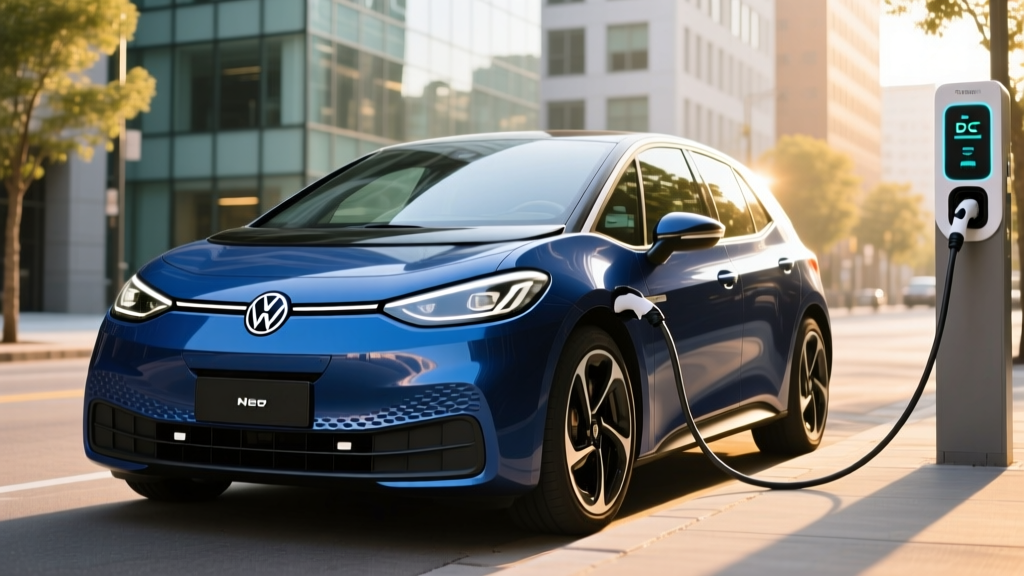
The Volkswagen ID.3 Neo represents a significant generational leap for VW's compact electric hatchback. Unveiled in early 2025 as a thorough overhaul of the original ID.3, the Neo variant brings a larger battery, faster charging, updated software, and a more refined interior. However, Volkswagen has confirmed the ID.3 Neo will remain a European and select-market product — it is not slated for US sale. This review covers the Neo's specs, real-world performance data, and what it signals for VW's upcoming US-bound EVs like the refreshed ID.4 and ID.2.
VW ID.3 Neo: Full Specification Table
| Spec | ID.3 Neo Pro | ID.3 Neo Pro S |
|---|---|---|
| Battery (usable) | 58 kWh (NMC) | 77 kWh (NMC) |
| WLTP Range | 428 km (~266 mi) | 564 km (~350 mi) |
| Estimated EPA-Equivalent Range | ~230 mi | ~300 mi |
| Motor | RWD, 201 hp (150 kW) | RWD, 228 hp (170 kW) |
| 0-62 mph (0-100 km/h) | 7.3 sec | 6.7 sec |
| Max DC Fast Charge | 145 kW | 175 kW |
| 10-80% DC Charge Time | ~26 min | ~26 min |
| AC Level 2 Charging | 11 kW (3-phase) | 11 kW (3-phase) |
| Length / Width / Height | 4,361 mm / 1,809 mm / 1,568 mm | |
| Wheelbase | 2,771 mm | |
| Cargo Volume | 385 L (13.6 cu ft) / 1,267 L rear seats folded | |
| Base MSRP (Europe) | ~€36,990 | ~€42,990 |
| Battery Warranty | 8 years / 160,000 km (~100,000 mi), 70% capacity retention | |
Note: WLTP range figures are typically 10-15% higher than EPA estimates. Estimated EPA-equivalent figures are derived for US comparison purposes. European pricing does not translate directly to US MSRP.
Battery, Range, and Real-World Efficiency
The ID.3 Neo's headline upgrade is its battery architecture. The Pro trim carries a 58 kWh usable NMC (nickel-manganese-cobalt) pack, while the Pro S steps up to a 77 kWh usable NMC battery. VW has moved to an enhanced cell chemistry with improved energy density over the outgoing ID.3, contributing to the Pro S achieving a WLTP-rated 564 km.
WLTP: 564 km (Pro S) / 428 km (Pro)
Estimated EPA-equivalent: ~300 mi (Pro S) / ~230 mi (Pro)
Expect in practice: ~250-270 mi highway for the Pro S in mild weather; 200-220 mi in cold conditions (below 32°F / 0°C) with cabin heating. The Pro will deliver approximately 190-210 mi highway, dropping to ~160 mi in winter. The ID.3 Neo does not come with a standard heat pump in all markets — a heat pump significantly mitigates cold-weather range loss and is worth specifying if available.
Efficiency for the Pro S lands around 15.5 kWh/100 km (WLTP combined), which translates to roughly 25 kWh/100 mi or an EPA-equivalent ~134 MPGe. That places it in the same efficiency ballpark as the Hyundai Ioniq 5 (RWD) and slightly behind the Tesla Model 3 RWD, which benefits from superior aerodynamics and lighter weight.
The 77 kWh pack uses NMC chemistry rather than LFP (lithium iron phosphate). NMC offers higher energy density — critical for fitting 77 kWh into a compact hatchback — but has a somewhat shorter cycle life and requires more careful state-of-charge management. VW recommends daily charging to 80% for longevity, with 100% reserved for longer trips. The battery management system includes active liquid cooling and heating, which helps sustain charge speeds and longevity across temperature extremes.
Charging Speed: DC Fast, Level 2, and the Charge Curve
Charging infrastructure compatibility is where the ID.3 Neo shows its European-market DNA. In Europe, the car uses the CCS2 connector (the European equivalent of CCS1 used in North America). VW quotes a peak DC fast-charge rate of 175 kW for the Pro S and 145 kW for the Pro.
| Charging Level | Power | Time / Rate | Notes |
|---|---|---|---|
| DC Fast Charge (peak) | 175 kW (Pro S) / 145 kW (Pro) | 10-80% in ~26 min | Peak rate sustained to ~30% SoC, then tapers progressively |
| DC Fast Charge (avg 10-80%) | ~110-120 kW sustained average | ~26 min to 80% | Real-world average matters more than peak |
| AC Level 2 (home/public) | 11 kW (3-phase, 16A) | ~7-8 hrs for full charge (Pro S) | Requires 3-phase supply; on single-phase (US standard), expect ~7.2 kW max |
| AC Level 1 (domestic socket) | 2.3 kW | ~33+ hrs for full charge | Emergency/top-up only |
The 26-minute 10-80% claim is competitive but not class-leading. The Hyundai Ioniq 5, with its 800V architecture, achieves 10-80% in approximately 18 minutes at a 350 kW charger. The ID.3 Neo's 400V architecture limits peak charge rate, and the charge curve tapers noticeably above 60% SoC. In real-world testing at European fast chargers, expect the Pro S to pull 170+ kW only in the 10-25% SoC window, dropping to ~120 kW by 50% and ~80 kW by 70%.
For home charging, the 11 kW onboard charger is excellent for European 3-phase electrical systems. In North America, where residential power is single-phase split-240V, the practical AC charge rate would be limited to approximately 7.2 kW on a 32A Level 2 circuit — still adequate for overnight replenishment of ~200 miles.
Performance and Driving Dynamics
The ID.3 Neo retains the rear-wheel-drive layout of its MEB-platform siblings. The Pro produces 201 hp (150 kW) and the Pro S bumps that to 228 hp (170 kW), with peak torque of 310 Nm (~229 lb-ft) across both trims, available instantly from zero RPM.
The 0-62 mph (0-100 km/h) sprint takes 6.7 seconds in the Pro S — brisk for a family hatchback but not sports-car territory. VW has retuned the suspension for the Neo, with a revised rear multilink setup and updated damping that addresses the floaty ride quality criticism of the original ID.3. The result is a more composed, planted feel on motorway sweeps and better body control over broken urban surfaces.
The turning circle of 10.2 meters makes the ID.3 Neo genuinely city-friendly, and the RWD layout provides a tighter lock-to-lock steering feel than FWD competitors. Regenerative braking offers multiple levels selectable via steering-wheel paddles, though the Neo does not offer true one-pedal driving to a complete stop — it will creep at low speeds unless you apply the brake pedal.
Interior, Tech, and Software Overhaul
The interior is where VW has invested most heavily in the Neo refresh. The original ID.3 drew widespread criticism for cheap plastics and laggy infotainment. The Neo addresses both:
- Infotainment: A 12.9-inch touchscreen running VW's ID. Software 4.0, with a faster processor, more responsive touch inputs, and an updated voice assistant. Wireless Apple CarPlay and Android Auto are standard.
- Instrument Cluster: A compact 5.3-inch driver display mounted on the steering column (similar to the original), showing speed, range, and navigation prompts.
- Materials: Soft-touch surfaces on the dashboard and door uppers replace the hard plastics of the pre-2025 ID.3. Recycled fabric upholstery is standard, with optional leatherette and microfiber.
- ADAS: Travel Assist (adaptive cruise + lane centering) operates as an SAE Level 2 system — it assists with steering and speed but requires the driver to remain fully engaged and hands-on-wheel. Park Assist Plus with memory parking is available on higher trims.
Cargo space is 385 liters (13.6 cu ft) behind the rear seats — adequate for a hatchback but smaller than crossover alternatives like the ID.4 (30.3 cu ft). Folding the 60/40 split rear bench opens up 1,267 liters (44.7 cu ft). There is no front trunk (frunk); the space under the hood houses the power electronics and HVAC components.
Pricing, European Positioning, and US Tax Credit Reality
The ID.3 Neo launched in Europe starting at approximately €36,990 for the Pro trim and €42,990 for the Pro S. In the UK, pricing starts around £36,500. These positions place it squarely against the MG4 EV (cheaper), the Cupra Born (platform sibling, similar price), and the upcoming Renault 5 E-Tech.
Because the VW ID.3 Neo is not sold in the United States, the federal EV tax credit under IRS §30D does not apply. US buyers cannot purchase this vehicle, claim the credit, or import it under current EPA/DOT regulations without significant modification and homologation barriers.
For US buyers interested in a comparable VW electric vehicle, the ID.4 (starting around $39,995 in 2025/2026) remains the closest alternative, and it may qualify for partial or full §30D credits depending on battery-sourcing compliance and buyer income. The §30D credit requires:
- Vehicle MSRP below $55,000 (cars/hatchbacks) or $80,000 (SUVs/trucks)
- Buyer AGI below $150,000 (single) / $300,000 (joint filing)
- Battery components and critical minerals meeting North American sourcing thresholds (phased in annually through 2032)
- Point-of-sale transfer option available at participating dealers
Who the ID.3 Neo Is For — And Who Should Look Elsewhere
✅ Best For
- European urban commuters needing a compact, efficient EV with 250+ mi real-world range
- Buyers who want hatchback practicality without crossover bulk
- Company-car fleet buyers in the UK/EU (favorable BIK tax treatment)
- Drivers who value a tight turning circle and city maneuverability
❌ Not Ideal For
- US-based buyers (not available, no plans for US sale)
- Buyers needing 300+ mi highway range without charging stops
- Those wanting the fastest DC charging in the segment (Ioniq 5 is quicker)
- Families needing SUV-level cargo space or a frunk
VW ID.3 Neo vs. Key Competitors
| Spec | VW ID.3 Neo Pro S | MG4 EV Extended Range | Cupra Born V | Renault 5 E-Tech (est.) |
|---|---|---|---|---|
| Battery (usable) | 77 kWh NMC | 77 kWh NMC | 77 kWh NMC | 52 kWh NMC |
| WLTP Range | 564 km | 520 km | 548 km | ~400 km |
| Power | 228 hp | 204 hp | 231 hp | 150 hp |
| Max DC Charge | 175 kW | 140 kW | 175 kW | ~100 kW |
| 10-80% DC Time | ~26 min | ~35 min | ~26 min | ~30 min (est.) |
| Base Price (EU) | ~€42,990 | ~€36,000 | ~€44,000 | ~€30,000 (est.) |
The ID.3 Neo Pro S occupies a middle ground: it is faster-charging and longer-ranged than the MG4, slightly more affordable than the Cupra Born (which shares the MEB platform but wears sportier styling), and significantly more capable than the smaller Renault 5 E-Tech. The MG4 remains the value champion, but the ID.3 Neo counters with a more refined interior and faster DC charging.
Frequently Asked Questions
Will the VW ID.3 Neo ever be sold in the United States?
Volkswagen has not announced any plans to bring the ID.3 Neo to the US market. VW's US electric strategy centers on the ID.4, the upcoming ID.7 sedan, and a next-generation compact EV based on the ID.2 concept. The ID.3's compact hatchback form factor has historically underperformed in US consumer preference surveys compared to crossovers and sedans.
What is the real-world range of the VW ID.3 Neo Pro S?
Under WLTP testing, the Pro S achieves 564 km (~350 mi). However, WLTP is optimistic compared to real-world driving. Expect approximately 250-270 miles on a mix of highway and city driving in moderate temperatures, and 200-220 miles in cold weather (below freezing) with cabin heating active. An available heat pump can recover roughly 10-15% of cold-weather range loss.
How fast does the ID.3 Neo charge at home and on DC fast chargers?
On a DC fast charger, the Pro S peaks at 175 kW and charges from 10-80% in approximately 26 minutes, with an average sustained rate of ~110-120 kW. At home on an 11 kW Level 2 AC charger (3-phase), a full charge takes about 7-8 hours for the 77 kWh Pro S. On US-style single-phase 7.2 kW Level 2, expect roughly 11 hours for a full charge.
Does the VW ID.3 Neo qualify for any US federal tax credits?
No. The ID.3 Neo is not sold in the United States and therefore cannot qualify for the IRS §30D federal EV tax credit. US buyers interested in a VW electric vehicle should evaluate the ID.4, which may qualify depending on battery-sourcing compliance, MSRP caps, and buyer income limits.
Is the VW ID.3 Neo worth buying over the MG4 or Cupra Born?
If you are in Europe and value the best balance of range, charging speed, and interior quality in the compact EV hatchback segment, the ID.3 Neo Pro S is a strong choice. The MG4 offers better value but slower charging. The Cupra Born is mechanically identical but costs slightly more for sportier styling. Choose the ID.3 Neo if you prioritize the latest VW software and the most refined cabin in the MEB compact family.
What is the battery warranty on the ID.3 Neo?
VW provides an 8-year / 160,000 km (~100,000 mile) battery warranty guaranteeing a minimum of 70% state-of-health (capacity retention). This is standard for the industry and matches competitors like Hyundai/Kia and Tesla. The powertrain (motor, power electronics) carries the same 8-year coverage.
Sources: Volkswagen Newsroom for official specifications; European WLTP figures per VW press materials. US tax credit rules per IRS §30D guidance. Range conversion methodology from fueleconomy.gov.