What the VW ID.2 Is — and Where It Stands in 2026
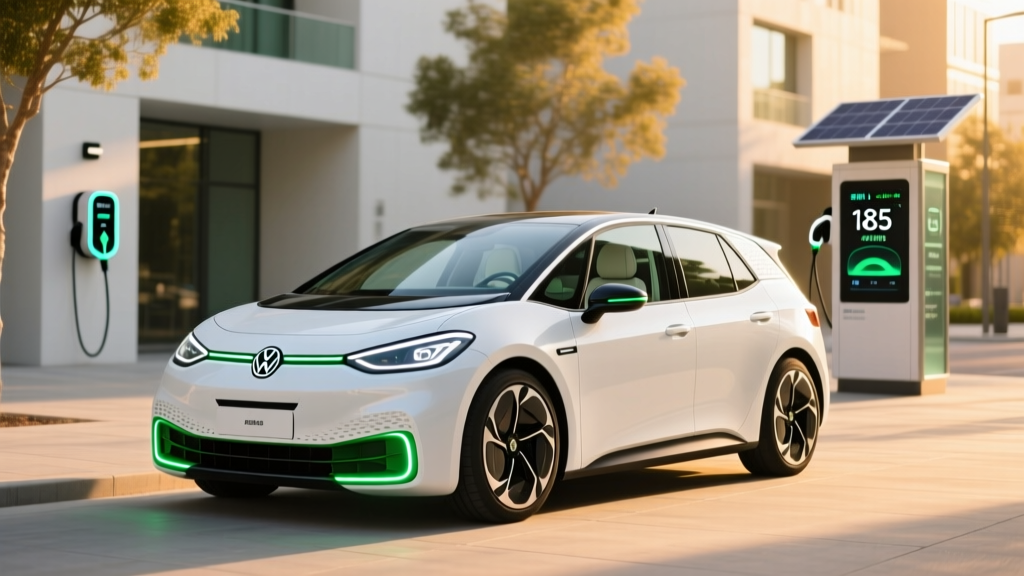
The Volkswagen ID.2 is VW's answer to the affordable subcompact electric hatchback segment — a vehicle positioned below the ID.3 and ID.4 in the brand's electric lineup, targeting European and potentially global urban commuters who want a practical, budget-friendly EV with city-friendly dimensions and modern battery tech. First teased as the ID.2all concept in early 2023 and subsequently confirmed for production, VW has targeted a starting price around €25,000 (roughly $27,000 USD at current exchange rates) for the European market.
As of early 2026, the VW ID.2 remains announced but not yet available for purchase in any market. Volkswagen has confirmed production timing for late 2026 in Europe, with specifications still considered preliminary. A US launch has not been officially confirmed, and given VW's current American EV strategy — which centers on the ID.4 SUV built in Chattanooga, Tennessee — the ID.2's path to US showrooms is uncertain at best.
This preview compiles everything VW has disclosed, alongside informed estimates based on the MEB Entry platform architecture, to give prospective buyers a data-grounded picture of what to expect.
Estimated Range, Battery, and Efficiency
The ID.2 is built on Volkswagen's MEB Entry platform — a cost-reduced variant of the Modular Electric Drive Matrix that also underpins the ID.3 and ID.4. For the ID.2, VW has indicated a battery pack in the range of approximately 45 to 58 kWh (usable), with the larger pack reserved for a "long-range" variant.
VW targets a WLTP range of up to 450 km (~280 miles) for the long-range ID.2 variant. If the vehicle reaches the US, expect an EPA-estimated range closer to 230–250 miles, given the EPA's more conservative testing cycle (typically 10–15% lower than WLTP).
Real-world expectation: On highway drives at 70+ mph, plan for roughly 190–210 miles. In cold weather (below 32°F), lithium-ion chemistry and cabin heating demands can reduce range by 20–30%, potentially dropping effective range to 160–180 miles on the larger battery. City driving with regenerative braking will yield the best results.
The battery chemistry is expected to be LFP (lithium iron phosphate) for the base model, which trades some energy density for lower cost, longer cycle life, and reduced reliance on cobalt and nickel. The long-range variant may use an NMC (nickel manganese cobalt) pack for higher energy density. LFP batteries also tolerate regular 100% charging better than NMC, which is a practical advantage for daily commuters.
| Spec | Base Model | Long-Range |
|---|---|---|
| Battery (usable) | ~45 kWh (LFP est.) | ~58 kWh (NMC est.) |
| WLTP Range | ~350 km / 217 mi | ~450 km / 280 mi |
| Est. EPA Range (if US) | ~185–200 mi | ~230–250 mi |
| Est. Efficiency | ~27–29 kWh/100mi | ~25–27 kWh/100mi |
| Est. MPGe | ~115–120 MPGe | ~125–130 MPGe |
Charging Speed: DC Fast Charging and Home Level 2
Charging speed is a make-or-break spec for any EV, and the ID.2's MEB Entry platform is expected to support DC fast charging at up to 100–125 kW peak. While that's well below the 250+ kW rates of premium EVs, it's appropriate for a subcompact with a smaller battery — you don't need 350 kW to fill a 58 kWh pack quickly.
| Charging Level | Power | Speed / Time |
|---|---|---|
| Level 1 (120V household) | ~1.4 kW | ~4–5 mi/hr added |
| Level 2 (240V home) | 7.2–11 kW | ~24–36 mi/hr; full charge in 5–8 hrs |
| DC Fast Charge | 100–125 kW peak | 10–80% in ~25–30 min (est.) |
A few practical notes on the charging curve: peak kW is never sustained across the entire session. Expect the ID.2 to hold near its peak rate up to roughly 50–60% state of charge, after which the charge rate will taper to protect the battery. A 10–80% session at a 150 kW charger should take approximately 25 to 30 minutes under ideal conditions (warm battery, preconditioned). In cold weather without preconditioning, add 5–10 minutes.
For home charging, a Level 2 wallbox at 7.2 kW (30A circuit) will fully replenish the base battery overnight in about 6 hours. Upgrading to an 11 kW / 48A setup shaves that to roughly 4.5 hours for the base pack. If the US version ships with a NACS port (as VW has committed to for its American EV lineup starting in 2025), it will have native access to Tesla Superchargers — a significant infrastructure advantage.
Performance and Drivetrain
The ID.2 is a front-wheel-drive vehicle — a departure from the rear-wheel-drive layout of the ID.3 and ID.4. The MEB Entry platform uses a front-mounted motor to reduce cost and complexity. VW has indicated a single-motor setup producing approximately 130 to 165 horsepower (roughly 95–120 kW), depending on trim.
| Spec | Estimate |
|---|---|
| Drivetrain | FWD, single motor |
| Horsepower | ~130–165 hp |
| 0–60 mph | ~8.0–9.5 seconds (est.) |
| Top Speed | ~99 mph (electronically limited, EU spec) |
| Towing Capacity | Not rated / unlikely to be tow-rated |
This is not a performance EV. The 0–60 time is adequate for city merging and suburban driving but won't impress anyone coming from a Tesla Model 3 or Hyundai Ioniq 6. The FWD layout prioritizes packaging efficiency and cost over driving dynamics. For the target buyer — an urban commuter or second-car household — this powertrain is perfectly sufficient.
Pricing, Trims, and Tax Credit Eligibility
Volkswagen has publicly targeted a starting price of approximately €25,000 for the base ID.2 in Europe. Translating that to US dollars with current exchange rates, tariffs, and localization costs, a hypothetical US-spec ID.2 would likely start in the $28,000–$32,000 MSRP range before any incentives.
| Trim (Hypothetical) | Est. MSRP | After Potential §30D Credit |
|---|---|---|
| Base (45 kWh LFP) | ~$28,000–$30,000 | ~$20,500–$22,500 |
| Long-Range (58 kWh NMC) | ~$32,000–$35,000 | ~$24,500–$27,500 |
If the ID.2 reaches the US, qualifying for the full $7,500 federal tax credit under IRS §30D rules is far from guaranteed. Eligibility depends on:
- MSRP cap: The vehicle must have an MSRP at or below $55,000 (cars) — the ID.2 would clear this easily.
- Buyer income cap: Modified adjusted gross income must not exceed $150,000 (single) / $300,000 (joint).
- Battery sourcing: Critical minerals and battery components must meet escalating domestic-content thresholds. An EU-built ID.2 with European or Chinese battery cells may not qualify for the full credit — or any credit — under current sourcing rules.
- Assembly: Final assembly must occur in North America. Unless VW produces the ID.2 at a US plant, it would be ineligible.
Interior, Cargo, and Technology
The ID.2 is a B-segment hatchback — think Volkswagen Polo dimensions, but electric. Expect a wheelbase around 102–104 inches with an overall length near 160–165 inches. Interior space will be tight for rear-seat adults on long trips but adequate for children or short city rides.
Estimated cargo volume: Approximately 13–15 cubic feet behind the rear seats, expanding to 38–42 cubic feet with the rear seats folded. A small front trunk (frunk) is possible but not confirmed on the MEB Entry platform, which prioritizes cost savings over the additional storage compartment.
Infotainment and tech: VW is expected to equip the ID.2 with its latest-generation ID. Software (version 4.x or newer), which addresses many of the lag and usability complaints that plagued early ID.3 and ID.4 infotainment systems. Expect a 10- to 12.9-inch central touchscreen, wireless Apple CarPlay and Android Auto, and a simplified menu structure. A compact digital instrument cluster (roughly 8 inches) replaces the traditional gauge panel.
Driver assistance: The ID.2 will likely ship with VW's IQ.DRIVE suite — a Level 2 (SAE) driver-assistance system including adaptive cruise control, lane-keeping assist, automatic emergency braking, and traffic-sign recognition. This is a hands-on, eyes-on system requiring continuous driver supervision. It is not autonomous driving.
VW IQ.DRIVE and similar driver-assist features are SAE Level 2 systems. The driver must remain fully engaged — hands on or near the wheel, eyes on the road — at all times. These systems assist with steering and speed but do not replace the driver. Only Level 4 services (like Waymo in designated zones) operate without a human driver.
Pros, Cons, and the Competition
- Sub-$30,000 starting price (before incentives) targets an underserved affordable EV segment
- LFP battery option offers long cycle life and 100% daily charging tolerance
- Compact dimensions ideal for urban parking and tight garages
- VW brand familiarity and dealer network (if US-bound)
- Expected NACS port for Tesla Supercharger access in the US
- US launch unconfirmed — may remain a Europe-only product
- FWD-only layout limits performance and all-weather traction
- Modest DC fast-charge rate (100–125 kW) vs. rivals at 150–250 kW
- Sub-200-mile real-world highway range on the base battery
- Likely ineligible for §30D tax credit if built in Europe
- Tight rear-seat and cargo space vs. compact SUVs
Key Competitors (If the ID.2 Reaches the US)
The affordable subcompact EV space is thin but growing. If VW brings the ID.2 stateside, it would compete against:
- Chevrolet Bolt EV / Bolt EUV (if reintroduced): GM's next-gen Bolt on the Ultium platform could offer 250+ miles of range at a similar price point, built in the US and likely credit-eligible.
- Nissan LEAF (next generation): Nissan has confirmed a new LEAF for North America, potentially with 200+ miles of range and CCS/NACS charging.
- Hyundai Kona Electric: Already US-available with 261 miles EPA range and an MSRP around $33,000, though it's slightly larger and pricier.
- Tesla Model 2 / next-gen compact (announced): Tesla's long-rumored $25,000 vehicle, if it materializes, would be the ID.2's most direct threat given Tesla's US manufacturing and Supercharger ecosystem.
Who Should Wait for the VW ID.2?
- Urban commuters with short daily drives (under 40 miles round-trip) who want low running costs and easy parking
- Second-car households that already have a larger vehicle for road trips and need an efficient daily runabout
- European buyers — the primary target market where the ID.2 will actually be available at launch
- Budget-conscious EV shoppers willing to accept modest range and performance in exchange for a lower purchase price
- Buyers who need 300+ miles of range for frequent road trips
- Those in cold climates who need AWD and maximum range retention
- US buyers who need confirmed availability and tax-credit eligibility now
- Families needing substantial rear-seat and cargo space
Warranty and Ownership Considerations
Based on VW's existing EV warranty structure for the ID.4, expect the ID.2 to carry:
- Battery warranty: 8 years / 100,000 miles (whichever comes first), with a capacity-retention threshold of 70% — consistent with industry norms tracked by fueleconomy.gov.
- Basic vehicle warranty: 4 years / 50,000 miles.
- Powertrain warranty: Likely bundled with the battery warranty at 8 years / 100,000 miles for electric drive components.
Long-term battery degradation on LFP packs tends to be lower than NMC — many LFP packs retain 90%+ capacity after 1,000 charge cycles. For a daily commuter charging to 100% regularly, this is a meaningful advantage over the vehicle's lifespan.
Frequently Asked Questions
What is the real-world range of the VW ID.2?
Based on VW's preliminary WLTP figures and EPA conversion estimates, expect roughly 185–200 miles on the base 45 kWh battery and 230–250 miles on the long-range 58 kWh pack. Real-world highway driving at 70+ mph will reduce that to approximately 160–210 miles depending on the variant, with further reductions of 20–30% in freezing temperatures.
How fast does the VW ID.2 charge?
DC fast charging is estimated at 100–125 kW peak, delivering a 10–80% charge in approximately 25–30 minutes under ideal conditions. Home Level 2 charging at 7.2 kW adds roughly 24–28 miles of range per hour, fully replenishing the battery in 5–8 hours overnight.
How much will the VW ID.2 cost after tax credits?
The estimated US MSRP is $28,000–$35,000 depending on trim. However, the §30D federal tax credit of up to $7,500 is unlikely to apply unless VW assembles the ID.2 in North America and meets battery-sourcing requirements. Without the credit, expect to pay full MSRP. The IRS §30D page details current eligibility rules.
Is the VW ID.2 worth buying vs. competitors?
If it launches in the US at its target price, the ID.2 would be one of the most affordable new EVs available. However, competitors like the Chevrolet Bolt (US-built, likely credit-eligible) and Hyundai Kona Electric (already available, 261-mile range) may offer better value when tax credits and availability are factored in. The ID.2 makes the most sense if you prioritize VW brand loyalty, LFP battery longevity, and compact urban dimensions.
Does the VW ID.2 qualify for the federal EV tax credit?
Almost certainly not in its initial form. The §30D credit requires North American final assembly, and VW has not announced US production plans for the ID.2. Even if assembled in the US, battery-sourcing and critical-mineral thresholds must be met. Always verify current rules at irs.gov and consult a tax professional before making a purchase decision.
When will the VW ID.2 be available?
VW targets European deliveries beginning in late 2026 or early 2027. A US launch, if it happens, would likely follow in 2027 or 2028 at the earliest — and remains unconfirmed. This article will be updated as VW releases final production specifications and market plans.
Note: All specifications in this preview are based on VW's announced targets, MEB Entry platform data, and informed estimates. Final production specs, pricing, and market availability may differ. This article reflects information available as of early 2026.