What the VW ID.R Actually Is — And What It Isn't
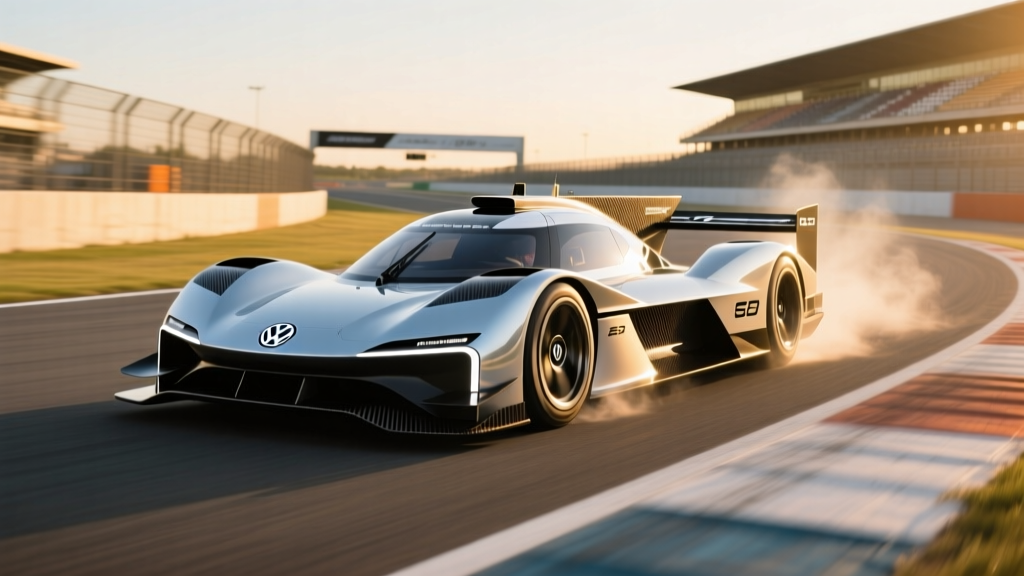
If you've searched for "VW ID.R" expecting a production EV you can order at your local dealer, let's clear that up immediately: the VW ID.R is a one-off, fully electric race car built by Volkswagen Motorsport. It is not road-legal, not available for purchase, and not part of VW's consumer ID lineup alongside the ID.4 and ID.7. Only a handful of chassis were ever constructed, and they exist exclusively for record-setting runs and motorsport demonstrations.
But dismissing the ID.R as a mere concept would miss the point entirely. Between 2018 and 2020, this machine set outright lap records at Pikes Peak, the Nürburgring Nordschleife, and the Goodwood Festival of Speed hillclimb — beating not just other electric cars, but combustion-powered competitors that had held those records for years. More importantly, the engineering decisions made for the ID.R directly influenced the powertrain architecture, thermal management, and performance philosophy of VW's production MEB-platform vehicles.
This profile breaks down the ID.R's verified specifications, its motorsport achievements, the technology that transferred to consumer EVs, and what it tells us about VW's electric future heading into 2026.
| Attribute | Specification |
|---|---|
| Vehicle Type | Purpose-built electric race car (not road-legal) |
| Powertrain | Dual-motor AWD (one motor per axle) |
| Total Output | 500 kW / 680 metric hp (670 bhp) |
| Torque | 472 lb-ft (640 Nm) |
| 0-60 mph | ~2.25 seconds |
| Top Speed | ~180 mph (290 km/h, gearing-limited) |
| Battery Capacity | ~40 kWh usable (lithium-ion NMC cells) |
| Battery Voltage | ~700V nominal architecture |
| Weight (with driver) | Under 2,425 lbs (1,100 kg) |
| Aerodynamics | Active DRS rear wing, full underbody diffuser |
| Chassis | Carbon-fiber monocoque, FIA-compliant |
| DC Fast Charge (race spec) | ~350 kW capable (external rapid charge) |
| Production Count | Not sold — limited race chassis only |
| MSRP | N/A — not available for consumer purchase |
Pikes Peak, Nürburgring, and Goodwood: The Record Sheet
The ID.R was built with a singular mission: prove that electric propulsion could dominate the most demanding motorsport venues on Earth. It delivered on all three of its headline targets.
Pikes Peak International Hill Climb (June 2018)
Driver Romain Dumas piloted the ID.R to an 8:13.878 overall record at the 12.42-mile, 156-turn Pikes Peak course in Colorado — beating Sébastien Loeb's 2013 Peugeot 208 T16 time by over 16 seconds and obliterating the previous EV record by nearly a full minute. The 4,720-foot elevation gain mattered enormously here: while combustion engines lose roughly 3% of power per 1,000 feet of altitude, the ID.R's electric motors delivered full output from start to summit.
Nürburgring Nordschleife (June 2019)
Dumas returned behind the wheel for a 6:05.336 lap of the 12.9-mile Nordschleife — setting the outright EV record and averaging 128 mph. The run demanded sustained high-speed energy management: the 40 kWh battery had to deliver peak discharge rates continuously while thermal systems kept cell temperatures within the narrow performance window. VW Motorsport reported battery temperatures stayed within 2°C of target throughout the lap.
Goodwood Festival of Speed (July 2019)
The ID.R tackled the 1.16-mile Goodwood hillclimb in 39.90 seconds, winning the event outright — the first EV to do so. It also set the fastest time of the weekend across all vehicle classes.
Tianmen Mountain (September 2019)
In a demonstration run on the 99-turn, 6.7-mile Tianmen Mountain road in China, the ID.R recorded a 7:38.585 time — a venue chosen to showcase EV performance for the Chinese market, where VW was preparing to launch its ID. production vehicles.
Powertrain and Battery: Engineering Without Compromise
The ID.R's dual-motor setup uses one electric motor on each axle, providing all-wheel-drive traction with torque vectoring capability. Combined output of 500 kW (680 metric hp) is achieved without the mechanical complexity of a traditional AWD system — no driveshaft, no center differential, no transmission. Each motor operates independently, managed by power electronics that adjust torque distribution in milliseconds based on grip conditions.
Battery Chemistry and Packaging
VW Motorsport selected NMC (nickel manganese cobalt) lithium-ion cells for the ID.R, prioritizing energy density and high discharge rates over the cycle longevity that LFP chemistry offers. The pack sits low and behind the driver in a carbon-fiber safety cell, contributing to the car's sub-2,425-lb weight — remarkably light for a vehicle carrying a 40+ kWh battery.
For context, the production ID.4 uses a larger 82 kWh (usable: 77 kWh) NMC battery and weighs approximately 4,600 lbs. The ID.R's smaller pack reflects the different mission: a race car needs to discharge energy violently over a short duration, not sustain 250+ miles of highway driving.
Thermal Management Under Extreme Load
The most transferable technology from the ID.R program was its thermal management system. Sustaining 500 kW output for a full Nürburgring lap without battery overheating required active liquid cooling with predictive algorithms that pre-cool cells based on upcoming track sections. This same philosophy — preconditioning the battery before high-demand scenarios — appears in the production ID.4 and ID.7, where preconditioning optimizes DC fast-charge speeds by warming or cooling cells to the ideal temperature window before you arrive at a charging station.
As a race car, the VW ID.R was never EPA-tested for range. Its 40 kWh battery is sized for approximately 12-15 miles of maximum-effort racing (e.g., a single Pikes Peak run or Nürburgring lap). This is not a vehicle designed for efficiency — it's designed to convert electrical energy into speed as rapidly as physics allows. For VW's production EVs with real-world range data, see our ID.4 review.
How ID.R Technology Flows Into VW's Production EVs
Volkswagen never intended the ID.R for showrooms. Its purpose was twofold: validate electric powertrain technology under the most extreme conditions possible, and generate marketing momentum for the ID family. By both measures, the program succeeded.
Direct Technology Transfers
- Predictive thermal management: The ID.R's real-time battery temperature prediction system evolved into the preconditioning feature in the ID.4 and ID.7, which warms or cools the pack before DC fast charging to maximize charge rate and protect cell health.
- High-voltage architecture lessons: Operating at ~700V gave the ID.R's power electronics experience that informed VW's transition toward higher-voltage platforms. The ID.7 and updated ID.4 use enhanced 400V architectures with improved inverter efficiency.
- Regenerative braking calibration: The ID.R's aggressive regen harvesting (recovering energy under braking at rates exceeding 200 kW) pushed the boundaries of what VW's motor controllers could handle, informing the progressive regen settings in production models.
- Aerodynamic efficiency: The full underbody diffuser and active rear wing concepts validated on the ID.R influenced the ID.7's drag coefficient of 0.23 — among the lowest of any production sedan.
The ID.4 GTX and ID.7: Where the Spirit Lives
If you want the closest consumer expression of the ID.R's dual-motor AWD performance philosophy, the ID.4 GTX (335 hp, 0-60 in ~5.4 seconds, EPA 263 miles) and the ID.7 sedan represent VW's production translation of race-bred EV engineering. Neither approaches the ID.R's raw output, but both benefit from the thermal management and power electronics validation that the race program provided.
Charging Specs: Race-Speed Energy Replenishment
The ID.R's charging setup is purpose-built for motorsport, not consumer infrastructure. Between runs at Pikes Peak or the Nürburgring, the car needed to recharge rapidly from portable generator-based systems, not Electrify America stations.
| Charging Method | Power | Estimated Time | Notes |
|---|---|---|---|
| External DC Rapid Charge | Up to ~350 kW | ~20 min (full charge) | Specialized race paddock equipment; not consumer CCS/NACS compatible |
| Mobile Generator Set | ~100-150 kW | ~40-60 min (full charge) | Glycerin-powered generators used at Pikes Peak for "carbon-neutral" positioning |
| Standard AC (theoretical) | Not designed for AC | N/A | Race car has no onboard AC charger; DC-only architecture |
For comparison, VW's production ID.4 supports up to 175 kW DC fast charging on newer models, achieving a 10-80% charge in approximately 28 minutes at a compatible station. The ID.7 pushes this further with up to 200 kW capability and a 10-80% time closer to 22 minutes. These production figures reflect real-world charging infrastructure compatibility — CCS1 connectors (transitioning to NACS on future VW models via the Tesla Supercharger agreement) and standard Level 2 home charging at 11 kW.
What the ID.R Tells Us About VW's EV Strategy in 2026
Looking at VW's 2026 lineup through the lens of the ID.R program reveals a clear strategic arc. The race car proved that electric powertrains could outperform combustion engines at altitude (Pikes Peak), sustain extreme output without overheating (Nürburgring), and deliver explosive acceleration (Goodwood). These weren't abstract engineering exercises — they were marketing weapons deployed to counter the "EVs are slow/fragile/boring" narrative that still lingered in 2018-2019.
By 2026, VW's ID family has expanded considerably. The ID.4 remains the volume seller in the US market, the ID.7 brings flagship sedan efficiency, and upcoming SSP-platform vehicles promise 800V architecture, faster charging, and next-generation battery chemistry. The ID.R's role is complete: it proved what was possible, generated global headlines, and provided real engineering data that improved production vehicles.
For Buyers Considering VW's Production EVs
If the ID.R's performance legacy interests you in a VW electric vehicle, here's the realistic 2026 landscape:
- ID.4 (base): ~275 mi EPA range, RWD, starting ~$39,995, eligible for up to $7,500 federal tax credit (subject to IRS §30D rules including income caps, MSRP limits, and battery sourcing requirements).
- ID.4 GTX: ~263 mi EPA range, AWD dual-motor, starting ~$47,995, tax credit eligibility varies by trim and sourcing.
- ID.7: ~340+ mi EPA range (estimated for US spec), sedan format, starting ~$48,000+, tax credit eligibility pending final battery sourcing confirmation.
None of these vehicles replicate the ID.R's 680 hp or 2.25-second 0-60. But they carry forward the thermal management, power electronics, and efficiency lessons learned on the world's toughest race courses — and they're actually available to buy.
ID.R Program Strengths (Engineering Legacy)
- Set outright records at Pikes Peak, Nürburgring, and Goodwood — beating combustion cars
- Validated extreme thermal management under sustained high-load conditions
- Proved EV altitude advantage (no power loss at elevation)
- Directly influenced production ID vehicle preconditioning and regen systems
- Generated massive global awareness for VW's EV transition
ID.R Limitations (As a Consumer Reference)
- Not available for purchase — race-only vehicle with no road-legal version
- No EPA range, MPGe, or consumer-relevant efficiency data
- Battery sized for ~12-15 miles of racing, not daily driving
- Charging infrastructure is race-specific, not compatible with public networks
- No pricing, tax credit, or ownership cost data applies
Frequently Asked Questions
Can I buy a VW ID.R?
No. The VW ID.R is a purpose-built race car that was never homologated for road use and is not available for consumer purchase. Volkswagen built only a small number of chassis for competition and demonstration purposes. If you want a production VW electric vehicle, the ID.4 and ID.7 are the current consumer options.
How fast is the VW ID.R?
The ID.R accelerates from 0-60 mph in approximately 2.25 seconds, produces 500 kW (680 metric hp), and has a top speed of roughly 180 mph. It set an overall record at Pikes Peak (8:13.878), the EV record at the Nürburgring (6:05.336), and won the Goodwood Festival of Speed hillclimb outright (39.90 seconds).
What battery does the VW ID.R use?
The ID.R uses a ~40 kWh lithium-ion battery pack with NMC (nickel manganese cobalt) cells, operating at approximately 700V nominal. The pack is sized for short-duration, high-output racing rather than range — sufficient for a full Pikes Peak run or Nürburgring lap at maximum effort.
Did the ID.R technology make it into VW's production EVs?
Yes, indirectly. The predictive thermal management system, high-discharge power electronics validation, regenerative braking calibration, and aerodynamic principles all informed VW's production MEB-platform vehicles including the ID.4, ID.4 GTX, and ID.7. The ID.R served as an extreme-condition proving ground for technologies later adapted for consumer use.
Does VW have plans for an ID.R-inspired road car?
As of early 2026, Volkswagen has not announced a road-legal vehicle directly based on the ID.R. The closest performance-oriented production models are the ID.4 GTX (335 hp, AWD) and the ID.7 GTX variant. VW's future SSP platform may enable higher-performance EVs, but no specific ID.R successor for road use has been confirmed.
What is VW's fastest production EV available in 2026?
The ID.4 GTX is VW's quickest widely available US-market EV, with 335 hp and a 0-60 time of approximately 5.4 seconds. The ID.7 (in higher-output trims) may offer comparable or slightly improved acceleration, but neither approaches the ID.R's race-car performance figures.
Sources: Volkswagen Newsroom — ID.R Nürburgring Record; Pikes Peak International Hill Climb Official Records; IRS §30D Clean Vehicle Credit Rules.