The Quick Answer: VW Sportline Electric GTI at a Glance
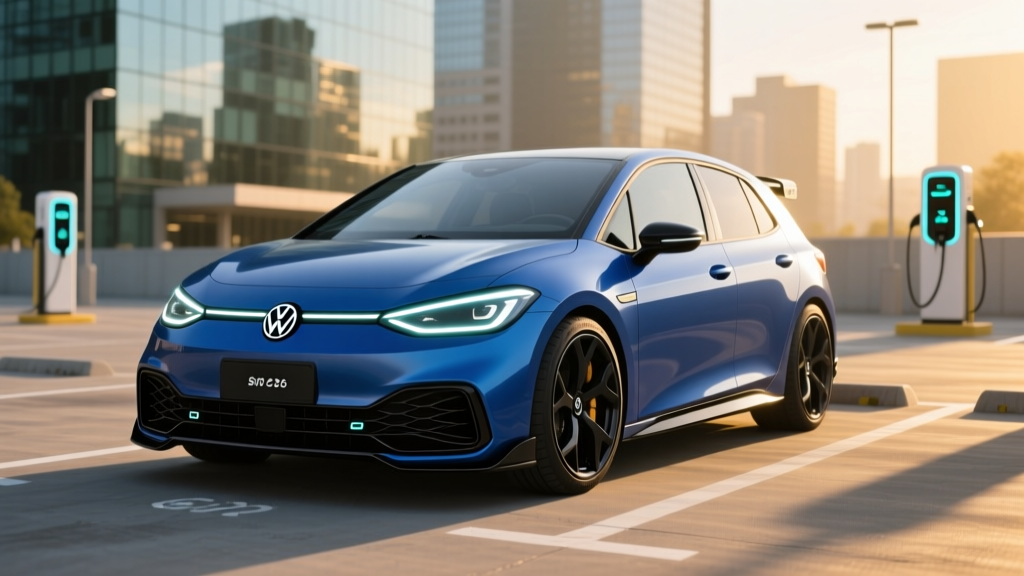
The VW Sportline Electric GTI — officially branded as the Volkswagen ID. GTI — is VW's performance-oriented electric hot hatch built on the MEB platform. For the 2026 model year, VW targets an EPA-estimated range of approximately 260–280 miles from a ~77 kWh (usable) NMC battery pack, a single rear-mounted motor producing roughly 282 hp and 402 lb-ft of torque, and DC fast charging that peaks near 175 kW (10–80% in approximately 26 minutes). Expected U.S. pricing starts around $42,000–$45,000 MSRP before incentives. As of early 2026, VW has confirmed the ID. GTI for European markets with U.S. availability still listed as forthcoming — buyers should verify current status with their local dealer before budgeting.
What Is the VW Sportline Electric GTI?
When enthusiasts search for the "VW Sportline Electric GTI," they're looking for Volkswagen's electric successor to the iconic Golf GTI. VW officially unveiled the ID. GTI concept at IAA Mobility 2023 in Munich, and the production version is expected to carry the GTI badge into the battery-electric era. The "Sportline" trim designation — used by VW in various global markets for sporty appearance packages — may appear on higher-spec versions depending on region.
The production ID. GTI sits on VW's MEB (Modular Electric Drive Matrix) platform, the same architecture underpinning the ID.4 and ID. Buzz, but tuned for a lower, sportier stance. VW has confirmed a single-motor, rear-wheel-drive layout for the standard GTI variant, consistent with how the brand positions the GTI below the all-wheel-drive GTX performance models.
Key design cues include the signature GTI red accent line, tartan-inspired interior upholstery adapted for a digital cabin, and a GTI-specific steering wheel with integrated drive-mode controls. VW has stated the goal is to translate the GTI's "accessible performance" philosophy to electric propulsion — not to chase supercar numbers, but to deliver a balanced, engaging daily driver.
Range, Battery & Charging: The Numbers That Matter
For an electric hot hatch, range and charging speed determine whether the GTI is a practical daily driver or a garage ornament. Here's what we know based on VW's MEB platform specifications and the latest ID. family data:
| Specification | ID. GTI (Estimated / Announced) |
|---|---|
| Battery Capacity (Usable) | ~77 kWh (NMC chemistry) |
| EPA-Estimated Range | ~260–280 miles |
| Real-World Highway Range | ~210–240 miles (70+ mph, moderate temps) |
| Cold-Weather Range (20°F) | ~180–210 miles (est. 25–30% loss) |
| Motor Output | ~282 hp / 402 lb-ft torque |
| 0–60 mph | ~5.8 seconds (est.) |
| Top Speed | ~112 mph (electronically limited) |
| Max DC Fast Charge Rate | ~175 kW (peak) |
| 10–80% DC Fast Charge Time | ~26 minutes |
| Level 2 AC Charge Rate | 11 kW (onboard charger) |
| Level 2 Full Charge Time | ~7.5 hours (0–100%) |
| Charging Port / Connector | CCS1 (NACS adapter expected for Tesla Supercharger access) |
| Battery Warranty | 8 years / 100,000 miles (min 70% capacity retention) |
Real-World Range Reality Check
The EPA sticker may say ~270 miles, but plan your road trips around 210–240 miles of usable range at highway speeds. MEB-platform vehicles like the ID.4 have shown efficiency drops of 15–20% at sustained 75 mph cruising versus combined-cycle testing. Add cold weather (below 30°F), and lithium-ion chemistry combined with cabin heating demands can push total range loss to 25–30%. If your commute is 80 miles round-trip in Minnesota winters, you'll want reliable Level 2 home charging — the GTI's buffer will be tight on the coldest days.
Charging curve reality: The 175 kW peak rate is not sustained across the entire session. Like most NMC MEB vehicles, the GTI will taper significantly above 80% State of Charge (SoC). Expect the 10–80% sprint in ~26 minutes under ideal conditions (preconditioned battery, moderate ambient temperature), but a 10–100% session could take 40+ minutes. For road trips, plan stops at 15–20% SoC and charge only to 80% to minimize time at the charger.
Electric GTI vs. Gas GTI vs. Hybrid Alternatives
The whole point of the ID. GTI is to replace the Golf GTI's role in your life — but does it? Here's a data-driven comparison against the outgoing gas GTI and a popular hybrid alternative:
| Metric | VW ID. GTI (EV) | VW Golf GTI (Gas, 2025) | Toyota Prius Prime (PHEV) |
|---|---|---|---|
| Powertrain | Single-motor BEV | 2.0L Turbo I4 | 2.0L PHEV |
| Horsepower | ~282 hp | 241 hp | 220 hp (combined) |
| 0–60 mph | ~5.8 sec | ~5.6 sec | ~6.6 sec |
| EPA Range / MPG | ~270 mi | ~340 mi (30 mpg comb.) | 44 mi EV + 48 mpg gas |
| Fuel/Energy Cost per Mile | ~$0.04–0.06 (home L2) | ~$0.12–0.14 ($3.50/gal) | ~$0.05–0.10 (blended) |
| Annual "Fuel" Cost (12k mi) | ~$480–$720 | ~$1,440–$1,680 | ~$600–$1,200 |
| Est. MSRP | ~$42,000–$45,000 | ~$33,000–$40,000 | ~$34,000–$38,000 |
| Annual Maintenance | ~$300–$400 | ~$600–$900 | ~$500–$700 |
The tradeoff is clear: The ID. GTI costs roughly $8,000–$12,000 more upfront than a comparably equipped gas GTI, but saves $700–$1,000+ per year in fuel and maintenance. The break-even point lands around 8–10 years of ownership at 12,000 miles annually — without factoring in any federal or state incentives. With the §30D federal EV tax credit (up to $7,500 if the vehicle qualifies on battery sourcing, MSRP caps, and buyer income limits), that break-even drops to 5–7 years. However, eligibility is not guaranteed — always verify current-year rules on IRS.gov and consult a tax professional.
Total Cost of Ownership: 5-Year Breakdown
Upfront price tells only part of the story. Here's a 5-year / 60,000-mile ownership cost projection comparing the ID. GTI with the gas Golf GTI, assuming home Level 2 charging and national-average electricity/gas prices:
| Cost Category | VW ID. GTI (EV) | VW Golf GTI (Gas) |
|---|---|---|
| Purchase Price (MSRP) | $44,000 | $36,500 |
| Federal Tax Credit (§30D) | –$7,500 (if eligible) | $0 |
| Net Purchase Price | $36,500 | $36,500 |
| Home Charger Install (L2) | $1,200–$2,000 | $0 |
| Energy/Fuel (5 yr, 60k mi) | $2,400–$3,600 | $7,200–$8,400 |
| Maintenance (5 yr) | $1,500–$2,000 | $3,000–$4,500 |
| Insurance (5 yr est.) | $8,500–$10,500 | $6,500–$8,500 |
| Estimated Depreciation (5 yr) | $14,000–$18,000 | $11,000–$14,000 |
| Total 5-Year Cost | $51,100–$62,100 | $54,200–$63,900 |
Key takeaways:
- With the full §30D credit, the ID. GTI's net purchase price can match the gas GTI's sticker — a critical advantage.
- EV insurance premiums run 15–25% higher on average due to repair costs and battery replacement risk. Get quotes before purchasing.
- EV depreciation has been volatile — early ID.4 resale values have softened, which could work for or against you depending on market conditions at trade-in time.
- Home charger installation varies widely: a simple 240V/50A circuit near your panel might cost $800, while a panel upgrade from 100A to 200A service can push the total to $3,000+. Always get a quote from a licensed electrician before committing.
First-Time EV Buyer Checklist: What You Must Know Before Ordering
If the ID. GTI would be your first electric vehicle, these are the non-negotiable items to evaluate before signing anything:
1. Home Charging Access
This is the single biggest determinant of EV satisfaction. Without reliable Level 2 home charging (240V, 32–48A), daily EV ownership becomes a chore of public-charger hunting. Confirm you have:
- A garage or dedicated parking spot with access to a 240V circuit or the ability to run one
- Electrical panel capacity (ideally 200A service with spare breaker slots)
- Landlord or HOA approval if you rent or live in a condo
If you cannot install home charging, the ID. GTI — or any EV — will require a significant lifestyle adjustment. Consider a PHEV like the Prius Prime instead.
2. Your Driving Pattern vs. Real-World Range
Map your worst-case driving day, not your average. If you regularly drive 200+ miles in cold weather or at sustained highway speeds, the ID. GTI's real-world range of ~210 miles in those conditions means you'll need a mid-trip DC fast charge. That's fine if your route has reliable CCS or NACS chargers — check fueleconomy.gov and PlugShare for your common routes.
3. Tax Credit Eligibility Is Not Automatic
The §30D credit of up to $7,500 requires the vehicle to meet all of the following:
- MSRP at or below $55,000 (sedans/hatchbacks) — the GTI should qualify
- Buyer AGI under $150,000 (single) or $300,000 (joint filing)
- Battery components and critical minerals meeting domestic-sourcing thresholds (these tighten annually)
- Vehicle assembled in North America (verify VIN — some VW ID. models have been built in Emden, Germany)
Check the latest eligible vehicle list at IRS.gov and confirm with your tax advisor. The point-of-sale transfer option lets you apply the credit as a down-payment reduction at the dealer, but only if the vehicle is on the approved list at time of purchase.
4. NACS vs. CCS: Connector Transition
VW has committed to adopting the North American Charging Standard (NACS) for future models, and current MEB vehicles are expected to gain Tesla Supercharger access via adapter. If the ID. GTI launches with a CCS1 port, expect VW to provide or sell a NACS adapter for Supercharger network access — a significant range-expansion benefit for road trips. Confirm adapter availability and included-vs-purchased status before delivery.
Common Misconceptions About the Electric GTI
| Myth | Fact |
|---|---|
| "EV batteries need replacing every 5 years." | VW warranties the ID. GTI battery for 8 years / 100,000 miles at minimum 70% capacity. Real-world MEB data shows ~10–12% degradation at 100k miles — the pack should last the life of the car for most owners. |
| "It's cheaper to fuel a gas GTI." | At $3.50/gal and 30 mpg combined, the gas GTI costs ~$0.12/mile in fuel. The ID. GTI on home Level 2 at $0.15/kWh and ~3.2 mi/kWh costs ~$0.05/mile — less than half. |
| "The electric GTI won't feel like a real GTI." | With ~402 lb-ft of instant torque and a ~5.8-second 0–60, the ID. GTI matches or exceeds the gas GTI's acceleration. The sound and shift feel are different, but the thrust is immediate and linear. |
| "I can charge anywhere in 10 minutes." | DC fast charging from 10–80% takes ~26 minutes at peak rate. Above 80%, charging slows dramatically to protect the battery. Plan 25–35 minute stops, not 10-minute fill-ups. |
| "EVs don't work in cold climates." | EVs work in cold climates — but range drops 20–30%. The ID. GTI's expected heat pump (confirm by trim) helps reduce cabin-heating energy draw. Preconditioning while plugged in preserves range on cold mornings. |
Decision Framework: Should You Buy the VW ID. GTI?
Choose the VW ID. GTI (Sportline Electric GTI) if:
- You have reliable Level 2 home charging and your daily driving is under 150 miles
- You want hot-hatch performance with near-zero daily fuel cost
- You qualify for the §30D tax credit, bringing the effective price in line with the gas GTI
- You value instant torque, quiet operation, and lower maintenance over exhaust note and manual-shift nostalgia
- Your road trips are under 250 miles between reliable DC fast chargers
Consider a Gas GTI or Hybrid Alternative if:
- You cannot install home Level 2 charging (apartment, street parking, no panel capacity)
- You regularly drive 300+ miles in cold weather between stops
- Your budget is firmly under $35,000 and you can't wait for incentive stacking
- You tow, track-day, or need sustained high-speed performance beyond what a single-motor EV hatch delivers
- You want proven long-term resale data — the ID. GTI is new, and EV depreciation curves remain uncertain
Frequently Asked Questions
Is the VW ID. GTI available in the U.S. for 2026?
VW confirmed the ID. GTI for European markets with production expected to begin in 2025–2026. U.S. availability has been signaled but not formally confirmed with a firm on-sale date as of early 2026. Contact your local VW dealer for the latest status and reservation options.
Will the ID. GTI qualify for the $7,500 federal tax credit?
It depends on battery-sourcing compliance, assembly location, your income, and the vehicle's MSRP — all of which must meet current-year §30D thresholds. VW's European-built ID. models have historically faced assembly-location challenges for U.S. credit eligibility. Verify the VIN and current IRS eligible vehicle list before assuming credit availability.
How does the ID. GTI compare to the Tesla Model 3 Performance?
The Model 3 Performance offers AWD, ~330 miles of EPA range, and a 0–60 under 3.5 seconds — significantly more performance and range. But the ID. GTI targets a different buyer: someone who wants a hatchback form factor, VW build quality, and GTI heritage rather than a sedan. They're different tools for different needs.
What's the expected insurance cost for the ID. GTI?
EV insurance premiums typically run 15–25% higher than equivalent gas vehicles. For a ~$44,000 performance EV, expect annual premiums of $1,700–$2,100 depending on your state, driving record, and coverage level. Get quotes from multiple insurers before purchasing.
Does the ID. GTI have one-pedal driving?
MEB-platform vehicles offer adjustable regenerative braking, including a "B" mode that provides strong regen for near-one-pedal driving in city conditions. However, VW's regen implementation typically doesn't bring the car to a complete stop — you'll still use the brake pedal for final stopping. This differs from Nissan Leaf or Chevrolet Bolt behavior.
How long will the battery last?
NMC batteries on the MEB platform have shown approximately 10–12% degradation over 100,000 miles in real-world ID.4 data. VW's warranty guarantees minimum 70% capacity retention at 8 years / 100,000 miles. For most owners driving 12,000–15,000 miles per year, the battery should provide adequate range well beyond 150,000 miles.