Quick Verdict: The Hot Hatch Goes Electric
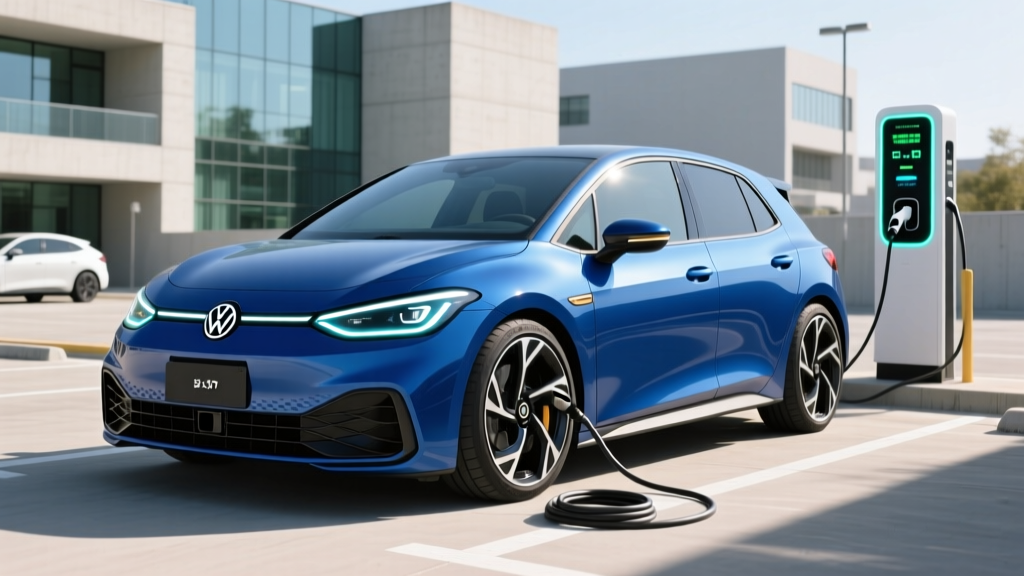
The Volkswagen GTI badge carries decades of hot-hatch credibility, and the 2026 VW ID. GTI is VW's bid to translate that legacy into an all-electric performance package. Built on an evolved version of the MEB platform, the ID. GTI pairs a rear-mounted 282-hp (210 kW) motor with a 84 kWh (usable) NMC battery and a sport-tuned chassis. The result is a 260-mile EPA-estimated range, a sub-5-second 0-60 sprint, and a starting MSRP near $45,000 before incentives.
It isn't the longest-range EV in its price class, and public DC charging peaks at a respectable but not class-leading 175 kW. What the ID. GTI does deliver is a driving character that most electric crossovers can't match: low center of gravity, sharp steering calibration, and a chassis that rewards spirited driving without sacrificing daily comfort. If you want an EV that feels like a driver's car first and an appliance second, this is VW's strongest argument yet.
Range, Efficiency & Real-World Expectations
Real-World Expectation: 220–240 mi highway (70-80 mph); 245–255 mi mixed city/suburban; 180–210 mi in sustained sub-freezing temperatures
Efficiency: 102 MPGe combined / 33 kWh per 100 miles
The EPA's 260-mile figure places the ID. GTI in the middle of the performance-EV pack. For context, that is roughly 40 miles shy of a Tesla Model 3 Long Range AWD but about 30 miles ahead of a Mini Cooper SE — and the ID. GTI offers substantially more interior space and power than the Mini.
In real-world highway driving at 75 mph on a flat route, expect to use about 35–37 kWh/100 mi, which drops effective range to roughly 225–235 miles. Cold weather (below 32°F / 0°C) without preconditioning can reduce range by 20–30%, bringing worst-case winter highway range down to around 180 miles. The ID. GTI's standard heat pump helps mitigate cabin-heating energy draw, but battery chemistry still loses efficiency in cold conditions.
For most commuters driving 30–50 miles round trip, a single overnight Level 2 charge will easily cover two to three days of driving. Road-trippers should plan charging stops every 180–200 miles to stay in the optimal 20–80% state of charge (SoC) window for fastest charging.
Battery & Charging: Speeds, Connectors & Costs
The ID. GTI uses an 84 kWh usable (91 kWh gross) lithium-ion battery pack with NMC (nickel manganese cobalt) chemistry. VW chose NMC over LFP (lithium iron phosphate) here to maximize energy density — critical for fitting enough capacity into a compact hatchback footprint while keeping weight manageable at approximately 4,480 lbs curb weight.
The trade-off: NMC cells degrade slightly faster than LFP over thousands of cycles and prefer not to sit at 100% SoC for extended periods. VW's battery management system includes a top-end buffer, and the infotainment system allows you to set a daily charge limit (80% recommended for longevity, 100% only when you need full range for a trip).
| Charging Level | Connector | Max Power | Rate / Time | Miles Added per Hour |
|---|---|---|---|---|
| Level 1 (120V) | J1772 / NACS adapter | 1.4 kW | ~1.4 kW sustained | ~4 mi/hr |
| Level 2 (240V) | J1772 / NACS | 11 kW (onboard charger) | ~11 kW sustained | ~32 mi/hr |
| DC Fast Charge | CCS1 / NACS | 175 kW peak | 10–80% in ~28 min | N/A |
Charging-curve reality check: The 175 kW peak rate is achievable between roughly 10–30% SoC at an optimal battery temperature (the ID. GTI will precondition the pack if you navigate to a charger in the infotainment system). Above 50% SoC, the rate tapers to around 100–120 kW; above 80%, it drops below 50 kW. This is typical for NMC packs and is why the 10–80% time (28 minutes) is the meaningful metric, not peak kW alone.
For 2026, VW has confirmed NACS (Tesla-style) connector availability on the ID. GTI alongside the legacy CCS1 port, giving owners access to Tesla Supercharger V3/V4 stations via native plug — no adapter required on NACS-equipped models. Verify your specific vehicle's connector at purchase, as early-build 2026 models may still ship with CCS1.
Home Level 2 charging at 11 kW means a full 10–100% charge takes roughly 8.5 hours — easily achievable overnight on a 48-amp Level 2 home charger connected to a 60-amp circuit. Expect a home charger installation to cost between $800 and $2,500 depending on panel capacity and run length, per U.S. Department of Energy guidance.
Performance: 0-60, Horsepower & Drivetrain
| Metric | Value |
|---|---|
| Drivetrain | Rear-wheel drive (single motor) |
| Horsepower | 282 hp (210 kW) |
| Torque | 402 lb-ft |
| 0–60 mph | ~5.0 seconds |
| Top Speed | 112 mph (electronically limited) |
| Curb Weight | ~4,480 lbs |
| Drive Modes | Eco, Comfort, Sport, Individual, GTI-specific GTI mode |
The single rear motor producing 282 hp and 402 lb-ft of torque makes the ID. GTI the most powerful rear-drive MEB vehicle VW has produced. The instant torque delivery — all 402 lb-ft available from 0 rpm — gives it a punch off the line that a gas GTI's turbo lag can't match. The 5.0-second 0-60 time trails the dual-motor Tesla Model 3 Performance (2.9 seconds) but beats the outgoing 2024 gas GTI Autobahn (5.6 seconds with DSG).
Where the ID. GTI distinguishes itself is chassis tuning. VW's GTI-specific sport suspension lowers the ride height by 15 mm versus the standard ID.4, with firmer damper calibration, a thicker rear stabilizer bar, and a rear-axle torque-vectoring simulation via brake-based intervention. The steering rack is also recalibrated for a quicker ratio. In Sport and GTI modes, the throttle mapping sharpens and the regen braking becomes more aggressive, approaching one-pedal driving in city traffic.
The trade-off of a single-motor RWD layout: no all-wheel drive. If you live in a region with heavy snow and ice, the ID. GTI's winter capability relies on winter tires and traction control rather than a front axle pulling you through. VW offers the ID.4 with AWD if that's a dealbreaker, but it sacrifices the GTI's sport tuning.
Interior, Cargo & Technology
The ID. GTI cabin adopts VW's ID. 2all-inspired interior language, which is a meaningful upgrade over earlier ID. models that drew criticism for confusing touch-capacitive steering wheel controls and sluggish infotainment. The 2026 ID. GTI features:
- 12.9-inch central touchscreen running VW's ID. Software 4.0 with wireless Apple CarPlay and Android Auto
- 10.25-inch digital driver cluster with configurable GTI-specific layouts (G-meter, power/regen gauge, navigation)
- Physical volume knob and restored tactile climate controls (a direct response to owner feedback)
- GTI heritage touches: tartan-pattern seat inserts (in recycled materials), red stitching, GTI-badged flat-bottom steering wheel
- Ambient lighting: 30-color LED with GTI-specific red mode
Passenger and cargo space:
| Dimension | Measurement |
|---|---|
| Front legroom | 41.1 inches |
| Rear legroom | 37.6 inches |
| Front headroom | 40.2 inches |
| Cargo (rear seats up) | 18.6 cu ft |
| Cargo (rear seats folded) | 50.2 cu ft |
| Frunk | Not available (MEB platform) |
The cargo area is competitive for a hatchback — roughly 3 cu ft more than a Toyota GR Corolla and about 5 cu ft less than a Hyundai Ioniq 5. The lack of a frunk is an MEB-platform limitation; the front space is occupied by power electronics and the HVAC system. A removable cargo floor panel creates a hidden compartment for charging cables.
Driver-assistance technology: The ID. GTI ships with VW's IQ.DRIVE suite, which is a SAE Level 2 driver-assist system. This includes adaptive cruise control with stop-and-go, lane-centering assist, automatic emergency braking, blind-spot monitoring, and rear cross-traffic alert. The system requires continuous driver supervision — hands on the wheel (capacitive detection), eyes on the road. It is not autonomous driving and does not navigate on its own.
Pricing, Trims & Federal Tax Credit Eligibility
| Trim | Base MSRP | Destination | As-Tested (est.) | §30D Credit Potential | Effective Price |
|---|---|---|---|---|---|
| ID. GTI S | $44,990 | $1,295 | $46,285 | Up to $7,500* | ~$38,785* |
| ID. GTI Autobahn | $49,990 | $1,295 | $53,500 (w/ options) | Up to $7,500* | ~$46,000* |
*Federal tax credit eligibility depends on multiple IRS §30D requirements. See checklist below.
- MSRP cap: Vehicle MSRP must not exceed $55,000 (sedans/hatchbacks). Both ID. GTI trims qualify on MSRP.
- Buyer income cap: Modified AGI must not exceed $150,000 (single), $225,000 (head of household), or $300,000 (joint). Exceed any threshold and you're ineligible.
- Battery sourcing: Critical minerals and battery components must meet escalating North American/free-trade-partner thresholds. VW has been working to localize supply, but final eligibility varies by build batch.
- Point-of-sale transfer: Eligible buyers can transfer the credit to the dealer at purchase, reducing the purchase price upfront rather than waiting for a tax refund.
- Verification: Always confirm eligibility on the IRS Clean Vehicle Provisions page at irs.gov and consult a tax professional before relying on the credit.
The ID. GTI S at a potential ~$38,785 after the full credit represents strong value for a 282-hp electric hatchback with this level of equipment. The Autobahn trim adds a panoramic fixed glass roof, 20-inch alloy wheels, leatherette sport seats with ventilation, a 9-speaker Harman Kardon audio system, and a head-up display — but pushes closer to the $55K MSRP cap once options are added. Buyers should be cautious with dealer-installed accessories that could push the MSRP above the cap.
Ownership Costs, Warranty & Long-Term Value
VW backs the ID. GTI with the following warranty coverage:
- Battery: 8 years / 100,000 miles (whichever comes first), with a capacity retention threshold of 70% of original usable capacity. If the pack degrades below 70% within the warranty period, VW will repair or replace modules to bring it back above that threshold.
- Powertrain (motor, reduction gear): 8 years / 100,000 miles
- Bumper-to-bumper: 4 years / 50,000 miles
- Corrosion perforation: 7 years / 100,000 miles
Based on current NMC degradation data from the broader MEB fleet (ID.4, ID. Buzz), owners can expect approximately 5–8% capacity loss over the first 100,000 miles with normal charging habits (keeping daily SoC between 20–80%, avoiding frequent 100% charges and DC fast-charge-only routines). VW's thermal management system, which includes liquid cooling and heating of the battery pack, helps mitigate extreme-temperature degradation.
Estimated 5-year cost of ownership vs. gas GTI (2024 2.0T Autobahn):
| Category | ID. GTI S (EV) | 2024 GTI Autobahn (Gas) |
|---|---|---|
| Purchase (after credit) | ~$38,785 | ~$39,500 |
| Fuel / Electricity | ~$3,200 (home charging avg.) | ~$7,800 (premium fuel) |
| Maintenance | ~$1,200 (tire rotations, cabin filter, fluid top-offs) | ~$3,400 (oil, brakes, filters) |
| Insurance (est.) | ~$9,600 | ~$8,100 |
| Estimated Depreciation | ~$14,500 | ~$16,000 |
| Total 5-Year | ~$67,285 | ~$74,800 |
The ID. GTI saves an estimated $7,500 over five years, driven primarily by fuel and maintenance savings. Insurance premiums run 15–20% higher for the EV — a common pattern due to higher repair costs and parts pricing. Depreciation estimates assume the EV market continues to stabilize; early EV adopters saw steeper drops, but 2025–2026 data suggests improved retention as the used-EV market matures.
Competitor Comparison: ID. GTI vs. Key Rivals
| Spec | VW ID. GTI S | Tesla Model 3 LR AWD | Hyundai Ioniq 5 N | Mini Cooper SE (2026) |
|---|---|---|---|---|
| EPA Range | 260 mi | 363 mi | 221 mi | 230 mi |
| Battery (usable) | 84 kWh NMC | 75 kWh NMC | 84 kWh NMC | 54 kWh NMC |
| Horsepower | 282 hp | 346 hp | 641 hp (N Grin Boost) | 215 hp |
| 0–60 mph | 5.0 sec | 4.2 sec | 3.4 sec | 6.7 sec |
| Max DC Charge | 175 kW | 250 kW | 240 kW | 95 kW |
| 10–80% Time | ~28 min | ~20 min | ~18 min | ~30 min |
| Drivetrain | RWD | AWD | AWD | FWD |
| Base MSRP | $44,990 | $47,990 | $66,500 | $35,900 |
| §30D Eligible | Yes* | Yes* | No (MSRP > $55K) | Yes* |
| Cargo (seats up) | 18.6 cu ft | 23.0 cu ft | 27.2 cu ft | 10.6 cu ft |
*§30D eligibility subject to buyer income, battery sourcing, and MSRP verification at time of purchase.
The Tesla Model 3 Long Range wins on range and charging speed, but its interior materials and ride quality are a step below the VW's. The Hyundai Ioniq 5 N is a thrilling track weapon but costs $20K more and sacrifices daily usability for performance. The Mini Cooper SE is cheaper and charming but far less practical and slower. The ID. GTI occupies a specific niche: accessible performance, European build quality, and practical hatchback utility at a price that undercuts the performance-EV elite.
Pros, Cons & Who Should Buy
- GTI-tuned chassis delivers genuine driving engagement rare in EVs at this price
- Strong 282 hp / 402 lb-ft from a single rear motor; instant torque off the line
- Competitive ~$45K MSRP; eligible for up to $7,500 federal credit
- Practical hatchback cargo (18.6 cu ft) with comfortable rear seats
- Improved ID. Software 4.0 infotainment with physical controls restored
- Standard heat pump for better cold-weather efficiency
- NACS connector option for Tesla Supercharger access
- 260-mile EPA range trails Model 3 LR by 100+ miles; road trips require more stops
- 175 kW peak DC charging is slower than rivals (Tesla 250 kW, Hyundai 240 kW)
- No frunk; MEB platform limits front storage
- RWD only — no AWD option for snow-belt buyers
- Curb weight (~4,480 lbs) is noticeable in tight corners vs. gas GTI (~3,150 lbs)
- Insurance premiums run 15–20% higher than gas equivalent
- Autobahn trim approaches MSRP cap; options could push over $55K threshold
- Choose the ID. GTI if: You want an EV that prioritizes driving dynamics over maximum range, you commute under 60 miles daily with home charging, you value European interior quality, and you want a hatchback that fits a small family's gear.
- Look elsewhere if: You regularly drive 300+ miles between charging stops (consider Model 3 LR), you need AWD for harsh winters (consider ID.4 AWD or Model 3 LR), you want track-day performance (Ioniq 5 N), or your budget is under $35K (Mini Cooper SE or used EV market).
Frequently Asked Questions
What is the real-world range of the VW ID. GTI?
The EPA estimates 260 miles combined. In real-world highway driving at 70–80 mph, expect 220–240 miles. In freezing temperatures without preconditioning, range can drop to 180–210 miles. City driving with regenerative braking can push range closer to or slightly above the EPA figure.
How fast does the ID. GTI charge?
On a DC fast charger, the ID. GTI peaks at 175 kW and charges from 10–80% in approximately 28 minutes when the battery is preconditioned. At home on a Level 2 charger (240V, 48A), the 11 kW onboard charger adds roughly 32 miles of range per hour, filling the battery from empty in about 8.5 hours.
Does the VW ID. GTI qualify for the $7,500 federal EV tax credit?
Both trims fall under the $55,000 MSRP cap for hatchbacks/sedans, which is one requirement. However, eligibility also depends on your modified adjusted gross income (not exceeding $150K single / $300K joint), battery critical-mineral and component sourcing thresholds, and purchasing the vehicle new from a licensed dealer. Always verify current eligibility at irs.gov and consult a tax professional. Eligible buyers can transfer the credit to the dealer at point of sale for an upfront price reduction.
Is the ID. GTI worth buying over a Tesla Model 3?
It depends on priorities. The Model 3 Long Range AWD offers 100+ more miles of range, faster DC charging (250 kW), and AWD for $3,000 more. The ID. GTI counters with a more engaging chassis, higher-quality interior materials, hatchback practicality, and a more traditional driving experience. If range and charging speed are your top concerns, the Tesla wins. If driving feel and build quality matter more, the VW is the stronger choice.
Does the ID. GTI have a frunk (front trunk)?
No. The MEB platform places power electronics, the onboard charger, and HVAC components under the front hood, leaving no room for a frunk. All cargo space (18.6 cu ft) is in the rear hatch area.
What is the battery warranty on the ID. GTI?
VW covers the high-voltage battery for 8 years or 100,000 miles, whichever comes first. The warranty guarantees the battery will retain at least 70% of its original usable capacity. If degradation exceeds 30% within that period, VW will service or replace battery modules to restore capacity above the threshold.
Is VW's IQ.DRIVE self-driving?
No. IQ.DRIVE is an SAE Level 2 driver-assistance system. It provides adaptive cruise control and lane-centering, but the driver must remain fully engaged — hands on the wheel, eyes on the road, ready to take over at any moment. It does not navigate autonomously, change lanes on its own, or handle complex driving scenarios without supervision.
Can I charge the ID. GTI at Tesla Superchargers?
2026 ID. GTI models equipped with the native NACS connector can charge at Tesla Supercharger V3 and V4 stations without an adapter. Models built with the CCS1 port will require a CCS-to-NACS adapter. Confirm your vehicle's connector type before purchase, as VW is transitioning the lineup to NACS throughout the 2026 model year.
Sources: fueleconomy.gov (EPA range and efficiency data), IRS §30D Clean Vehicle Credit, Volkswagen of America official specifications. All figures reflect 2026 model-year data available at time of publication. Tax credit eligibility and vehicle pricing subject to change; verify with dealer and tax professional.