The Quick Answer: Is There an Electric GTI?
Volkswagen's ID. GTI — an all-electric successor to the iconic Golf GTI — was unveiled as a concept in September 2023 at the IAA Mobility show in Munich. As of early 2026, VW has confirmed production intent but has not yet opened orders or published final EPA-certified specs. Based on VW's statements and the MEB platform it shares with the ID.3/ID.4 family, the production electric GTI is expected to arrive in global markets around 2027, with a targeted starting price in the $35,000–$40,000 range (before incentives) and an estimated WLTP range of roughly 260–300 miles (expect ~220–260 EPA miles once certified). It will be front-wheel drive with approximately 220–280 horsepower depending on the final powertrain tune. If you're shopping for a hot hatch today, the electric GTI is not yet available — but it's worth tracking.
What Is the ID. GTI Concept and Where Does It Stand?
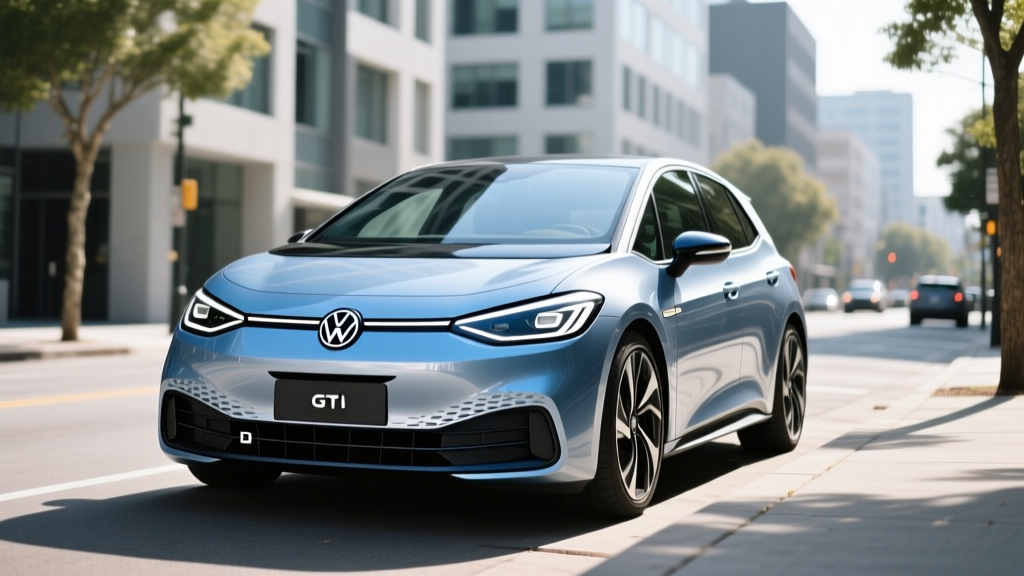
The ID. GTI Concept is VW's vision for a performance-oriented electric hatchback that carries the GTI badge into the electrified era. It's built on a shortened version of VW's MEB (Modular Electric Drive Matrix) platform — essentially the same architecture underpinning the ID.3 sold in Europe and related to the ID.4 crossover sold in the US. The concept car features a single rear-mounted electric motor (despite the GTI's traditional front-wheel-drive layout, the MEB-based ID. family uses rear- or all-wheel-drive configurations), aggressive bodywork, a lowered ride height, and signature GTI design cues like the red stripe across the grille and tartan-inspired interior accents.
VW CEO Thomas Schäfer confirmed the concept is headed for production, positioning it as a "democratic" performance EV — meaning accessible pricing rather than luxury-tier cost. However, VW has been cautious about timelines. The company is simultaneously restructuring its EV strategy, delaying some software-intensive models, and recalibrating its MEB rollout. The production ID. GTI is now expected no earlier than late 2026 as a 2027 model year, with US availability uncertain — VW may initially limit it to European markets where the ID.3 platform is already established.
Expected Specs: Range, Battery, and Charging
Because the production model hasn't been officially specced for the US market, the figures below are estimates based on VW's MEB platform capabilities and the concept's disclosed details. Final EPA-certified numbers will differ.
| Specification | Estimated Value | Notes |
|---|---|---|
| Battery Capacity (usable) | ~58–77 kWh | MEB platform supports both; GTI likely uses 77 kWh for range |
| Battery Chemistry | NMC (Nickel Manganese Cobalt) | Standard for VW MEB performance variants |
| WLTP Range (est.) | 260–300 miles | European cycle; more optimistic than EPA |
| EPA Range (est.) | ~220–260 miles | Real-world US expectation once certified |
| Motor Output | 220–280 hp | Single rear motor; possible AWD variant later |
| 0–60 mph (est.) | ~5.5–6.5 seconds | Hot hatch territory; torque delivery is instant |
| Peak DC Fast Charge | ~135–175 kW | MEB platform limitation; not class-leading |
| 10–80% DC Charge Time (est.) | ~28–35 minutes | Charge curve tapers significantly above 80% |
| Level 2 AC Charge Rate | 11 kW (estimated) | ~7–8 hours for a full charge on 240V/48A |
| Drivetrain | Rear-wheel drive (MEB standard) | Differs from traditional FWD GTI |
| Estimated Base MSRP (US) | $35,000–$40,000 | Before any federal/state incentives |
Real-World Range Reality Check
The estimated 220–260 EPA miles assumes moderate temperatures and mixed driving. In practice:
- Highway driving at 75 mph: Expect ~180–220 miles before needing to charge.
- Cold weather (below 32°F): Range can drop 20–30%, potentially to ~160–200 miles. The MEB platform includes a heat pump option, which mitigates this somewhat.
- City/regenerative driving: You may exceed the EPA estimate, reaching 250+ miles with disciplined regen use.
For a hot hatch buyer who plans to road-trip, this range is workable but not exceptional — it puts the electric GTI in the same ballpark as a Chevrolet Bolt EUV (247 mi EPA) or base Hyundai Kona Electric (261 mi EPA), but behind the Tesla Model 3 RWD (272 mi EPA at a similar price point).
Electric GTI vs. Gas GTI: A Data-Driven Comparison
The current gas-powered 2025 Volkswagen Golf GTI remains on sale and is the benchmark the electric version must beat. Here's how they stack up on the metrics that matter to hot hatch buyers:
| Metric | 2025 Gas Golf GTI (2.0T SE) | ID. GTI (Estimated) |
|---|---|---|
| Base MSRP | ~$33,545 | ~$35,000–$40,000 |
| Horsepower | 241 hp | 220–280 hp |
| Torque | 273 lb-ft | ~250–340 lb-ft (instant) |
| 0–60 mph | ~5.6 sec | ~5.5–6.5 sec (est.) |
| Fuel/Energy Cost per Mile | ~$0.14/mi (28 MPG combined, $3.90/gal) | ~$0.04–$0.06/mi (home charging, $0.13/kWh) |
| Range / Tank | ~380 miles (13.2-gal tank) | ~220–260 miles (est. EPA) |
| Refuel/Recharge Time | ~5 minutes | ~28–35 min (10–80% DC fast) |
| Cargo Space | 19.9 cu ft | ~15–18 cu ft (est., battery packaging impact) |
| Curb Weight | ~3,150 lbs | ~3,700–4,000 lbs (est.) |
| Annual Maintenance | ~$600–$900/yr | ~$200–$400/yr (no oil, fewer wear items) |
| Federal Tax Credit (§30D) | Not eligible | Potentially up to $7,500 (sourcing/income rules apply) |
The trade-off is clear: The electric GTI will likely cost more upfront, weigh significantly more (which affects handling dynamics — a core GTI attribute), and offer less total range. But it will deliver dramatically lower per-mile energy costs, instant torque, lower maintenance, and potential tax credit eligibility that could narrow or eliminate the price gap.
Real Costs of Ownership: What the Numbers Actually Look Like
Let's model a realistic 5-year ownership scenario comparing the gas GTI and the estimated electric GTI. This assumes 12,000 miles/year, home Level 2 charging availability, and current energy prices.
| Cost Category | Gas GTI (2025 SE) | Electric GTI (Est.) |
|---|---|---|
| Purchase Price (base) | $33,545 | $37,500 (midpoint estimate) |
| Federal Tax Credit (§30D) | $0 | –$3,750 to –$7,500* |
| Effective Purchase Price | $33,545 | $30,000–$33,750 |
| Fuel/Energy (5 yr, 60k mi) | $8,400 | $2,400–$3,600 |
| Maintenance (5 yr) | $3,500 | $1,500 |
| Insurance (5 yr, avg) | $7,500 | $8,000–$9,000** |
| Home Charger Install (L2) | $0 | $500–$1,500 |
| Estimated Depreciation (5 yr) | ~$14,000 | ~$15,000–$18,000*** |
| Total 5-Year Cost | ~$66,945 | ~$57,400–$66,350 |
* §30D credit depends on battery critical-mineral sourcing, buyer income caps ($150k single / $300k joint), and MSRP caps ($55k for cars). Check current rules at IRS.gov. Eligibility for a VW-built EV is uncertain given European battery sourcing.
** EV insurance premiums run 10–20% higher on average due to repair costs and battery replacement risk.
*** EV depreciation remains volatile; early-adopter models depreciate faster than established nameplates. The GTI badge may help resale.
Charging Reality: What You Need to Know Before You Buy
The MEB platform's DC fast-charging ceiling of roughly 135–175 kW is the electric GTI's most significant practical limitation. For context, Hyundai's E-GMP platform (Ioniq 5, Ioniq 6) charges at up to 240 kW on 800V architecture, and Tesla's latest V4 Superchargers deliver 250+ kW. The ID. GTI will charge noticeably slower on road trips.
| Charging Level | Power (kW) | Miles Added per Hour | Typical Use Case |
|---|---|---|---|
| Level 1 (120V household) | ~1.4 kW | ~4–5 mi/hr | Emergency/overnight trickle |
| Level 2 (240V home/public) | 7.2–11 kW | ~25–40 mi/hr | Daily charging at home |
| DC Fast Charge (public) | ~135–175 kW peak | ~450–600 mi/hr (peak) | Road trips; 10–80% in ~28–35 min |
Home charging is essential. Without a Level 2 home setup, daily EV ownership becomes a chore of public-charger hunting. A 240V/48A home charger installation typically costs $800–$2,000 depending on your electrical panel's capacity. If your panel needs upgrading from 100A to 200A service, add $1,500–$3,000. Always get a quote from a licensed electrician before committing to an EV purchase.
On road trips, the 28–35 minute 10–80% charge time means planning 30+ minute stops every 200 miles or so. That's manageable, but it's a step behind the best-in-class EVs that can do 10–80% in 18 minutes. VW's charging curve also tapers steeply above 80% SoC — charging from 80–100% can take nearly as long as 10–80%. For road-trip efficiency, plan to charge to 80% and move on.
Common Misconceptions About the Electric GTI
| Myth | Fact |
|---|---|
| "The electric GTI is available to buy now." | As of early 2026, the ID. GTI is still a confirmed-for-production concept. No orders are open. Expect availability around 2027 at the earliest. |
| "It will handle exactly like a gas GTI." | The electric GTI will be 500–850 lbs heavier due to the battery pack and uses rear-wheel drive (MEB platform), fundamentally different from the FWD gas GTI. Weight distribution and steering feel will be different. |
| "It qualifies for the full $7,500 federal tax credit." | Eligibility under IRS §30D depends on battery sourcing (critical minerals and components must meet phased-in thresholds), buyer income, and MSRP caps. A VW built on a European battery supply chain may not qualify for the full amount — or at all. Verify at purchase time. |
| "260 miles of range means I can drive 260 miles on a road trip." | EPA range assumes mixed driving at moderate speeds. Sustained 75 mph highway driving, cold weather, and elevation changes can reduce real range by 20–35%. Plan for ~180–220 real highway miles between charges. |
| "I don't need home charging — public chargers are everywhere." | While the US public charging network has grown significantly, reliability remains inconsistent. Relying solely on public charging adds cost ($0.30–$0.50/kWh vs. ~$0.13/kWh at home) and time. Home Level 2 charging is the foundation of practical EV ownership. |
Decision Framework: Should You Wait for the Electric GTI or Buy Now?
Choose the Gas GTI (2025) If:
- You want to buy now and not wait 12–18+ months for an unproven model.
- Road-trip flexibility without charge-planning is a priority (380-mile tank, 5-minute fills).
- You don't have reliable home charging access (apartment, street parking, no 240V outlet).
- Lightweight, tossable handling is your top dynamic priority (gas GTI is ~3,150 lbs vs. est. 3,700+ for EV).
- You live in a region with sparse DC fast-charging infrastructure.
Wait for the Electric GTI If:
- You have home Level 2 charging and your daily commute is under 80 miles round-trip.
- You want dramatically lower per-mile energy costs (~$0.05/mi vs. ~$0.14/mi).
- You value instant torque and a quiet, vibration-free daily drive.
- You want lower maintenance costs (no oil changes, fewer brake replacements with regen braking).
- The GTI badge matters to you and you want to be an early adopter of its electric chapter.
- You can absorb the uncertainty of first-year production (potential software bugs, build-quality variability).
Consider These Alternatives Available Now:
- Hyundai Ioniq 5 N: The current performance-EV benchmark. 601 hp (N Grin Boost), 221 mi EPA range, ~$66,000. Far more expensive but delivers genuine track capability and 800V fast charging.
- Tesla Model 3 Performance: 315 mi EPA range, 0–60 in 2.9 sec, ~$54,990. Not a hatchback, but the performance-per-dollar king among EVs.
- Mini Cooper SE (2025+): The closest spiritual competitor — small, fun, electric hatchback. ~150 mi EPA range, ~$32,000. Limited range but engaging to drive.
- Gas GTI (2025): Still excellent. 241 hp, 28 MPG combined, proven platform, $33,545 base.
Frequently Asked Questions
Will the electric GTI be sold in the United States?
VW has not confirmed US availability. The ID. GTI concept is based on the ID.3 platform, which VW has historically kept in European and Asian markets. The US gets the larger ID.4 and ID.7 on MEB. A US launch is possible but not guaranteed — VW may prioritize Europe where small hatchbacks have stronger demand.
What battery chemistry will the electric GTI use?
The MEB platform currently uses NMC (Nickel Manganese Cobalt) lithium-ion cells, primarily supplied by LG Energy Solution and SK On. NMC offers higher energy density than LFP (Lithium Iron Phosphate), which is important for a performance hatchback where weight and packaging are constrained. However, VW has been exploring LFP for lower-cost models, so a base trim could potentially use LFP for cost savings with a slight range trade-off.
How does the electric GTI's charging speed compare to competitors?
The MEB platform's ~135–175 kW DC fast-charge peak is a known limitation. It's slower than Hyundai/Kia's 800V E-GMP platform (~240 kW, 10–80% in ~18 min), Tesla's V3/V4 Superchargers (~250 kW), and even GM's Ultium platform (~190–200 kW on many models). For road-trippers who fast-charge frequently, this is a meaningful disadvantage — adding ~10–15 extra minutes per stop compared to the fastest-charging competitors.
Will the electric GTI qualify for the federal EV tax credit?
This is uncertain. Under current IRS §30D rules, a vehicle must meet battery-component and critical-mineral sourcing thresholds (which phase up annually), the buyer must be under income caps ($150,000 single / $300,000 joint AGI), and the vehicle MSRP must be under $55,000 for cars. If VW sources batteries from European or Korean suppliers that don't meet the critical-mineral thresholds, the credit could be reduced or unavailable. Always verify eligibility at the point of sale — dealers can check the IRS database.
Is the electric GTI a good first EV?
It could be — if it arrives at its target price point with adequate range and you have home charging. The GTI badge suggests VW will prioritize driving engagement, which could make it one of the more emotionally compelling entry-point EVs. However, first-time EV buyers should strongly consider models with proven reliability records, established charging networks (Tesla's Supercharger advantage), and confirmed tax-credit eligibility. Waiting for a brand-new, unproven model as your first EV carries more risk than choosing an established option like the Tesla Model 3, Hyundai Ioniq 5, or Chevrolet Equinox EV.