Quick Verdict: VW's Flagship Electric Sedan Ambition
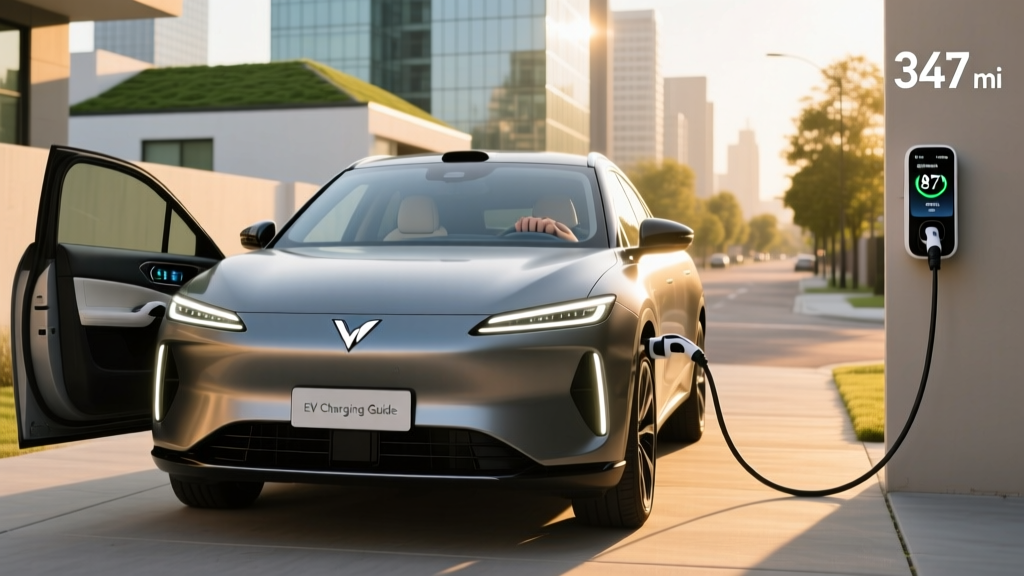
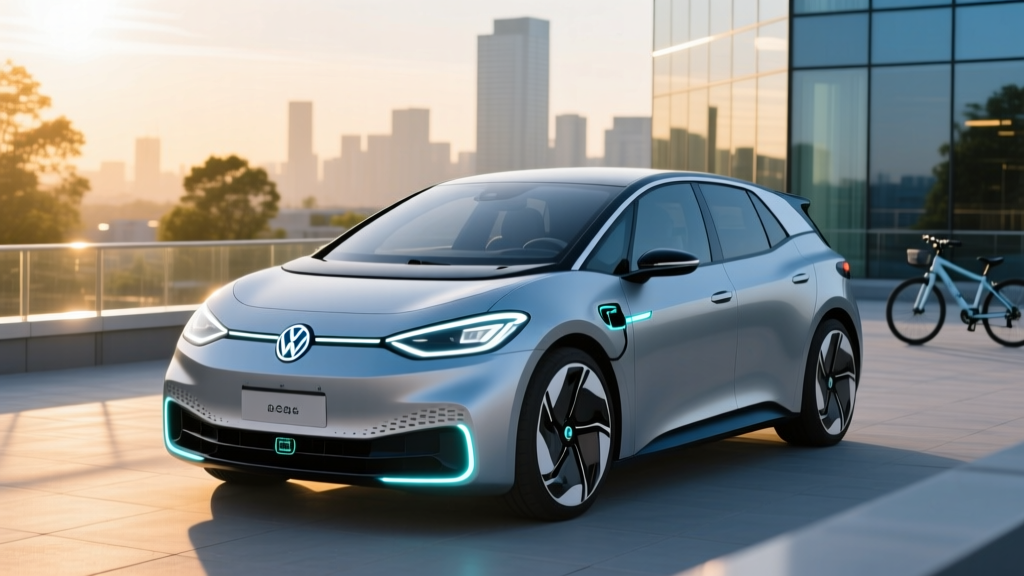
Volkswagen unveiled the ID.7 as its global electric sedan, but the VW ID Era nameplate surfaced through a China-market concept that previews VW's next-generation electric flagship for the premium sedan segment. As of early 2026, the ID Era remains an announced concept — not yet available for purchase in the United States — but its specifications and design language signal where VW is heading with its SSP (Scalable Systems Platform) architecture.
This preview compiles every confirmed and estimated specification we have on the VW ID Era, contextualized against the ID.7 sedan that shares much of its DNA, so you can evaluate whether VW's flagship electric sedan deserves a spot on your shortlist when it reaches US showrooms.
Estimated Range and Battery Specifications
The VW ID Era concept is built on Volkswagen's upcoming 800-volt SSP platform, which supports larger battery packs and faster charging than the current MEB architecture found in the ID.4 and ID.7. Based on VW's disclosures and the ID.7 production sedan's confirmed figures, here is what we can project:
| Spec | Estimated / Known Value | Source Basis |
|---|---|---|
| Battery Capacity (Usable) | ~86–91 kWh (estimated) | ID.7 Pro S / SSP platform specs |
| Battery Chemistry | NMC (Nickel Manganese Cobalt) | VW's current EV lineup |
| EPA Estimated Range | ~340–380 miles (projected) | ID.7 WLTP 435 mi, adjusted for EPA |
| Drivetrain | RWD standard; AWD available | ID.7 platform configuration |
| Horsepower | ~282 hp (RWD); ~335 hp (AWD est.) | ID.7 Pro S output |
| 0–60 mph | ~6.5 sec (RWD); ~5.2 sec (AWD est.) | ID.7 tested figures |
| Efficiency | ~110–120 MPGe (projected) | ID.7 EPA-equivalent calculations |
The NMC chemistry VW uses prioritizes energy density over the cycle-life advantages of LFP (lithium iron phosphate). For a flagship sedan targeting 350+ miles, NMC remains the pragmatic choice — though it means buyers should plan for moderate long-term degradation (typically 10–15% capacity loss over 8 years based on current VW pack data).
Charging Speed: DC Fast and Home Level 2
The 800-volt SSP architecture is the ID Era's most significant technical upgrade over the current MEB-based VWs. Higher voltage enables faster charging without excessive current, reducing heat and improving sustained charge rates.
| Level | Power / Rate | Time / Miles Added |
|---|---|---|
| Level 1 (120V household) | ~1.4 kW | ~4–5 miles per hour |
| Level 2 (240V home/work) | ~11 kW (est.) | ~32–36 miles per hour; full charge ~9 hrs |
| DC Fast Charge (peak) | ~200–250 kW (est.) | 10–80% in ~20–25 minutes (projected) |
Understanding the charge curve: Peak DC charge rate is not sustained across the entire session. The ID Era will likely hit its peak kW between 10–40% State of Charge, then taper progressively. Above 80%, charging slows dramatically to protect the battery — expect 80–100% to take nearly as long as 10–80%. For road trips, plan stops around the 10–80% window for the best time efficiency.
The jump from MEB's ~170 kW peak (ID.4) to SSP's projected 200–250 kW is meaningful on long trips: a 20-minute stop instead of 28 minutes adds up over a 600-mile drive. The 800V architecture also positions the ID Era to take full advantage of 350 kW-capable chargers on networks like Electrify America.
For home charging, an 11 kW Level 2 setup requires a 48-amp dedicated circuit on a 60-amp breaker. If your home electrical panel lacks capacity, a panel upgrade ($1,500–$3,000) may be necessary — budget accordingly when planning your installation.
Performance and Driving Dynamics
The ID Era concept positions itself as a premium electric sedan — think Tesla Model S competitor at a more accessible price point, or a direct rival to the Hyundai Ioniq 6 and BMW i4. VW's rear-wheel-drive APP550 motor, debuted in the ID.7, delivers 282 horsepower and 229 lb-ft of torque. An all-wheel-drive variant with a front motor would push output above 330 hp.
Key performance characteristics projected for the ID Era:
- 0–60 mph: ~6.5 seconds (RWD); ~5.2 seconds (AWD, estimated)
- Top speed: Electronically limited to ~112 mph (VW's standard limiter for efficiency)
- Suspension: Adaptive dampers expected on higher trims; multi-link rear axle
- Turning circle: Sedan proportions should yield ~35–37 ft, tighter than most crossovers
The 800V platform also enables more aggressive regenerative braking, potentially offering true one-pedal driving — something VW's current MEB vehicles only partially deliver. Expect multiple regen modes selectable through the steering wheel paddles or infotainment system.
Interior, Tech, and Cargo Space
The ID Era concept showcases VW's next-generation interior architecture, building on the ID.7's cabin but with more premium materials and a larger digital footprint. Key interior features projected or confirmed from the concept:
- Displays: 15-inch center touchscreen with haptic feedback; augmented-reality head-up display projecting navigation and ADAS cues into the driver's sightline
- Climate: Smart glass panoramic roof with electrochromic dimming (replaces a physical shade, saving weight)
- Audio: Premium sound system (Harman Kardon or similar tier expected)
- Connectivity: Wireless Apple CarPlay/Android Auto, over-the-air updates, VW's latest ID. Software 4.x
- Seats: Heated/ventilated front seats standard on upper trims; massage available
Cargo and passenger space (estimated from ID.7 dimensions, which the ID Era closely mirrors):
- Rear legroom: ~40 inches (competitive with Model S)
- Trunk: ~18–19 cu ft (sedan trunk; no hatchback liftgate)
- Frunk (front trunk): Small storage compartment, ~2–3 cu ft for charging cables
- Total passenger volume: ~100–103 cu ft
The sedan form factor sacrifices some cargo versatility compared to the ID.4 crossover, but the low floor and long wheelbase give rear passengers limousine-like legroom — a deliberate choice for the executive-sedan buyer.
Pricing, Trims, and Federal Tax Credit Eligibility
Volkswagen has not announced official US pricing for the ID Era. However, based on the ID.7's positioning and VW's stated goal of competing in the premium-but-accessible segment, we can project the following pricing structure:
| Trim | Est. Base MSRP | Key Features |
|---|---|---|
| Pro (RWD) | ~$48,000–$52,000 | Standard battery, 15" screen, adaptive cruise |
| Pro S (RWD) | ~$53,000–$57,000 | Extended range, premium audio, panoramic roof |
| Pro S AWD | ~$57,000–$62,000 | Dual motor, all-weather capability, sport suspension |
Federal Tax Credit: §30D Eligibility
The IRS §30D clean vehicle credit offers up to $7,500 for qualifying new EVs, but eligibility hinges on multiple factors that may affect the ID Era:
- MSRP cap: Sedans must be priced at or below $55,000 to qualify. The ID Era Pro and Pro S RWD trims should clear this threshold; the AWD variant may exceed it.
- Buyer income cap: Modified adjusted gross income must not exceed $150,000 (single), $225,000 (head of household), or $300,000 (joint filers).
- Battery sourcing: Critical minerals and battery components must meet escalating domestic-content thresholds. VW's supply chain for the SSP platform is still being finalized — this is the biggest wildcard for credit eligibility.
- Point-of-sale transfer: If eligible, the $7,500 credit can be applied at the dealership as an instant discount rather than waiting for a tax refund.
Driver Assistance and Safety Technology
The ID Era is expected to feature VW's Travel Assist suite, which combines adaptive cruise control with lane-centering — a SAE Level 2 driver-assistance system. This means:
Expected ADAS features:
- Adaptive cruise control with stop-and-go
- Lane-centering assist with lane-keep
- Automatic emergency braking with pedestrian/cyclist detection
- Blind-spot monitoring with rear cross-traffic alert
- Park Assist Plus (semi-automated parallel/perpendicular parking)
- Car2X communication (vehicle-to-infrastructure warnings, standard on EU VWs)
For safety ratings, the ID Era has not yet been tested by NHTSA or IIHS — these results will follow after the vehicle reaches production. The ID.7 earned a 5-star Euro NCAP rating, which provides a strong indicator of the structural safety baseline.
Who Should Consider the VW ID Era?
- You want a premium electric sedan with 340+ miles of range at a sub-$55K starting price
- You prioritize rear-seat comfort and a refined ride over sporty handling
- You prefer VW's build quality and dealer network over Tesla or startup brands
- You want 800V fast-charging capability without paying Porsche Taycan prices
- Executive commuting and long highway trips are your primary use case
- You need SUV-level cargo space or towing capability (consider the ID.4 or Rivian R1S)
- You want a performance-focused sedan (BMW i4 M50 or Tesla Model S Plaid are quicker)
- You need to buy now — the ID Era is not yet available in the US
- LFP battery chemistry (longer cycle life, lower degradation) is a priority (consider Tesla Model 3 RWD or base Hyundai Ioniq 6)
Pros and Cons at a Glance
- 340–380 mi projected EPA range
- 800V architecture for fast DC charging
- Premium sedan comfort with spacious rear seats
- Competitive pricing vs. BMW i4, Mercedes EQB
- AR head-up display and modern infotainment
- VW's established US dealer/service network
- Not yet available — US launch date unconfirmed
- Tax credit eligibility uncertain (sourcing rules)
- Sedan trunk limits cargo versatility vs. hatchback/SUV
- VW's infotainment software has drawn criticism in current models
- NMC battery means higher degradation than LFP over time
- No confirmed towing rating (sedan, likely unrated)
Battery and Vehicle Warranty
Volkswagen's current EV warranty structure is expected to carry over to the ID Era:
- Battery warranty: 8 years / 100,000 miles (whichever comes first), covering defects and capacity loss below 70% of original capacity
- Powertrain warranty: 8 years / 100,000 miles (electric motor, power electronics)
- Bumper-to-bumper: 4 years / 50,000 miles
- Roadside assistance: 4 years / 50,000 miles
The 70% capacity retention threshold is industry-standard (matching Hyundai, Kia, and Tesla). If your ID Era battery drops below 70% State of Health within the warranty period, VW is obligated to repair or replace it. Based on current data from ID.4 owners, most VW packs retain 90%+ capacity after 3 years of typical use.
Frequently Asked Questions
What is the real-world range of the VW ID Era?
Based on the ID.7's confirmed efficiency and the ID Era's projected 86–91 kWh battery, expect approximately 290–330 miles in real-world highway driving at 70 mph in mild weather. In cold conditions (below freezing), range may drop to 250–280 miles. The sedan's low drag coefficient (~0.23 Cd projected) helps preserve highway efficiency compared to boxier SUVs.
How fast does the VW ID Era charge?
The 800V SSP platform is projected to support DC fast charging at 200–250 kW peak, enabling a 10–80% charge in approximately 20–25 minutes at a compatible station. Home Level 2 charging at 11 kW should add roughly 32–36 miles of range per hour, fully recharging the battery in about 9 hours overnight.
How much will the VW ID Era cost after tax credits?
If the base Pro trim lands around $48,000–$52,000 MSRP and qualifies for the full $7,500 federal credit, the effective price could be $40,500–$44,500. However, credit eligibility depends on battery sourcing, buyer income, and MSRP caps — all of which remain unconfirmed for the ID Era specifically. State incentives (e.g., California, Colorado, New York) may stack on top.
Is the VW ID Era worth buying vs. competitors?
The ID Era targets the premium electric sedan space occupied by the Hyundai Ioniq 6 (~$37K–$52K, 361 mi range), Tesla Model 3 Long Range (~$48K, 341 mi), and BMW i4 (~$52K, 307 mi). If VW prices it competitively and delivers the projected 800V charging and 350+ mile range, it will be a strong contender — particularly for buyers who prefer VW's build quality and want a sedan more refined than the Model 3 but less expensive than the BMW i4.
Does the VW ID Era qualify for the federal EV tax credit?
Eligibility is not yet confirmed. The sedan must be priced at or below $55,000 MSRP, the buyer must meet income thresholds, and the battery must satisfy critical-mineral and component sourcing requirements per IRS §30D rules. VW's US-built EVs (like the ID.4) have qualified, but the ID Era's manufacturing location and supply chain are not yet announced. Check fueleconomy.gov closer to launch for the definitive answer.
When will the VW ID Era be available in the US?
Volkswagen has not confirmed a US launch date for the ID Era. The ID.7 sedan was initially slated for US delivery in 2024 but faced delays. If the ID Era follows the SSP platform timeline, a 2027–2028 model-year launch is plausible, but this remains speculative. VW may also choose to offer the ID.7 in the US instead, with the ID Era reserved for Asian and European markets.