Quick Answer: Should You Buy a VW Electric Van?
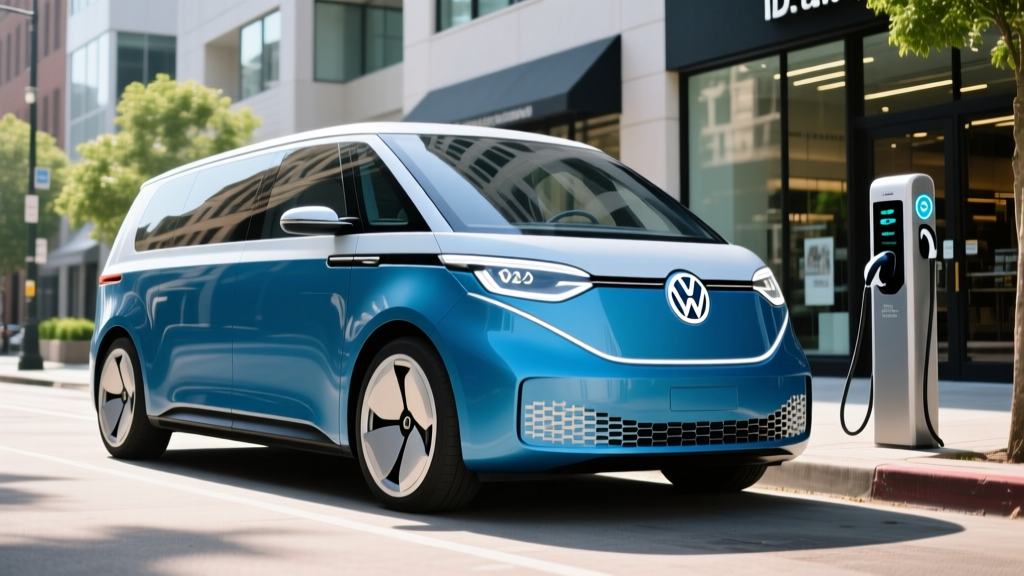
The 2026 Volkswagen ID. Buzz is a three-row electric minivan with an EPA-estimated 234 miles of range (Standard Wheelbase) and 231 miles (Long Wheelbase AWD). It starts at $59,995 before destination. Buyers with modified adjusted gross income under $300,000 (joint filers) who purchase a VIN meeting §30D battery-sourcing requirements may qualify for up to $7,500 in federal tax credits, potentially transferred at point of sale. The ID. Buzz is best for suburban families with home Level 2 charging who drive under 180 miles daily and want a distinctive, spacious EV. It is not ideal for frequent 400+ mile road-trippers or buyers without reliable home or workplace charging access.
What Is the VW ID. Buzz? The Electric Van Landscape in 2026
The 2026 VW ID. Buzz is Volkswagen's retro-styled electric minivan, sold in the U.S. since late 2024 and now entering its second model year with minor packaging updates. It competes in a segment with no direct electric rival — the Chrysler Pacifica PHEV is the closest electrified alternative, while gas minivans like the Toyota Sienna and Honda Odyssey serve as conventional baselines.
VW offers the ID. Buzz in two body styles: Standard Wheelbase (SWB) with rear-wheel drive, and Long Wheelbase (LWB) with all-wheel drive. Both seat up to seven passengers. The SWB is the volume seller and the more efficient of the two.
| Spec | SWB (RWD) | LWB (AWD) |
|---|---|---|
| EPA Range | 234 mi | 231 mi |
| Battery (usable) | 86 kWh (NMC) | 86 kWh (NMC) |
| Power | 282 hp / 282 lb-ft | 335 hp / 339 lb-ft |
| 0–60 mph | 7.9 sec | 5.7 sec |
| DC Fast Charge Peak | 185 kW | 185 kW |
| 10–80% DC Charge | ~26 min | ~26 min |
| Level 2 Charge Rate | 11 kW | 11 kW |
| MPGe (combined) | 87 MPGe | 84 MPGe |
| Base MSRP | $59,995 | $63,995 |
| Battery Warranty | 8 yr / 100,000 mi | 8 yr / 100,000 mi |
Sources: EPA Fuel Economy, Volkswagen USA.
Real-World Range: What to Expect Beyond the EPA Sticker
EPA: 234 miles (SWB) | Real-world highway: ~195–210 miles | Cold weather (below 30°F): ~165–185 miles
The ID. Buzz's boxy aerodynamics — a drag coefficient around 0.29 — hurt efficiency at highway speeds. In warm-weather highway driving at 70–75 mph, expect to use roughly 36–40 kWh/100mi, translating to 195–210 miles before needing a charge. In winter conditions, battery chemistry and cabin heating can reduce range by 20–30%, dropping real-world miles to roughly 165–185. The ID. Buzz does not include a heat pump on all trims; the resistance heater draws significant power in cold weather. VW has confirmed heat-pump availability as standard for the 2026 model year on U.S. trims, which should moderate cold-weather losses compared to the 2025 model.
For daily commuting under 80 miles round-trip, the ID. Buzz's real-world range is more than sufficient. The limitation appears on long road trips, where you'll need to plan DC fast-charging stops roughly every 180–200 miles in summer and every 150–170 miles in winter.
Charging Speed and Infrastructure Reality
The ID. Buzz peaks at 185 kW on DC fast chargers — adequate but not class-leading. On a 350 kW Electrify America or Tesla Supercharger (via NACS adapter, which VW now includes for 2026), the van sustains roughly 140–160 kW between 20–60% State of Charge, then tapers to under 80 kW above 70%. The 10–80% session takes approximately 26 minutes under ideal conditions (preconditioned battery, warm ambient temperature, functioning stall).
At home on a Level 2 charger (240V, 48A circuit), the 11 kW onboard charger replenishes the 86 kWh battery from empty in roughly 8.5 hours. Most owners charging overnight from 20% SoC will reach full by morning.
| Level | Power | Miles Added/Hour | Typical Use Case |
|---|---|---|---|
| Level 1 (120V) | ~1.4 kW | ~3–4 mi/hr | Emergency/overnight trickle |
| Level 2 (240V/48A) | 11 kW | ~28–32 mi/hr | Home daily charging |
| DC Fast (peak) | 185 kW | ~180+ mi in 30 min | Road-trip stops |
ID. Buzz vs. Gas Minivan vs. PHEV: Ownership Cost Breakdown
How does the ID. Buzz stack up against the Toyota Sienna Hybrid and Chrysler Pacifica PHEV over five years? The table below uses 15,000 miles/year, $0.14/kWh average home electricity, $3.50/gallon gas, and includes the federal §30D credit where applicable.
| Cost Category | VW ID. Buzz SWB | Toyota Sienna Hybrid | Chrysler Pacifica PHEV |
|---|---|---|---|
| Base MSRP | $59,995 | $38,085 | $50,490 |
| Federal Tax Credit (§30D) | Up to $7,500* | $0 | Up to $7,500* |
| Net Purchase Price | ~$52,495 | $38,085 | ~$42,990 |
| Fuel/Energy (5 yr) | ~$4,725 | ~$7,290 | ~$5,100 |
| Maintenance (5 yr) | ~$1,800 | ~$3,200 | ~$3,000 |
| Insurance (5 yr est.) | ~$12,500 | ~$9,500 | ~$10,800 |
| 5-Year Total Cost | ~$71,520 | ~$58,075 | ~$61,890 |
*Tax credit eligibility depends on VIN-specific battery-sourcing requirements, buyer income caps ($300k joint / $150k single), and MSRP caps ($80,000 for vans/SUVs). Confirm eligibility at fueleconomy.gov and consult a tax professional. Credit amounts shown are maximums; partial credits apply to some VINs.
Common Misconceptions About the ID. Buzz
| Myth | Fact |
|---|---|
| "It qualifies for the full $7,500 tax credit automatically." | Credit amount depends on critical-mineral and battery-component sourcing percentages, which vary by production batch. Check the specific VIN on fueleconomy.gov before purchase. |
| "234 miles of range means 234 miles of real driving." | Highway driving at 70+ mph and cold weather reduce range by 15–30%. Plan for ~195–210 miles in warm highway conditions. |
| "I can charge it at any public station." | The 2026 ID. Buzz uses NACS (Tesla-style) for DC fast charging. CCS1 stations require an adapter. CHAdeMO stations are largely incompatible. |
| "Electric minivans save money immediately." | Higher upfront cost and insurance premiums mean breakeven vs. a Sienna Hybrid may take 6–8 years for average drivers. The savings case is strongest with cheap home electricity and high annual mileage. |
First-Time EV Buyer: What You Need to Know About the ID. Buzz
If the ID. Buzz is your first electric vehicle, here are the ownership realities that don't appear on the window sticker:
- Home charging is nearly mandatory. Public DC charging at $0.35–$0.50/kWh makes the ID. Buzz more expensive to "fuel" than a Sienna Hybrid. At $0.14/kWh home rates, it costs roughly $0.06/mile to drive vs. $0.10/mile for the Sienna. Budget $800–$2,000 for a Level 2 home charger installation (240V/50A circuit) if you don't already have one.
- Insurance premiums run 15–25% higher than equivalent gas minivans due to higher repair costs for battery-adjacent damage and aluminum body panels.
- Regenerative braking takes adjustment. The ID. Buzz offers adjustable regen levels but does not provide true one-pedal driving like some competitors. Expect a learning curve of 1–2 weeks.
- Software updates can change the car. VW delivers over-the-air updates that may add features or alter interface behavior. Not all updates are bug-free — check owner forums before installing immediately.
- Cargo space is generous but the floor is high. The battery pack raises the load floor, so while total cargo volume is competitive (~18.5 cu ft behind the third row, ~75 cu ft with seats folded), loading heavy items requires more lifting than in a gas minivan.
Decision Framework: Is the ID. Buzz Right for You?
Choose the VW ID. Buzz if:
- You have reliable Level 2 home charging and drive under 180 miles daily.
- You qualify for the §30D tax credit (check income and VIN sourcing requirements).
- You value distinctive styling, a spacious three-row cabin, and a quiet electric drivetrain.
- You take road trips fewer than 4–5 times per year and can plan DC charging stops.
- Your total cost of ownership timeline is 6+ years, allowing fuel and maintenance savings to offset the premium.
Choose the Toyota Sienna Hybrid or Pacifica PHEV instead if:
- You lack home or workplace charging access.
- You regularly drive 300+ miles without stopping (frequent long road trips, rural routes).
- You live in a region with extreme cold (sustained sub-20°F winters) where range loss compounds charging logistics.
- Your budget prioritizes lowest upfront cost — the Sienna starts $22,000 lower.
- You need maximum cargo flexibility with a lower, flatter load floor.
Tax Credit Eligibility Checklist (2026 Rules)
- MSRP cap: Van/SUV limit is $80,000 — all ID. Buzz trims qualify on price.
- Buyer income cap: Modified AGI must not exceed $300,000 (joint), $225,000 (head of household), or $150,000 (single) — per IRS §30D guidelines.
- Battery sourcing: Critical-mineral and battery-component percentages must meet 2026 thresholds. The credit amount ($3,750 or $7,500) varies by VIN — verify on fueleconomy.gov.
- Point-of-sale transfer: You may transfer the credit to the dealer at purchase, reducing your out-of-pocket cost immediately. The dealer must register the sale on the IRS Energy Credits Online portal.
- Final assembly: Must occur in North America. The ID. Buzz is assembled in Hanover, Germany — this has been a point of uncertainty. Confirm with your dealer that the specific VIN qualifies under current final-assembly rules before relying on the credit.
Frequently Asked Questions
Can the VW ID. Buzz tow?
Yes. The ID. Buzz is rated for 2,500 pounds of towing capacity (SWB and LWB). That covers a small utility trailer or a pair of jet skis but not a large camper. Towing will reduce range by an estimated 30–40%.
Does the ID. Buzz have a frunk (front trunk)?
No. The ID. Buzz does not include a front trunk. All cargo space is in the rear compartment. This is a notable omission compared to EVs like the Ford F-150 Lightning or Rivian R1S.
What is the battery chemistry and expected lifespan?
The ID. Buzz uses an NMC (nickel-manganese-cobalt) lithium-ion battery. VW warranties it for 8 years/100,000 miles against degradation below 70% of original capacity. Industry data on similar VW MEB-platform batteries (ID.4) shows approximately 5–8% degradation after 100,000 miles under normal use.
How does AWD affect range and efficiency?
The LWB AWD model adds a front motor for all-wheel drive, boosting power to 335 hp but reducing EPA range by just 3 miles (234 vs. 231). The efficiency penalty is small because the front motor disengages during light-load cruising.
Is the ID. Buzz self-driving?
No. The ID. Buzz offers Travel Assist, which is an SAE Level 2 driver-assistance system combining adaptive cruise control and lane-centering. The driver must remain engaged with hands on the wheel and eyes on the road at all times. It does not offer hands-free driving like GM's Super Cruise or Ford's BlueCruise.