The VW ID. Buzz Arrives in America — Here's What Buyers Need to Know
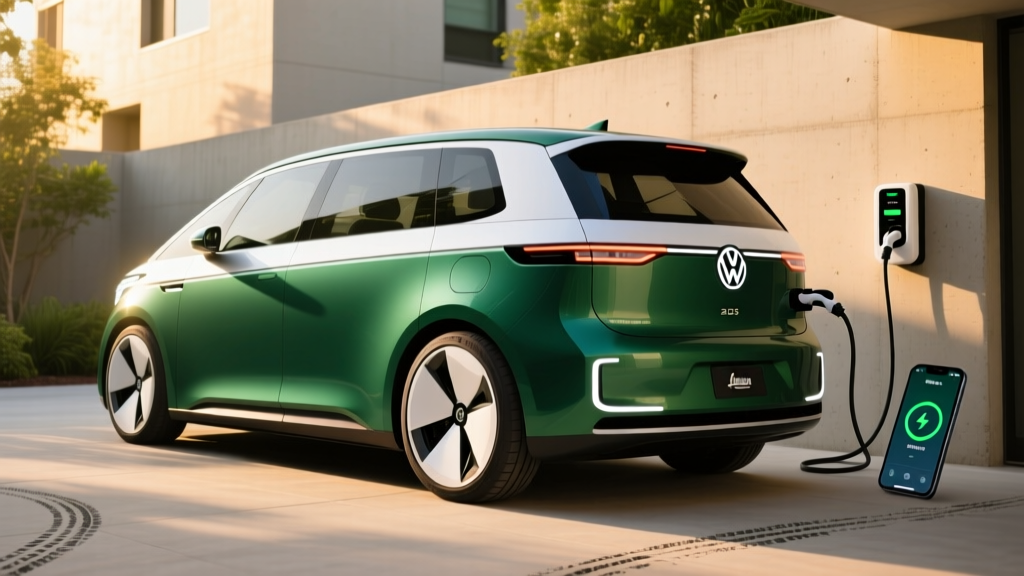
The retro-styled electric microbus is no longer a concept-car fantasy. The 2025 Volkswagen ID. Buzz is now reaching U.S. dealerships, and searches for a VW ID. Buzz for sale have surged as families and adventurers weigh its three-row practicality against its premium price tag. Built on VW's MEB platform and assembled in Hannover, Germany, the American-spec ID. Buzz is longer than its European sibling specifically to accommodate a larger battery and available 4MOTION all-wheel drive.
But nostalgia only gets you so far. With a starting MSRP near $60,000, the ID. Buzz competes against far more range-efficient crossovers and minivans. This review cuts through the hype with exact numbers — EPA range, charging curves, real-world efficiency, tax-credit eligibility, and the ownership trade-offs that brochures gloss over.
Spec Sheet: 2025 VW ID. Buzz at a Glance
| Specification | RWD (Pro S) | AWD (4MOTION) |
|---|---|---|
| EPA Range | 234 miles | 231 miles |
| Battery (usable / gross) | 86 kWh / 91 kWh | 86 kWh / 91 kWh |
| Battery Chemistry | NMC (nickel manganese cobalt) | NMC |
| Horsepower | 282 hp | 335 hp |
| Torque | 406 lb-ft | 509 lb-ft |
| 0–60 mph | ~7.9 sec | ~5.7 sec |
| Drivetrain | Rear-wheel drive | Dual-motor AWD |
| Max DC Fast Charge | 170 kW | 170 kW |
| 10–80% DC Charge Time | ~26 minutes | ~26 minutes |
| Level 2 Home Charging | 11 kW (AC) | 11 kW (AC) |
| MPGe (combined) | 90 MPGe | 87 MPGe |
| Efficiency | ~37 kWh/100 mi | ~38 kWh/100 mi |
| Base MSRP | $59,995 | $63,495 |
| Battery Warranty | 8 yr / 100,000 mi | 8 yr / 100,000 mi |
Range and Real-World Efficiency
EPA Estimated Range: 234 miles (RWD) / 231 miles (AWD)
Real-World Expectation: Expect 190–210 miles on mixed highway driving at 70+ mph. In cold weather (below 32°F), range can drop to 160–180 miles due to cabin heating demand and reduced battery chemistry efficiency. City driving with regenerative braking recovers more energy, pushing closer to the EPA sticker.
The ID. Buzz's boxy aerodynamic profile is its biggest efficiency liability. With a drag coefficient around 0.29 and a tall, flat front end, the Buzz consumes significantly more energy per mile than a Tesla Model Y (roughly 28 kWh/100 mi) or a Hyundai IONIQ 5 (around 30 kWh/100 mi). On fueleconomy.gov, the RWD model rates at 90 MPGe combined — adequate for suburban life but punishing on road trips.
For context, a 300-mile highway trip at 75 mph with mild headwinds will likely require one DC fast-charge stop. In winter conditions across the upper Midwest or Northeast, plan for two stops on that same route. The ID. Buzz is a vehicle where route planning matters more than it does in sleeker, lighter EVs.
Charging Speed: DC Fast and Home Level 2
| Charging Level | Power | Rate / Time | Notes |
|---|---|---|---|
| Level 1 (120V outlet) | ~1.4 kW | ~4 mi/hr | Emergency/trickle only; 60+ hours for full charge |
| Level 2 (240V home) | 11 kW | ~27 mi/hr; full in ~9 hr | Requires 48A circuit; ideal for overnight |
| DC Fast Charge | 170 kW peak | 10–80% in ~26 min | Tapers significantly above 80%; 80–100% adds 15+ min |
The 170 kW peak DC charge rate is competitive but not class-leading. Hyundai-Kia's E-GMP platform (IONIQ 5, EV6) hits 240 kW on 350 kW chargers, and the Tesla Model Y can sustain around 250 kW on V3 Superchargers. The ID. Buzz's charge curve is relatively flat between 10% and 60% SoC, then tapers gradually. You'll see the full 170 kW only briefly before it drops to around 120–130 kW through the mid-range.
At home, the 11 kW onboard charger is a bright spot. With a properly installed Level 2 wall connector on a 60-amp circuit (48 amps continuous), you'll add roughly 27 miles of range per hour — enough to fully replenish the 86 kWh usable battery overnight. Home charging is essential for ID. Buzz ownership; relying solely on public DC charging with this vehicle's efficiency profile gets expensive fast.
One practical note: the ID. Buzz uses the CCS1 connector standard for DC fast charging in North America. As Volkswagen has committed to adopting NACS (Tesla's connector) on future models, the Buzz currently ships with CCS. Adapters will be available for Tesla Supercharger access, but native NACS is not on this model year.
Performance and Driving Dynamics
The rear-wheel-drive ID. Buzz Pro S delivers 282 horsepower and 406 lb-ft of torque from a single rear-mounted APP550 electric motor. The 0–60 mph sprint takes approximately 7.9 seconds — adequate for merging and passing, but hardly thrilling in a 5,800-pound vehicle.
The 4MOTION AWD variant adds a front induction motor for a combined 335 hp and 509 lb-ft, dropping the 0–60 time to roughly 5.7 seconds. The dual-motor setup also improves traction in rain and light snow, and the front motor disengages during cruising to minimize parasitic drag.
Driving dynamics are where the ID. Buzz's microbus heritage shows. The tall center of gravity and soft suspension tuning (prioritizing ride comfort over cornering composure) mean noticeable body roll in turns. The steering is light and numb by modern standards. However, the ride quality over rough pavement is genuinely excellent — the long wheelbase and compliant damping soak up potholes and expansion joints better than most crossovers.
The turning circle is surprisingly tight for a vehicle this size, thanks to the rear-wheel-drive layout's generous steering angle. VW quotes a curb-to-curb turning diameter of about 36.8 feet for the RWD model, making parking-lot maneuvering easier than expected.
Interior Space, Cargo, and Technology
The U.S.-spec ID. Buzz rides on a long wheelbase (127.5 inches) and stretches 192.4 inches overall — roughly the footprint of a Honda Odyssey minivan. Inside, it offers three rows of seating for up to seven passengers.
Cargo volume: Approximately 18.5 cubic feet behind the third row, expanding to roughly 75 cubic feet with the second and third rows folded. The second-row seats slide and recline, and they fold flat rather than being removable (unlike traditional minivans).
Legroom: Front-row legroom is generous at around 42 inches. The second row offers approximately 38 inches, while the third row is best suited for children or short trips at roughly 33 inches.
The infotainment system runs VW's ID. Software 4.0 on a 12.9-inch center touchscreen. It's an improvement over earlier ID.4 software — faster, more responsive, with wireless Apple CarPlay and Android Auto. However, VW's reliance on capacitive touch sliders for volume and climate control remains a frustration point for many drivers. Haptic feedback is minimal, and accidental inputs are common.
Driver assistance: The ID. Buzz comes equipped with IQ.DRIVE, VW's Level 2 (SAE) driver-assistance suite. This includes adaptive cruise control with stop-and-go, lane-centering assist, automatic emergency braking, and blind-spot monitoring. Travel Assist combines ACC and lane-centering for semi-automated highway driving, but the driver must remain fully engaged at all times. This is not autonomous driving — it is a hands-on-wheel convenience system.
One standout feature: the available panoramic glass roof with electrochromic dimming (on 1st Edition and higher trims) floods the cabin with light and reinforces the airy, van-life atmosphere that defines the ID. Buzz experience.
Pricing, Trims, and Federal Tax Credit Eligibility
| Trim | Drivetrain | MSRP | Est. Federal Credit | Effective Price |
|---|---|---|---|---|
| Pro S | RWD | $59,995 | Up to $7,500* | ~$52,495* |
| Pro S | AWD (4MOTION) | $63,495 | Up to $7,500* | ~$55,995* |
| Pro S Plus | RWD | $63,495 | Up to $7,500* | ~$55,995* |
| Pro S Plus | AWD | $66,995 | Up to $7,500* | ~$59,495* |
| 1st Edition | AWD | $69,995 | Up to $7,500* | ~$62,495* |
*Federal tax credit eligibility depends on multiple IRS §30D requirements. See checklist below.
IRS §30D Federal EV Tax Credit Requirements (2025–2026):
- MSRP cap: Vans classified as SUVs/trucks qualify up to $80,000 MSRP — the ID. Buzz clears this threshold on all trims.
- Buyer income cap: Modified AGI must not exceed $150,000 (single), $225,000 (head of household), or $300,000 (joint filers).
- Battery sourcing: Critical minerals and battery components must meet phased-in domestic/free-trade-agreement sourcing percentages that tighten each year. Verify current-year compliance on IRS.gov or via the dealer's point-of-sale verification.
- Point-of-sale transfer: Eligible buyers can transfer the credit to the dealer at purchase, reducing the purchase price directly rather than waiting for a tax refund.
- Final assembly: Must occur in North America — however, the ID. Buzz is assembled in Hannover, Germany. This is a critical concern that may disqualify the vehicle from the §30D credit entirely.
Critical caveat: The ID. Buzz is built in Germany, and the §30D credit requires final assembly in North America. As of the latest IRS guidance, this likely disqualifies the ID. Buzz from the federal purchase credit. Consult a tax professional and check the official fueleconomy.gov tax credit lookup before relying on this credit in your purchase math. Some buyers may qualify for alternative incentives through state or local programs, or through commercial/lease pass-through structures — but the standard §30D new-vehicle credit is uncertain for this model.
Ownership Costs and Warranty Coverage
Volkswagen backs the ID. Buzz with a competitive warranty package:
- Battery warranty: 8 years / 100,000 miles (whichever comes first), guaranteeing at least 70% state-of-health capacity retention over that period.
- Powertrain warranty: 8 years / 100,000 miles.
- Bumper-to-bumper: 4 years / 50,000 miles.
- Complimentary maintenance: 2 years / 20,000 miles of scheduled service.
Insurance premiums for the ID. Buzz tend to run higher than average for its price class, driven by limited collision-repair data on MEB-platform vehicles and the cost of replacement body panels. Expect quotes in the $2,200–$3,000/year range depending on your profile and state.
Charging costs at home (at the U.S. average of ~$0.16/kWh) work out to roughly $5.92 per 100 miles. At a public DC fast charger averaging $0.40/kWh, that jumps to about $14.80 per 100 miles. Compare that to a gas minivan averaging 22 mpg at $3.50/gallon (~$15.90/100 mi), and the savings case for the ID. Buzz depends heavily on consistent home charging access.
Pros and Cons
Pros
- Iconic retro design with genuine road presence — nothing else looks like it
- Spacious three-row cabin with flexible seating and flat-folding rows
- Excellent ride comfort over rough roads; composed and quiet at highway speeds
- Generous 11 kW Level 2 onboard charger for fast home replenishment
- AWD available across multiple trims (rare in the EV van segment)
- Tight turning circle for a vehicle of this size
Cons
- Range of 231–234 miles is modest for a $60K+ vehicle; road trips require planning
- High energy consumption (37–38 kWh/100 mi) drives up public-charging costs
- 170 kW peak DC charging is slower than Hyundai/Kia/Tesla competitors
- Likely ineligible for the $7,500 federal tax credit due to German assembly
- Capacitive touch controls for climate and volume frustrate in daily use
- Third-row legroom is tight for adults; not a true minivan replacement for large families
- No front trunk (frunk) — the MEB platform's rear-motor layout eliminates this storage
Who Should Buy the VW ID. Buzz?
Choose the ID. Buzz if:
- You want a distinctive, head-turning EV with genuine personality and heritage design
- Your daily driving is under 150 miles and you have reliable Level 2 home charging
- You need three rows occasionally but don't require full-size minivan cargo volume daily
- You value ride comfort and cabin quietness over sporty handling dynamics
- You're drawn to the van-life lifestyle and want an EV that enables weekend adventures
Look elsewhere if:
- Maximum range and road-trip efficiency are top priorities (consider the Tesla Model X, Rivian R1S, or Hyundai IONIQ 5)
- You need the full $7,500 federal tax credit to make the math work
- You regularly haul six or seven adults — a Kia Carnival or Toyota Sienna hybrid offers more third-row space
- You want the fastest possible DC charging for frequent highway travel
Frequently Asked Questions
What is the real-world range of the VW ID. Buzz?
The EPA rates the RWD ID. Buzz at 234 miles and the AWD at 231 miles. In real-world highway driving at 70–75 mph, expect 190–210 miles. Cold weather (below freezing) can reduce that to 160–180 miles. The boxy shape and heavy weight make the Buzz more sensitive to speed and temperature than sleeker EVs.
How fast does the ID. Buzz charge at home and on the road?
At home on a Level 2 (240V, 48A) charger, the ID. Buzz accepts up to 11 kW, adding roughly 27 miles of range per hour and fully charging in about 9 hours. On a DC fast charger, it peaks at 170 kW and charges from 10% to 80% in approximately 26 minutes. Charging above 80% slows considerably — plan on an additional 15+ minutes to reach 100%.
Does the VW ID. Buzz qualify for the federal EV tax credit?
Likely not under the standard §30D new-vehicle credit, because the ID. Buzz is assembled in Hannover, Germany, and the credit requires final assembly in North America. Always verify current eligibility on fueleconomy.gov and consult a tax professional. Some buyers may access credits through leasing structures where the lessor claims the commercial credit and passes savings through.
Is the VW ID. Buzz worth buying versus competitors?
It depends on priorities. If design character, ride comfort, and three-row flexibility matter most, the ID. Buzz is genuinely compelling and has no direct rival. If range, charging speed, and tax-credit savings are paramount, the Tesla Model X (348 mi range, Supercharger access), Kia EV9 (279 mi, eligible for credit, ~$54,990 base), or Rivian R1S (adventure capability, ~352 mi) may be stronger choices on paper. The ID. Buzz wins on emotion and daily comfort; it loses on efficiency metrics.
Can the ID. Buzz tow?
Yes, the ID. Buzz has a maximum towing capacity of 3,500 pounds when properly equipped. This is sufficient for a small camper trailer, a pair of jet skis, or a utility trailer — but it falls short of body-on-frame SUVs and trucks. Towing will also significantly reduce range, potentially by 30–40%, so plan accordingly.
What battery chemistry does the ID. Buzz use, and how long will it last?
The ID. Buzz uses an NMC (nickel manganese cobalt) lithium-ion battery pack with 91 kWh gross / 86 kWh usable capacity. NMC offers higher energy density than LFP (lithium iron phosphate) but is more sensitive to sustained high states of charge. VW recommends daily charging to 80% for longevity and reserving 100% for long trips. The battery warranty covers 8 years or 100,000 miles with a guaranteed minimum of 70% capacity retention.