Quick Verdict: Is the VW ID. Buzz Right for You?
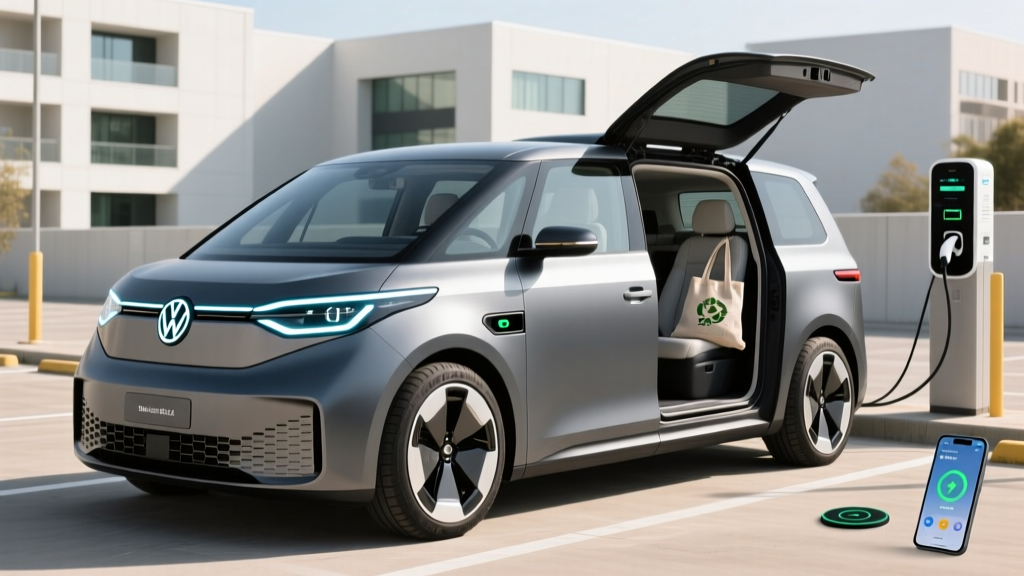
The 2026 VW ID. Buzz is a three-row electric van with an EPA-estimated 234 miles of range (RWD), a 91 kWh usable battery, and DC fast charging up to 185 kW (10–80% in roughly 26 minutes). Starting at approximately $59,995 before incentives, it targets families who want zero tailpipe emissions, low running costs, and iconic retro styling. However, its real-world highway range drops to around 195–210 miles, and AWD trims lose roughly 10% of range. If you have Level 2 home charging and mostly drive under 200 miles daily, the ID. Buzz can replace a gas minivan and save $1,500–$2,500 annually on fuel. If you frequently road-trip through charging deserts or live in extreme cold, plan carefully around its range limitations.
Range and Efficiency: EPA Sticker vs. Real-World Driving
The VW ID. Buzz is built on Volkswagen's MEB platform and comes in two powertrain configurations for 2026. The rear-wheel-drive (RWD) model uses a single motor producing 282 HP and 413 lb-ft of torque, paired with a 91 kWh usable (NMC chemistry) battery pack. The 4MOTION all-wheel-drive (AWD) variant adds a front motor for a combined 335 HP.
Real-World Range Reality Check
EPA estimate: 234 miles (RWD) / 210 miles (AWD)
Real-world highway (70 mph, moderate climate): ~195–210 miles (RWD) / ~175–190 miles (AWD)
Cold weather (below 30°F): Expect 20–30% reduction — as low as ~160–175 miles (RWD)
Efficiency: ~2.4–2.7 kWh/mile (roughly 79–85 MPGe combined)
The ID. Buzz is a large, boxy vehicle with the aerodynamics of, well, a van. Highway efficiency suffers compared to sleeker EVs like the Hyundai Ioniq 5. Plan conservatively for road trips.
For context, the EPA's fueleconomy.gov database lists the RWD ID. Buzz at approximately 82 MPGe combined. That translates to about 37 kWh per 100 miles — higher than most EV sedans and crossovers, but competitive within the minivan class when you factor in the size and three-row seating.
Charging Speeds and Infrastructure: What to Expect
Understanding the difference between kW (power — how fast energy flows) and kWh (energy — how much the battery holds) is essential. The ID. Buzz has a 91 kWh battery and can accept up to 185 kW of DC fast charging power. Here's how that breaks down across charging levels:
| Charging Level | Power (kW) | Miles Added Per Hour | Notes |
|---|---|---|---|
| Level 1 (120V household) | ~1.2 kW | ~3 mi/hr | Emergency/trickle only — adds ~36 mi overnight |
| Level 2 (240V home/public) | ~11 kW (max onboard) | ~26–29 mi/hr | Full charge in ~8.5 hours — ideal for overnight |
| DC Fast Charge (CCS/NACS) | Up to 185 kW peak | ~150+ mi in 26 min (10–80%) | Peak rate tapers above ~60% SoC; sustained avg ~120 kW |
Charging curve reality: The 185 kW peak only holds between roughly 10–40% State of Charge. Beyond 60%, the rate drops significantly — from 80–100% can take as long as the 10–80% session. For road trips, plan stops at 10–80% and skip topping off unless necessary.
For 2026, the ID. Buzz ships with a CCS1 port in North America. Volkswagen has confirmed NACS adapter support for Tesla Supercharger access, but always confirm adapter compatibility with your specific model year at purchase. The Electrify America network (included in VW's partnership) remains a primary DC fast-charging option, with complimentary charging periods often included with purchase.
Home Level 2 Charging Setup: Estimated Costs
| Item | Cost Range |
|---|---|
| Level 2 charger (40A–48A hardwired) | $400–$700 |
| Electrician labor (standard install) | $500–$1,500 |
| Electrical panel upgrade (if needed, 200A) | $1,500–$3,500 |
| Permit and inspection | $100–$300 |
| Total (typical, no panel upgrade) | $1,000–$2,500 |
Always get a quote from a licensed electrician. Homes with older 100A panels may require an upgrade to support a 48A charger alongside existing loads.
Performance and Driving Experience
The RWD ID. Buzz hits 0–60 mph in approximately 7.3 seconds — respectable for a 5,800+ lb vehicle and adequate for highway merging. The AWD 4MOTION model shaves that to roughly 5.7 seconds, thanks to the dual-motor setup and 335 HP combined output.
Ride quality is a highlight. The long wheelbase (127.5 inches on the US-spec LWB model) and low center of gravity from the floor-mounted battery pack deliver a planted, comfortable highway cruise. Body roll is present in corners — this is a tall van, not a sporty crossover — but it's well-controlled for the segment.
The IQ.DRIVE suite includes adaptive cruise control, lane centering, and automatic emergency braking. This is a SAE Level 2 driver-assistance system: you must keep your hands on the wheel and eyes on the road at all times. It is not autonomous driving.
Pricing, Trims, and Federal Tax Credit Eligibility
| Spec | RWD (Pro S) | AWD (4MOTION) |
|---|---|---|
| Base MSRP (2026) | ~$59,995 | ~$64,995 |
| EPA Range | 234 mi | 210 mi |
| Battery (usable) | 91 kWh (NMC) | 91 kWh (NMC) |
| Horsepower | 282 HP | 335 HP |
| 0–60 mph | ~7.3 sec | ~5.7 sec |
| DC Fast Charge Peak | 185 kW | 185 kW |
| 10–80% DC Time | ~26 min | ~26 min |
| Level 2 Onboard Charger | 11 kW | 11 kW |
| Seating | 7 passengers | 7 passengers |
| Cargo (behind 3rd row) | ~18 cu ft | ~18 cu ft |
| Battery/Powertrain Warranty | 8 yr / 100,000 mi | 8 yr / 100,000 mi |
Federal Tax Credit (§30D) — 2026 Rules
The ID. Buzz's eligibility for the $7,500 federal EV tax credit under IRS §30D depends on several factors that change periodically. As of 2026, key requirements include:
- MSRP cap: Vans/SUVs must be under $80,000 — the ID. Buzz qualifies on MSRP.
- Buyer income cap: AGI must not exceed $150,000 (single) / $300,000 (joint).
- Battery sourcing: Critical minerals and battery components must meet phased-in percentage thresholds from US or FTA partners. VW's supply chain has been adjusting — verify current-year eligibility on the IRS clean vehicle credits page or with your dealer before purchase.
- Point-of-sale transfer: Eligible buyers can transfer the credit to the dealer for an immediate price reduction at purchase.
Important: Battery sourcing requirements tighten each year. A vehicle that qualified in 2025 may not qualify in 2026. Always confirm with your dealer and consult a tax professional before relying on the credit.
Cost of Ownership: ID. Buzz vs. Gas Minivan
How does the VW ID. Buzz stack up against a conventional gas minivan like the Honda Odyssey or Toyota Sienna hybrid? Let's compare over 5 years and 75,000 miles.
| Cost Category | VW ID. Buzz (RWD) | Honda Odyssey (Gas) | Toyota Sienna (Hybrid) |
|---|---|---|---|
| Base MSRP | ~$59,995 | ~$39,500 | ~$39,000 |
| Est. Tax Credit Applied | –$7,500 (if eligible) | $0 | $0 |
| Effective Purchase Price | ~$52,495 | ~$39,500 | ~$39,000 |
| Fuel/Energy (75k mi) | ~$4,500 (home charging avg) | ~$10,500 (22 MPG, $3.50/gal) | ~$6,400 (36 MPG, $3.50/gal) |
| Maintenance (5 yr) | ~$1,200 | ~$3,500 | ~$3,000 |
| Insurance (5 yr est.) | ~$9,500 | ~$7,500 | ~$7,500 |
| 5-Year Total Cost | ~$67,695 | ~$61,000 | ~$55,900 |
| Cost Per Mile | ~$0.90 | ~$0.81 | ~$0.75 |
Key takeaways:
- The ID. Buzz saves $6,000–$9,000 on fuel and maintenance over 5 years compared to a gas minivan, but its higher purchase price and insurance premiums narrow the gap.
- Home charging at an average of $0.14/kWh is critical to achieving these savings. Public DC fast charging at $0.35–$0.50/kWh significantly increases per-mile energy costs.
- The Sienna hybrid is the strongest cost competitor — its lower purchase price and excellent MPG make it hard to beat on pure economics.
- If you qualify for the full $7,500 credit and charge primarily at home, the ID. Buzz's total cost approaches the Odyssey's within 5 years.
Common Misconceptions About the VW EV Van
| Myth | Fact |
|---|---|
| "The ID. Buzz gets 234 miles no matter how you drive." | 234 miles is the EPA combined estimate. Sustained highway driving at 70+ mph, cold weather, and full cargo loads reduce range by 15–30%. Plan for ~175–210 miles in mixed real-world conditions. |
| "You can't road-trip in an EV van." | You can, but it requires planning. With 185 kW DC fast charging, a 10–80% stop takes ~26 minutes. Map Electrify America or Supercharger (with adapter) stops along your route. Expect 2–3 stops on a 600-mile trip. |
| "The battery will need expensive replacement in a few years." | VW warranties the battery for 8 years/100,000 miles with a minimum 70% capacity retention threshold. Modern NMC packs are designed to retain 80–90% capacity at 100,000 miles based on degradation data from similar MEB-platform vehicles. |
| "Any home outlet will charge it fine." | A standard 120V outlet adds only ~3 miles per hour — insufficient for daily driving. A 240V Level 2 home charger ($1,000–$2,500 installed) is practically essential for regular ownership. |
| "It qualifies for the $7,500 tax credit automatically." | Eligibility depends on your income, the vehicle's battery sourcing compliance, and MSRP caps — all of which can change. Verify on irs.gov and with your dealer before signing. |
Decision Framework: Should You Buy the ID. Buzz?
Choose the VW ID. Buzz if:
- You have access to Level 2 home charging (garage or driveway with 240V).
- Your daily driving is under 180 miles round-trip.
- You want a three-row family vehicle with zero tailpipe emissions and low running costs.
- You qualify for the federal tax credit (check income and sourcing rules).
- You value the retro design and VW's build quality.
Choose a Gas/Hybrid Minivan (Sienna, Odyssey) if:
- You lack reliable home or workplace charging access.
- You regularly drive 300+ miles in a day through areas with sparse charging infrastructure.
- You live in an extremely cold climate where range loss compounds with long-distance needs.
- Upfront purchase price is the primary constraint and you don't qualify for tax incentives.
- You need maximum cargo volume — the ID. Buzz's floor-mounted battery slightly reduces underfloor storage compared to gas vans.
Choose a Different EV (e.g., Kia EV9) if:
- You want more range (the EV9 offers up to ~304 miles EPA in RWD).
- You need faster DC charging speeds (some competitors peak at 240+ kW).
- You prefer a more traditional SUV form factor over a van.
First-Time EV Buyer Checklist
If the ID. Buzz is your first electric vehicle, here's what to prepare before delivery day:
- Install a Level 2 home charger — Get an electrician quote early. Budget $1,000–$2,500 for a quality 48A hardwired unit. Panel upgrades add $1,500–$3,500 if needed.
- Download charging apps — Electrify America, PlugShare, and A Better Routeplanner (ABRP) are essential for trip planning and finding chargers.
- Learn preconditioning — The ID. Buzz can precondition its battery before a DC fast-charge stop (set a navigation destination to a charger). This warms the battery for faster charging, especially in cold weather.
- Understand regenerative braking — The ID. Buzz offers adjustable regen levels. In "B" mode, you get stronger regen for near one-pedal driving in city traffic. On the highway, "D" mode with coasting is more efficient.
- Check your insurance rate — EV insurance premiums run 15–25% higher than comparable gas vehicles. Get quotes before purchase to avoid surprises.
- Verify tax credit eligibility — Confirm current §30D rules on irs.gov and discuss point-of-sale transfer with your dealer.
Frequently Asked Questions
What is the real-world range of the VW ID. Buzz?
The EPA rates the RWD model at 234 miles and AWD at 210 miles. In real-world highway driving at 70 mph in moderate temperatures, expect approximately 195–210 miles (RWD) and 175–190 miles (AWD). Cold weather below 30°F can reduce range by an additional 20–30%.
How long does it take to charge the VW ID. Buzz at home?
On a Level 2 (240V) home charger at 11 kW, a full charge from 0–100% takes approximately 8.5 hours. Most owners charge from 20–80% overnight, which takes about 5 hours — more than enough to replenish a day's driving.
Can the VW ID. Buzz tow?
The ID. Buzz has a tow rating of approximately 2,500 lbs (braked trailer). This is adequate for a small utility trailer or a couple of dirt bikes, but it falls short of gas minivans (the Odyssey rates at 3,500 lbs). Towing also reduces range significantly — expect a 30–40% range loss when towing near max capacity.
Does the VW ID. Buzz qualify for the $7,500 federal tax credit?
It may, depending on current battery sourcing rules, your income, and MSRP thresholds. The MSRP cap for vans is $80,000 (ID. Buzz qualifies). Income caps are $150,000 single / $300,000 joint. Battery critical-mineral and component sourcing requirements tighten annually — verify eligibility for the specific model year on the IRS website before committing.
How does the ID. Buzz compare to the Kia EV9 for families?
The Kia EV9 offers more EPA range (up to 304 miles RWD), faster DC charging (up to 240 kW peak on some trims), and a lower starting price (~$54,900). The ID. Buzz counters with a more spacious third row, greater cargo versatility, and a distinctive design. If range and charging speed are top priorities, the EV9 has an edge. If passenger comfort and van-style utility matter more, the ID. Buzz is the better fit.
What happens if the battery degrades?
VW covers the ID. Buzz battery with an 8-year/100,000-mile warranty guaranteeing at least 70% capacity retention. Based on data from other MEB-platform vehicles (ID.4, ID.3), most batteries retain 85–92% capacity at 100,000 miles under normal use. Full battery replacement, if ever needed out of warranty, currently costs in the range of $12,000–$18,000 depending on labor and pack pricing at the time.
Is the VW ID. Buzz available with NACS (Tesla Supercharger) compatibility?
For 2026, the ID. Buzz ships with a CCS1 port. Volkswagen has announced NACS adapter support, enabling access to Tesla Superchargers. Confirm adapter availability and included charging credits with your dealer at the time of purchase.