Quick Answer: Is the VW Bus EV Worth It?
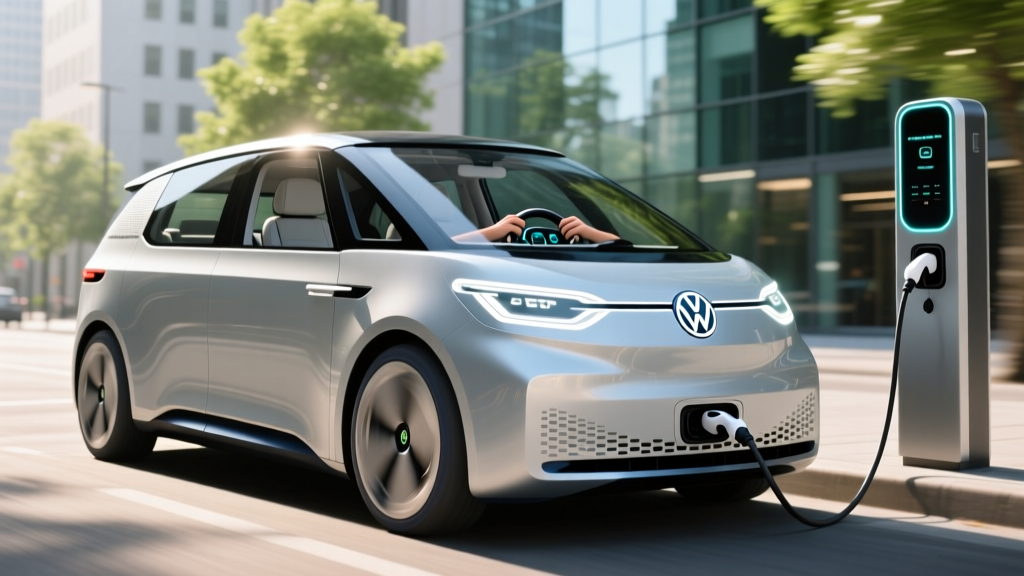
The Volkswagen ID. Buzz is the production realization of the iconic VW bus as a three-row electric minivan. For the 2025/2026 model year, the rear-wheel-drive ID. Buzz offers an EPA-estimated 234 miles of range from a 91 kWh (usable) NMC battery, while the dual-motor AWD 4Motion variant delivers approximately 231 miles. Pricing starts at $59,995 (Pro S RWD), placing it above the §30D federal tax credit MSRP cap of $80,000 for vans—but buyers should verify current-year eligibility as trim configurations evolve. DC fast charging peaks at 170 kW, reaching 10–80% in roughly 26 minutes. If you need a three-row family hauler with retro styling and can charge at home, the ID. Buzz is compelling. If you regularly drive 300+ miles between charges or lack reliable home charging, a hybrid minivan like the Toyota Sienna (36 MPG combined) may serve you better.
VW ID. Buzz: Specs at a Glance
| Specification | Pro S (RWD) | Pro S Plus (AWD 4Motion) |
|---|---|---|
| EPA Range | 234 miles | 231 miles |
| Battery (usable) | 91 kWh NMC | 91 kWh NMC |
| Horsepower | 282 hp | 330 hp (combined) |
| 0–60 mph | ~7.9 sec | ~6.5 sec |
| Peak DC Fast Charge | 170 kW | 170 kW |
| 10–80% DC Charge Time | ~26 min | ~26 min |
| Level 2 Charge Rate | 11 kW (AC) | 11 kW (AC) |
| MPGe (combined) | ~82 MPGe | ~78 MPGe |
| Seating | 7 passengers | 7 passengers |
| Cargo (behind 3rd row) | 18.6 cu ft | 18.6 cu ft |
| Towing Capacity | Not rated | Not rated |
| Starting MSRP | $59,995 | $69,995 |
| Battery/Powertrain Warranty | 8 yr / 100,000 mi | 8 yr / 100,000 mi |
Sources: EPA Fuel Economy, Volkswagen USA.
Real-World Range: What to Actually Expect
EPA Sticker: 234 miles (RWD) / 231 miles (AWD)
Highway (70–75 mph, mild weather): Expect roughly 200–215 miles. The ID. Buzz's boxy shape creates substantial aerodynamic drag at speed, reducing efficiency to approximately 2.6–2.8 kWh/mile on the highway.
Cold Weather (below 32°F): Plan for 160–185 miles. NMC chemistry loses roughly 25–30% range in deep cold without preconditioning. The ID. Buzz includes a heat pump (standard on most trims), which helps, but the large cabin volume demands significant energy for climate control.
Mixed city/suburban: 220–235 miles — regenerative braking in stop-and-go traffic recovers energy effectively.
Charging the ID. Buzz: Home and On the Road
The ID. Buzz uses the CCS1 connector for DC fast charging on most 2025 models delivered in the United States. Volkswagen has committed to NACS adoption for future model years, and adapters are available for Tesla Supercharger network access. Here's what charging actually looks like:
| Charging Level | Power (kW) | Miles Added per Hour | Use Case |
|---|---|---|---|
| Level 1 (120V household) | ~1.4 kW | ~4–5 mi/hr | Emergency/top-up only |
| Level 2 (240V home charger) | 11 kW (max) | ~32–36 mi/hr | Daily overnight charging |
| DC Fast Charge | 170 kW (peak) | ~180+ mi/hr (peak) | Road trips; 10–80% in ~26 min |
Charging curve reality: The ID. Buzz peaks near 170 kW only between roughly 10–30% state of charge. Above 50% SoC, the rate tapers to approximately 100–120 kW, and above 80%, it drops below 50 kW. This is standard NMC behavior to protect battery longevity, but it means a 10–90% charge takes closer to 40–45 minutes, not 26.
Home charging setup: With an 11 kW onboard charger, the ID. Buzz can fully recharge overnight on a 48-amp Level 2 home station (such as a ChargePoint Home Flex or Wallbox Pulsar Plus). Expect a full 0–100% charge in roughly 9–10 hours. Installation typically costs $800–$2,000 if your electrical panel has capacity; a panel upgrade to 200A can add $1,500–$3,000.
ID. Buzz vs. Gas Minivan: The Cost Breakdown
The most direct comparison for the ID. Buzz isn't another EV — it's the gas-powered minivan segment. Here's how a five-year ownership scenario stacks up against the Toyota Sienna hybrid (the efficiency benchmark in the segment) and a conventional Chrysler Pacifica:
| Factor | VW ID. Buzz (RWD) | Toyota Sienna (HEV) | Chrysler Pacifica (Gas) |
|---|---|---|---|
| Starting MSRP | $59,995 | $38,085 | $40,990 |
| EPA Efficiency | 82 MPGe | 36 MPG combined | 22 MPG combined |
| Annual Fuel/Energy Cost* | ~$680/yr | ~$1,540/yr | ~$2,520/yr |
| 5-Year Fuel/Energy Total | ~$3,400 | ~$7,700 | ~$12,600 |
| Estimated Maintenance (5 yr) | ~$1,200 | ~$2,800 | ~$3,400 |
| Insurance (avg annual) | ~$2,100 | ~$1,600 | ~$1,700 |
| 5-Year Total Operating Cost | ~$14,900 | ~$15,700 | ~$21,100 |
*Based on 12,000 miles/year, $0.14/kWh home charging average, $3.50/gallon gas. Your costs will vary with local electricity rates and gas prices. Source: fueleconomy.gov.
The key takeaway: The ID. Buzz costs roughly $20,000 more upfront than a Sienna hybrid, but saves approximately $600–$800 per year in energy and maintenance. At current prices, the payback period on fuel savings alone exceeds 20 years — the ID. Buzz is not a cost-savings play versus a hybrid minivan. Buyers choose it for the driving experience, zero tailpipe emissions, home charging convenience, and the design statement.
Federal Tax Credit & Incentives: What Applies
Under current IRS §30D rules, the federal clean vehicle credit offers up to $7,500 for qualifying new EVs. However, the ID. Buzz faces several eligibility hurdles:
- MSRP Cap: Vans must not exceed $80,000. The ID. Buzz Pro S at $59,995 clears this threshold; loaded Pro S Plus AWD trims approaching $75,000 also qualify.
- Buyer Income Limits: AGI must not exceed $300,000 (joint), $225,000 (head of household), or $150,000 (single).
- Battery Sourcing: Critical minerals and battery component requirements phase in annually. Volkswagen has indicated North American supply chain development, but specific credit amounts ($3,750 or full $7,500) depend on current-year sourcing certifications. Check the IRS clean vehicle credit page for the latest eligibility list.
- Point-of-Sale Transfer: If eligible, you can transfer the credit to the dealer at purchase, reducing your out-of-pocket cost immediately.
Important: Battery sourcing requirements tighten each year. Consult a tax professional and verify your specific vehicle's VIN on the IRS portal before committing to a purchase.
Ownership Realities: What First-Time EV Buyers Should Know
Home Charging Access Is Non-Negotiable
The ID. Buzz's 234-mile range means most owners will need to charge at home nightly or every other night. If you live in an apartment without charging access or rely solely on public DC fast chargers, the experience becomes significantly more expensive ($0.35–$0.50/kWh at public stations vs. $0.10–$0.16/kWh at home) and less convenient. Before purchasing, confirm you can install a Level 2 charger or have reliable daily access to one.
Cold Climate Considerations
If you live where winters regularly drop below freezing, budget for 25–30% range loss. The ID. Buzz's heat pump helps, but heating a minivan-sized cabin in 15°F weather draws substantial power. Preconditioning the battery and cabin while plugged in (using scheduled departure times) is essential — it preserves range and enables faster DC charging.
Road Trip Planning
With 200–215 real-world highway miles, plan charging stops every 180–200 miles on long trips. The 170 kW peak charge rate is adequate but not class-leading — competitors like the Kia EV9 charge at up to 240 kW (10–80% in ~18 minutes). For a 600-mile family road trip, expect two to three charging stops adding 50–80 minutes total.
Maintenance Simplicity
The ID. Buzz has no engine oil, spark plugs, transmission fluid, or exhaust system to maintain. Scheduled service typically involves cabin air filter replacement, brake fluid checks, tire rotation, and wiper blades. VW's recommended service interval is every 2 years or 20,000 miles for most items. Budget roughly $200–$300 per visit.
Common Misconceptions About the ID. Buzz
| Myth | Fact |
|---|---|
| "It's just a van — range shouldn't matter." | Minivans are family vehicles used for road trips, school runs, and errands. The ID. Buzz's 234-mile EPA range is adequate for daily use but requires planning for trips over 200 miles. |
| "EVs cost more to own, period." | The ID. Buzz has higher upfront cost but lower operating costs. Whether it's cheaper overall depends on how long you keep it, your electricity rates, and whether you qualify for incentives. |
| "The battery will need replacing soon and cost a fortune." | VW warranties the battery for 8 years/100,000 miles against degradation below 70% capacity. NMC batteries in modern thermal-managed systems typically retain 85–90% capacity after 100,000 miles. Full replacement (rarely needed) is estimated at $12,000–$18,000. |
| "It qualifies for the full $7,500 tax credit automatically." | Credit eligibility depends on your income, the vehicle's battery sourcing compliance, and MSRP. The partial credit ($3,750) or no credit are possible outcomes depending on the model year and your tax situation. |
| "DC fast charging will be as quick as filling a gas tank." | Expect 26 minutes for 10–80% at a functioning 170+ kW charger. Real-world public charging involves finding a working stall, plugging in, and waiting. Budget 35–45 minutes per stop on road trips. |
Decision Framework: Should You Buy the VW ID. Buzz?
Choose the VW ID. Buzz if:
- You have reliable Level 2 home charging and drive under 200 miles most days
- You want a three-row EV with distinctive retro-modern design
- You value a smooth, quiet ride and instant electric torque for city and suburban driving
- You want zero tailpipe emissions and lower maintenance costs
- Your budget accommodates a $60,000–$75,000 family vehicle
- You take road trips occasionally and can plan charging stops
Choose a Hybrid Minivan (Toyota Sienna) instead if:
- You regularly drive 300+ miles between stops and don't want to plan charging
- You lack home charging access and don't want to rely on public infrastructure
- Your budget is closer to $40,000–$50,000
- You need maximum cargo volume (the Sienna offers more with seats folded)
- You live in an area with limited public EV charging infrastructure
Consider the Kia EV9 if:
- You want a three-row electric SUV with faster DC charging (240 kW peak)
- You need towing capability (EV9 rated up to 5,000 lbs)
- You prefer a more conventional SUV form factor over a minivan
- Starting price matters — EV9 starts around $54,900
Frequently Asked Questions
Does the VW ID. Buzz have a frunk (front trunk)?
No. Unlike many EVs built on dedicated platforms, the ID. Buzz does not offer a front trunk. All cargo space is in the rear. Behind the third row, you get 18.6 cubic feet; fold the third row for significantly more.
Can the ID. Buzz tow a trailer?
Volkswagen has not rated the US-spec ID. Buzz for towing as of the current model year. European variants have a tow rating of approximately 2,200 lbs (braked), but this has not been certified for North America. If towing is a priority, look at the Kia EV9 or Rivian R1S.
What connector does the ID. Buzz use?
Current US-market ID. Buzz models use the CCS1 connector for DC fast charging and J1772 for Level 2 AC charging. Volkswagen has signaled a transition to NACS (the Tesla connector) for future models, and CCS-to-NACS adapters enable access to Tesla Superchargers.
How long will the ID. Buzz battery last?
VW warranties the high-voltage battery for 8 years or 100,000 miles, guaranteeing it will retain at least 70% of original capacity. Based on data from other VW MEB-platform vehicles (ID.4, ID.5), owners can expect approximately 85–92% capacity retention at 100,000 miles with normal use. The battery should outlast 150,000–200,000 miles before degradation becomes significantly noticeable.
Is the ID. Buzz all-wheel drive available?
Yes. The Pro S Plus 4Motion trim adds a front motor for dual-motor AWD, producing 330 combined horsepower and dropping the 0–60 time to approximately 6.5 seconds. Range decreases slightly to an EPA-estimated 231 miles due to the added weight and drivetrain losses.
What's the real cost to charge the ID. Buzz at home?
A full 0–100% charge using 91 kWh at the national average of $0.14/kWh costs approximately $12.74. For a typical driver covering 12,000 miles per year at 2.5 kWh/mile, annual home electricity cost is roughly $680. Compare that to approximately $2,500 in gasoline for a conventional minivan at $3.50/gallon and 22 MPG.