Quick Answer: Is There an EV VW Bug?
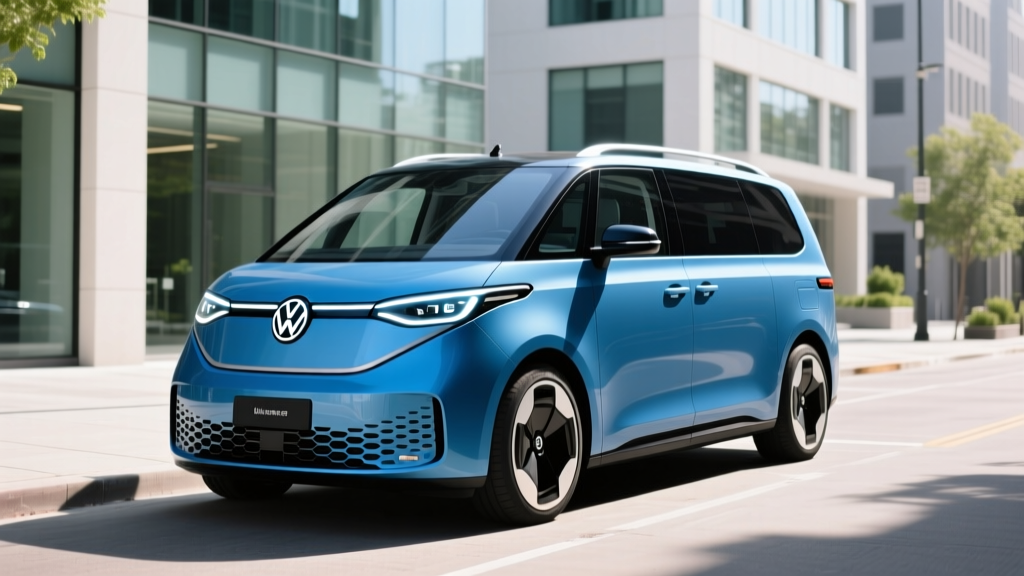
Volkswagen does not produce an electric Beetle in 2026. The closest spiritual successor is the VW ID. Buzz — a retro-styled electric van that channels VW's heritage design. The US-spec ID. Buzz seats seven, offers an EPA-estimated 234 miles of range (Standard Wheelbase), and starts at approximately $61,545 MSRP. It qualifies for a point-of-sale federal tax credit of up to $7,500 under IRS §30D (subject to income and sourcing requirements). If you're searching for an "EV VW Bug" because you want a retro, fun, practical electric Volkswagen — the ID. Buzz is what VW actually sells today.
Why Buyers Search for an "EV VW Bug" — And What VW Actually Offers
The original VW Beetle ended US sales in 2019. Volkswagen has not announced a battery-electric Beetle as of early 2026. Instead, VW funnels its retro-EV energy into the ID. Buzz, a modern reinterpretation of the classic Type 2 Microbus. The confusion is understandable: both vehicles sit on VW's MEB electric platform, both lean hard into heritage styling, and both attract buyers who want an EV with personality rather than a generic crossover.
If you specifically want a compact, Beetle-shaped electric car, the used market offers conversion EVs (companies like Zelectric Motors retrofit classic Beetles with electric drivetrains for $60,000–$90,000+), but these are custom builds, not factory products with warranties or dealer support. For a factory-backed, warrantied, tax-credit-eligible electric Volkswagen, the ID. Buzz is your only current option.
ID. Buzz Specs: Range, Battery, Charging, and Performance
The 2025/2026 US-spec VW ID. Buzz rides on an extended-wheelbase platform (unlike the shorter European version) and comes with a 91 kWh usable lithium-ion NMC battery pack. Here's the full spec breakdown:
| Specification | ID. Buzz (Standard Wheelbase, RWD) | ID. Buzz (AWD 4MOTION) |
|---|---|---|
| EPA Range | 234 miles | 231 miles |
| Battery (usable) | 91 kWh (NMC) | 91 kWh (NMC) |
| Horsepower | 282 hp | 330 hp (combined) |
| 0–60 mph | ~7.9 sec | ~5.9 sec |
| Max DC Fast Charge | 175 kW | 175 kW |
| 10–80% DC Charge Time | ~26 minutes | ~26 minutes |
| Level 2 AC Charge Rate | 11 kW | 11 kW |
| MPGe (combined) | 87 MPGe | 84 MPGe |
| Seating | 7 passengers | 7 passengers |
| Cargo (behind 3rd row) | 18.8 cu ft | 18.8 cu ft |
| Base MSRP | ~$61,545 | ~$65,545 |
| Battery/Powertrain Warranty | 8 years / 100,000 miles | 8 years / 100,000 miles |
Real-World Range vs. EPA Sticker
The EPA rates the RWD ID. Buzz at 234 miles. In real-world highway driving at 70–75 mph, expect approximately 195–215 miles before needing to charge. In cold weather (below 30°F), that drops to roughly 170–190 miles due to cabin heating demand and reduced battery efficiency. The ID. Buzz's boxy aerodynamic profile (higher drag coefficient than a sleek sedan) amplifies highway and cold-weather losses. Plan road trips with a 30–40 mile buffer below the EPA figure.
Charging the ID. Buzz: Home Setup and Public Networks
The ID. Buzz uses the NACS (Tesla-style) connector for DC fast charging, aligning with VW's adoption of the North American Charging Standard. For Level 2 home charging, it uses the standard J1772 connector (or NACS with an adapter, depending on model year).
| Charging Level | Power | Miles Added per Hour | Typical Use Case |
|---|---|---|---|
| Level 1 (120V) | 1.4 kW | ~4 mi/hr | Emergency / overnight trickle |
| Level 2 (240V, 48A) | 11 kW | ~30 mi/hr | Home daily charging (full overnight) |
| DC Fast Charge | Peak 175 kW | ~150 mi in 15 min | Road trips, public stations |
Home charging reality check: A full Level 2 installation (48-amp hardwired charger on a 60-amp dedicated circuit) typically costs $1,200–$2,800 including equipment, electrician labor, and permits. If your home's electrical panel is maxed out (common in older homes with 100-amp service), a panel upgrade to 200 amps can add $1,500–$3,500. Always get a licensed electrician's assessment before purchasing charging equipment.
At a 175 kW DC fast charger, the ID. Buzz peaks near 175 kW at low state-of-charge but tapers significantly above 80%. The 10–80% charge takes about 26 minutes under ideal conditions (warm battery, low starting SoC). In colder weather without adequate preconditioning, add 5–10 minutes. The ID. Buzz supports battery preconditioning when you navigate to a charger via the built-in navigation system.
Cost Breakdown: ID. Buzz vs. Gas Minivan (5-Year Ownership)
The ID. Buzz competes against three-row family haulers like the Toyota Sienna (hybrid), Honda Odyssey, and Chrysler Pacifica. Here's how the costs compare over 5 years and 75,000 miles, assuming $0.14/kWh home electricity and $3.40/gallon gas:
| Cost Category | VW ID. Buzz (RWD) | Toyota Sienna Hybrid (AWD) |
|---|---|---|
| Base MSRP | $61,545 | $40,635 |
| Federal Tax Credit (§30D) | –$7,500 (if eligible) | $0 |
| Effective Purchase Price | $54,045 | $40,635 |
| Fuel/Energy (75k mi) | $2,835 (home charging) | $7,140 (35 MPG combined) |
| Maintenance (5 yr) | ~$1,200 | ~$2,800 |
| Insurance (5 yr est.) | ~$9,500 | ~$7,200 |
| Estimated Depreciation | ~$22,000 | ~$16,000 |
| 5-Year Total Cost | ~$89,580 | ~$73,775 |
Key takeaway: The ID. Buzz saves roughly $4,300 in fuel and $1,600 in maintenance over five years compared to a Sienna Hybrid, but the higher purchase price, steeper depreciation (EVs have historically depreciated faster than Toyota hybrids), and elevated insurance premiums mean the total cost of ownership remains higher. The ID. Buzz is a lifestyle and values purchase — you're paying for zero tailpipe emissions, a distinctive design, a quiet ride, and the EV driving experience. If pure economics drive your decision, the Sienna Hybrid wins. If you want an electric family hauler and can charge at home, the fuel and maintenance savings are real and ongoing.
Federal Tax Credit: Does the ID. Buzz Qualify?
Under current IRS §30D rules, the VW ID. Buzz is eligible for up to $7,500 in federal tax credits, available as a point-of-sale reduction at the dealer. However, eligibility depends on several buyer-specific and vehicle-specific requirements:
§30D Eligibility Checklist
- MSRP Cap: Vans/minivans must have an MSRP at or below $80,000 — the ID. Buzz qualifies.
- Buyer Income Cap: Modified AGI must not exceed $300,000 (joint), $225,000 (head of household), or $150,000 (single).
- Battery Sourcing: Critical minerals and battery components must meet phased-in percentages from US or FTA-partner sources. VW has worked to comply, but verify current-year status on fueleconomy.gov before purchasing.
- Point-of-Sale Transfer: You can transfer the credit to the dealer at purchase for an immediate price reduction — no need to wait until tax filing.
- Final Assembly: The US-spec ID. Buzz is assembled in Hanover, Germany. Verify current final-assembly eligibility on the IRS clean vehicle list.
Always confirm eligibility with your tax professional and check the latest IRS qualified vehicle list before signing a purchase agreement. Rules and vehicle qualification statuses can change.
Common EV VW Bug Myths — Fact-Checked
| Myth | Fact |
|---|---|
| "VW is making an electric Beetle." | VW has not announced a production electric Beetle. The ID. Buzz (Microbus revival) is VW's current retro-EV offering. |
| "The ID. Buzz can go 234 miles on the highway easily." | 234 miles is the EPA combined estimate. Sustained 70+ mph highway driving yields ~195–215 miles real-world. The boxy shape creates more drag at speed. |
| "I can charge it at any Tesla Supercharger." | VW's NACS adoption means DC fast charging at Tesla Superchargers is supported, but verify compatibility for your specific model year on VW's website. Some older CCS-only VW models require an adapter. |
| "The battery will need expensive replacement soon." | VW warrants the battery for 8 years/100,000 miles against degradation below 70% capacity. NMC batteries in liquid-cooled systems typically retain 85–90% capacity at 100,000 miles based on industry data. |
| "EVs cost more to insure and that wipes out fuel savings." | EV insurance is typically 15–25% higher than comparable gas vehicles. On the ID. Buzz vs. Sienna, the ~$2,300 five-year insurance premium gap is significant but does not fully erase the ~$5,900 combined fuel and maintenance savings. |
Decision Framework: Is the ID. Buzz the Right EV for You?
Choose the VW ID. Buzz If:
- You can install a Level 2 home charger (garage or driveway with 240V access).
- You want a distinctive, retro-styled EV that stands out — not another crossover.
- You need 7-passenger seating and plan mostly daily commutes, school runs, and weekend trips under 180 miles.
- You qualify for the §30D tax credit and can apply it at point of sale.
- You value a quiet, smooth electric drivetrain and one-pedal driving in stop-and-go traffic.
Choose a Hybrid Minivan (Sienna/Pacifica) Instead If:
- You regularly drive 300+ miles between stops and don't want to plan around DC fast chargers.
- You live in an apartment or lack reliable home or workplace charging access.
- Total cost of ownership is your primary decision factor — hybrids still win on 5-year TCO for three-row family vehicles.
- You live in an area with limited public DC fast-charging infrastructure (charging deserts still exist in rural and some suburban areas).
- You need maximum cargo volume — the ID. Buzz's 18.8 cu ft behind the third row is tight compared to the Sienna's ~33 cu ft.
Wait for an Electric Beetle If:
- You specifically want a compact, two-door, Beetle-shaped EV. VW has not confirmed such a vehicle. Monitor VW's ID. family announcements, but don't delay a purchase you need today for a car that may never come.
First-Time EV Buyer Essentials
If the ID. Buzz is your first electric vehicle, here are the ownership realities no brochure will tell you:
Charging is a lifestyle, not an errand. Most ID. Buzz owners will charge at home overnight, waking up to a full battery every morning. This is more convenient than gas stations — if you have home charging. If you don't, public charging becomes a regular time commitment (30–45 minutes at a DC fast charger, 2–3 times per week for average drivers).
Precondition the battery before fast charging. Use the ID. Buzz's navigation to route to your DC fast charger. This warms the battery to optimal temperature and can shave 5–10 minutes off your charge time, especially in cold weather.
Don't charge to 100% daily. NMC batteries last longest when kept between 20–80% for daily use. Set the ID. Buzz's charge limit to 80% for routine driving and only charge to 100% when you need maximum range for a road trip.
Winter range loss is real. Expect 20–30% less range in freezing temperatures. The ID. Buzz does not currently offer a heat pump in all US trims (resistive heating uses more energy). Preconditioning the cabin while plugged in at home mitigates this.
Frequently Asked Questions
Will VW ever make an electric Beetle?
Volkswagen has not announced a production electric Beetle as of 2026. VW executives have occasionally hinted at the possibility of a compact retro EV, but the ID. Buzz (Microbus) and ID. 2all (small hatchback, announced for Europe) are the closest current products. If a Beetle EV is essential to you, you'll need to wait or explore the aftermarket conversion market.
How much does it cost to charge the ID. Buzz at home?
A full charge from 0–100% using 91 kWh at the US average residential rate of ~$0.14/kWh costs approximately $12.74. For a typical daily commute of 30 miles (consuming ~10 kWh), daily charging costs about $1.40 — compared to roughly $3.40 per day in a 25 MPG gas vehicle at $3.40/gallon.
Can I tow with the ID. Buzz?
The US-spec ID. Buzz has a towing capacity of approximately 2,500 pounds when properly equipped. This is adequate for a small utility trailer or a pair of dirt bikes, but not suitable for boat trailers or campers. Towing will significantly reduce range — expect a 30–50% range reduction depending on trailer weight and aerodynamics.
Is the ID. Buzz good for road trips?
It's workable but requires planning. With ~200 miles of real-world highway range, you'll stop every 2.5–3 hours at a DC fast charger for 25–35 minutes. The NACS connector gives you access to Tesla Superchargers and Electrify America networks. For families, the frequent stops can double as rest breaks, but if you prefer 500-mile non-stop drives, a hybrid minivan is more practical.
What's the warranty coverage?
VW covers the ID. Buzz battery and powertrain for 8 years or 100,000 miles (whichever comes first), with a capacity retention guarantee of 70%. The basic vehicle warranty is 4 years / 50,000 miles. VW also includes complimentary scheduled maintenance for 2 years / 20,000 miles on new models.