Quick Answer: Is the VW ID. Buzz the Right EV Bus for You?
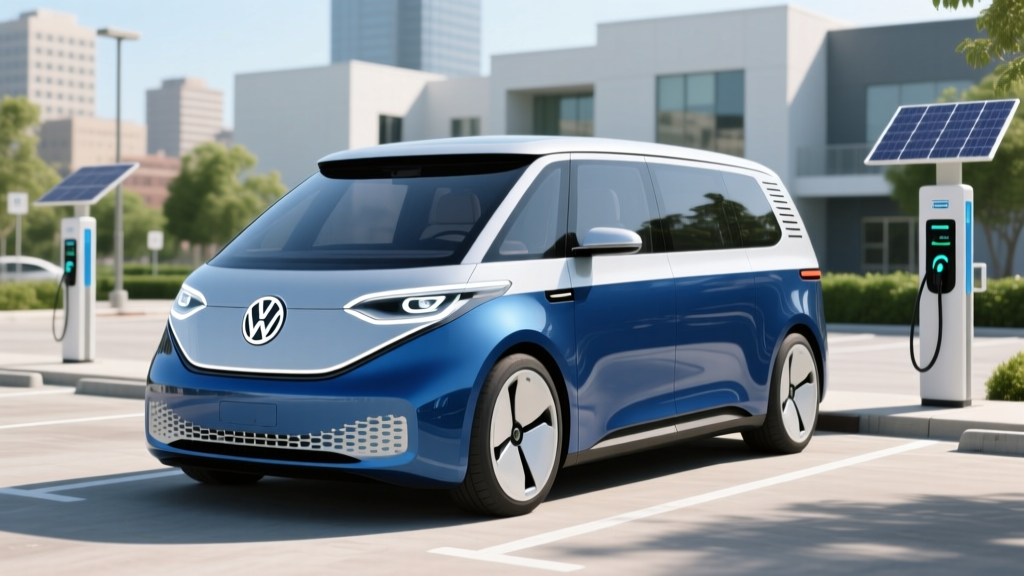
The 2026 Volkswagen ID. Buzz is a three-row, retro-styled electric minivan with an EPA-estimated 234 miles of range (Pro S rear-wheel-drive), a 91 kWh usable NMC battery, and DC fast charging that peaks at 185 kW (10–80% in roughly 26 minutes). Pricing starts at $59,995 before destination. It qualifies for the $7,500 federal §30D tax credit for eligible buyers who meet income and sourcing requirements, bringing the effective starting price near $52,495. Compared to a gas Honda Odyssey or Toyota Sienna hybrid, the ID. Buzz costs more upfront but saves $1,200–$2,000 annually on fuel and maintenance if you charge mostly at home.
Range, Battery, and Real-World Efficiency
The ID. Buzz rides on VW's MEB platform and packs a 91 kWh (usable) lithium-ion NMC battery. The rear-wheel-drive Pro S trim earns an EPA rating of 234 miles, while the 4Motion all-wheel-drive Pro S Plus drops to 231 miles. These numbers place it behind the Chrysler Pacifica PHEV's combined gas-electric reach but ahead of most three-row EVs in its price band.
EPA Sticker: 234 miles (Pro S RWD) | 231 miles (Pro S Plus AWD)
Real-World Expectation: Plan for 195–215 miles on highway road trips at 70–75 mph. In freezing temperatures (below 32°F), expect a 20–30% reduction, dropping effective range to 165–190 miles. The ID. Buzz's boxy aerodynamics and 5,000+ lb curb weight work against it at sustained highway speeds.
Efficiency lands at approximately 2.2–2.4 kWh/mile (roughly 87 MPGe combined per fueleconomy.gov). That's thirstier than a Tesla Model Y (3.6 mi/kWh) but expected for a 5,000-lb people hauler. Around town with regenerative braking engaged, you can push closer to 240+ miles thanks to stop-and-go energy recapture.
| Spec | Pro S (RWD) | Pro S Plus (AWD) |
|---|---|---|
| EPA Range | 234 mi | 231 mi |
| Battery (usable) | 91 kWh NMC | 91 kWh NMC |
| Horsepower | 282 hp | 335 hp |
| 0–60 mph | ~7.9 sec | ~6.5 sec |
| Peak DC Charge Rate | 185 kW | 185 kW |
| 10–80% DC Time | ~26 min | ~26 min |
| Level 2 (AC) Rate | 11 kW | 11 kW |
| MPGe (combined) | 87 MPGe | 85 MPGe |
| Cargo (behind 3rd row) | 18.2 cu ft | 18.2 cu ft |
| Max Cargo (seats folded) | 126.5 cu ft | 126.5 cu ft |
| Towing Capacity | Not rated | Not rated |
| Base MSRP | $59,995 | $69,995 |
| Battery Warranty | 8 yr / 100,000 mi | 8 yr / 100,000 mi |
Charging Speeds: Home and Public
Understanding the difference between kW (power — how fast energy flows) and kWh (energy — how much the battery holds) is essential for ID. Buzz ownership. The 91 kWh battery needs a lot of energy, so charge times are longer than a smaller-battery EV like the Chevy Equinox EV.
| Level | Power | Miles Added per Hour | Full Charge Time | Best For |
|---|---|---|---|---|
| Level 1 (120V) | ~1.4 kW | ~3–4 mi/hr | ~65+ hours | Emergency top-offs only |
| Level 2 (240V, 48A) | 11 kW | ~27 mi/hr | ~9 hours (0–100%) | Overnight home charging |
| DC Fast Charge | Peak 185 kW | ~150+ mi/hr (peak) | 10–80% in ~26 min | Road trips |
Charging-curve reality: The ID. Buzz peaks at 185 kW only at a low state of charge (around 10–20%) and on a capable CCS or NACS station. By 50% SoC, the rate tapers to ~120 kW, and above 80% it drops below 50 kW. VW recommends charging to 80% for daily use to preserve long-term battery health — only charge to 100% before long trips.
For home charging, a Level 2 wallbox on a 240V/60A circuit (like the ChargePoint Home Flex or Emporia Level 2) will replenish the full battery overnight. Installation costs typically run $800–$2,500 depending on your electrical panel. If your home has a 100A panel, you may need a $1,500–$3,000 panel upgrade to support a dedicated 60A EV circuit — consult a licensed electrician before purchasing equipment.
ID. Buzz vs Gas Minivan: Cost of Ownership
The ID. Buzz competes against three-row mainstays like the Honda Odyssey, Toyota Sienna (hybrid), and Chrysler Pacifica. Here's how five-year costs stack up for a family driving 15,000 miles per year, assuming $0.14/kWh home electricity and $3.40/gallon regular unleaded.
| Category | VW ID. Buzz Pro S | Toyota Sienna Hybrid | Honda Odyssey |
|---|---|---|---|
| Base MSRP | $59,995 | $39,485 | $41,090 |
| Fed. Tax Credit (§30D) | −$7,500* | $0 | $0 |
| Effective Purchase | $52,495 | $39,485 | $41,090 |
| Fuel/Energy (5 yr) | $5,250 | $8,925 | $12,750 |
| Maintenance (5 yr) | ~$1,800 | ~$3,500 | ~$3,800 |
| Insurance (5 yr est.) | ~$11,500 | ~$9,000 | ~$9,200 |
| 5-Year Total (excl. depreciation) | ~$71,045 | ~$60,910 | ~$66,840 |
*§30D credit eligibility depends on buyer income caps ($150K single / $300K joint), MSRP van caps ($80,000 for vans/SUVs), and battery critical-mineral sourcing. The ID. Buzz is assembled in Germany — verify current sourcing compliance on irs.gov before purchase. Point-of-sale transfer is available at participating dealers.
The ID. Buzz narrows the gap with gas minivans primarily through fuel and maintenance savings — EVs eliminate oil changes, transmission fluid, and exhaust repairs. However, higher insurance premiums (common for EVs due to repair costs and battery value) and the higher starting price mean the total-cost breakeven versus a Sienna hybrid stretches to roughly 7–9 years for most buyers. If you drive more than 15,000 miles/year or have access to cheap solar charging, the math improves significantly.
Federal Tax Credit and Incentive Details
For 2026, the IRS §30D clean vehicle credit offers up to $7,500, split into two halves:
- $3,750 — Critical Minerals Requirement: A percentage of battery minerals must be sourced from the U.S. or a free-trade-agreement country. Thresholds increase annually.
- $3,750 — Battery Components Requirement: A percentage of battery components must be manufactured or assembled in North America. The ID. Buzz's German assembly complicates this half.
- Buyer Income Caps: AGI must not exceed $150,000 (single), $225,000 (head of household), or $300,000 (joint).
- MSRP Cap: Vans, SUVs, and trucks qualify up to $80,000 MSRP. All ID. Buzz trims fall under this cap.
- Point-of-Sale Transfer: Eligible buyers can transfer the credit to the dealer at purchase, reducing the out-of-pocket price immediately rather than waiting for a tax refund.
Because the ID. Buzz is built in Hanover, Germany, the battery-components half of the credit has been in flux. Always confirm the exact credit amount with your dealer and a tax professional before signing. Some state incentives (California's CVRP, Colorado's innovative motor vehicle credit) may stack on top — check your state's energy office for current programs.
Real-World Ownership: What First-Time EV Buyers Must Know
Buying the ID. Buzz is a different calculus than buying a gas minivan. These practical realities shape daily ownership:
Home charging is nearly mandatory. The 91 kWh battery makes Level 1 (120V) charging impractical — you'd add only ~20 miles overnight. Without a Level 2 home setup or reliable workplace charging, you'll be visiting public DC fast chargers multiple times per week, which adds time and cost ($0.30–$0.50/kWh at public stations vs $0.14 at home).
Road trips require planning. With ~200 miles of real-world highway range, plan a 15–25 minute DC fast-charge stop every 180 miles. VW includes three years of complimentary charging on the Electrify America network (with session limits). The ID. Buzz uses the CCS1 connector for DC charging, though NACS adapter availability is expanding — check with VW for the latest adapter compatibility.
Cold weather cuts range hard. The ID. Buzz includes a heat pump (standard), which mitigates cabin-heating energy draw compared to resistive heaters. Still, expect 20–30% range loss in sustained sub-freezing temperatures. Preconditioning the battery while plugged in — using the VW app to warm the cabin and battery before departure — recovers significant range.
Maintenance is lighter. No oil changes, no spark plugs, no transmission fluid. Brake pads last longer thanks to regenerative braking. Budget for cabin air filters, tire rotations, and washer fluid. VW's scheduled maintenance plan covers the first two years.
Common Misconceptions About the ID. Buzz
| Myth | Fact |
|---|---|
| "234 miles is enough for any road trip." | Real highway range is ~200 mi; cold weather drops it to ~170. Plan charge stops every 150–180 mi on long trips. |
| "It charges as fast as a Tesla." | The ID. Buzz peaks at 185 kW. A Tesla Model Y on V3 Superchargers can sustain higher average rates. Expect 26 min for 10–80%, not 15. |
| "The $7,500 credit applies to everyone." | Income caps, MSRP caps, and battery-sourcing rules apply. The German-built ID. Buzz may only qualify for $3,750 (half-credit) depending on the model year's sourcing rules. |
| "I don't need a home charger." | With a 91 kWh battery, public-only charging costs 2–3x more per mile and adds significant weekly time. Home Level 2 is strongly recommended. |
| "It's self-driving with Travel Assist." | VW's IQ.DRIVE with Travel Assist is SAE Level 2 — hands-on-wheel, eyes-on-road at all times. It is not autonomous. |
SAE Automation Level: The VW ID. Buzz features IQ.DRIVE with Travel Assist — an SAE Level 2 driver-assistance system combining adaptive cruise control and lane centering. The driver must remain fully engaged, hands on the wheel, and eyes on the road. This is not a self-driving vehicle. No consumer vehicle sold today offers SAE Level 4 autonomy for personal ownership.
Decision Framework: Should You Buy the ID. Buzz?
Choose the VW ID. Buzz if:
- You want a three-row EV with distinctive styling and solid cargo space (126.5 cu ft max).
- You can install Level 2 home charging and drive mostly under 180 miles/day.
- You qualify for the §30D credit and value the point-of-sale price reduction.
- You prioritize a quiet, smooth ride and low running costs over maximum range.
- You want AWD availability for snow-belt climates (Pro S Plus 4Motion).
Look elsewhere if:
- You regularly drive 300+ miles between charging stops — consider the Rivian R1S or wait for longer-range three-row EVs.
- You cannot install home charging and lack reliable workplace or public charging nearby.
- Upfront budget is under $45,000 — a used Tesla Model Y or a Toyota Sienna hybrid may fit better.
- You need towing capability — the ID. Buzz is not rated for towing.
- You want the lowest total cost of ownership in 5 years — the Sienna hybrid still wins on pure economics for moderate-mileage drivers.
Frequently Asked Questions
What is the real-world range of the VW ID. Buzz?
The EPA rates the Pro S RWD at 234 miles, but expect 195–215 miles in real-world highway driving at 70+ mph. In freezing weather, plan for 165–190 miles. City driving with regenerative braking can push closer to the EPA figure.
How long does it take to charge the ID. Buzz at home?
On a Level 2 (240V, 11 kW) home charger, a full 0–100% charge takes approximately 9 hours. Most owners charge from 20% to 80% overnight, which takes about 5 hours. Level 1 (120V) is too slow for daily use with this 91 kWh battery.
Does the VW ID. Buzz qualify for the $7,500 federal tax credit?
The ID. Buzz qualifies for at least $3,750 of the §30D credit, and potentially the full $7,500 depending on battery-sourcing compliance for the specific model year. Buyer income caps ($150K single / $300K joint) and the $80K MSRP cap also apply. Verify on irs.gov and with your tax professional.
Can the VW ID. Buzz tow a trailer?
No. VW does not rate the ID. Buzz for towing in the U.S. market. If you need a three-row EV with towing capacity, look at the Rivian R1S (up to 7,700 lbs) or the Kia EV9 (up to 5,000 lbs with the AWD Long Range trim).
How does the ID. Buzz compare to the Chrysler Pacifica PHEV?
The Pacifica PHEV offers 32 miles of electric-only range plus a gas engine for unlimited total range, starting around $51,000. It's a better fit for families who can't charge at home or regularly take 400+ mile road trips. The ID. Buzz offers lower running costs, more interior space, and zero tailpipe emissions — but requires charging infrastructure commitment.
What connector does the ID. Buzz use?
The ID. Buzz uses a CCS1 connector for DC fast charging and a J1772 connector for Level 2 AC charging. As the industry transitions to NACS (Tesla's connector), VW has indicated future adapter support — check with your dealer for the latest compatibility updates for Tesla Supercharger access.
What is the battery warranty on the ID. Buzz?
VW covers the high-voltage battery for 8 years or 100,000 miles, whichever comes first, against defects and capacity loss below 70% of original capacity. This is competitive with most mainstream EVs. The basic vehicle warranty is 4 years / 50,000 miles.