VW ID. Buzz Electric Van: The Ultimate Family EV Review
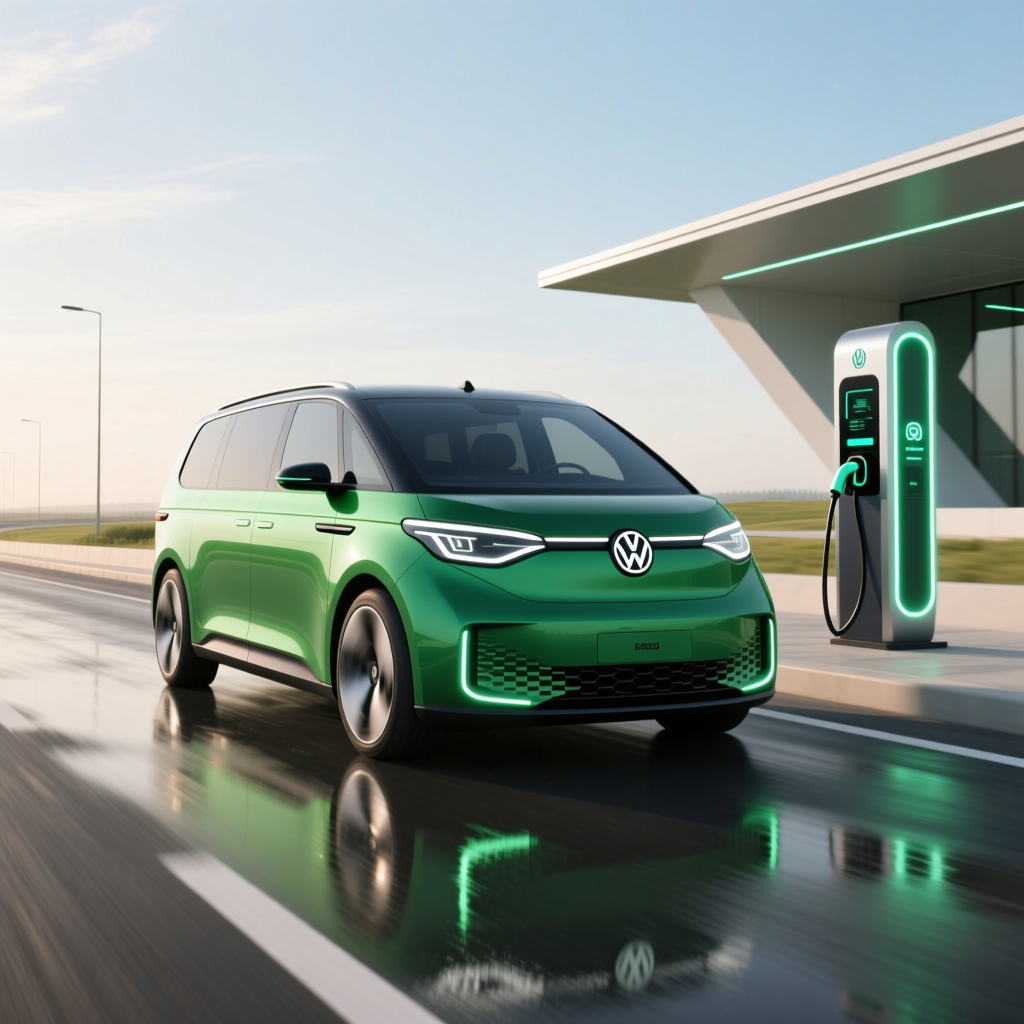
The Volkswagen ID. Buzz is more than just a nostalgia trip wrapped in a retro-modern shell. This all-electric van takes the spirit of the iconic VW Microbus and reimagines it for the electric age, offering families a spacious, practical, and genuinely fun vehicle that stands apart in an increasingly crowded EV market. Whether you're hauling kids to school, embarking on a weekend road trip, or simply looking for a daily driver with serious cargo capacity, the ID. Buzz demands a closer look.
In this comprehensive review, we'll examine every aspect of the VW ID. Buzz from a family perspective — covering real-world range, charging performance, interior technology, driving dynamics, and long-term ownership costs. We'll also compare it against key rivals to help you decide if this electric van deserves a spot in your driveway. For more family-friendly EV options, be sure to explore our best electric SUVs for families guide.
Vehicle Overview: What Is the VW ID. Buzz?
The VW ID. Buzz is a fully electric minivan built on Volkswagen's MEB platform — the same modular electric architecture that underpins the VW ID.4 crossover. It arrives in the North American market as a long-wheelbase model, offering three rows of seating for up to seven passengers and a substantial cargo area that rivals conventional minivans.
Under the hood — or rather, under the floor — the ID. Buzz houses a 91 kWh (gross) lithium-ion battery pack that powers a rear-mounted electric motor producing 282 horsepower and 406 lb-ft of torque in the single-motor configuration. An all-wheel-drive variant adds a front motor, bumping combined output to approximately 330 horsepower. According to EPA estimates, the rear-wheel-drive ID. Buzz achieves a range of approximately 234 miles on a full charge, while the AWD version drops to roughly 215 miles.
Volkswagen has positioned the ID. Buzz as a premium lifestyle vehicle, and the pricing reflects that ambition. Starting prices place it in competition with higher-end minivans and mid-size electric SUVs. But what the ID. Buzz offers that few rivals can match is a combination of head-turning design, genuine three-row practicality, and an emission-free powertrain. If you're cross-shopping, our best electric minivans and people movers list offers additional context.
Real-World Range and Efficiency
On paper, the EPA-estimated 234 miles of range for the rear-wheel-drive ID. Buzz sounds adequate for most family duties. But real-world driving tells a more nuanced story — one that families planning road trips should carefully consider.
In independent highway-range testing conducted at a steady 70 mph with climate control set to 72°F, the ID. Buzz RWD typically delivers between 200 and 215 miles before reaching a low state of charge. The van's boxy silhouette, while charming, creates significant aerodynamic drag at higher speeds, which reduces efficiency compared to sleeker electric crossovers. City driving, where regenerative braking can recover energy during frequent stops, tends to yield results closer to or even slightly above the EPA estimate.
For daily use — school runs, grocery trips, commuting — the ID. Buzz's range is more than sufficient. Most families will find they can go several days between charges with a typical daily driving distance of 30 to 50 miles. However, road trips require more planning. A 300-mile journey will necessitate at least one charging stop, and a 500-mile family vacation will involve two or three stops depending on your comfort level with battery buffer.
Efficiency-wise, the ID. Buzz consumes roughly 2.4 to 2.7 kWh per mile in mixed driving conditions, which translates to approximately 80 MPGe combined. That's respectable for a vehicle of its size and weight — we're talking about a van that tips the scales at over 5,800 pounds — but it trails more aerodynamically optimized EVs. For comparison, the Tesla Model X achieves higher efficiency despite offering similar interior space, as noted in our Tesla Model X vs. VW ID. Buzz comparison.
The onboard energy consumption display is clear and helpful, providing real-time feedback and predictive range estimates based on recent driving patterns. The navigation system also integrates charging stops into route planning when a destination exceeds available range, which reduces range anxiety considerably.
Charging Speed and Infrastructure
Charging performance is where the ID. Buzz delivers a pleasant surprise. The van supports DC fast charging at up to 200 kW on compatible CCS chargers, which is competitive with the best in its class. Volkswagen claims a 10% to 80% charge can be completed in approximately 26 minutes under optimal conditions.
In real-world testing at Electrify America and other high-power charging networks, the ID. Buzz has demonstrated charging speeds peaking around 175 to 190 kW, with the charging curve tapering as expected as the battery fills. A typical 10-80% session takes roughly 28 to 32 minutes, which is in line with the manufacturer's claims. That means a road-trip charging stop can be accomplished during a reasonably quick family break — grab some snacks, let the kids stretch their legs, and you're back on the road.
For Level 2 home charging, the ID. Buzz accepts up to 11 kW on a 240-volt connection using the included charging cable or a compatible wall-mounted unit. At this rate, a full charge from empty takes approximately 9 to 10 hours. Most families will plug in overnight and wake up to a full battery every morning, making home charging the primary refueling method. Installing a Level 2 home charger is highly recommended, and you can find guidance on setup costs and best units in our complete home EV charger guide.
The charge port is located on the rear quarter panel, which is a thoughtful placement for pull-through charging at public stations. The ID. Buzz also supports plug-and-charge functionality on compatible networks, eliminating the need to fiddle with apps or RFID cards at the charger — a genuine convenience when you're managing kids and cargo.
One area to note: the ID. Buzz does not currently support NACS (Tesla's charging connector) natively. However, Volkswagen has indicated that adapters will be available, and future model years may adopt the connector directly. Access to the Supercharger network via adapter significantly expands the available charging infrastructure for road trips, a factor worth monitoring as the industry transitions.
Interior Space, Comfort, and Technology
Step inside the ID. Buzz, and the retro charm continues with a surprisingly modern and well-appointed cabin. Volkswagen has done an admirable job blending nostalgic design cues — like the two-tone dashboard and minimalist controls — with the technology and convenience features that today's families expect.
Seating and Cargo Capacity
The long-wheelbase North American ID. Buzz offers three rows of seating. The front seats are spacious and well-bolstered, with available massaging and ventilation functions on higher trims. The second row features captain's chairs that slide and recline independently, offering generous legroom that accommodates adults comfortably. The third row is best suited for children on longer trips, though adults can fit for shorter journeys.
Cargo space is one of the ID. Buzz's strongest selling points. Behind the third row, you'll find approximately 18 cubic feet of cargo volume — enough for a week's worth of groceries or several suitcases. Fold the third row flat, and that number expands dramatically to over 75 cubic feet. With both rear rows folded, the ID. Buzz offers well over 100 cubic feet of flat cargo space, making it genuinely competitive with full-size minivans for hauling furniture, camping gear, or anything else your family throws at it.
The low load floor, enabled by the absence of a traditional engine and transmission tunnel, makes loading heavy items significantly easier than in many SUVs. The power tailgate with hands-free opening is standard on most trims, a feature parents will appreciate when approaching the van with arms full of children and shopping bags.
Infotainment and Connectivity
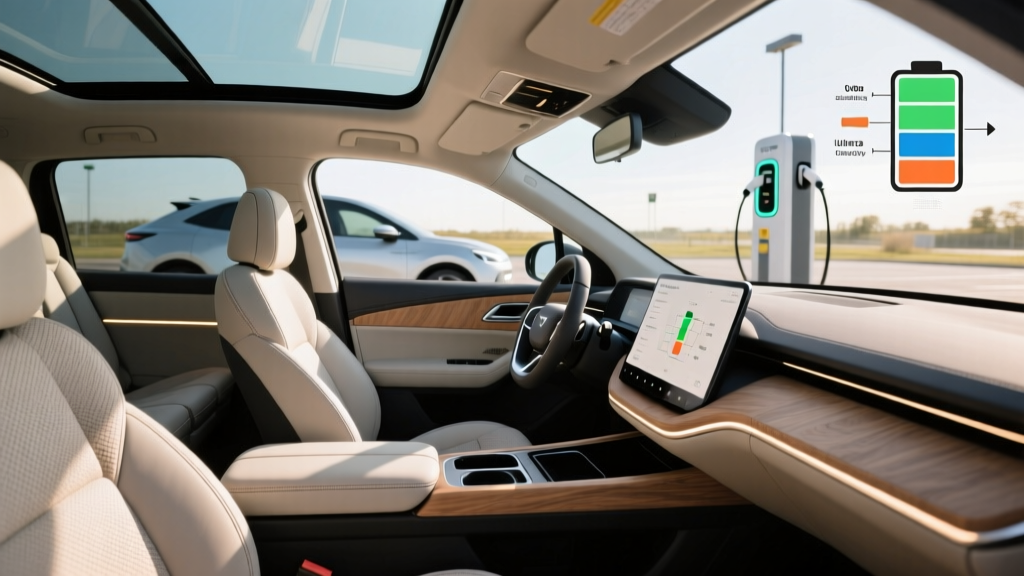
The ID. Buzz features a 12.9-inch central touchscreen running Volkswagen's latest ID. Software infotainment system. The display is bright, responsive, and well-organized, with large icons that are easy to tap while driving. Wireless Apple CarPlay and Android Auto are standard, along with wireless phone charging on most trims.
The digital instrument cluster is compact but informative, displaying speed, range, navigation directions, and driver-assistance data in a clean layout. A head-up display is available on higher trims, projecting key information onto the windshield to minimize distraction.
Rear-seat entertainment is available through the Volkswagen app ecosystem, and USB-C ports are distributed throughout the cabin to keep devices charged. Available tri-zone automatic climate control ensures comfort for all three rows, with dedicated vents for rear passengers. The panoramic glass roof, available on select trims, floods the cabin with natural light and creates an airy, spacious feeling that passengers — especially children — genuinely love.
One criticism worth noting: earlier versions of Volkswagen's ID. Software had sluggish response times and occasional glitches. Recent over-the-air updates have significantly improved performance and stability, but some owners still report minor frustrations with the touch-sensitive climate and volume sliders, which can be less intuitive than physical buttons. For a deeper dive into EV infotainment systems, check our best EV infotainment systems roundup.
Driving Dynamics and Performance
Don't let the retro-minivan exterior fool you — the ID. Buzz drives with a level of refinement and composure that belies its size. The rear-mounted electric motor delivers instant torque, providing brisk acceleration from a stop that makes merging onto highways and navigating city traffic feel effortless. Volkswagen quotes a 0-60 mph time of approximately 7.9 seconds for the rear-wheel-drive model and around 6.5 seconds for the all-wheel-drive variant.
Steering is light and precise, making the ID. Buzz surprisingly easy to maneuver in tight parking lots and narrow streets. The turning circle is generous given the wheelbase, but the excellent outward visibility — a hallmark of the upright van design — compensates significantly. Large windows and thin pillars give the driver a commanding view of the surroundings, a refreshing change from the bunker-like visibility of many modern SUVs.
Ride quality is where the ID. Buzz truly shines. The suspension tuning strikes an excellent balance between comfort and control, absorbing bumps and road imperfections with a composure that keeps passengers comfortable over long distances. The low center of gravity, thanks to the floor-mounted battery pack, minimizes body roll in corners and gives the van a planted, stable feel that inspires confidence at highway speeds.
The all-wheel-drive model adds front-axle traction, which is valuable in rain, snow, and light off-road conditions. It's not a hardcore off-roader, but the AWD system provides the extra security that families in northern climates will appreciate during winter months. The regenerative braking system offers multiple levels of intensity, selectable through the gear selector or steering-wheel paddles. The strongest setting provides near one-pedal driving capability in city traffic, reducing brake wear and recapturing energy efficiently.
Noise, vibration, and harshness levels are excellent. Without a combustion engine, the ID. Buzz is whisper-quiet at low speeds, with only mild wind and tire noise becoming noticeable at highway velocities. The overall driving experience is relaxing and refined — exactly what you want in a family vehicle tasked with carrying your most precious cargo. For more on how electric vans compare behind the wheel, see our electric van comparison guide.
Ownership Costs, Incentives, and Value
The financial case for the ID. Buzz involves several factors beyond the sticker price. Let's break down what families can expect in terms of total ownership costs.
Purchase Price and Incentives
The VW ID. Buzz is positioned at a premium price point relative to conventional minivans. Base models start in the low-to-mid $60,000 range, while fully loaded variants can approach $70,000 or more depending on options and packages. This places the ID. Buzz in direct competition with higher-trim versions of the Toyota Sienna Hybrid, Chrysler Pacifica, and the Kia EV9 three-row electric SUV.
Federal and state incentives can meaningfully offset the purchase price. Depending on your income and the vehicle's eligibility at the time of purchase, a federal tax credit of up to $7,500 may be available. Many states and local utilities offer additional rebates, tax credits, or reduced electricity rates for EV owners. Be sure to check the U.S. Department of Energy's incentive database for the most current information applicable to your situation.
Fuel and Maintenance Savings
Where the ID. Buzz begins to make financial sense is in ongoing operating costs. Electricity is significantly cheaper than gasoline on a per-mile basis. Based on average residential electricity rates and typical driving distances, families can expect to spend roughly $500 to $800 per year on electricity for the ID. Buzz, compared to $2,000 to $3,000 annually on gasoline for a comparable internal-combustion minivan. Over a five-year ownership period, that's a potential savings of $7,500 to $12,000 in fuel costs alone.
Maintenance costs are also substantially lower. Electric vehicles have far fewer moving parts than gasoline vehicles — no oil changes, no transmission fluid replacements, no spark plugs, no exhaust system repairs. Brake pad wear is dramatically reduced thanks to regenerative braking. Volkswagen typically includes a complimentary maintenance period for the first few years, and long-term maintenance schedules are minimal, involving mainly cabin air filter replacements, tire rotations, and windshield washer fluid.
Insurance and Depreciation
Insurance premiums for the ID. Buzz tend to be higher than for conventional minivans, reflecting the vehicle's purchase price and the cost of EV-specific repairs. However, as EV adoption grows and repair networks expand, insurance rates for electric vehicles have been trending downward. Shopping around with multiple insurers — particularly those that offer EV-specific discounts — can yield meaningful savings.
Depreciation remains a wildcard for the ID. Buzz. EV depreciation has historically been steeper than for gasoline vehicles, though this gap has narrowed as the market matures. The ID. Buzz's unique design and cult appeal may help it hold value better than more generic EVs, but long-term data isn't yet available. Families who plan to own the vehicle for five years or more will be less impacted by depreciation concerns.
For a broader look at the financial side of going electric, our EV total cost of ownership calculator lets you plug in your specific numbers to see how the ID. Buzz stacks up against your current vehicle.
Pros and Cons
Every vehicle involves trade-offs. Here's an honest assessment of the VW ID. Buzz's strengths and weaknesses from a family perspective.
Pros
- Exceptional interior space and versatility: Genuine three-row seating with class-leading cargo flexibility makes the ID. Buzz a true minivan alternative.
- Head-turning retro design: Few vehicles generate as many smiles and thumbs-ups from strangers. The ID. Buzz is a genuine conversation starter.
- Smooth, refined driving experience: Excellent ride quality, quiet cabin, and effortless electric acceleration make every drive pleasant.
- Strong DC fast-charging capability: Up to 200 kW charging speeds minimize road-trip downtime.
- Low operating costs: Significant fuel and maintenance savings compared to gasoline minivans.
- Comprehensive safety and driver-assistance features: Standard automatic emergency braking, adaptive cruise control, lane-keeping assist, and more.
Cons
- Real-world range falls short of some rivals: The boxy shape and heavy weight limit highway efficiency, requiring more frequent charging stops on long trips.
- Premium pricing: Starting prices exceed those of conventional minivans, and well-equipped models push toward luxury territory.
- Touch-sensitive controls: The lack of physical buttons for climate and volume controls can be frustrating during daily use.
- Third-row space is limited for adults: Best suited for children or short trips when adults occupy the rearmost seats.
- No native NACS connector: Access to Tesla Superchargers currently requires an adapter, adding complexity.
Specification Comparison Table
How does the VW ID. Buzz stack up against its closest competitors? The table below compares key specifications across several popular family EVs and minivans.
| Specification | VW ID. Buzz (RWD) | VW ID. Buzz (AWD) | Kia EV9 (AWD) | Tesla Model X (AWD) |
|---|---|---|---|---|
| Battery Capacity | 91 kWh | 91 kWh | 100 kWh | 100 kWh |
| EPA Range | ~234 miles | ~215 miles | ~280 miles | ~335 miles |
| Horsepower | 282 hp | ~330 hp | 379 hp | 670 hp |
| 0-60 mph | ~7.9 sec | ~6.5 sec | ~5.0 sec | ~3.8 sec |
| Max DC Fast Charge | 200 kW | 200 kW | 236 kW | 250 kW |
| Seating Capacity | 7 | 7 | 6-7 | 5-7 |
| Cargo (behind 3rd row) | ~18 cu ft | ~18 cu ft | ~20 cu ft | ~15 cu ft |
| Towing Capacity | ~2,500 lbs | ~2,500 lbs | ~5,000 lbs | ~5,000 lbs |
| Starting Price (approx.) | ~$60,000 | ~$64,000 | ~$60,000 | ~$80,000 |
As the table illustrates, the ID. Buzz prioritizes interior space and character over outright range and performance. Families who value uniqueness, cargo versatility, and everyday comfort may find it more appealing than the numbers alone suggest. For a detailed head-to-head, don't miss our Kia EV9 vs. VW ID. Buzz comparison.
Frequently Asked Questions
Is the VW ID. Buzz a good family vehicle?
Absolutely. The VW ID. Buzz excels as a family vehicle thanks to its spacious three-row interior, excellent ride comfort, low center of gravity for stability, and comprehensive suite of safety features. The large cargo area accommodates strollers, sports equipment, and luggage with ease. The quiet electric powertrain makes for peaceful rides, and the low operating costs free up budget for other family priorities. The main compromise is highway range on long road trips, which requires more planning than a gasoline minivan. For most daily family duties — school drop-offs, activities, grocery runs — the ID. Buzz is outstanding.
How long does it take to charge the VW ID. Buzz at home?
Using a Level 2 home charger (240V, 48A), the VW ID. Buzz takes approximately 9 to 10 hours to charge from empty to full. In practice, most families will plug in each evening and only need to replenish the day's driving, which typically requires just 2 to 4 hours of charging. On a standard 120V household outlet (Level 1), a full charge takes several days, making Level 1 suitable only for emergency use or very low daily mileage. We strongly recommend installing a dedicated Level 2 charger before taking delivery of your ID. Buzz.
Can the VW ID. Buzz tow a trailer or camper?
Yes, the VW ID. Buzz has a rated towing capacity of approximately 2,500 pounds when properly equipped with a factory-approved tow hitch. This is sufficient for a small utility trailer, a pair of jet skis, or a lightweight teardrop camper. However, it falls well short of the 5,000-pound capacity offered by the Kia EV9 and Tesla Model X. Keep in mind that towing significantly reduces range — expect a 30% to 50% reduction depending on the trailer's weight and aerodynamics. Families who regularly tow larger campers or boats should consider an EV with higher towing ratings or retain a gasoline vehicle for those specific needs.
What safety ratings does the VW ID. Buzz have?
The VW ID. Buzz comes equipped with Volkswagen's IQ.DRIVE suite of driver-assistance technologies as standard equipment. This includes automatic emergency braking with pedestrian detection, adaptive cruise control with stop-and-go, lane-keeping assist, blind-spot monitoring, rear cross-traffic alert, and travel assist for semi-autonomous highway driving. The ID. Buzz has undergone crash testing by both Euro NCAP (where it achieved a five-star rating) and the NHTSA for the North American market. The van's substantial weight and rigid MEB platform contribute to strong crash-test performance. Always review the latest NHTSA safety ratings for the most current results.
How does the VW ID. Buzz compare to a traditional gasoline minivan?
Compared to gasoline minivans like the Honda Odyssey, Toyota Sienna, and Chrysler Pacifica, the ID. Buzz offers a dramatically different ownership experience. It's smoother, quieter, and far cheaper to fuel and maintain. The instant electric torque makes it feel quicker in daily driving despite modest horsepower figures. However, traditional minivans still hold advantages in total driving range (often exceeding 500 miles per tank), faster refueling, lower starting prices, and broader third-row seating for adults. The ID. Buzz is best for families who drive primarily in urban and suburban environments, have access to home charging, and take road trips that can accommodate charging stops. If your lifestyle involves frequent long-distance travel through areas with sparse charging infrastructure, a hybrid minivan like the Toyota Sienna may still be the more practical choice.
Final Verdict
The VW ID. Buzz is a triumph of character and practicality. It proves that a family vehicle doesn't have to be boring, and that going electric doesn't mean sacrificing space or versatility. While it isn't the longest-range EV in its class, and the premium pricing may give some buyers pause, the total ownership experience is genuinely compelling for the right family.
If you value unique design, interior flexibility, low operating costs, and a driving experience that puts a smile on your face every morning, the ID. Buzz deserves serious consideration. It's not just an electric van — it's a statement about the kind of family vehicle you want to drive. And in a world of look-alike crossovers, that statement is refreshing.
Ready to explore more electric options for your family? Browse our best electric SUVs for families list, or dive into our complete electric van comparison guide to see how the ID. Buzz stacks up against every alternative on the market.