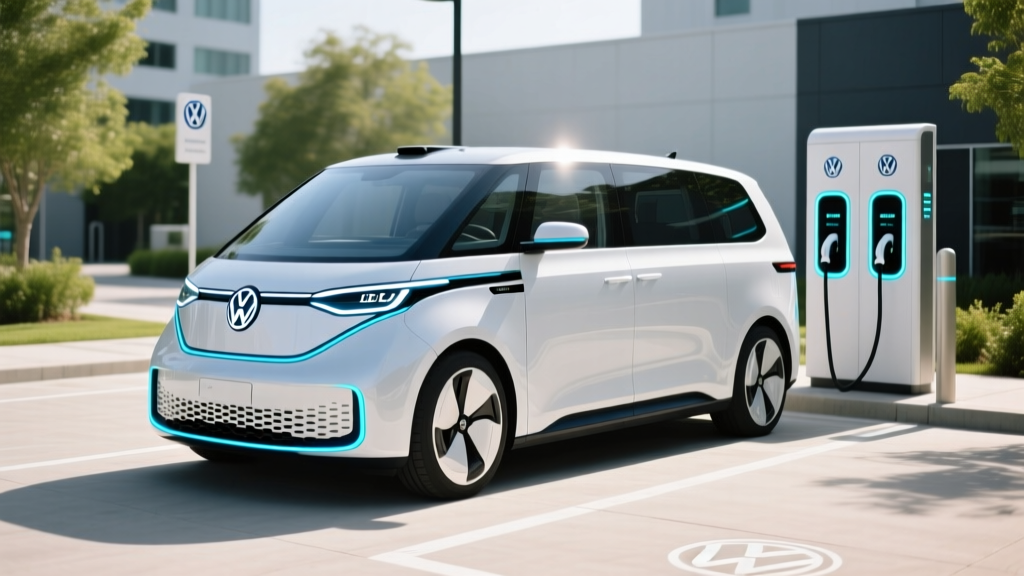
Quick Answer: The 2026 VW ID. Buzz is Volkswagen's all-electric three-row minivan, reviving the classic Microbus nameplate on the MEB platform. It offers an EPA-estimated 234 miles of range (RWD), a 91 kWh usable battery, and DC fast charging up to 200 kW (10–80% in ~26 minutes). Pricing starts at $59,995 before destination. It qualifies for the §30D federal tax credit of up to $7,500 (subject to income, MSRP, and battery-sourcing rules), which can be transferred at the point of sale. Real-world highway range drops to roughly 195–210 miles, and cold-weather driving may reduce that further to ~170 miles. It's best suited for families who prioritize interior space and style over maximum range efficiency.
What the VW ID. Buzz Electric Bus Actually Is
The VW ID. Buzz is not a commercial van conversion — it's a purpose-built, three-row electric passenger vehicle on Volkswagen's MEB architecture (the same platform underpinning the ID.4). For 2026, it's available in two configurations: a single-motor rear-wheel-drive (RWD) and a dual-motor 4MOTION all-wheel-drive (AWD). The AWD variant gains a front motor, bumping output to 335 hp and dropping the 0–60 mph time from 7.9 seconds to approximately 5.7 seconds, at the cost of about 15 miles of EPA range.
Volkswagen positions the ID. Buzz against electric three-row rivals like the Kia EV9 and against traditional gas minivans like the Toyota Sienna and Honda Odyssey. It trades some range efficiency for a distinctive retro design, a spacious flat-floor cabin, and a turning circle that makes urban driving surprisingly easy for its size.
| Spec | RWD (Pro S) | AWD (Pro S Plus) |
|---|---|---|
| EPA Range | 234 mi | 219 mi |
| Battery (usable) | 91 kWh (NMC) | 91 kWh (NMC) |
| Horsepower | 282 hp | 335 hp |
| 0–60 mph | 7.9 sec | 5.7 sec |
| Peak DC Charge Rate | 200 kW | 200 kW |
| 10–80% DC Charge Time | ~26 min | ~26 min |
| Level 2 (AC) Rate | 11 kW | 11 kW |
| Towing Capacity | 2,500 lb | 2,500 lb |
| Starting MSRP | $59,995 | $64,995 |
| Battery/Powertrain Warranty | 8 yr / 100,000 mi | 8 yr / 100,000 mi |
Source: fueleconomy.gov and Volkswagen of America press materials.
Real-World Range: What the EPA Sticker Doesn't Tell You
EPA Estimate: 234 miles (RWD) / 219 miles (AWD)
Real-World Highway Expectation: ~195–210 mi (RWD), ~180–195 mi (AWD)
Cold Weather (below 32°F): ~160–180 mi (RWD), expect 20–30% reduction
The ID. Buzz is a large, boxy vehicle with the aerodynamic profile of, well, a bus. Its drag coefficient sits higher than sleeker EVs, and that matters most at sustained highway speeds above 65 mph. In mixed suburban driving with frequent regen-braking opportunities, you'll get closer to the EPA sticker. But on a 75-mph interstate run — the kind of trip where charging infrastructure matters most — plan for roughly 200 miles of usable range before needing a stop.
The ID. Buzz does come equipped with a heat pump on most trims, which mitigates cold-weather range loss compared to EVs that rely solely on resistive cabin heating. Still, NMC chemistry in a 91 kWh pack will lose meaningful capacity in sub-freezing temperatures, especially if the vehicle is parked outside overnight without preconditioning. If you live in Minnesota or Maine, budget for 170 miles or less in January.
One practical note on the charging curve: the 200 kW peak rate is not sustained across the full session. You'll see peak speeds between roughly 10–45% state of charge, after which the curve tapers significantly. A 10–80% session takes about 26 minutes, but pushing from 80–100% can add another 25+ minutes. For road-trip planning, plan stops at 15–20% remaining and charge to 80%.
How the ID. Buzz Compares to Gas Minivans and Electric Rivals
Most families cross-shopping the ID. Buzz are either coming from a gas minivan or considering the Kia EV9. Here's how the numbers stack up:
| Metric | 2026 VW ID. Buzz (RWD) | 2026 Toyota Sienna (Hybrid) | 2026 Kia EV9 (AWD LR) |
|---|---|---|---|
| Powertrain | BEV | HEV | BEV |
| EPA Range / MPG | 234 mi / 87 MPGe | 36 MPG combined | 280 mi / 85 MPGe |
| Seating | 7 | 7–8 | 6–7 |
| Starting MSRP | $59,995 | $39,995 | $59,995 |
| Est. Fuel/Energy Cost (15k mi/yr) | ~$660/yr | ~$1,250/yr | ~$700/yr |
| Federal Tax Credit | Up to $7,500 | None | Up to $7,500 |
| DC Fast Charge (10–80%) | ~26 min | N/A | ~20 min |
The Sienna hybrid wins on upfront cost and total range per fill-up (over 500 miles), but the ID. Buzz recovers ground through dramatically lower per-mile energy costs and reduced maintenance (no oil changes, no transmission fluid, far less brake wear due to regen). The Kia EV9 offers more range and faster charging in a similarly sized package, though its styling is more conventional and its third row is slightly less accommodating than the Buzz's flat-floor layout.
Total Cost of Ownership: 5-Year Breakdown
Let's model a realistic 5-year ownership scenario assuming 15,000 miles per year, home Level 2 charging at the national average electricity rate of $0.16/kWh, and gasoline at $3.50/gallon for the Sienna comparison.
| Cost Category | VW ID. Buzz (RWD) | Toyota Sienna (HEV) |
|---|---|---|
| Purchase Price (MSRP) | $59,995 | $39,995 |
| Federal Tax Credit (§30D) | −$7,500* | $0 |
| Net Purchase | $52,495 | $39,995 |
| Energy (5 yrs, 75k mi) | $3,300 | $6,250 |
| Maintenance (5 yrs) | ~$1,200 | ~$3,000 |
| Insurance (5 yrs est.) | ~$11,500 | ~$8,500 |
| Est. 5-Year Depreciation | ~$22,000 | ~$14,000 |
| Total 5-Year Cost | ~$90,495 | ~$71,745 |
*§30D credit eligibility depends on modified adjusted gross income (≤$150k single / ≤$300k joint), MSRP cap ($80k for vans/SUVs), and battery component/critical mineral sourcing requirements. Verify at irs.gov and consult a tax professional. Credit can be transferred to the dealer at point of sale as a purchase-price reduction.
The ID. Buzz saves roughly $2,950 on energy and $1,800 on maintenance over five years, but those savings don't fully offset the higher purchase price, steeper insurance premiums (EV insurance averages 15–25% higher than comparable ICE vehicles), and greater projected depreciation. The total-cost gap narrows further if you have access to free or subsidized workplace charging, time-of-use electricity rates below $0.10/kWh, or state-level EV rebates (California's CVRP, for instance, or Colorado's state credit).
Charging at Home and on the Road
The ID. Buzz uses the NACS (North American Charging Standard) connector for 2026, meaning it can access Tesla Supercharger stations with no adapter — a significant advantage for road-trip charging reliability. For DC fast charging on non-Tesla networks (Electrify America, EVgo), the NACS connector is now the default.
| Level | Power | Miles Added per Hour | Typical Use Case |
|---|---|---|---|
| Level 1 (120V) | ~1.4 kW | ~3–4 mi/hr | Emergency / overnight trickle |
| Level 2 (240V, 48A) | 11 kW | ~30–33 mi/hr | Home / workplace daily charging |
| DC Fast Charge | Up to 200 kW | ~150+ mi in 15 min | Road trips, rapid top-ups |
A full Level 2 home charge from 10% to 100% takes roughly 9 hours — fine for overnight replenishment. Home Level 2 installation typically costs $800–$2,500 depending on panel proximity and whether a 200-amp panel upgrade is needed. The ID. Buzz's 91 kWh battery means a full charge consumes about 95 kWh from the wall (accounting for ~5% charging losses), costing roughly $15 at $0.16/kWh — versus $55+ to fill a Sienna's 18-gallon tank at $3.50/gal.
For apartment dwellers or those without dedicated home parking, the ID. Buzz's 234-mile range becomes tighter. Public DC fast charging costs $0.35–$0.55/kWh on most networks, pushing per-mile energy costs closer to the Sienna's fuel cost. If you cannot install a Level 2 charger at home, a plug-in hybrid minivan (the Chrysler Pacifica Hybrid, with 32 miles of electric range) may be a more practical bridge.
Common Misconceptions About the VW Electric Bus
| Myth | Fact |
|---|---|
| "It's just a van with a battery stuffed in." | The ID. Buzz is built on VW's dedicated MEB EV platform with a skateboard battery, flat floor, and optimized weight distribution — not a converted ICE van. |
| "234 miles isn't enough for road trips." | With 200 kW DC charging and Supercharger access, you add ~150 miles in 15 minutes. Most families stop every 2–2.5 hours anyway. |
| "The battery will need replacing in a few years." | VW warranties the battery at 8 years/100,000 miles with a 70% capacity retention guarantee. NMC packs in liquid-cooled systems typically show 10–15% degradation at 100k miles. |
| "It qualifies for the full $7,500 credit automatically." | §30D eligibility depends on buyer income, MSRP limits, and battery sourcing requirements that change annually. Confirm on the IRS portal before purchasing. |
| "Electric minivans are cheaper to own overall." | Lower fuel and maintenance costs are real, but higher insurance, faster depreciation, and the upfront price premium mean total savings depend heavily on your electricity rate, mileage, and state incentives. |
Decision Framework: Is the ID. Buzz Right for You?
Choose the VW ID. Buzz if:
- You have home Level 2 charging access (garage or driveway with a 240V outlet)
- Your typical weekly driving is under 200 miles with occasional 300–400 mile road trips
- You value interior volume, flat-floor flexibility, and distinctive design over maximum range-per-dollar
- You qualify for the §30D tax credit (reducing effective price to ~$52,500)
- You want three usable rows plus meaningful cargo space behind the third row
Look elsewhere if:
- You cannot charge at home and rely entirely on public charging (consider a PHEV minivan instead)
- You regularly drive 300+ miles between stops in rural areas with sparse DC infrastructure
- Minimizing total cost of ownership is your top priority (the Sienna hybrid costs ~$18,000 less over 5 years)
- You need maximum towing capacity (the ID. Buzz tops out at 2,500 lbs — a Rivian R1S or Ford F-150 Lightning offers far more)
First-Time EV Buyer Checklist for the ID. Buzz
If the ID. Buzz is your first electric vehicle, here's what to prepare before delivery day:
- Confirm home charging feasibility. Have a licensed electrician assess your panel. A 60-amp circuit with a 48-amp Level 2 charger (like the ChargePoint Home Flex or Emporia Vue) delivers the full 11 kW the Buzz can accept.
- Verify §30D eligibility. Check the IRS clean vehicle credit portal for the specific VIN. Income caps, MSRP limits, and battery-sourcing rules all apply.
- Download the Electrify America, EVgo, and Tesla apps. Even with NACS Supercharger access, having multiple network accounts prevents fumbling at unfamiliar stations.
- Learn to precondition. Set departure times in the VW app so the battery reaches optimal temperature before a DC fast charge or a cold morning commute. This alone can recover 10–15 miles of range in winter.
- Budget for insurance. Get quotes before signing. EV insurance for a $60,000 vehicle typically runs $180–$250/month depending on your profile — roughly 20% more than a Sienna.
Frequently Asked Questions
Does the VW ID. Buzz have a frunk?
No. The ID. Buzz does not include a front trunk (frunk). All cargo space is in the rear. With the third row folded, you get approximately 75 cubic feet of cargo volume — competitive with other minivans but less than some electric SUVs that offer front storage.
Can I charge the ID. Buzz at Tesla Superchargers?
Yes. The 2026 ID. Buzz comes with a native NACS charge port, granting direct access to the Tesla Supercharger network without an adapter. This is one of the strongest practical advantages of the NACS transition.
What's the real cost per mile to drive the ID. Buzz?
At the national average electricity rate of $0.16/kWh and the ID. Buzz's efficiency of approximately 2.2 kWh/mile (roughly 87 MPGe), you're paying about $0.04–$0.05 per mile at home. Compare that to a Sienna hybrid at 36 MPG and $3.50/gal gas: roughly $0.10/mile. Public DC fast charging at $0.45/kWh pushes the Buzz to ~$0.10/mile — about the same as the gas minivan.
How long will the ID. Buzz battery last?
Volkswagen warranties the high-voltage battery for 8 years or 100,000 miles, guaranteeing at least 70% of original capacity. Based on data from other MEB-platform vehicles (ID.4, Audi Q4 e-tron), real-world degradation at 100,000 miles typically falls between 8–14%. A full battery replacement out of warranty would cost approximately $15,000–$20,000, though this is rarely needed within the vehicle's normal lifespan.
Is the ID. Buzz self-driving?
No. The ID. Buzz comes with Volkswagen's IQ.DRIVE suite, which includes adaptive cruise control, lane-keeping assist, and semi-automated lane changes. This is an SAE Level 2 driver-assistance system — you must keep your hands on the wheel and eyes on the road at all times. It is not autonomous driving.
What state incentives exist beyond the federal credit?
State EV incentives vary widely and change frequently. California, Colorado, Massachusetts, New York, and others offer additional rebates or tax credits ranging from $1,000 to $7,500, often with their own income and price caps. Check your state's energy or environmental agency website, and consult a tax professional for current eligibility.