The VW ID Buzz in America: A Short Run and an Abrupt Exit
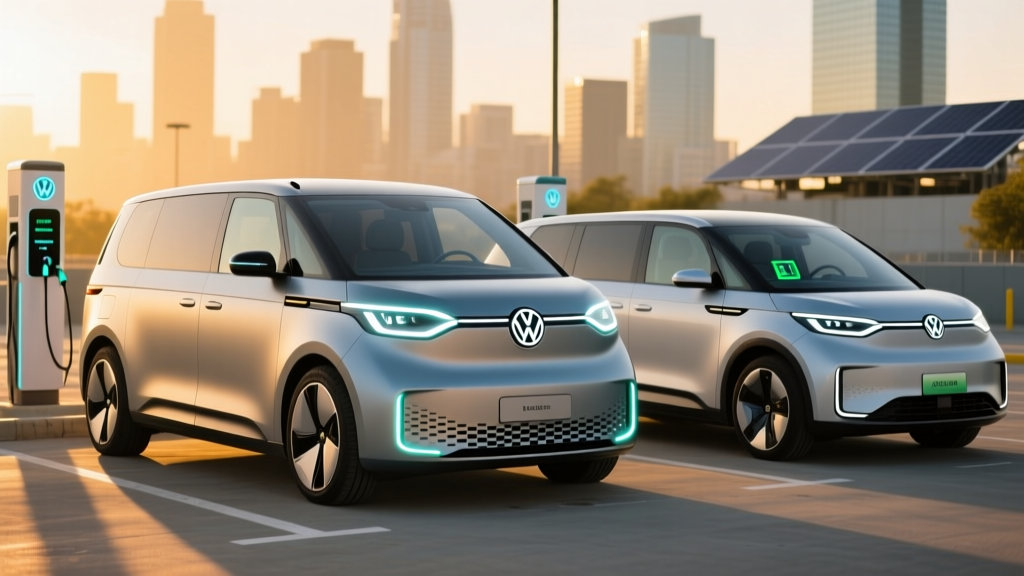
When Volkswagen launched the US-spec ID Buzz for the 2025 model year, it promised a retro-styled, three-row electric van that could serve as a family hauler, adventure rig, and daily commuter. By early 2026, Volkswagen confirmed what industry watchers had suspected: the VW ID Buzz discontinued status in the United States was official. VW cited a combination of softer-than-expected demand in the premium electric van segment, shifting US tariff conditions for imported vehicles, and the company's broader pivot toward its next-generation SSP-platform EVs.
For buyers who were researching the ID Buzz, the discontinuation raises immediate questions: Can you still buy one? What were its real specs and limitations? And what should you consider instead? This article breaks down everything about the ID Buzz's brief US run and maps out the 2026 alternatives.
2025 VW ID Buzz US-Spec: Full Specifications at a Glance
Before we get into the discontinuation details, here is the complete spec sheet for the US-market ID Buzz as it was sold for the 2025 model year. These figures reflect EPA testing and VW's official US press materials.
| Specification | ID Buzz Pro (RWD) | ID Buzz AWD (4Motion) |
|---|---|---|
| Drivetrain | Rear-Wheel Drive, single motor | Dual-Motor All-Wheel Drive |
| Horsepower | 282 hp | 335 hp |
| 0–60 mph | 7.9 sec | 5.7 sec |
| Usable Battery Capacity | 86 kWh (NMC) | 86 kWh (NMC) |
| EPA Estimated Range | 234 miles | 231 miles |
| MPGe (Combined) | 87 MPGe | 85 MPGe |
| Efficiency | 39 kWh/100 mi | 40 kWh/100 mi |
| Max DC Fast Charge Rate | 200 kW (peak) | 200 kW (peak) |
| 10–80% DC Fast Charge Time | ~26 minutes | ~26 minutes |
| Level 2 Home Charge Rate | 11 kW (AC) | 11 kW (AC) |
| Seating Capacity | 7 passengers (3 rows) | 7 passengers (3 rows) |
| Cargo Volume (behind 3rd row) | 16.3 cu ft | 16.3 cu ft |
| Cargo Volume (3rd row folded) | 75.5 cu ft | 75.5 cu ft |
| Base MSRP | $59,995 | $64,995 |
| Battery/Powertrain Warranty | 8 yr / 100,000 mi | 8 yr / 100,000 mi |
Sources: fueleconomy.gov, Volkswagen of America press materials.
Real-World Range: What 234 EPA Miles Actually Look Like
EPA Estimate: 234 miles (RWD) / 231 miles (AWD)
Real-World Highway (70 mph): Expect ~185–200 miles
Real-World Mixed Driving: Expect ~200–215 miles
Cold Weather (below 30°F): Expect ~165–185 miles (25–30% loss typical for NMC packs without aggressive preconditioning)
The ID Buzz's EPA range was one of its most criticized figures. At 234 miles for the RWD model, it fell well short of competitors like the Rivian R1T or even the Tesla Model X. The van's boxy aerodynamics — a drag coefficient around 0.29 — work against it at highway speeds, where wind resistance dominates energy consumption.
In real-world testing across multiple EV publications, the ID Buzz averaged roughly 2.4–2.6 miles per kWh in mixed suburban and highway driving. That translates to about 205–220 miles before needing to charge on a typical day. On sustained 70+ mph highway trips, efficiency dropped to around 2.0–2.2 mi/kWh, meaning a practical highway range closer to 185–200 miles. This is a critical consideration for road-trip-minded buyers.
Cold weather compounds the issue. The ID Buzz uses an NMC (nickel manganese cobalt) battery pack, which is more susceptible to low-temperature range loss than LFP chemistry. Without diligent use of the battery preconditioning feature — which the ID Buzz supports but requires manual activation via the infotainment system — winter range can dip to 165–185 miles. The van does include a heat pump, which helps cabin efficiency, but battery thermal management in cold conditions remains a weak point relative to vehicles with more advanced thermal systems like the Hyundai Ioniq 9 or Tesla Model X.
Charging Speed and Infrastructure: Adequate but Not Class-Leading
Charging speed is where many modern EV buyers scrutinize the numbers, and the ID Buzz delivers competent but unremarkable performance.
| Charging Level | Power | Estimated Rate | Notes |
|---|---|---|---|
| Level 1 (120V household) | ~1.4 kW | ~4–5 miles per hour | Emergency/top-up only; full charge takes ~60+ hours |
| Level 2 (240V home/public) | 11 kW (max) | ~35–38 miles per hour | Full 0–100% in ~9 hours; overnight home charging works well |
| DC Fast Charge (CCS) | 200 kW (peak) | 10–80% in ~26 min | Peak rate sustained only to ~40% SoC; tapers significantly above 80% |
The ID Buzz charges via the CCS1 connector (not NACS). This is a meaningful consideration in 2026, as the North American EV charging landscape has shifted heavily toward the Tesla NACS standard. While Electrify America, EVgo, and ChargePoint CCS stations remain widely available, new installations increasingly favor NACS. VW has not announced a NACS retrofit adapter for the ID Buzz, though third-party CCS-to-NACS adapters exist.
The DC fast-charging curve is where the ID Buzz shows its age. While VW advertises a 200 kW peak, that rate holds only briefly — typically from around 10% to 35–40% State of Charge (SoC). Above 50%, the rate drops to roughly 120–140 kW, and above 80% it falls below 50 kW. This means the published 10–80% time of 26 minutes is achievable under ideal conditions (warm battery, preconditioned), but a 10–90% charge will take closer to 40–45 minutes. For road trippers, this means planning longer stops than you would in a Hyundai Ioniq 5 (which sustains higher rates thanks to its 800V architecture) or a Tesla Model X.
At home, the 11 kW Level 2 onboard charger is solid. On a 48-amp Level 2 circuit (the most common home installation), you'll add roughly 35–38 miles of range per hour, meaning a depleted battery reaches full overnight in about 9 hours. Home charging is where the ID Buzz works best — plug in when you get home, wake up to a full battery every morning.
Performance, Ride, and the 335-hp AWD Option
The US-spec ID Buzz offered two powertrain configurations. The base Pro model uses a single rear-mounted motor producing 282 hp and 339 lb-ft of torque, achieving a 0–60 mph time of 7.9 seconds. That's perfectly adequate for a family van — merging onto highways and navigating city traffic feels effortless thanks to instant electric torque.
The AWD (4Motion) variant adds a front motor for a combined 335 hp and 406 lb-ft, dropping the 0–60 time to 5.7 seconds. This is genuinely quick for a 5,700-pound van and makes the AWD model feel surprisingly agile. The dual-motor setup also improves traction in rain and light snow, a practical benefit for northern-climate buyers.
Ride quality was a highlight in reviews. The ID Buzz sits on VW's MEB platform with a long 127.5-inch wheelbase, which smooths out road imperfections effectively. The steering is light and precise, and the turning radius is surprisingly tight for a vehicle this size. However, the van's height (76.2 inches) and weight mean noticeable body roll in corners — this is a comfortable cruiser, not a sporty handler.
Regenerative braking offers two modes: a coasting "D" mode and a stronger "B" mode that approaches one-pedal driving but doesn't bring the van to a complete stop. This is a missed opportunity; competitors like the Kia EV9 offer true one-pedal driving with full stop-and-hold capability.
Pricing, Tax Credits, and the Total Cost Picture
The ID Buzz was positioned as a premium electric van, and its pricing reflected that. Here's how the MSRP broke down by trim at launch:
| Trim | Drivetrain | MSRP | Destination | Total Before Incentives |
|---|---|---|---|---|
| Pro S | RWD | $59,995 | $1,395 | $61,390 |
| Pro S Plus | RWD | $63,495 | $1,395 | $64,890 |
| Pro S Plus 4Motion | AWD | $67,995 | $1,395 | $69,390 |
| 1st Edition | AWD | $69,995 | $1,395 | $71,390 |
Federal Tax Credit Eligibility (§30D)
The ID Buzz's eligibility for the IRS §30D federal EV tax credit was complicated and ultimately a disadvantage:
- MSRP Cap: The ID Buzz qualifies under the van/SUV MSRP cap of $80,000, so all trims pass this test.
- Buyer Income Cap: Adjusted gross income must not exceed $150,000 (single), $225,000 (head of household), or $300,000 (joint filers).
- Battery Sourcing / Critical Minerals: This was the sticking point. The ID Buzz was manufactured in Hanover, Germany, and its battery cell sourcing did not consistently meet the critical-mineral and battery-component requirements that tightened through 2024–2025. As a result, the ID Buzz did not reliably qualify for the full $7,500 credit — many buyers received either a partial credit or none at all, depending on the production batch and the sourcing rules in effect at time of purchase.
- Point-of-Sale Transfer: Where eligible, buyers could apply the credit as a point-of-sale reduction rather than waiting for a tax refund.
This inconsistent tax credit eligibility was a significant competitive disadvantage against domestically assembled rivals like the Rivian R1S or the Kia EV9 (assembled in Georgia), which more reliably qualified for the full credit.
Interior, Tech, and What Owners Actually Liked (and Didn't)
The ID Buzz's interior was both its greatest strength and the source of its most frustrating compromises.
Standout Features
- Retro-modern design: Two-tone paint options, V-shaped front lighting signature, and a cabin with warm, sustainable materials (recycled plastics, no leather standard) gave the ID Buzz a personality no competitor matched.
- Spacious cabin: With 7-passenger seating across three rows and generous headroom (41.5 inches front, 39.8 inches second row), the ID Buzz accommodated adults in all three rows — a rarity. Third-row legroom measured 35.4 inches, genuinely usable for adults on shorter trips.
- Sliding second-row bench: The second row slid fore/aft by 7.9 inches, letting owners prioritize either second-row legroom or cargo space behind the third row.
- Power-sliding doors: Standard on Pro S Plus and above, with kick-sensor opening — invaluable for parents loading kids with arms full.
- ID. Light: A thin LED strip across the dashboard that communicates navigation prompts, charging status, and driver-assist alerts with ambient color changes.
Notable Drawbacks
- Infotainment frustrations: The 12.9-inch touchscreen ran VW's ID.Software 4.0, which was improved over earlier ID.4 versions but still drew criticism for capacitive-touch sliders (volume and temperature) that lacked backlighting and were difficult to use while driving. No physical knobs.
- Limited cargo space behind 3rd row: At 16.3 cu ft, the area behind the third row was tight for a van this size — enough for a few grocery bags or a stroller, but not the cavernous space the exterior dimensions suggest. Competitors like the Chrysler Pacifica Hybrid offer 32.3 cu ft in the same area.
- No front trunk (frunk): The MEB platform's front-end packaging left no room for a frunk, a missed storage opportunity.
- Driver assists were Level 2 only: VW's IQ.DRIVE suite includes adaptive cruise control, lane-keeping assist, and automatic emergency braking — all competent SAE Level 2 features. But there was no hands-free driving capability comparable to GM's Super Cruise or Ford's BlueCruise. For a $65,000+ van in 2025–2026, this felt like a gap.
- Distinctive retro design with genuine personality
- Comfortable, spacious 7-passenger cabin
- Strong AWD performance option (335 hp, 5.7s 0–60)
- Excellent ride quality for a large van
- Tight turning radius for its size
- Sustainable interior materials
- EPA range of 231–234 miles is below segment average
- Real-world highway range drops to ~185–200 miles
- Inconsistent federal tax credit eligibility
- CCS-only charging in an increasingly NACS world
- Small cargo area behind third row (16.3 cu ft)
- Capacitive-touch controls frustrate daily use
- No hands-free highway driving assist
Why Was the VW ID Buzz Discontinued in the US?
Volkswagen's decision to discontinue the US-spec ID Buzz after a single model year stemmed from several converging factors:
- Import tariff exposure: The ID Buzz was built in Hanover, Germany. US tariffs on imported vehicles — which shifted through 2025 — added cost pressure that VW could not absorb without further eroding margins on an already expensive vehicle.
- Soft sales volume: Despite strong initial enthusiasm and media attention, actual deliveries fell below VW's internal projections. The $60,000+ starting price, combined with sub-235-mile range and uncertain tax credit eligibility, limited the buyer pool.
- Platform transition: VW is investing heavily in its next-generation SSP (Scalable Systems Platform), which promises 800V architecture, faster charging, and improved range. The MEB-based ID Buzz did not align with this long-term roadmap.
- Competitive pressure: The Kia EV9 (starting ~$54,900, EPA range up to 304 miles, assembled in Georgia) and Hyundai Ioniq 9 offered more range, more competitive pricing, and stronger tax credit eligibility in the 3-row electric SUV segment that overlaps heavily with the ID Buzz's buyer profile.
VW has not announced a direct US replacement for the ID Buzz. The company has indicated that a future SSP-based electric van or large SUV may eventually serve this segment, but no timeline or specifications have been confirmed for the US market.
2026 Alternatives: What to Buy Instead
If you were considering the ID Buzz, here are the most relevant alternatives available in 2026, with key comparison specs:
| Vehicle | EPA Range | Battery | Max DC Charge | 0–60 mph | Starting MSRP | §30D Credit |
|---|---|---|---|---|---|---|
| Kia EV9 (LR RWD) | 304 mi | 100 kWh (NMC) | 238 kW | 8.2 sec | ~$54,900 | Eligible (GA assembly) |
| Hyundai Ioniq 9 (LR RWD) | ~310 mi | 110.3 kWh (NMC) | ~350 kW (800V) | ~7.5 sec | ~$56,000 | Eligible (GA assembly) |
| Tesla Model X (LR) | 335 mi | ~100 kWh (NMC) | 250 kW | 3.8 sec | ~$79,990 | Eligible (Fremont) |
| Rivian R1S (Dual-Motor) | ~330 mi (Max Pack) | ~141 kWh (Max) | ~220 kW | 4.5 sec | ~$75,900 | Partial / varies |
Pricing and credit eligibility subject to change; verify at irs.gov.
- Choose the Kia EV9 if: You want the closest functional replacement for the ID Buzz — 3 rows, strong range, better tax credit access, and a lower starting price. It's the pragmatic choice.
- Choose the Hyundai Ioniq 9 if: You prioritize the fastest charging in the segment (800V architecture) and want maximum range with a premium interior.
- Choose the Tesla Model X if: You need Supercharger network access, Falcon Wing doors for tight parking, and the longest EPA range, and you're willing to pay near the $80K MSRP cap.
- Choose the Rivian R1S if: You want genuine off-road capability, a Max Pack battery option, and a more adventure-oriented platform — and you can absorb the higher price.
- Buy a remaining ID Buzz if: You find a dealer discount that compensates for the range limitation and you prioritize the unique design and van-style cabin over pure specs. Verify tax credit eligibility with your dealer and tax professional before committing.
Frequently Asked Questions
Can I still buy a VW ID Buzz in 2026?
Remaining new inventory may be available at select VW dealerships, though supply is dwindling following the discontinuation announcement. VW continues to honor the 8-year/100,000-mile battery and powertrain warranty, and service/parts support is guaranteed. Certified pre-owned ID Buzz vehicles will also begin appearing as early leases expire. If you find one at a dealer, negotiate aggressively — discontinuation typically means steep discounts on remaining stock.
What is the real-world range of the VW ID Buzz?
The EPA rates the RWD model at 234 miles and the AWD at 231 miles. In real-world mixed driving, expect roughly 200–215 miles. Highway-only driving at 70+ mph drops this to approximately 185–200 miles. Cold weather (below 30°F) can reduce range to 165–185 miles. These figures are below the segment average for 3-row electric vehicles.
How fast does the ID Buzz charge at home and on DC fast chargers?
On a Level 2 home charger (240V, 48A), the ID Buzz accepts up to 11 kW AC, adding about 35–38 miles of range per hour and reaching a full charge in roughly 9 hours. On a DC fast charger, it peaks at 200 kW, achieving a 10–80% charge in approximately 26 minutes under ideal conditions. However, the charge curve tapers significantly above 50% SoC, and a 10–90% session takes closer to 40–45 minutes. The ID Buzz uses the CCS1 connector, not NACS.
Does the VW ID Buzz qualify for the federal EV tax credit?
Eligibility under IRS §30D was inconsistent. While the ID Buzz passes the $80,000 MSRP cap for vans/SUVs and buyer income limits may apply, its German-built battery and critical-mineral sourcing did not reliably meet the full requirements. Many buyers received a partial credit or none. Always verify eligibility for your specific vehicle's VIN with your dealer and consult a tax professional before relying on the credit.
Is the VW ID Buzz worth buying vs. the Kia EV9 or Hyundai Ioniq 9?
For most buyers, the Kia EV9 and Hyundai Ioniq 9 are stronger choices: more range (300+ miles EPA), faster charging, lower starting prices, and more reliable federal tax credit eligibility thanks to US assembly. The ID Buzz's primary advantage is its unique van design, retro styling, and flat-floor cabin that some buyers prefer over SUV configurations. If those design elements are a priority and you find a steep dealer discount, a remaining ID Buzz could still be a satisfying purchase — but understand the range and charging trade-offs.
Will VW release a replacement electric van for the US market?
Volkswagen has not announced a direct US successor to the ID Buzz. The company's next-generation SSP platform, expected to underpin future VW EVs from the late 2020s onward, could support a new electric van or large SUV. However, no timeline, specifications, or US market confirmation has been provided. For now, the ID Buzz's discontinuation leaves VW without a 3-row electric people-mover in its US lineup.