Quick Verdict: The Sensible Electric SUV Done Right
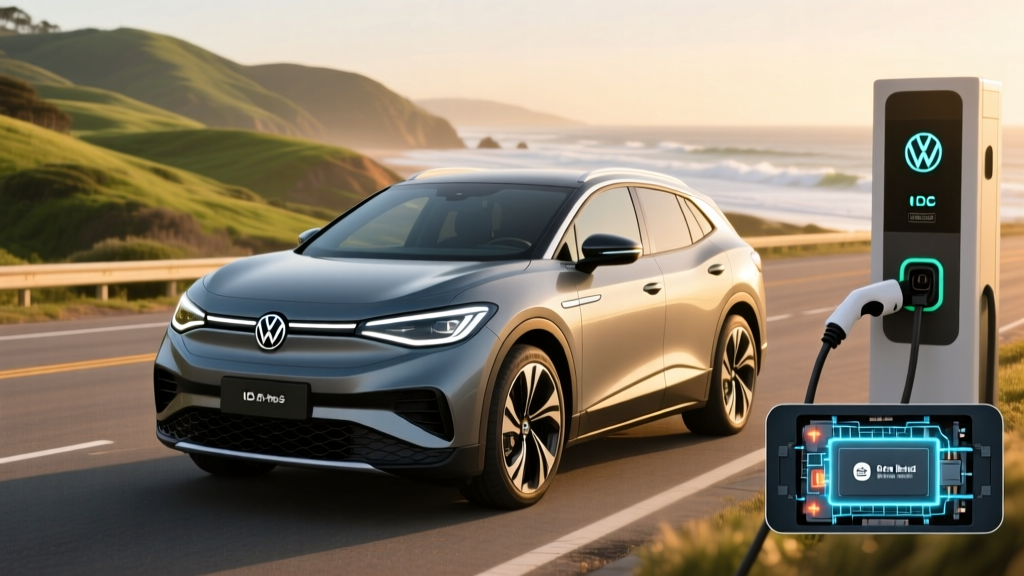
The Volkswagen ID.4 Pro S occupies a specific niche in the EV market: it's the practical, no-drama family crossover that prioritizes ride comfort, interior space, and straightforward usability over headline-grabbing performance numbers. For 2026, VW has refined the formula with updated infotainment software, improved charging speeds, and the continued availability of the 82 kWh (usable) NMC battery pack. The Pro S trim — sitting above the base Pro but below the Pro S Plus — delivers the best value-to-feature ratio in the ID.4 lineup for buyers who want premium touches without paying for every available option.
After spending time with the ID.4 Pro S in mixed driving conditions, the verdict is clear: this is a competent, comfortable electric SUV that excels as a daily commuter and family hauler, with enough range and charging capability for road trips — provided you plan around its 175 kW peak DC fast-charging ceiling, which trails competitors like the Hyundai Ioniq 5 and Tesla Model Y.
EPA Range vs. Real-World Expectations
The 2026 VW ID.4 Pro S with rear-wheel drive carries an EPA-estimated range of 291 miles on a full charge. The AWD Pro S variant drops to approximately 263 miles due to the added weight and energy consumption of the front motor. These figures come from the ID.4's 82 kWh usable battery pack (91 kWh gross), which uses nickel-manganese-cobalt (NMC) lithium-ion chemistry supplied primarily by SK On.
EPA estimates assume a mix of city and highway driving at moderate temperatures. In real-world testing:
• Highway (70-75 mph, fair weather): Expect 245-265 miles for RWD; 220-240 miles for AWD
• City/suburban mixed: 275-290 miles achievable with regenerative braking
• Cold weather (below 32°F): Range drops 20-30% — budget for 185-210 miles on RWD in freezing highway conditions
• Heat pump (standard on Pro S): Reduces cold-weather cabin-heating energy draw, partially mitigating winter range loss
The ID.4's efficiency lands at approximately 104 MPGe combined (RWD), translating to about 32 kWh per 100 miles. That's middling for the segment — the Tesla Model Y achieves roughly 120 MPGe combined, while the Hyundai Ioniq 5 hits around 114 MPGe. The VW's heavier curb weight (~4,600 lbs for RWD) and less aerodynamic profile explain the gap.
| Spec | RWD Pro S | AWD Pro S |
|---|---|---|
| EPA Range | 291 miles | 263 miles |
| Battery (usable / gross) | 82 kWh / 91 kWh (NMC) | 82 kWh / 91 kWh (NMC) |
| Horsepower | 282 hp | 335 hp |
| 0-60 mph | 7.3 sec | 5.4 sec |
| Max DC Fast Charge | 175 kW | 175 kW |
| 10-80% DCFC Time | ~28 min | ~28 min |
| Level 2 Charge Rate | 11 kW (~37 mi/hr) | 11 kW (~37 mi/hr) |
| Efficiency (combined) | 104 MPGe / 32 kWh/100mi | 95 MPGe / 35 kWh/100mi |
| Base MSRP | $43,690 | $47,690 |
Charging Speed: DC Fast, Level 2, and the Charge Curve Reality
Charging is where the ID.4 Pro S is adequate rather than exceptional. The maximum DC fast-charging rate is 175 kW, which Volkswagen says enables a 10-80% charge in approximately 28 minutes under optimal conditions (battery preconditioned, ambient temperature 65-85°F, connected to a 350 kW-capable station).
Here's what the charge curve actually looks like in practice:
- 10-30% SoC: Sustains near peak 170-175 kW
- 30-60% SoC: Gradually tapers from ~165 kW down to ~130 kW
- 60-80% SoC: Further taper to ~90-100 kW
- Above 80% SoC: Sharp drop to ~50 kW and below — avoid charging past 80% on road trips unless necessary
Compared to the Hyundai Ioniq 5's 800V architecture (which peaks at 240 kW and holds higher rates longer), the ID.4's 400V system is a generation behind. On a real road trip, this means roughly 5-8 extra minutes per charging stop — not catastrophic, but noticeable over a 600-mile drive with two stops.
For home Level 2 charging, the ID.4 Pro S accepts up to 11 kW on a 48-amp, 240V circuit. This adds approximately 37 miles of range per hour, meaning a full 0-100% charge takes about 8.5-9 hours — easily achievable overnight on a standard home Level 2 installation. A 200-amp home electrical panel is typically sufficient; no panel upgrade required for most homes.
The ID.4 uses the CCS1 connector for DC fast charging and the J1772 connector for Level 1/Level 2 AC charging. Volkswagen has not yet transitioned the ID.4 to the NACS (Tesla-style) connector, though an adapter for Tesla Supercharger access is expected to be offered. This is worth monitoring, as Tesla's Supercharger network remains the most reliable public charging infrastructure in the US.
Performance and Driving Impressions
The RWD ID.4 Pro S produces 282 horsepower from its single rear-mounted permanent-magnet synchronous motor, achieving a 0-60 mph time of 7.3 seconds. The AWD Pro S adds a front AC induction motor for a combined 335 horsepower and a more brisk 5.4-second 0-60 time.
Neither variant is a performance vehicle by EV standards — the Tesla Model Y Long Range AWD hits 60 mph in about 4.8 seconds, and the Ford Mustang Mach-E GT does it in roughly 3.5 seconds. But the ID.4 isn't trying to be a sports crossover. What it delivers instead is:
- Ride quality: Soft, compliant suspension tuning that absorbs road imperfections better than most competitors. This is the ID.4's strongest dynamic trait.
- Steering: Light and numb — acceptable for commuting, uninspiring on back roads.
- Regenerative braking: The ID.4 offers adjustable regen via steering-wheel paddles (D, B modes), but it does not provide true one-pedal driving to a complete stop in D mode. You'll still use the friction brake regularly.
- NVH (noise, vibration, harshness): Impressively quiet cabin at highway speeds, with minimal wind and road noise.
Towing capacity is rated at 2,700 lbs for the AWD model (1,600 lbs for RWD). That's enough for a small utility trailer or a pair of dirt bikes, but it falls well short of the Ford F-150 Lightning or Rivian R1S for serious towing duty.
Interior Space, Cargo, and Daily Livability
The ID.4 rides on VW's MEB platform, which provides a flat floor and generous interior packaging. Passenger and cargo dimensions are a genuine strength:
- Cargo volume (behind rear seats): 30.3 cubic feet
- Cargo volume (rear seats folded): 64.2 cubic feet
- Front headroom: 41.1 inches
- Rear legroom: 37.6 inches
- Front legroom: 40.9 inches
These numbers make the ID.4 competitive with the Toyota RAV4 and Honda CR-V for interior space, and it edges out the Hyundai Ioniq 5 on cargo volume (30.3 vs. 27.2 cu ft behind the rear row). There is no front trunk (frunk) — a missed opportunity given the MEB platform's architecture, though VW uses that space for electronics and HVAC components.
The Pro S trim adds premium touches over the base Pro: heated front seats, a panoramic fixed glass roof, leatherette (SofTex-style) upholstery, a heated steering wheel, and ambient interior lighting. The 12.9-inch central touchscreen runs VW's updated ID.Software 4.0, which has improved responsiveness and menu logic over earlier model years, though it still trails the intuitiveness of Tesla's or Hyundai's interfaces. Wireless Apple CarPlay and Android Auto are standard.
Pricing, Trim Levels, and Federal Tax Credit Eligibility
The 2026 VW ID.4 lineup is structured across several trims. Here's where the Pro S sits:
| Trim | RWD MSRP | AWD MSRP | Key Additions Over Prior Trim |
|---|---|---|---|
| Standard Range | $37,735 | N/A | 62 kWh battery, 206 mi range, basic features |
| Pro | $40,290 | $44,290 | 82 kWh battery, 291 mi range, 12.9" screen |
| Pro S | $43,690 | $47,690 | Panoramic roof, heated seats/steering, ambient lighting |
| Pro S Plus | $47,690 | $51,690 | Ventilated seats, premium audio, Area View cameras |
All prices include destination charge. Prices reflect 2026 MSRP as published by Volkswagen.
The VW ID.4 may qualify for up to $7,500 in federal tax credits under IRS §30D, but eligibility depends on multiple requirements:
- MSRP cap: SUVs must have an MSRP ≤ $80,000 — all ID.4 trims qualify ✓
- Buyer income cap: AGI ≤ $150,000 (single) / $300,000 (joint) / $225,000 (head of household)
- Battery sourcing: Critical minerals and battery components must meet phased-in domestic/FTEA sourcing thresholds per the Inflation Reduction Act — VW has been working to qualify US-built ID.4s (Chattanooga, TN assembly), but verify current-year compliance on the IRS qualified vehicles list before purchasing
- Point-of-sale transfer: As of 2024+, eligible buyers can transfer the credit to the dealer at purchase, reducing the out-of-pocket price immediately rather than waiting for tax filing
Driver Assistance and Technology
The ID.4 Pro S comes equipped with Volkswagen's IQ.DRIVE suite of Level 2 driver-assistance features. This includes:
- Travel Assist: Adaptive cruise control with lane-centering — functional on highways but requires hands on the steering wheel (capacitive detection). This is SAE Level 2 — the driver must remain fully engaged and is responsible for the vehicle at all times.
- Front Assist: Automatic emergency braking with pedestrian detection
- Lane Assist: Lane-keeping assistance
- Side Assist: Blind-spot monitoring with rear cross-traffic alert
- Park Assist Plus: Automated parking assistance (available on Pro S Plus)
VW's Travel Assist is a Level 2 driver-assist system, not autonomous or self-driving. It does not handle complex urban scenarios, construction zones, or adverse weather reliably. The driver must maintain hands-on-wheel contact and full situational awareness at all times.
The IQ.DRIVE system is competent but unremarkable compared to Ford's BlueCruise (which allows hands-free driving on pre-mapped highways) or GM's Super Cruise. VW's lane-centering can feel slightly tentative on curves, and the system occasionally requests steering-wheel confirmation more frequently than competitors. It's safe and functional — it just doesn't feel like a technology leader.
Warranty and Long-Term Battery Outlook
Volkswagen backs the ID.4 with competitive warranty coverage:
- Basic vehicle warranty: 4 years / 50,000 miles
- Battery & powertrain warranty: 8 years / 100,000 miles — covers the high-voltage battery against defects and excessive capacity loss (below 70% state of health)
- Roadside assistance: 4 years / 50,000 miles
The 8-year/100,000-mile battery warranty is standard for the segment and aligns with DOC/EPA guidance on EV battery longevity expectations. The NMC chemistry in the ID.4 has demonstrated moderate degradation rates in real-world fleet data — expect approximately 5-8% capacity loss over the first 100,000 miles under normal use. VW's thermal management system (liquid cooling and heating) helps mitigate degradation by keeping the battery in its optimal temperature window.
For long-term ownership, the Chattanooga-built ID.4 benefits from a growing US parts and service network, though VW's EV-specific technician training still lags behind Tesla's vertically integrated service model. Plan for potentially longer service wait times compared to legacy brands with deeper EV service experience.
Pros, Cons, and Who Should Buy
- Comfortable, quiet ride quality — best-in-class for comfort
- Spacious cabin: 30.3 cu ft cargo, generous rear legroom
- Strong value with tax credit: ~$36K effective price for Pro S RWD
- Heat pump standard (reduces winter range loss)
- Competitive 291-mile EPA range (RWD)
- US-built (Chattanooga, TN) — supports domestic manufacturing and tax credit eligibility
- 175 kW peak DC charging trails competitors (Ioniq 5: 240 kW; Model Y: 250 kW)
- No frunk (front trunk)
- Infotainment still lags rivals in responsiveness and UX design
- Regen braking doesn't enable full one-pedal driving to a stop
- AWD towing limited to 2,700 lbs
- CCS1 connector — no native NACS/Tesla Supercharger access yet
- Choose the ID.4 Pro S if: You prioritize ride comfort and interior space over charging speed and tech innovation; you want a US-built EV likely eligible for the full $7,500 credit; your daily commute is under 80 miles round-trip with home charging available.
- Look elsewhere if: You take frequent long road trips and want the fastest possible DC charging (consider Ioniq 5 or Model Y); you need hands-free highway driving (BlueCruise/Super Cruise); you require a frunk or maximum cargo versatility.
Frequently Asked Questions
What is the real-world range of the VW ID.4 Pro S?
The EPA rates the RWD ID.4 Pro S at 291 miles. In real-world highway driving at 70-75 mph in fair weather, expect 245-265 miles. Cold weather (below freezing) reduces this to roughly 185-210 miles. The AWD variant delivers approximately 263 miles EPA, with real-world highway range of 220-240 miles.
How fast does the ID.4 Pro S charge at home and on DC fast chargers?
On a DC fast charger, the ID.4 Pro S peaks at 175 kW and charges from 10-80% in approximately 28 minutes under optimal conditions. At home on a Level 2 (240V, 48A) charger, it accepts up to 11 kW, adding roughly 37 miles of range per hour and achieving a full charge in about 8.5-9 hours.
How much does the VW ID.4 Pro S cost after the federal tax credit?
The 2026 ID.4 Pro S RWD starts at $43,690 MSRP. If you qualify for the full $7,500 federal tax credit under IRS §30D (income limits, battery sourcing compliance, and MSRP cap all met), the effective price drops to approximately $36,190. The AWD Pro S at $47,690 would drop to about $40,190. Always verify current-year eligibility on the IRS qualified clean vehicles page and consult a tax professional.
Is the VW ID.4 Pro S worth buying over the Tesla Model Y or Hyundai Ioniq 5?
It depends on your priorities. The ID.4 Pro S wins on ride comfort, interior quietness, and likely tax-credit eligibility at a competitive price. The Tesla Model Y wins on charging speed (250 kW), Supercharger network access, efficiency (120 MPGe), and software/tech. The Hyundai Ioniq 5 wins on DC charging speed (240 kW via 800V architecture) and design, though it offers less cargo space. If comfort and value are paramount, the ID.4 is a strong pick. If charging speed and tech matter more, look at the Model Y or Ioniq 5.
Does the 2026 VW ID.4 qualify for the federal EV tax credit?
The Chattanooga, Tennessee-built ID.4 has been positioned to qualify for up to $7,500 under §30D, but eligibility depends on current-year battery sourcing requirements (critical minerals and components thresholds that phase in annually), buyer income caps, and the $80,000 MSRP cap for SUVs. Check the IRS qualified vehicles list for the specific model year and trim before purchasing, as sourcing compliance can change.
What is the ID.4 Pro S battery warranty?
Volkswagen covers the ID.4's high-voltage battery for 8 years or 100,000 miles, whichever comes first. The warranty covers defects and capacity degradation below 70% state of health. The basic vehicle warranty is 4 years / 50,000 miles.