Quick Verdict: The Pragmatic Dual-Motor Crossover
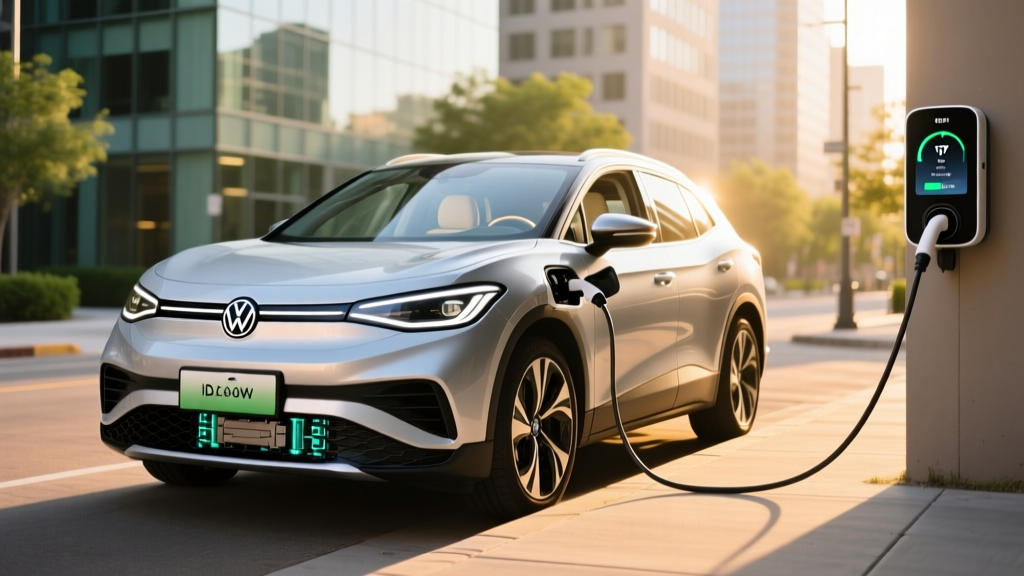
The Volkswagen ID.4 AWD occupies a specific niche in the 2026 compact electric SUV market: it's the all-weather, all-road commuter that doesn't try to be a luxury statement or a performance machine. With dual-motor traction, usable cargo volume, and a starting price that undercuts many rivals, the ID.4 AWD is engineered for buyers who need all-wheel-drive capability without paying a premium badge tax. But its conservative charging speeds, average infotainment execution, and real-world range that falls short of its EPA sticker mean buyers should go in with clear expectations.
For 2026, Volkswagen continues the ID.4 AWD with the 82 kWh (usable) battery pack and the dual-motor powertrain producing 295 horsepower. Minor software refinements and a streamlined trim structure carry over from the previous model year. If you live where winters bite or your commute includes unpaved or hilly stretches, the AWD variant earns its $3,400–$4,000 premium over the rear-wheel-drive ID.4. If you're strictly a Sun Belt highway commuter, the RWD model offers more range for less money.
Range, Efficiency, and Real-World Expectations
The 2026 VW ID.4 AWD carries an EPA-estimated range of 263 miles on a full charge (AWD Pro S trim on 19-inch wheels). The base AWD Pro with 20-inch wheels drops slightly to approximately 255 miles. Efficiency is rated at 104 MPGe combined, translating to roughly 32 kWh per 100 miles.
Real-World Range Reality Check
EPA Sticker: 263 miles (AWD Pro S, 19" wheels)
Expect in mixed driving: 235–250 miles in temperate conditions at moderate speeds.
Highway-heavy trips (70–80 mph): Plan for 210–230 miles before needing a charge stop. Aerodynamic drag hits this bluff-profile SUV harder than sleeker crossovers.
Cold weather (below 30°F): Expect 175–200 miles of usable range. The ID.4 AWD lacks a standard heat pump in the U.S. market — cabin heating draws directly from the traction battery, and that energy penalty is significant. Preconditioning while plugged in mitigates some of this loss.
Bottom line: The 263-mile EPA figure is achievable in ideal city/suburban conditions. For road-trip planning, budget 200–220 miles between DC fast-charge stops to stay in the battery's fast-charging sweet spot and avoid range stress.
The 82 kWh usable battery uses NMC (nickel manganese cobalt) chemistry, which delivers higher energy density than LFP alternatives. This means more range in a physically smaller, lighter pack — but NMC cells are more sensitive to prolonged 100% states of charge. VW recommends setting the daily charge limit to 80% for routine use and reserving 100% for road-trip departure days.
Charging Speeds: DC Fast Charge and Home Level 2
Charging is where the ID.4 AWD reveals its MEB-platform roots — competent but not class-leading. Here's the full breakdown:
| Charging Level | Power / Rate | Time / Miles Added | Notes |
|---|---|---|---|
| Level 1 (120V household) | ~1.4 kW | ~3–4 miles per hour | Emergency/top-up only; full charge takes 3+ days |
| Level 2 (240V home, 48A) | 11 kW (onboard charger max) | ~33 miles per hour; 0–100% in ~8.5 hours | Requires a hardwired 60A circuit or high-amperage EVSE |
| Level 2 (240V, 32A) | ~7.7 kW | ~23 miles per hour; 0–100% in ~11 hours | Standard NEMA 14-50 outlet on a 40A circuit |
| DC Fast Charge (CCS) | Peak 175 kW | 10–80% in ~30 minutes | Peak rate is brief; sustained average ~110–120 kW |
Charging curve reality: The 175 kW peak only holds from roughly 5% to about 25–30% state of charge. After that, the rate tapers progressively — by 60% SoC you're seeing ~100 kW, and above 80% the rate drops to under 50 kW. This is typical for MEB-platform vehicles but falls behind Hyundai/Kia's E-GMP architecture (which sustains higher rates longer and achieves 10–80% in ~18 minutes on 350 kW chargers).
For home charging, the ID.4's 11 kW onboard AC charger is a genuine advantage over rivals limited to 7.7 kW. If your electrical panel supports a 60A dedicated circuit, you can fully replenish the 82 kWh pack overnight in about 8.5 hours — practical for daily commuters who plug in each evening.
The ID.4 AWD uses the CCS1 connector for DC fast charging and the J1772 connector for AC. Volkswagen has announced future NACS adoption, but 2026 models still ship with CCS1. A CCS-to-NACS adapter (available from Tesla and third parties) grants access to Tesla Supercharger V3 stalls, though charging speeds may be limited by the adapter's throughput.
Performance and Drivetrain
| Specification | 2026 VW ID.4 AWD |
|---|---|
| Drivetrain | Dual-motor AWD (front induction + rear permanent-magnet) |
| Horsepower | 295 hp (combined) |
| Torque | 339 lb-ft |
| 0–60 mph | 5.4 seconds (manufacturer) |
| Top Speed | 112 mph (electronically limited) |
| Towing Capacity | 2,700 lbs (with factory hitch) |
| Battery (usable) | 82 kWh, NMC chemistry |
| EPA Range | 263 mi (Pro S, 19") / 255 mi (Pro, 20") |
| EPA Efficiency | 104 MPGe combined / 32 kWh/100 mi |
| Max DC Charge Rate | 175 kW (CCS1) |
| 10–80% DC Charge | ~30 minutes |
| AC Onboard Charger | 11 kW |
| Cargo Volume | 30.3 cu ft (rear seats up) / 64.2 cu ft (rear seats folded) |
| Rear Legroom | 37.6 inches |
| Front Headroom | 41.1 inches |
| Curb Weight | ~4,765 lbs |
| Battery Warranty | 8 years / 100,000 miles (70% capacity retention) |
| Vehicle Warranty | 4 years / 50,000 miles bumper-to-bumper |
The dual-motor AWD system uses an asynchronous induction motor on the front axle and a permanent-magnet synchronous motor on the rear. Under light-load cruising, the front motor decouples entirely to eliminate drag losses — this is why the AWD range penalty versus RWD is relatively modest (~20 miles). When traction is needed, the front motor engages in milliseconds.
The 5.4-second 0–60 time is brisk for a family crossover but won't embarrass anyone at a merge. The ID.4 AWD prioritizes ride comfort over sporty dynamics: the suspension is compliant, steering is light and accurate, and the low center of gravity (battery pack under the floor) keeps body roll controlled through corners. This is a confident all-conditions daily driver, not a canyon carver.
Regenerative braking offers two modes via the gear selector: D (coast-focused, minimal regen) and B (stronger regen, approaching one-pedal driving in city traffic). Unlike some competitors, the ID.4 does not come to a complete stop in B mode — you still need the brake pedal for the final few mph.
Interior, Technology, and Driver Assistance
The ID.4's cabin is minimalist in the VW tradition — clean lines, soft-touch materials on upper surfaces, and a floating 12.9-inch infotainment touchscreen (Pro S and above; 10.3-inch on base Pro). Physical buttons are scarce: climate controls and volume use capacitive-touch sliders that can be finicky to operate while driving. The 2026 model year carries over the updated ID.Software 4.0, which improved responsiveness and added wireless wireless Apple CarPlay and Android Auto over earlier versions.
Standout tech features:
- IQ.DRIVE suite: Includes Travel Assist (adaptive cruise + lane centering, SAE Level 2), Front Assist with automatic emergency braking, Lane Assist, and Park Assist Plus with memory parking.
- ID. Light: An LED strip at the base of the windshield that communicates navigation prompts, charging status, and incoming calls through color-coded animations. Genuinely useful once you learn the visual language.
- Augmented-reality head-up display (Pro S Plus): Projects navigation arrows and speed onto the windshield with convincing depth alignment to the road ahead.
- Panoramic fixed glass roof with an electrochromic dimming panel (Pro S and above) — eliminates the need for a physical shade.
Notable drawbacks:
- Capacitive-touch steering wheel controls and climate sliders are a persistent frustration for owners accustomed to tactile buttons.
- No front trunk (frunk) — the space under the hood houses the front motor and power electronics.
- Rear-seat USB-C ports are present but there's no rear climate zone control.
- Voice assistant comprehension lags behind Google Built-in systems found in competitors like the Hyundai Ioniq 5 and Volvo EX30.
Driver Assistance: SAE Level 2 — Not Self-Driving
VW's IQ.DRIVE and Travel Assist are SAE Level 2 driver-assistance systems. They can manage steering, acceleration, and braking on highways — but the driver must remain fully attentive, keep hands on or near the wheel, and be prepared to take over instantly. This is not autonomous driving. No 2026 consumer vehicle sold in the U.S. offers hands-off, eyes-off self-driving capability.
Pricing, Trims, and Federal Tax Credit Eligibility
The 2026 VW ID.4 AWD is offered in three trims. Pricing below reflects MSRP before destination charges (~$1,395) and before any incentives:
| Trim | MSRP | Key Features | Est. Price After §30D Credit* |
|---|---|---|---|
| AWD Pro | $46,890 | 10.3" screen, heated seats, 20" alloy wheels, IQ.DRIVE | ~$39,390 |
| AWD Pro S | $51,490 | 12.9" screen, panoramic roof, power liftgate, 19" wheels | ~$43,990 |
| AWD Pro S Plus | $55,890 | AR head-up display, ventilated seats, premium audio, 20" wheels | ~$48,390 |
*Tax credit estimates assume full eligibility under IRS §30D rules. Actual credit depends on your income, the vehicle's battery component and critical-mineral sourcing, and MSRP caps. Always verify with a tax professional and consult the latest IRS guidance on clean vehicle credits.
§30D Federal Tax Credit Checklist for the ID.4 AWD
- MSRP cap: The ID.4 AWD qualifies as an SUV under IRS classification, so the MSRP cap is $80,000. All trims clear this threshold.
- Buyer income cap: Modified adjusted gross income must not exceed $150,000 (single), $225,000 (head of household), or $300,000 (married filing jointly).
- Battery sourcing: The credit splits into two halves — $3,750 for battery component manufacturing (North America) and $3,750 for critical mineral sourcing (U.S. or free-trade-agreement partners). VW assembles the ID.4 in Chattanooga, Tennessee, but battery cell sourcing determines how much of the full $7,500 is available. Check fueleconomy.gov for the current sourcing determination on the specific VIN you're purchasing.
- Point-of-sale transfer: As of 2024, buyers can transfer the credit to the dealer at the point of sale, reducing the purchase price directly rather than waiting for a tax refund. The dealer must be IRS-registered.
- One vehicle per taxpayer per year for the new clean vehicle credit.
How It Compares: ID.4 AWD vs. Key Rivals
The compact AWD electric SUV segment is crowded. Here's how the ID.4 stacks up on the metrics that matter:
| Metric | 2026 VW ID.4 AWD Pro S | 2026 Hyundai Ioniq 5 AWD | 2026 Tesla Model Y Long Range AWD | 2026 Ford Mustang Mach-E AWD ER |
|---|---|---|---|---|
| EPA Range | 263 mi | 290 mi | 320 mi | 290 mi |
| Battery (usable) | 82 kWh NMC | 84 kWh NMC | ~79 kWh NMC | 91 kWh NMC |
| 0–60 mph | 5.4 sec | 5.0 sec | 4.8 sec | 5.1 sec |
| Peak DC Charge | 175 kW | 240 kW (350 kW cap) | 250 kW | 150 kW |
| 10–80% DC | ~30 min | ~18 min | ~25 min | ~38 min |
| Cargo (rear up) | 30.3 cu ft | 27.2 cu ft | 30.2 cu ft + frunk | 29.7 cu ft + frunk |
| Base AWD MSRP | $46,890 | $50,250 | $49,990 | $48,995 |
Choose the VW ID.4 AWD If:
- You prioritize ride comfort and cabin quietness over sporty handling.
- You need strong cargo volume (30.3 cu ft) and easy rear-seat access for car seats or tall passengers.
- Home Level 2 charging speed matters — the 11 kW onboard charger fills the pack faster overnight than most rivals.
- You want a U.S.-assembled EV (Chattanooga, TN) to maximize potential tax-credit eligibility.
- You're budget-conscious and the AWD Pro trim at ~$47K undercuts most dual-motor competitors.
Look Elsewhere If:
- DC fast-charge speed is your top priority — the Hyundai Ioniq 5 charges significantly faster on road trips.
- You need maximum EPA range — the Tesla Model Y Long Range AWD delivers 320+ miles.
- You want a frunk for additional cargo or charging cable storage.
- You prefer physical buttons and knobs over capacitive-touch interfaces.
Ownership Costs and Warranty
Volkswagen backs the ID.4's battery pack with an 8-year / 100,000-mile warranty guaranteeing at least 70% capacity retention. If the pack degrades below that threshold, VW will repair or replace it at no cost. The vehicle's limited warranty covers 4 years / 50,000 miles bumper-to-bumper, with 2 years of scheduled maintenance included (a modest perk that covers cabin air filter changes and tire rotations).
Insurance costs for the ID.4 AWD are moderate for the segment. Expect annual premiums in the $1,600–$2,200 range depending on your state, driving record, and coverage level — slightly below the Tesla Model Y but above the Ford Mach-E in most markets, according to industry averages.
Charging economics favor the ID.4 for home-charge-heavy owners. At a national average residential electricity rate of ~$0.16/kWh, a full 82 kWh charge costs approximately $13.12, delivering roughly 200 real-world miles — about $0.066 per mile. Compare that to a 28 MPG gas crossover at $3.40/gallon ($0.121 per mile), and the per-mile fuel savings are substantial. Public DC fast charging is more expensive ($0.35–$0.55/kWh at networks like Electrify America), so road-trip fuel costs narrow the gap.
Pros, Cons, and Who Should Buy
Pros
- Competitive AWD starting price ($46,890) undercuts most dual-motor rivals
- Strong cargo volume (30.3 cu ft) with a flat, usable load floor
- 11 kW onboard AC charger — among the fastest in the segment for home charging
- Comfortable, quiet ride quality on rough pavement
- U.S. assembly (Chattanooga, TN) supports domestic manufacturing and may aid tax-credit eligibility
- ID. Light and AR head-up display are genuinely useful, not gimmicky
- 8-year/100,000-mile battery warranty with 70% retention guarantee
Cons
- DC fast charging peaks at 175 kW — slower than Ioniq 5 and Model Y on road trips
- Real-world highway range drops to ~210–230 miles; cold weather cuts further
- No heat pump standard in the U.S. — winter range suffers
- Capacitive-touch controls (steering wheel, climate sliders) frustrate daily use
- No frunk — misses practical storage for charging cables or small items
- Infotainment voice assistant lags behind Google Built-in competitors
- CCS1 connector requires an adapter for Tesla Supercharger access
Who the ID.4 AWD suits best: This EV is ideal for the all-weather family commuter — someone in the Midwest, Northeast, or mountain states who needs dual-motor traction for snow and rain, values cargo space for gear and car seats, charges primarily at home overnight, and takes road trips of 200–350 miles a few times a year (tolerating one charge stop). It's also well-suited for budget-minded AWD seekers who want to stay under $50K before incentives. It's not the right pick for high-mileage road warriors who need maximum range and ultra-fast DC charging, or for tech enthusiasts who prioritize cutting-edge infotainment.
Frequently Asked Questions
What is the real-world range of the 2026 VW ID.4 AWD?
The EPA rates the ID.4 AWD Pro S at 263 miles. In real-world mixed driving at moderate temperatures, expect 235–250 miles. Highway driving at 70–80 mph reduces this to 210–230 miles. In sub-30°F winter conditions without a heat pump, plan for 175–200 miles of usable range. Always precondition the battery while plugged in to minimize cold-weather losses.
How fast does the ID.4 AWD charge at home and on the road?
At home on a 240V Level 2 charger, the ID.4's 11 kW onboard charger adds about 33 miles of range per hour, filling the pack from empty in roughly 8.5 hours on a 60A circuit. On a DC fast charger, it peaks at 175 kW and charges from 10–80% in approximately 30 minutes. The charge curve tapers significantly above 60% SoC, so the last 20% takes disproportionately longer.
Does the 2026 VW ID.4 AWD qualify for the $7,500 federal EV tax credit?
Potentially — eligibility depends on multiple factors under IRS §30D. The ID.4's MSRP is well under the $80,000 SUV cap, and it's assembled in the U.S. However, the full $7,500 depends on battery component and critical-mineral sourcing requirements, which are subject to annual updates. Your personal income must also fall below IRS thresholds ($150K single / $300K married filing jointly). Verify your specific eligibility via fueleconomy.gov and consult a tax professional before relying on the credit in your purchase decision.
Is the ID.4 AWD worth buying over the Tesla Model Y or Hyundai Ioniq 5?
It depends on your priorities. The Model Y offers more range (320 mi) and access to the Supercharger network natively. The Ioniq 5 charges dramatically faster on DC (10–80% in ~18 min). The ID.4 AWD wins on starting price, ride comfort, and cargo space. If you charge mostly at home and take moderate-length trips, the ID.4's lower entry cost and comfortable daily-driving manners make it a compelling choice. If road-trip charging speed or maximum range are dealbreakers, look at the Ioniq 5 or Model Y.
Does the ID.4 AWD have a heat pump for cold weather?
The U.S.-spec 2026 ID.4 AWD does not include a heat pump as standard equipment. Cabin heating draws directly from the traction battery, which reduces winter range by 25–35% in freezing conditions. European-market ID.4 models offer a heat pump as an option, but VW has not made it available in the U.S. This is one of the ID.4's most significant cold-weather limitations compared to competitors like the Hyundai Ioniq 5 (standard heat pump) and Tesla Model Y (heat pump standard).
Can I tow with the VW ID.4 AWD?
Yes. The ID.4 AWD is rated to tow up to 2,700 pounds when equipped with the factory-installed trailer hitch. That's sufficient for a small utility trailer, a pair of jet skis, or a lightweight pop-up camper. Keep in mind that towing will reduce range substantially — expect a 30–50% range reduction depending on trailer weight and aerodynamics.
What connector does the ID.4 AWD use, and can I charge at Tesla Superchargers?
The 2026 ID.4 AWD uses the CCS1 connector for DC fast charging and J1772 for AC. You can access Tesla Supercharger V3 stalls using a CCS-to-NACS adapter (sold separately by Tesla and third-party manufacturers). Charge speeds through an adapter are typically limited to the Supercharger's output and the adapter's rated capacity — expect up to ~150 kW in practice. VW has signaled a future transition to native NACS, but that has not arrived for the 2026 model year.