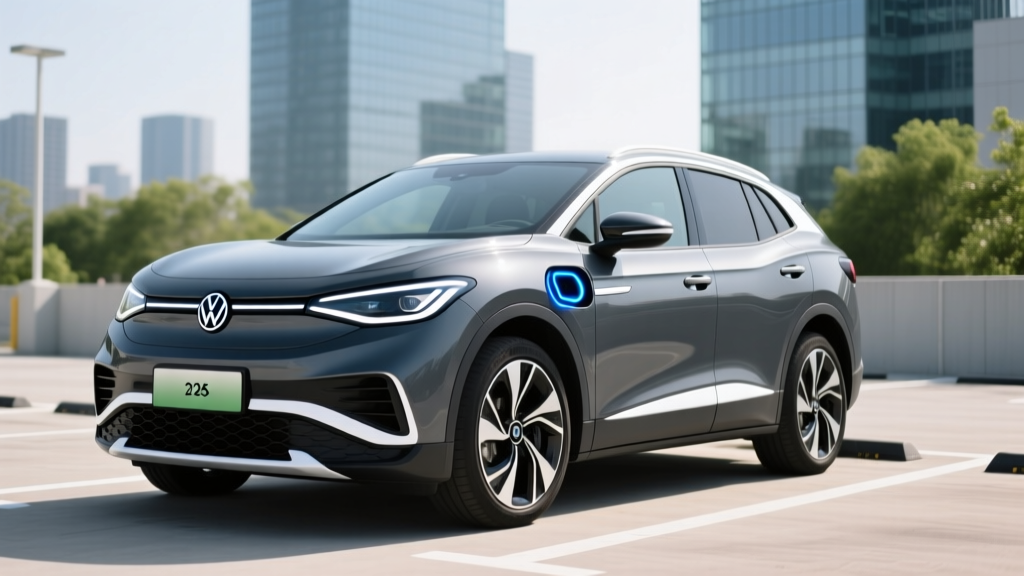
The Volkswagen ID.4 has been the mainstream electric SUV benchmark since its US launch, and the 2026 model year brings meaningful refinements to charging speed, software, and trim packaging. As one of the few EVs assembled in the United States — at VW's Chattanooga, Tennessee plant — the ID.4 occupies a critical position for buyers who want a practical, family-sized electric crossover without stepping into luxury-brand pricing. But with the Hyundai Ioniq 5, Tesla Model Y, and Ford Mustang Mach-E all pushing the segment forward, the 2026 ID.4 needs to prove its worth on specs, not just sentiment.
After spending time with the 2026 lineup and cross-referencing EPA data on fueleconomy.gov and Volkswagen's official specifications, here's the complete buyer's breakdown: real range, real charging speeds, real pricing after tax credits, and whether the ID.4 still earns its spot in a crowded field.
Quick Verdict: The 2026 VW ID.4 at a Glance
The 2026 ID.4 is a comfort-first electric SUV that prioritizes ride quality, interior space, and straightforward usability over performance theatrics. Its 82 kWh (usable) battery delivers competitive range, and VW's continued assembly in Tennessee keeps it eligible for the full federal tax credit — a significant advantage as more competitors lose eligibility due to battery-sourcing rules. The infotainment software, historically the ID.4's weakest link, has improved with the 4.0 update, though it still trails Tesla and Hyundai in responsiveness.
| Spec | RWD (Standard Range) | RWD (Pro/Pro S) | AWD (Pro S Plus) |
|---|---|---|---|
| EPA Range | 206 miles | 291 miles | 263 miles |
| Battery (usable) | 62 kWh | 82 kWh | 82 kWh |
| Chemistry | NMC | NMC | NMC |
| Horsepower | 201 hp | 282 hp | 335 hp |
| 0–60 mph | ~8.5 sec | ~7.5 sec | ~5.4 sec |
| Drivetrain | Rear-Wheel Drive | Rear-Wheel Drive | Dual-Motor AWD |
| Max DC Charge Rate | 135 kW | 170 kW | 170 kW |
| 10–80% DC Time | ~28 min | ~30 min | ~30 min |
| Level 2 Home Charge | 11 kW (~37 mi/hr) | 11 kW (~37 mi/hr) | 11 kW (~37 mi/hr) |
| MPGe (combined) | 107 MPGe | 104 MPGe | 98 MPGe |
| Base MSRP | $39,990 | $44,990 | $51,990 |
Range and Efficiency: EPA Numbers vs. the Real World
The headline number for most buyers: the 2026 VW ID.4 Pro and Pro S with rear-wheel drive carry an EPA-estimated 291 miles of range from an 82 kWh usable battery pack. That places it squarely in the competitive middle — slightly behind the Hyundai Ioniq 5 Long Range (303 miles) but ahead of the base Tesla Model Y RWD (283 miles) and the Ford Mustang Mach-E Select RWD (250 miles).
Efficiency ratings land at 104 MPGe combined for the RWD Pro, translating to about 32 kWh per 100 miles. That's respectable for a 4,700-pound crossover, though the Ioniq 5 and Model Y achieve slightly better efficiency through lighter weight or more aggressive aero. The AWD Pro S Plus drops to 98 MPGe combined and 263 miles EPA — a meaningful trade if you don't need all-wheel traction.
The Standard Range RWD model, with its 62 kWh pack, is EPA-rated at 206 miles. This trim makes sense only for committed city commuters with reliable home charging. For anyone planning road trips or highway commutes beyond 80 miles each way, the 82 kWh pack is the clear choice.
Charging Speed: Home and DC Fast Charging
Charging speed remains one of the ID.4's more nuanced stories. Volkswagen equips the 82 kWh models with a peak DC fast-charge rate of 170 kW on CCS1-equipped public chargers (Electrify America, EVgo, ChargePoint DC stations). The 10–80% session takes approximately 30 minutes under ideal conditions — battery preconditioned, charger capable of delivering full power, and ambient temperatures in the 60–80°F range.
Here's the reality check that spec sheets rarely mention: the ID.4's charge curve tapers significantly above 80% State of Charge. That 170 kW peak is sustained only between roughly 10–40% SoC. From 40–70%, expect speeds closer to 120–130 kW, and above 80%, charging slows dramatically to protect battery longevity — often dropping below 50 kW. For road-trip planning, this means you're best off charging from 10% to 80% and moving on, rather than topping off to 100% at a DC station.
| Charging Level | Power | Miles Added per Hour | Typical Use Case |
|---|---|---|---|
| Level 1 (120V household) | ~1.4 kW | ~3–4 mi/hr | Emergency / overnight trickle |
| Level 2 (240V home, 48A) | 11 kW | ~37 mi/hr | Daily home charging (full charge ~9 hrs) |
| DC Fast Charge (peak) | 170 kW (82 kWh models) | ~200+ mi in 30 min (10–80%) | Road trips, public stations |
For home Level 2 charging, the ID.4 accepts up to 11 kW on a 240-volt, 48-amp circuit. That translates to roughly 37 miles of range per hour of charging, or a full 0–100% charge in about 9 hours. Most owners who plug in overnight will wake up to a full battery every morning. A standard Level 2 home charger installation typically runs $800–$2,000 depending on your electrical panel's capacity and the distance from panel to garage — factor this into your first-year budget.
One important note: the ID.4 still ships with a CCS1 connector, not Tesla's NACS. VW has committed to adopting NACS on future models, but for 2026, you'll need a CCS-to-NACS adapter to access Tesla Superchargers. VW includes a complimentary adapter for new buyers — confirm this with your dealer, as programs have shifted year to year.
Performance and Drivetrain
The ID.4 was never designed to win drag races, and that's fine — most compact SUV buyers prioritize comfort over launch times. The rear-wheel-drive Pro model delivers 282 horsepower and a 0–60 mph time around 7.5 seconds, which is adequate for highway merging and passing. The AWD Pro S Plus bumps output to 335 hp with a dual-motor setup, dropping the sprint to approximately 5.4 seconds — genuinely quick for a family hauler.
Where the ID.4 shines is ride quality. The suspension tuning is decidedly comfort-oriented, absorbing potholes and expansion joints with a composure that the stiffer-sprung Model Y and Ioniq 5 can't match. The steering is light and low-effort, ideal for parking-lot maneuvering but less engaging on twisty back roads. Regenerative braking offers multiple levels selectable via steering-wheel paddles, but the ID.4 does not offer true one-pedal driving to a complete stop in its default mode — a frequent complaint from EV veterans accustomed to Nissan Leaf or Chevrolet Bolt behavior.
Towing capacity is rated at 2,700 pounds for AWD models and 2,200 pounds for RWD with the factory tow hitch. That's enough for a small utility trailer or a pair of dirt bikes, but not a camper or boat. If towing is a priority, the Ford F-150 Lightning or Rivian R1S are in a different class entirely.
Interior, Cargo, and Technology
The ID.4's cabin is one of its strongest selling points. With 30.3 cubic feet of cargo space behind the second row and 64.2 cubic feet with the rear seats folded, it matches or beats most gas-powered compact SUVs. Rear legroom measures a generous 37.6 inches, enough for adult passengers on longer trips. The panoramic fixed glass roof (standard on Pro S and above) creates an airy, open feeling that passengers consistently appreciate.
The 12.9-inch touchscreen (upgraded from earlier model years) runs VW's ID. Software 4.0, which represents a genuine improvement over the sluggish, frustrating 2.x and 3.x versions. Menu responses are faster, wireless Apple CarPlay and Android Auto are standard, and the voice assistant is more reliable. However, VW still relies on capacitive touch sliders for volume and climate — a decision that continues to draw criticism from reviewers and owners alike. There are no physical knobs for temperature or fan speed, and the illuminated touch strips can be imprecise while driving.
On the driver-assistance front, the ID.4 comes standard with VW's IQ.DRIVE suite, which includes adaptive cruise control, lane-keeping assist, automatic emergency braking, and blind-spot monitoring. The Travel Assist feature combines adaptive cruise and lane centering into a competent SAE Level 2 highway assist system. It's not hands-free like GM's Super Cruise or Ford's BlueCruise — you must keep your hands on the wheel — but it reduces fatigue on long interstate drives. The system is reliable and well-calibrated, though it lacks the automatic lane-change capability of Tesla's Autopilot or Hyundai's Highway Driving Assist 2.
Pricing, Trims, and Federal Tax Credit Eligibility
The 2026 VW ID.4 lineup is structured across five trims, with pricing that positions it as one of the more accessible electric SUVs in its class — especially after factoring in the federal tax credit.
| Trim | Drivetrain | Base MSRP | Est. Price After §30D Credit* |
|---|---|---|---|
| Standard Range | RWD | $39,990 | $32,490 |
| Pro | RWD | $44,990 | $37,490 |
| Pro S | RWD | $48,990 | $41,490 |
| Pro S | AWD | $50,990 | $43,490 |
| Pro S Plus | AWD | $51,990 | $44,490 |
*Federal tax credit amounts assume full $7,500 eligibility under IRS §30D. Actual credit depends on your tax liability, income, and vehicle battery-sourcing compliance. The credit can now be transferred to the dealer at point of sale as an immediate price reduction — you don't need to wait until tax filing. Verify current eligibility on IRS.gov's clean vehicle credits page, as battery-sourcing and critical-mineral requirements evolve throughout 2026.
The ID.4's Chattanooga assembly is a critical advantage here. Because the vehicle is manufactured in the US with increasing domestic battery content, it has maintained eligibility for the full $7,500 federal tax credit — something many competitors (including the Hyundai Ioniq 5 and Kia EV6, assembled in Korea) have struggled with as IRS §30D sourcing requirements tighten year over year.
- MSRP cap: SUVs must be priced at or below $80,000. All ID.4 trims qualify.
- Income cap: Adjusted gross income must not exceed $150,000 (single), $225,000 (head of household), or $300,000 (joint). Check your AGI before committing.
- Battery sourcing: A percentage of critical minerals and battery components must be sourced from the US or free-trade-agreement countries. VW's supply chain has met these thresholds for 2026, but confirm with your dealer at purchase.
- Point-of-sale transfer: You can assign the credit to the dealer for an immediate $7,500 price reduction, regardless of your tax liability. This is the most buyer-friendly option.
Battery Warranty and Long-Term Ownership
Volkswagen provides an 8-year/100,000-mile battery warranty for the ID.4, covering defects and capacity loss below 70% of original capacity. This matches the industry standard set by Hyundai, Kia, and most mainstream EV makers, though it falls short of the 8-year/120,000-mile coverage Tesla offers on some models.
The ID.4 uses NMC (nickel manganese cobalt) battery chemistry across all trims. NMC offers higher energy density than LFP (lithium iron phosphate), which is why VW can pack 82 kWh into a relatively compact footprint. The trade-off is that NMC batteries are more sensitive to sustained high states of charge and extreme heat. For maximum longevity, VW recommends charging to 80% for daily use and reserving 100% charges for road trips. Following this practice, real-world degradation data from European ID.4 fleets suggests approximately 8–12% capacity loss over 100,000 miles — well within the warranty threshold.
The general vehicle warranty covers 4 years/50,000 miles bumper-to-bumper, with roadside assistance for the same period. VW also includes 3 years/36,000 miles of complimentary scheduled maintenance (minimal for an EV, but it covers cabin air filters, brake fluid checks, and tire rotations).
2026 VW ID.4: Pros and Cons
✓ Pros
- Full $7,500 federal tax credit eligibility (US-built)
- Comfortable, composed ride quality — best in class for suspension tuning
- Spacious cabin with 30.3 cu ft cargo, generous rear legroom
- Competitive 291-mile EPA range on RWD Pro trims
- Improved ID. Software 4.0 — faster, more stable infotainment
- Standard IQ.DRIVE Level 2 driver assist suite
- Strong 11 kW Level 2 home charging rate
✗ Cons
- DC fast charging (170 kW peak) trails Ioniq 5 (240 kW) and Model Y (250 kW)
- Capacitive touch sliders for climate/volume — no physical knobs
- No true one-pedal driving to a full stop
- CCS1 connector requires adapter for Tesla Supercharger access
- AWD models lose meaningful range (263 mi vs 291 mi RWD)
- Base Standard Range model's 206-mile EPA range limits road-trip utility
- Driver assist is competent but lacks automatic lane-change functionality
Who Should Buy the 2026 VW ID.4?
Buy the ID.4 if: You want a comfortable, spacious electric SUV for daily commuting and family duty, you have access to home Level 2 charging, you value ride quality over sporty handling, and you want a vehicle that qualifies for the full federal tax credit without navigating import/sourcing uncertainty.
Look elsewhere if: You regularly take 400+ mile road trips and need the fastest possible DC charging (Ioniq 5 or Model Y charge significantly faster), you want hands-free highway driving (consider a Ford with BlueCruise or GM with Super Cruise), or you need more than 2,700 pounds of towing capacity.
Best trim pick: The Pro RWD at $44,990 offers the best value — 291 miles of range, the full 82 kWh battery, and strong standard equipment. After the $7,500 credit, it lands around $37,490, making it one of the most affordable long-range electric SUVs available.
Frequently Asked Questions
What is the real-world range of the 2026 VW ID.4?
The EPA rates the ID.4 Pro RWD at 291 miles. In real-world highway driving at 70–75 mph, expect approximately 245–265 miles. In cold weather (below 35°F), range drops to roughly 200–230 miles depending on heat pump usage and driving style. The AWD Pro S Plus, rated at 263 miles EPA, delivers roughly 220–240 miles in real-world highway conditions.
How fast does the 2026 ID.4 charge at home and on the road?
At home on a 240V Level 2 charger (48A), the ID.4 charges at up to 11 kW, adding approximately 37 miles of range per hour — a full charge takes about 9 hours. On DC fast chargers, the 82 kWh models peak at 170 kW, achieving a 10–80% charge in roughly 30 minutes under optimal conditions. The charge curve tapers significantly above 80%.
Does the 2026 VW ID.4 qualify for the $7,500 federal tax credit?
Yes — as of early 2026, the US-built ID.4 qualifies for the full $7,500 federal tax credit under IRS §30D, subject to buyer income caps ($150K single / $300K joint AGI) and battery-sourcing compliance. The credit can be transferred to the dealer at point of sale for an immediate price reduction. Always verify current eligibility on IRS.gov before purchasing, as sourcing rules can shift mid-year.
Is the 2026 ID.4 worth buying over the Hyundai Ioniq 5 or Tesla Model Y?
The ID.4 wins on ride comfort, interior spaciousness, and straightforward value after the tax credit. The Ioniq 5 charges faster (up to 240 kW vs 170 kW) and offers slightly more range (303 vs 291 miles). The Model Y offers access to the Supercharger network natively (NACS), faster acceleration, and over-the-air updates, but at a higher starting price and with a firmer ride. If comfort and tax-credit certainty matter most, the ID.4 is the strongest pick. If charging speed or autonomous-tech ambition drives your decision, look at the competitors.
What's the biggest drawback of the 2026 VW ID.4?
The most common owner complaint is the capacitive-touch climate and volume controls, which lack the tactile precision of physical knobs. On the spec sheet, the 170 kW peak DC charge rate — while adequate — falls behind the 240 kW capability of the Hyundai Ioniq 5 and the 250 kW of the Tesla Model Y, meaning longer stops on road trips. The CCS1 connector also requires an adapter for Tesla Supercharger access, adding a step that NACS-native vehicles avoid.
How long will the ID.4's battery last?
VW warranties the battery for 8 years or 100,000 miles against capacity loss below 70%. Based on fleet data from European ID.4 models, NMC packs in this platform show approximately 8–12% degradation at 100,000 miles when charged responsibly (daily charging limited to 80%). With proper care, the battery should remain functional well beyond the warranty period, likely lasting 150,000–200,000 miles before capacity loss becomes a practical concern.