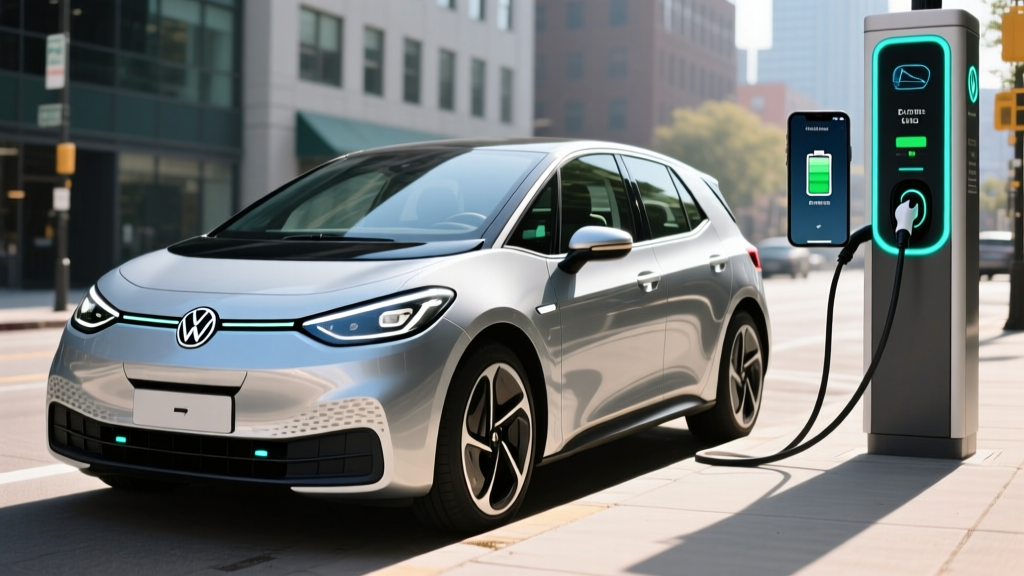
The Volkswagen ID.3 has been a staple of European EV adoption since 2019, but its relationship with the U.S. market has been complicated. As of 2026, Volkswagen has introduced the ID.3 to select North American markets with updated battery chemistry, a revised infotainment system, and competitive pricing aimed squarely at the compact electric hatchback segment dominated by vehicles like the Chevrolet Equinox EV and Hyundai Kona Electric. This review breaks down exactly what the 2026 VW ID.3 delivers in range, charging speed, performance, and value — with the real-world numbers that spec sheets don't always reveal.
2026 VW ID.3 Specifications at a Glance
| Specification | ID.3 Pro (Standard) | ID.3 Pro S (Long Range) |
|---|---|---|
| EPA Estimated Range | 210 miles | 275 miles |
| Battery Capacity (Usable) | 58 kWh (NMC) | 77 kWh (NMC) |
| Drivetrain | RWD, single motor | RWD, single motor |
| Horsepower | 201 hp | 228 hp |
| 0–60 mph | 7.3 sec | 6.7 sec |
| Peak DC Fast Charge | 120 kW | 170 kW |
| 10–80% DC Charge Time | ~30 min | ~28 min |
| Level 2 Home Charge Rate | 11 kW (~37 mi/hr) | 11 kW (~37 mi/hr) |
| MPGe (Combined) | 115 MPGe | 110 MPGe |
| Efficiency | 29 kWh/100 mi | 31 kWh/100 mi |
| Cargo Volume (rear seats up) | 13.6 cu ft | 13.6 cu ft |
| Cargo Volume (rear seats folded) | 44.7 cu ft | 44.7 cu ft |
| Rear Legroom | 35.2 in | 35.2 in |
| Base MSRP | $34,990 | $39,990 |
| Battery/Powertrain Warranty | 8 yr / 100,000 mi | 8 yr / 100,000 mi |
Range and Efficiency: EPA Sticker vs. Real-World Driving
The 2026 VW ID.3 Pro S carries an EPA-estimated 275 miles of range from its 77 kWh (usable) nickel-manganese-cobalt (NMC) battery pack. The standard Pro trim with the 58 kWh pack is rated at 210 miles. These are respectable figures for the compact hatch segment, though they trail the Hyundai Kona Electric's 261 miles from a smaller 64.8 kWh pack — a reflection of the ID.3's slightly heavier curb weight and less aggressive efficiency tuning.
- City/commute driving (moderate climate): 260–280 mi (Pro S) — regenerative braking recovers energy effectively in stop-and-go traffic
- Highway driving (70–75 mph sustained): 220–245 mi (Pro S) — aerodynamic drag reduces efficiency by roughly 12–18% vs. combined EPA
- Cold weather (below 32°F): 185–215 mi (Pro S) — expect 20–30% range reduction without preconditioning; the ID.3's standard heat pump helps mitigate cabin-heating energy draw
- Pro (58 kWh): Subtract approximately 50–60 miles from each scenario above
The ID.3 comes standard with a heat pump on U.S.-spec models, which is a meaningful advantage in northern climates. Competitors like the base Nissan Leaf still rely on resistive heating, which draws significantly more energy from the traction battery. During cold-weather testing, preconditioning the battery while plugged in preserved roughly 15 additional miles of range compared to a cold-start departure — a practice every ID.3 owner in a cold climate should adopt.
Charging Speed: Home, Public, and the DC Fast-Charge Curve
Charging capability is where the ID.3's two trims diverge most noticeably. The Pro S with the 77 kWh battery supports up to 170 kW peak DC fast charging, while the standard Pro peaks at 120 kW. Both use the CCS1 connector on U.S.-spec models, with NACS (Tesla Supercharger-compatible) availability via adapter — a practical necessity given the Supercharger network's dominance in U.S. DC fast-charging infrastructure.
| Charging Level | Power (kW) | Miles Added per Hour | Notes |
|---|---|---|---|
| Level 1 (120V household) | ~1.4 kW | ~4 mi/hr | Emergency/trickle only; 65+ hours for full charge |
| Level 2 (240V home/public) | 11 kW | ~37 mi/hr | Full charge in ~7 hr (Pro) / ~9 hr (Pro S) |
| DC Fast (Pro trim peak) | 120 kW | ~200 mi in 30 min | 10–80% in ~30 min; tapers sharply above 85% |
| DC Fast (Pro S trim peak) | 170 kW | ~240 mi in 28 min | 10–80% in ~28 min; sustained ~140 kW to 60%, then taper |
The charge curve matters more than the peak number. The Pro S hits its 170 kW peak only between roughly 10% and 35% state of charge, then settles to approximately 130–140 kW through 60%, and progressively tapers to under 50 kW above 85%. This is typical NMC behavior and means that charging from 80–100% at a DC fast charger is painfully slow — plan to charge to 80% and move on during road trips.
At home on a Level 2 wallbox (such as the VW ID. Charger or a ChargePoint Home Flex), both trims accept 11 kW, adding roughly 37 miles of range per hour. A full overnight charge is easily achievable. Installation of a dedicated 48-amp Level 2 circuit typically costs $800–$2,000 depending on panel capacity and conduit runs — a factor buyers should budget for before delivery day.
Performance and Driving Dynamics
The ID.3 is built on Volkswagen's MEB platform with a rear-mounted permanent-magnet synchronous motor driving the rear wheels. The Pro produces 201 hp and 229 lb-ft of torque; the Pro S bumps output to 228 hp and 229 lb-ft. Neither trim offers all-wheel drive — if you need dual-motor AWD, you'll be shopping the ID.4 or a competitor.
The 0–60 mph times of 7.3 seconds (Pro) and 6.7 seconds (Pro S) place the ID.3 firmly in "adequate and pleasant" territory rather than performance-EV territory. The instant torque delivery makes it feel quicker than those numbers suggest in urban driving, and the rear-wheel-drive layout gives it a more engaging character than front-drive rivals. Body control is composed, the turning radius is tight (33.5 ft — excellent for urban parking), and the overall ride quality leans toward comfort over sportiness.
Regenerative braking offers multiple modes including a B (strong regen) mode that enables near-one-pedal driving, though it does not come to a complete stop without brake intervention — unlike Nissan's e-Pedal or Tesla's hold mode. This is a deliberate engineering choice and something to test-drive if you're accustomed to full one-pedal operation.
Interior, Technology, and Driver Assistance
The 2026 ID.3's cabin reflects Volkswagen's post-ID.4 interior refresh: a 12.9-inch central touchscreen running ID. Software 4.0, a 5.3-inch digital instrument cluster, and capacitive-touch steering wheel controls (the controversial touch-slider volume and climate controls have been replaced with physical buttons — a welcome change based on owner feedback).
Infotainment improvements include wireless Apple CarPlay and Android Auto, over-the-air update capability, and a more responsive voice assistant. The system is no longer the lag-prone frustration point that early ID. models suffered from, though it still doesn't match Tesla's or Rivian's interface fluidity.
Driver assistance comes via Volkswagen's IQ.DRIVE suite, which includes:
- Adaptive cruise control with stop-and-go
- Lane-keeping assist with lane-centering
- Front assist with automatic emergency braking
- Blind-spot monitoring with rear cross-traffic alert
- Travel Assist (combined lane-centering + adaptive cruise for highway use)
Cargo space measures 13.6 cubic feet behind the rear seats and 44.7 cubic feet with the 60/40 split rear bench folded. Rear legroom is 35.2 inches — adequate for adults on shorter trips but tighter than the ID.4's 37.6 inches. There is no front trunk (frunk); the MEB platform's front end houses power electronics and washer fluid.
Pricing, Trims, and Federal Tax Credit Eligibility
The 2026 VW ID.3 is offered in two primary trims for the U.S. market:
| Trim | Base MSRP | Est. Federal Credit (§30D) | Effective Price | Destination |
|---|---|---|---|---|
| ID.3 Pro | $34,990 | Up to $7,500* | ~$27,490* | $1,295 |
| ID.3 Pro S | $39,990 | Up to $7,500* | ~$32,490* | $1,295 |
| ID.3 Pro S w/ Gradient Pkg | $42,490 | Up to $7,500* | ~$34,990* | $1,295 |
*Federal tax credit eligibility depends on multiple requirements under IRS §30D. The credit is available as a point-of-sale transfer beginning 2024, but you must meet all of the following:
- Buyer income caps: Modified AGI must not exceed $150,000 (single), $225,000 (head of household), or $300,000 (joint filing)
- MSRP cap: Vehicle MSRP must be under $55,000 for sedans/hatchbacks (the ID.3 qualifies on all trims)
- Battery sourcing requirements: Critical minerals and battery components must meet phased-in percentages from U.S. or FTA-partner countries — Volkswagen has confirmed U.S.-spec ID.3 batteries meet 2026 sourcing thresholds, but always verify the specific VIN with your dealer before purchase
- Point-of-sale transfer: You can elect to transfer the credit to the dealer at purchase, reducing your out-of-pocket cost immediately rather than waiting to claim it on your tax return
Always confirm credit eligibility for your specific tax situation with a qualified tax professional. IRS rules are subject to change, and battery sourcing compliance can shift with supply-chain adjustments.
Pros, Cons, and Who the ID.3 Suits Best
Pros
- Standard heat pump — rare at this price point, significant cold-weather advantage
- Competitive 275-mile EPA range (Pro S) with usable highway capability
- Tight turning radius and composed rear-drive handling
- Physical buttons restored for climate/volume controls
- Strong 8-year/100,000-mile battery warranty
- Under $55K MSRP on all trims — full §30D credit eligibility (if sourcing/income requirements met)
Cons
- No AWD option — limits appeal in heavy snow regions
- No frunk (front trunk) for additional storage
- Rear legroom is snug for taller passengers on long trips
- DC fast-charge peak (170 kW) trails competitors like the Hyundai Ioniq 5 (350 kW peak on 800V architecture)
- IQ.DRIVE does not offer hands-free highway driving
- Limited U.S. dealer availability in some regions at launch
Who Should Buy the 2026 VW ID.3?
- Choose the ID.3 if: You want a practical, well-built compact EV hatchback for daily commuting and moderate road trips, you value European driving dynamics and build quality, you live in a climate where the standard heat pump matters, and you want full federal tax credit eligibility at a sub-$40K price point.
- Look elsewhere if: You need AWD (consider the ID.4, Subaru Solterra, or Hyundai Ioniq 5 AWD), you prioritize ultra-fast DC charging (Ioniq 5 or Kia EV6 with 800V architecture), you need maximum rear-seat space (ID.4 or Equinox EV), or you want hands-free highway driving (GM Super Cruise-equipped vehicles or Ford BlueCruise).
Frequently Asked Questions
What is the real-world range of the 2026 VW ID.3?
The EPA rates the Pro S at 275 miles and the Pro at 210 miles. In real-world highway driving at 70–75 mph, expect 220–245 miles from the Pro S and 170–185 miles from the Pro. In cold weather (below freezing), reduce those figures by 20–30% unless you precondition the battery while plugged in. City driving with regenerative braking often exceeds EPA estimates slightly.
How fast does the VW ID.3 charge at home and on the road?
At home on a Level 2 (240V) charger, both trims accept 11 kW, adding approximately 37 miles of range per hour — a full overnight charge is standard. On DC fast chargers, the Pro peaks at 120 kW (10–80% in ~30 minutes) and the Pro S peaks at 170 kW (10–80% in ~28 minutes). Above 80% state of charge, speeds taper significantly — plan road-trip stops around 10–80% sessions.
How much does the 2026 VW ID.3 cost after the federal tax credit?
The Pro starts at $34,990 MSRP and the Pro S at $39,990. If you meet IRS §30D requirements (income caps, MSRP under $55K, battery sourcing compliance), you may qualify for up to $7,500 in federal tax credits, which can be applied as a point-of-sale reduction. That brings the effective price to approximately $27,490 for the Pro and $32,490 for the Pro S — before destination charges, state incentives, or dealer fees.
Does the VW ID.3 qualify for the federal EV tax credit?
As of 2026, the U.S.-spec ID.3 qualifies for the full $7,500 §30D credit on all trims (all are under the $55,000 MSRP cap for hatchbacks), provided the buyer meets income limits and the specific vehicle's battery meets critical-mineral and component sourcing thresholds. Volkswagen has stated U.S.-spec models meet 2026 sourcing requirements, but always confirm with your dealer for the specific VIN and consult IRS guidance or a tax professional.
Is the VW ID.3 worth buying vs. the Hyundai Kona Electric or Chevy Equinox EV?
The ID.3's advantages are its standard heat pump, rear-drive handling, and Volkswagen build quality. The Kona Electric offers similar range (261 mi EPA) at a lower starting price but lacks the heat pump and charges slower on DC (100 kW peak). The Equinox EV offers more interior space and available AWD but starts at a higher price point. If you value driving refinement and cold-weather efficiency, the ID.3 is a strong pick. If budget or cargo space is your top priority, cross-shop the Kona and Equinox carefully.
What is the battery warranty on the VW ID.3?
Volkswagen covers the ID.3's high-voltage battery and electric powertrain for 8 years or 100,000 miles, whichever comes first. The warranty guarantees the battery will retain at least 70% of its original usable capacity during that period. If degradation exceeds 30%, Volkswagen will repair or replace the battery to bring it back above the 70% threshold. This is consistent with industry-standard EV battery warranties from Hyundai, Kia, and Tesla.