The Short Answer: Is There a VW GTI EV?
As of early 2026, Volkswagen has not yet released a production VW GTI EV for the U.S. market. However, VW has strongly signaled that a performance electric hot hatch wearing the GTI badge is coming, likely built on the company's next-generation SSP (Scalable Systems Platform) architecture expected around 2026–2027. Until then, the closest electric alternative in VW's lineup is the ID.4 GTX, and the traditional gas-powered Mk8.5 GTI remains on sale. If you're searching for a "VW GTI EV" because you want GTI driving dynamics with zero tailpipe emissions, here's what's realistic today, what's on the horizon, and what the numbers actually look like.
What Volkswagen Has Said About an Electric GTI
Volkswagen's GTI badge has meant one thing for nearly 50 years: an accessible, practical, front-wheel-drive hot hatch with a peppy turbocharged engine and a manual or DSG transmission. Translating that formula to electric power is complicated — and VW knows it.
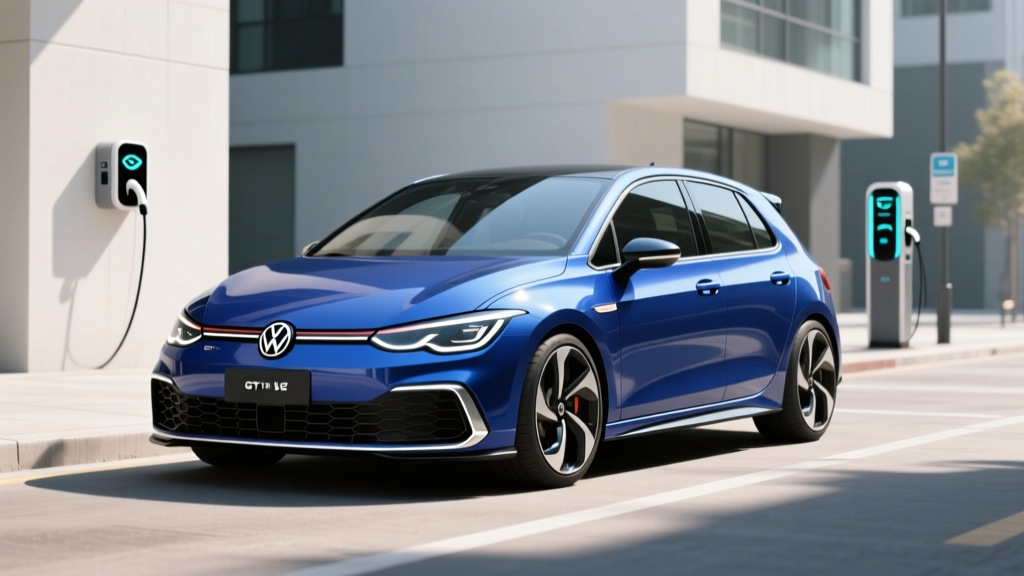
At the 2024 Geneva International Motor Show, VW unveiled the ID. GTI Concept, a compact electric hatchback previewing what an electric GTI could look like. The concept was built on a modified MEB platform (the same architecture under the ID.3 and ID.4) and featured:
- Single-motor rear-wheel drive (a departure from the FWD GTI tradition)
- Estimated output of around 200–220 kW (268–295 hp)
- A sport-tuned suspension with GTI-specific calibration
- Classic GTI styling cues: red accent stripes, tartan-inspired interior, honeycomb grille motif adapted for an EV face
- 0–100 km/h (0–62 mph) in approximately 6 seconds
VW executives have confirmed that a production version is in development, with the company's former brand CEO Thomas Schäfer stating publicly that the GTI nameplate will continue into the electric era. However, the production car is expected to ride on VW's upcoming SSP (Scalable Systems Platform), which promises faster charging, higher energy density batteries, and a more flexible motor layout. That platform is slated for vehicles launching in the 2026–2028 timeframe, meaning U.S. availability of a production VW GTI EV is likely a 2027 or 2028 model year at the earliest.
Estimated VW GTI EV Specs vs. the Gas Mk8.5 GTI
Since final specs aren't published yet, here's a side-by-side using the ID. GTI Concept figures, VW's SSP platform targets, and the current 2025 Mk8.5 gas GTI as the baseline:
| Specification | Gas Mk8.5 GTI (2025) | VW GTI EV (Estimated/Concept) |
|---|---|---|
| Powertrain | 2.0L turbo I4, FWD | Single electric motor, RWD (estimated) |
| Horsepower | 241 hp | ~268–295 hp (200–220 kW) |
| Torque | 273 lb-ft | ~295–340 lb-ft (instant) |
| 0–60 mph | ~5.9 sec | ~5.5–6.0 sec (est.) |
| EPA Range / Fuel Economy | 27 city / 34 hwy / 30 combined MPG | ~230–280 mi EPA (est. based on MEB/SSP hatch efficiency) |
| Battery Capacity | N/A (14.5 gal tank) | ~58–77 kWh usable (est.) |
| Max DC Fast Charge | N/A | ~175–200 kW peak (est. SSP target) |
| 10–80% DC Charge Time | N/A | ~20–26 min (est.) |
| Level 2 Charging | N/A | ~11 kW onboard charger |
| Cargo Volume | 19.9 cu ft (rear seats up) | ~14–17 cu ft (est., hatchback) |
| Starting MSRP | $32,440 | ~$35,000–$42,000 (est.) |
| Federal Tax Credit (§30D) | Not eligible | Potentially up to $7,500 (if NA battery sourcing met) |
| Drivetrain | Front-wheel drive | Rear-wheel drive (likely) |
Key takeaway: On paper, an electric GTI should match or slightly beat the gas GTI in acceleration while offering dramatically lower running costs. The trade-off will be weight (expect 3,600–4,000 lbs vs. the gas GTI's ~3,150 lbs), which will affect handling feel — the very thing GTI loyalists care about most.
What It Will Cost to Own: Electric GTI vs. Gas GTI
Let's run the numbers assuming a 5-year ownership period, 12,000 miles/year, and national average electricity and gas prices as of early 2026.
| Cost Category | Gas Mk8.5 GTI | VW GTI EV (Estimated) |
|---|---|---|
| Purchase Price (MSRP) | $32,440 | ~$38,000 (mid-estimate) |
| Federal Tax Credit | $0 | Up to $7,500 (eligibility TBD) |
| Effective Purchase Price | $32,440 | ~$30,500 (if full credit) |
| Fuel/Energy (5 yrs, 60k mi) | ~$7,200 (at $3.50/gal, 30 MPG) | ~$2,700 (at $0.15/kWh, 3.5 mi/kWh) |
| Maintenance (5 yrs) | ~$2,800 (oil, filters, brakes, spark plugs) | ~$900 (cabin filter, wipers, brake fluid, tire rotation) |
| Insurance (5 yrs, avg) | ~$7,500 | ~$8,500 (EVs typically 10–15% higher) |
| 5-Year Total Cost | ~$49,940 | ~$42,600 (with credit) / ~$50,100 (without) |
| Cost Per Mile | ~$0.83 | ~$0.71 (with credit) / ~$0.84 (without) |
The electric GTI's economics hinge almost entirely on the §30D federal tax credit. If VW sources its battery cells and critical minerals to meet the domestic-content and FOC (foreign entity of concern) requirements, buyers could see up to $7,500 applied at the point of sale. But that's a big "if" — VW's current ID.4 (built in Chattanooga, TN) qualifies for a partial credit, and battery sourcing rules are tightening annually. Always verify current-year eligibility on IRS.gov before purchasing.
Home charging is the cost multiplier. The $2,700 energy estimate above assumes 80%+ home Level 2 charging at residential electricity rates. If you're relying primarily on public DC fast charging at $0.35–$0.55/kWh, your 5-year fuel cost could jump to $5,500–$7,000, erasing much of the savings advantage.
Real-World Ownership: What a GTI EV Buyer Actually Needs to Know
Home Charging Access Is Non-Negotiable for the GTI Experience
The gas GTI's appeal is "fill up in 3 minutes anywhere." An electric GTI demands a different lifestyle calculation. If you have a garage or driveway where a Level 2 home charger (240V, 32–48 amps) can be installed, you'll wake up every morning with a "full tank" — roughly 230–280 miles of range. A Level 2 installation typically costs $800–$2,000 if your electrical panel has capacity, or $2,500–$5,000+ if you need a panel upgrade from 100A to 200A service.
If you live in an apartment, rely on street parking, or lack 240V access, an electric GTI becomes significantly less practical. Level 1 charging (120V standard outlet) adds only about 3–5 miles of range per hour — roughly 36–60 miles overnight. That works for short commutes but makes road trips and aggressive driving days (the whole point of a GTI) logistically painful.
Cold Weather Will Steal Your Range
Lithium-ion batteries lose efficiency in cold temperatures, and cabin heating in an EV draws directly from the traction battery. In sustained sub-30°F conditions, expect 20–35% range reduction compared to EPA estimates. A GTI EV with a 260-mile EPA rating might deliver 170–200 real-world miles in a Midwest or Northeast winter. VW's SSP platform is expected to include a heat pump (standard or optional), which recovers waste heat from the drivetrain and reduces the cabin-heating penalty — but it doesn't eliminate cold-weather loss entirely.
Charging on Road Trips: The Curve Reality
VW's ID. family has been criticized for middling DC fast-charging speeds compared to Hyundai/Kia's 800V E-GMP platform. The SSP platform aims to fix this with a target of 175–200+ kW peak charging, but peak rate is not sustained rate. Real-world charging follows a taper curve:
- 10–30% SoC: Near peak rate (~175–200 kW)
- 30–60% SoC: Gradual taper to ~140–160 kW
- 60–80% SoC: Steeper taper to ~80–100 kW
- 80–100% SoC: Trickle charging, ~20–40 kW
A 10–80% charge in ~20–26 minutes is the realistic target. That's competitive with most 400V competitors but behind the Hyundai Ioniq 5 N (800V, 10–80% in ~18 min at 240 kW peak), which is the closest thing to an electric hot hatch on the market today.
Alternatives to Wait For: Electric Hot Hatches You Can Buy Now
If the idea of waiting 1–2+ years for an unconfirmed production car doesn't appeal, here's what exists today that captures some or all of the GTI spirit:
| Vehicle | Horsepower | 0–60 mph | EPA Range | Starting MSRP | Notes |
|---|---|---|---|---|---|
| Hyundai Ioniq 5 N | 641 hp (N Grin Boost) | 3.4 sec | 221 mi | $67,495 | The performance EV benchmark. Simulated shifts and engine sounds. Expensive. |
| VW ID.4 GTX (AWD) | 295 hp | 5.4 sec | 263 mi | $46,995 | Sportiest VW EV in the U.S. today. SUV, not a hatchback. |
| Mini Cooper SE (2025+) | 215 hp | 6.5 sec | ~180 mi (est.) | ~$32,000 | Fun, compact, but short range. Spiritual GTI competitor in size. |
| Gas Mk8.5 GTI | 241 hp | 5.9 sec | 30 MPG combined | $32,440 | The known quantity. Still excellent. No tax credit. |
The Ioniq 5 N is the most capable electric performance car in this space, but at $67K+ it's in a completely different price bracket than any GTI has ever occupied. The GTI's magic has always been affordable performance — a $30K–$40K car that punches above its weight. VW will need to price the electric GTI aggressively to maintain that identity.
Decision Framework: Should You Wait, or Buy Now?
Choose the gas Mk8.5 GTI now if:
- You want a GTI today and don't want to wait 1–2 years for an unconfirmed EV
- You lack reliable home Level 2 charging access
- You regularly drive in extreme cold or take long road trips through charging-sparse areas
- The sound, feel, and engagement of a turbocharged engine and manual/DSG transmission matter to you
- Your total budget is around $32,000–$40,000
Wait for the VW GTI EV if:
- You have (or can install) home Level 2 charging
- Your daily driving is under 80 miles round-trip with occasional longer trips
- You want GTI-level performance with $500–$600/year in "fuel" costs instead of $1,400+
- You're okay with a 2027–2028 timeline and pricing that may land at $35,000–$42,000
- You value instant electric torque and a lower center of gravity for handling
Consider the Ioniq 5 N now if:
- Performance is your top priority and budget is flexible ($67K+)
- You want the most thrilling EV driving experience available today
- You accept the 221-mile EPA range as a trade-off for 641 hp
Federal Tax Credit: What an Electric GTI Buyer Needs to Know
The IRS §30D Clean Vehicle Credit offers up to $7,500 for qualifying new EVs, but eligibility depends on several factors that change annually:
- MSRP cap: The vehicle must have an MSRP at or below $55,000 for cars/hatchbacks (a GTI should clear this easily)
- Buyer income cap: Modified adjusted gross income must not exceed $150,000 (single), $225,000 (head of household), or $300,000 (joint filing)
- Battery sourcing: Increasing percentages of battery components must be manufactured or assembled in North America, and critical minerals must be sourced from the U.S. or free-trade-agreement partners. These thresholds tighten each year through 2029.
- FEOC restriction: Vehicles with battery components from a "foreign entity of concern" (primarily Chinese suppliers) are disqualified
- Point-of-sale transfer: As of 2024, the credit can be transferred to the dealer at purchase, reducing your out-of-pocket cost directly rather than waiting for a tax refund
Whether a future VW GTI EV qualifies will depend on where VW sources its battery cells and packs for the North American market. VW's Chattanooga, TN plant already builds the ID.4 with some domestic battery content, but the GTI EV may be imported from Europe initially, which could complicate credit eligibility. Check IRS.gov for the current qualified vehicles list before making any purchase decision.
Common Misconceptions About an Electric GTI
| Myth | Fact |
|---|---|
| "An electric GTI won't be fun to drive — EVs are too heavy." | The GTI EV will weigh ~500–800 lbs more than the gas GTI, but electric motors deliver instant torque and the battery pack sits low in the chassis, reducing body roll. VW's MEB-based concepts already demonstrate competitive handling. It will feel different, not necessarily worse. |
| "It'll have the same range issues as early VW ID. cars." | The SSP platform targets significantly better efficiency and charging speed than the current MEB platform. Expect 230–280+ miles EPA and 175–200 kW DC fast charging — a meaningful step up from the ID.4's current 263 mi / 175 kW. |
| "I'll save a fortune compared to the gas GTI." | You'll save on fuel and maintenance ($4,500–$5,500 over 5 years), but EV insurance premiums run 10–15% higher, and the purchase price may be $3,000–$8,000 more before tax credits. Net savings are real but modest — typically $2,000–$4,000 over 5 years with the tax credit. |
| "The GTI EV will have a manual transmission option." | Almost certainly not. EVs don't need multi-speed transmissions. VW may simulate gear shifts (as Hyundai does in the Ioniq 5 N), but a physical clutch and stick shift are engineering dead weight in an EV. |
Frequently Asked Questions
When will the VW GTI EV be available in the United States?
VW has confirmed a production electric GTI is in development, likely based on the SSP platform. The earliest realistic U.S. availability is the 2027 or 2028 model year. VW has not announced a specific on-sale date, pricing, or U.S. trim structure as of early 2026.
Will the electric GTI be front-wheel drive like the gas GTI?
The ID. GTI Concept was rear-wheel drive, which is the default MEB/SSP layout for single-motor configurations. VW could offer a dual-motor AWD variant (similar to the GTX badge), but a performance FWD electric GTI is unlikely because EVs don't have the same weight distribution challenges that made FWD the traditional GTI choice.
How fast will the VW GTI EV charge?
Based on SSP platform targets, expect a peak DC fast-charge rate of 175–200 kW with a 10–80% charge time of approximately 20–26 minutes. This is competitive with most mainstream EVs but trails the 800V architecture vehicles from Hyundai/Kia, which can charge 10–80% in ~18 minutes.
Will the VW GTI EV qualify for the $7,500 federal tax credit?
It's too early to confirm. Eligibility depends on battery component sourcing, critical mineral origin, the vehicle's final MSRP, and the buyer's income. If VW manufactures the GTI EV in Europe with non-NA battery cells, it may not qualify. Check the fueleconomy.gov tax credit database once the vehicle is officially listed.
Is the VW ID.4 GTX the same thing as an electric GTI?
No. The ID.4 GTX is a performance-oriented compact SUV with 295 hp and AWD. It shares VW's electric DNA but lacks the GTI's hatchback proportions, lower ride height, and price point (starting at $46,995 vs. the GTI's ~$32,440). Think of it as a sporty electric crossover, not a GTI successor.
What should a first-time EV buyer know before considering a performance EV?
Three things matter most: (1) Can you charge at home on Level 2? If not, an EV's convenience advantage disappears. (2) What's your typical daily mileage? If it's under 80 miles, even a 230-mile-range EV is more than sufficient. (3) Do you road-trip often through areas with sparse charging infrastructure? If yes, a PHEV or the gas GTI may be a better fit until public charging networks mature further.