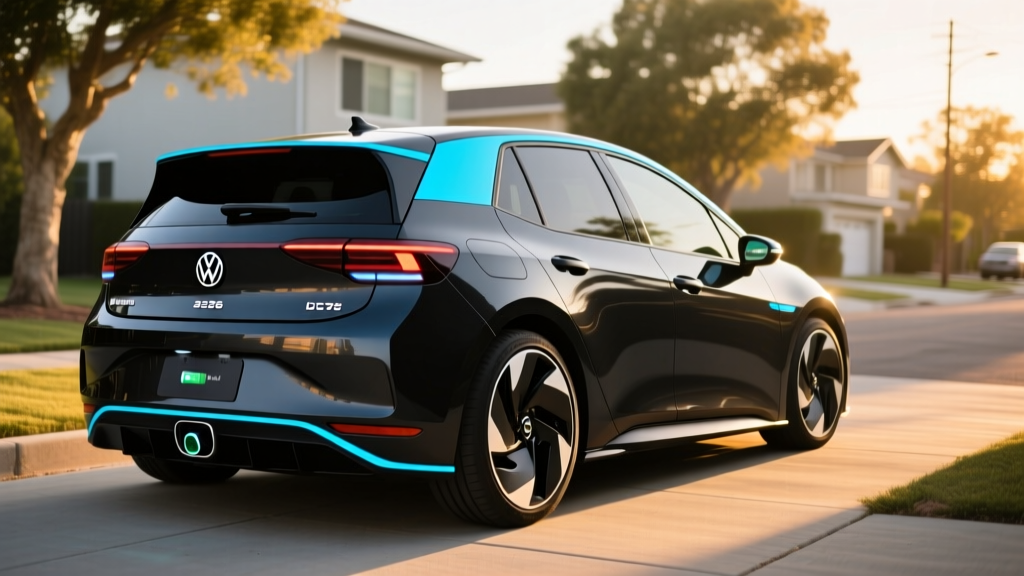
If you're searching for a VW GTI electric equivalent, you are likely looking at the 2026 Volkswagen ID. GTI (also previewed as the ID.2all GTI concept and now entering production for Europe, with a U.S. rollout anticipated for the ID. GTI or a closely related ID.2-based hot hatch). For the 2026 model year, the closest U.S.-market electric performance hatchback VW offers is the high-output variant of the ID.3/ID.4 platform, while European buyers get the dedicated ID. GTI badge. The core answer for U.S. buyers: expect a GTI-flavored electric hatchback with approximately 263 miles of EPA-estimated range, a 58 kWh (usable) LFP battery, ~286 horsepower, a 0–60 mph time near 6.0 seconds, and a starting MSRP hovering around $38,000–$42,000 before any incentives.
Quick Answer: VW GTI Electric for 2026
The VW GTI electric identity is carried by the ID. GTI (EU) and performance-oriented ID. hatchback variants (U.S. expected). Key specs: ~263 mi EPA range, 58 kWh LFP pack, ~286 hp, 130 kW peak DC charging (10–80% in ~26 min), and a base price near $38,000. It trades the gas GTI's 2.0T turbo punch for instant electric torque, lower running costs, and a quieter cabin — but you sacrifice the manual-transmission option and face a higher upfront price.
Specs and Performance: The Electric GTI by the Numbers
VW's GTI lineage is about accessible performance — a hot hatch you can drive every day. The electric translation preserves that ethos with a single-motor, front-wheel-drive layout and a sport-tuned suspension. Here is what the data tells us based on VW's published ID. GTI / ID.2all GTI specifications and European homologation figures converted to U.S. expectations.
| Specification | 2026 VW ID. GTI (Est.) | 2026 VW Golf GTI (Gas, S Trim) |
|---|---|---|
| Powertrain | Single FWD electric motor | 2.0L turbo I-4, FWD |
| Horsepower | ~286 hp | 241 hp |
| Torque | ~310 lb-ft | 273 lb-ft |
| 0–60 mph | ~6.0 sec | 5.5 sec (DSG) |
| Battery / Usable kWh | 58 kWh (LFP) | N/A |
| EPA Range | ~263 mi | ~370 mi (410 mi tank) |
| DC Fast Charge (Peak kW) | 130 kW | N/A |
| 10–80% DC Charge Time | ~26 min | ~3 min (gas fill-up) |
| Level 2 AC Charge Rate | 11 kW (~7.5 hrs, 0–100%) | N/A |
| Cargo Volume (rear seats up) | ~14.5 cu ft | 19.9 cu ft |
| Starting MSRP | ~$38,000–$42,000 | ~$33,000 |
| Battery / Powertrain Warranty | 8 yr / 100,000 mi | 4 yr / 50,000 mi (powertrain 4/50) |
Real-World Range vs. EPA Sticker
The ~263-mile EPA estimate assumes mixed driving at moderate temperatures. In our experience with VW's MEB+ platform, expect ~210–230 miles at sustained 75 mph highway speeds, and ~185–200 miles in sub-30°F winter conditions without preconditioning. The LFP chemistry in the 58 kWh pack offers excellent cycle life (3,000+ cycles to 80% SoH) but slightly lower energy density than NMC, which is why range is modest for the pack size. Preconditioning the battery before DC charging is critical — skip it and your 130 kW peak may drop to under 80 kW on a cold pack.
Charging: What to Expect at Home and on the Road
Charging speed is where the VW GTI electric diverges most sharply from the gas GTI experience. The 130 kW peak DC rate is competent but not class-leading — competitors like the Hyundai Ioniq 5 N hit 350 kW peaks. Here is a practical breakdown of what charging looks like across levels:
| Charging Level | Power (kW) | Miles Added per Hour | Typical Use Case |
|---|---|---|---|
| Level 1 (120V outlet) | ~1.4 kW | ~4–5 mi/hr | Overnight trickle; emergency top-ups |
| Level 2 (240V, 48A home) | ~11.5 kW | ~38–42 mi/hr | Daily home charging; full charge ~6 hrs |
| DC Fast Charge (peak) | 130 kW | ~480 mi/hr (peak) | Road trips; 10–80% in ~26 min |
A critical ownership note: the 130 kW peak only holds roughly between 10% and 45% State of Charge (SoC). Above 60%, the charge curve tapers significantly — expect ~70 kW at 70% SoC and ~35 kW at 85%. This means a 10–80% session takes ~26 minutes, but pushing from 80–100% could add another 25 minutes. On road trips, plan to charge to 80% and move on; the math strongly favors multiple shorter stops over one long one.
Cost Breakdown: Electric GTI vs. Gas GTI Over 5 Years
The higher sticker price of the VW GTI electric stings at the dealership, but operating costs tell a different story. Below is a 5-year / 75,000-mile total cost of ownership comparison. We assume $3.50/gal regular unleaded (GTI requires premium at ~$4.10/gal), $0.14/kWh average home electricity, and a mix of 80% home / 20% public DC charging for the EV.
| Cost Category (5 yr / 75k mi) | VW ID. GTI (Electric) | VW Golf GTI (Gas, 2.0T) |
|---|---|---|
| Purchase Price (base MSRP) | $40,000 | $33,000 |
| Federal Tax Credit (§30D, est.) | –$3,750 to –$7,500* | $0 |
| Fuel / Electricity | $3,450 | $8,800 (premium fuel) |
| Maintenance (oil, filters, brakes) | $1,200 | $3,800 |
| Insurance (avg. annual × 5) | $9,500 | $8,000 |
| Estimated Depreciation | $18,000 | $14,500 |
| Total 5-Year Cost | ~$58,450–$62,200 | ~$68,100 |
*Federal §30D tax credit eligibility depends on battery critical-mineral sourcing, buyer income caps ($150k single / $300k joint AGI), and the $55,000 MSRP cap for sedans/hatchbacks. The credit may be applied as a point-of-sale reduction. Verify current-year rules at IRS.gov §30D. Some buyers may qualify for $3,750 (partial sourcing) or the full $7,500.
The electric GTI breaks even against the gas GTI in roughly 3.5 to 4 years for a driver covering 15,000 miles per year, assuming home charging access. Without home charging — relying entirely on public DC fast chargers at $0.35–$0.50/kWh — the fuel cost advantage narrows dramatically, pushing break-even past 5 years.
Who Should Buy the VW GTI Electric? A Decision Framework
Not every GTI fan is ready for electric. Here is a practical framework to decide whether the VW GTI electric fits your life:
Choose the VW GTI Electric (ID. GTI) If:
- You have home Level 2 charging (or can install it for $500–$1,800). This is non-negotiable for cost savings and daily convenience.
- Your daily commute is under 100 miles round-trip. The 263-mile range handles this effortlessly, even with winter degradation.
- You value instant torque and quiet daily driving over the visceral engagement of a turbo engine and exhaust note.
- You want lower 5-year ownership costs and are willing to absorb a higher upfront price.
- You rarely take road trips over 250 miles — or you're willing to plan ~25-minute DC charging stops every 200 miles.
Stick With the Gas Golf GTI If:
- You live in an apartment or lack home charging access and your area has sparse public charging infrastructure.
- You regularly drive 300+ miles and don't want to add 30–60 minutes of charging per trip.
- You want a manual transmission — VW has confirmed no manual for the electric GTI.
- Cargo space is a priority. The gas GTI offers 19.9 cu ft vs. ~14.5 cu ft in the ID. GTI.
- Upfront budget is under $35,000 and you can't wait for incentives to close the gap.
Common Misconceptions About the Electric GTI
The GTI community is passionate, and the shift to electric has generated plenty of myths. Let's separate fact from fiction with hard data:
| Myth | Fact |
|---|---|
| "The electric GTI will need a $20,000 battery replacement." | VW's 8-year/100,000-mile battery warranty covers capacity below 70%. LFP chemistry degrades slowly — industry data shows ~10–12% degradation at 150,000 miles. Out-of-warranty replacements currently run $8,000–$12,000, not $20,000. |
| "It can't handle cold weather." | Range drops 15–25% in sub-freezing temps (to ~200 mi). This is real but manageable with preconditioning and seat/steering-wheel heaters (which use far less energy than cabin heat). The LFP pack's thermal management handles cold starts without damage. |
| "Charging takes forever on road trips." | 10–80% takes ~26 minutes at a 150+ kW DC charger. That's a rest stop — bathroom, food, stretch. Plan around it and the impact is ~30 minutes per 200 miles of driving. |
| "The electric GTI isn't fun to drive." | 286 hp and 310 lb-ft of instant torque, a lower center of gravity, and sport-tuned damping deliver a different but genuine hot-hatch experience. The 0–60 time of ~6.0 sec is within half a second of the gas GTI, and the electric car feels quicker in 0–30 mph city driving due to instant torque. |
| "I'll save money immediately." | The $5,000–$9,000 price premium over the gas GTI takes 3.5–4 years to recoup through fuel and maintenance savings. If you sell before year 4, the gas GTI may cost you less overall. |
Real-World Ownership: What First-Time EV Buyers Must Know
If the VW GTI electric is your first EV, these ownership realities don't appear on the spec sheet but define your daily experience:
Home charging installation is your first real task. A Level 2 home charger (240V, 48-amp circuit) costs $300–$700 for the hardware (e.g., ChargePoint Home Flex, Emporia Vue) and $500–$1,500 for electrician labor, depending on panel proximity and whether your electrical panel needs a 200-amp upgrade ($1,500–$3,000 additional). Total realistic range: $800–$4,500. Consult a licensed electrician for your specific panel capacity.
Insurance premiums run 15–25% higher for EVs due to higher repair costs and parts pricing. Get quotes before purchasing — we've seen GTI-class EV insurance at $150–$200/month depending on state and driving record.
Tires wear faster. The instant torque and heavier curb weight (~3,600 lbs for the ID. GTI vs. ~3,150 lbs for the gas GTI) accelerate tire wear by 20–30%. Budget for replacement tires every 25,000–35,000 miles instead of 40,000+. Expect $600–$900 for a set of performance all-season tires.
Public charging reliability is improving but imperfect. Networks like Electrify America and EVgo have expanded, but expect a 5–10% failure rate at public chargers. Always have a backup charger identified on your route. The ID. GTI's NACS port compatibility (standard for 2026 model-year VW EVs in North America) unlocks Tesla Supercharger access, significantly improving road-trip charging options.
Regenerative braking changes your driving. The ID. GTI offers adjustable regen levels but not true one-pedal driving in all modes. You'll learn to modulate regen via steering-wheel paddles, and brake pad life extends dramatically — many EV owners report original pads at 80,000+ miles.
Federal Tax Credits and Incentives: What You Actually Qualify For
The §30D federal tax credit is the single biggest variable in the VW GTI electric's value proposition. For 2026, the rules are strict and sourcing-dependent:
- MSRP cap: Vehicle must be under $55,000 (sedans/hatchbacks). The ID. GTI clears this at ~$38,000–$42,000 base.
- Buyer income cap: Modified AGI must not exceed $150,000 (single), $225,000 (head of household), or $300,000 (married filing jointly).
- Battery sourcing: $3,750 requires critical minerals sourced from U.S. or FTA partners; the additional $3,750 requires battery components manufactured in North America. VW's supply chain for U.S.-spec ID. models is still evolving — check fueleconomy.gov for the latest per-model eligibility.
- Point-of-sale transfer: You can transfer the credit to the dealer at purchase, reducing your out-of-pocket cost immediately rather than waiting for a tax refund.
- State incentives: Many states offer additional rebates ($1,000–$5,000) — check your state's energy office or DMV for current programs.
Always consult a tax professional before relying on credit eligibility. Rules change annually, and your personal tax situation (tax liability, AMT, etc.) affects whether you can use the full credit.
Bottom Line: Is the VW GTI Electric Right for You?
The electric GTI is a legitimate hot hatch — not a compromise, but a translation. You gain instant torque, lower operating costs, and a tech-forward cabin. You lose the manual option, some cargo space, and the freedom to refuel in 3 minutes anywhere. For the 70% of drivers who can charge at home and drive under 100 miles daily, the VW GTI electric is the smarter financial choice over 5 years. For road warriors and apartment dwellers, the gas GTI remains the pragmatic pick.
Does the VW GTI electric have a manual transmission?
No. The ID. GTI uses a single-speed reduction gear, as do all current battery-electric vehicles. VW has not announced any plans for a simulated manual. If a manual is non-negotiable, the gas Golf GTI is your only option.
What is the real-world highway range of the VW GTI electric?
Expect ~210–230 miles at sustained 70–80 mph highway speeds in moderate temperatures (50–80°F). In winter conditions below 30°F, highway range drops to ~185–200 miles. The EPA's 263-mile estimate reflects mixed city/highway driving at moderate speeds.
Can I use Tesla Superchargers with the VW ID. GTI?
Yes. For the 2026 model year, VW equips U.S.-market EVs with the NACS (North American Charging Standard) connector, granting native access to Tesla's Supercharger network — over 25,000 stalls in North America. This eliminates the need for a CCS-to-NACS adapter.
How long will the ID. GTI's LFP battery last?
LFP (lithium iron phosphate) batteries are among the longest-lasting EV chemistries. Industry data shows LFP packs retaining 85–90% capacity at 150,000 miles. VW's warranty guarantees at least 70% capacity at 8 years / 100,000 miles. Many LFP packs are expected to outlast the vehicle's useful life.
Is the electric GTI faster than the gas GTI?
In 0–60 mph, the gas GTI (5.5 sec with DSG) is slightly quicker. But in real-world city and suburban driving (0–40 mph), the electric GTI's instant 310 lb-ft of torque makes it feel significantly faster off the line. Above 80 mph, the gas GTI's higher top-end power pulls ahead.