Quick Answer: The Golf EV Landscape in 2026
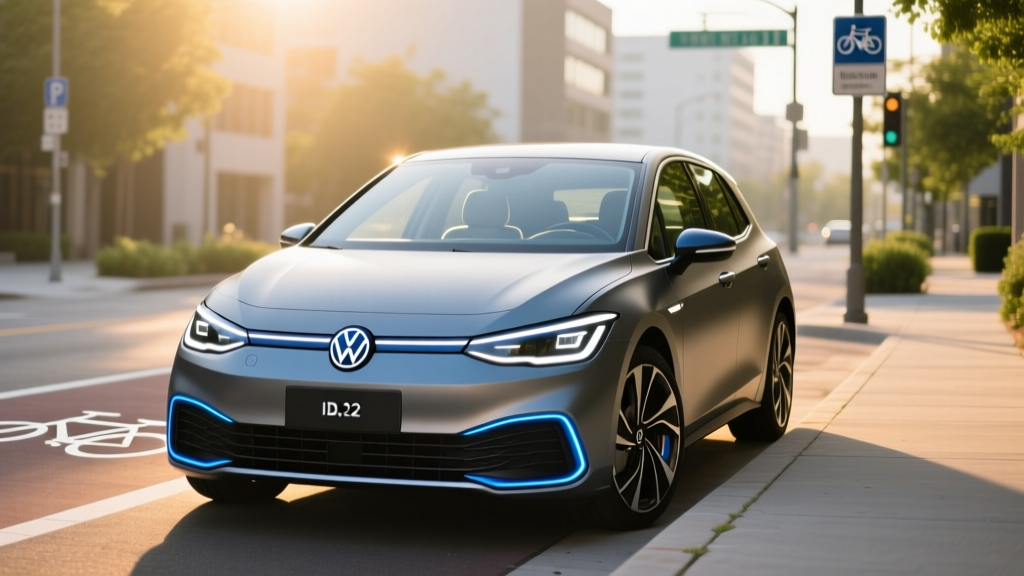
If you're searching for a "Golf EV," you're likely looking for an electric version of Volkswagen's iconic hatchback. Here's the reality: VW discontinued the e-Golf after the 2019 model year. In 2026, the closest spiritual successor is the VW ID.3 (sold in Europe) and the upcoming VW ID.2all (announced for 2026-2027 production, targeting a ~€25,000 price point). In the US market, VW's electric hatchback option remains the ID.4 compact crossover, as VW has not confirmed US availability for the ID.2all or ID.3. If you want a Golf-sized EV today in America, look at the Chevrolet Bolt EV/EUV (if remaining stock exists), the Mini Cooper SE, or the Hyundai Kona Electric.
Why There's No New VW Golf EV (Yet)
Volkswagen's decision to retire the e-Golf was strategic. The original e-Golf, produced from 2015-2019, offered just 125 miles of EPA range in its final iteration — competitive in 2017, but quickly outpaced by the Chevrolet Bolt (259 mi), Nissan Leaf Plus (226 mi), and later the Hyundai Kona Electric (258 mi). Rather than retrofitting the Golf's MQB platform further, VW pivoted to its dedicated MEB electric architecture, launching the ID.3 in Europe and the ID.4 globally.
The Golf nameplate continues as a mild-hybrid and plug-in hybrid (the Golf eHybrid and Golf GTE in Europe), but a fully electric Golf wearing the badge hasn't materialized. VW has instead positioned the ID. family as its electric identity, with the ID.2all concept signaling a return to the affordable hatchback segment.
The VW ID.2all: The Spiritual Golf EV Successor
VW announced the ID.2all concept in early 2023 with a stated goal of production beginning around 2026 for the European market. This is the vehicle that most closely matches what a "Golf EV" buyer wants: a compact, affordable, practical electric hatchback.
| Attribute | Estimated Spec |
|---|---|
| Battery Capacity | ~58 kWh usable (LFP expected for base) |
| WLTP Range | Up to 450 km (~280 mi WLTP / est. ~230-250 mi EPA equivalent) |
| Motor Output | ~166 kW (223 hp), front-wheel drive |
| DC Fast Charge (peak) | ~125 kW (10-80% est. ~25 min) |
| Level 2 AC Charge | 11 kW onboard charger |
| 0-100 km/h (0-62 mph) | Est. ~7.0 seconds |
| Target Price (Europe) | ~€25,000 (~$27,000 USD before incentives) |
| Platform | MEB Entry (MEB21) |
Important caveats: These figures are preliminary based on VW's concept announcements and industry reporting. Final production specs may differ. More critically, VW has not confirmed US market availability for the ID.2all. The US lineup currently starts with the ID.4 crossover.
US Alternatives: What to Buy Instead of a Golf EV
If you want a compact electric hatchback in the US in 2026, here's how the realistic options stack up against what a Golf EV would theoretically offer:
| Model | EPA Range | Battery (kWh) | Peak DC kW | 10-80% Min | 0-60 mph | Base MSRP |
|---|---|---|---|---|---|---|
| Hyundai Kona Electric | 261 mi | 64.8 (NMC) | 100 kW | ~43 min | 7.4 sec | ~$34,000 |
| Mini Cooper SE (2025+) | ~170 mi | 54.2 (NMC) | 95 kW | ~30 min | 7.3 sec | ~$32,000 |
| Chevrolet Bolt EV* | 259 mi | 65.0 (NMC) | 55 kW | ~70 min | 6.5 sec | ~$28,000* |
| Nissan Leaf (SV Plus) | 212 mi | 60.0 (NMC) | 100 kW | ~45 min | 6.9 sec | ~$31,000 |
*Chevrolet Bolt EV was discontinued after 2023; a next-gen Bolt on the Ultium platform has been announced but availability and final specs remain unconfirmed as of 2026. Prices reflect last known MSRP or estimated pricing.
The Kona Electric is the closest to what a modern Golf EV would be: a practical, well-equipped compact hatchback with competitive range. Its biggest weakness is DC charging speed — 100 kW peak is slow by 2026 standards when rivals like the Hyundai Ioniq 5 (peak 240 kW) have moved well beyond it. For real-world road trips, expect the Kona to add roughly 180-200 miles in a 30-minute stop at a 150+ kW charger, limited by its charge curve.
EV vs Gas Hatchback: Real Cost Comparison
One of the most common questions from prospective Golf EV buyers: does going electric actually save money compared to a gas Golf? Let's compare using concrete numbers.
| Cost Category | Hyundai Kona Electric (SEL) | VW Golf 1.5 TSI (Gas, 2024 EU spec as proxy) |
|---|---|---|
| Purchase Price (MSRP) | $34,000 | $28,000 (est. US equivalent) |
| Federal Tax Credit (§30D) | Up to $7,500 (eligibility varies) | $0 |
| Effective Purchase Price | ~$26,500 (if full credit applies) | $28,000 |
| Fuel/Energy (5 yrs, 75k mi) | ~$3,750 (home L2 at $0.14/kWh, 3.5 mi/kWh) | ~$9,375 (30 MPG avg, $3.75/gal) |
| Maintenance (5 yrs) | ~$1,200 (no oil changes, fewer brake replacements due to regen) | ~$3,500 (oil, filters, brake pads, spark plugs) |
| Insurance (5 yrs, avg) | ~$9,000 (EVs typically 15-20% higher premiums) | ~$7,500 |
| Estimated Depreciation (5 yrs) | ~$12,000 (EV depreciation has stabilized but remains steep) | ~$11,000 |
| Total 5-Year Cost | ~$52,450 | ~$59,375 |
Key takeaways: The EV wins on fuel and maintenance savings — roughly $7,875 less over five years. But higher insurance premiums and potentially steeper depreciation narrow the gap. The §30D federal tax credit is the swing factor: if you qualify for the full $7,500 (subject to income caps of $150k single/$300k joint, MSRP cap of $55k for cars, and battery sourcing requirements per IRS guidelines), the EV comes out significantly ahead. If you don't qualify, the math tightens considerably.
Charging cost assumes predominantly home Level 2 charging at residential electricity rates. If you rely on public DC fast charging exclusively, costs roughly double to ~$7,500 over five years, erasing much of the fuel savings advantage.
Real-World Ownership: What First-Time EV Buyers Must Know
Spec sheets don't tell the whole story. Here are the ownership realities that separate informed buyers from disappointed ones:
Home Charging Access Is Non-Negotiable for Most Owners
Over 80% of EV charging happens at home. If you can install a Level 2 charger (240V, 32-48A circuit), you'll wake up every morning with a full "tank." A typical Level 2 home installation costs $800-$2,500 depending on whether your electrical panel needs an upgrade (a 200-amp panel is usually required for a 48A charger). Without home charging, public DC fast charging becomes your lifeline — and at $0.30-$0.50/kWh on networks like Electrify America or EVgo, your per-mile cost rises to near gas-car territory.
Range Is Not a Single Number
The EPA range on the sticker assumes a mix of city and highway driving at moderate temperatures. In practice:
- Highway driving at 75 mph: Expect 15-20% less than EPA (a 261-mi Kona delivers ~210-220 mi real-world highway)
- Cold weather (below 32°F): Battery chemistry slows and cabin heating draws power — plan for 25-35% range loss, so that 261-mi Kona drops to ~170-195 mi
- Cold + highway combined: The worst case — expect up to 40% reduction
Vehicles with a heat pump (like the Kona Electric) mitigate cold-weather losses somewhat compared to resistive heating, but physics is physics. If you live in Minnesota or Maine, size your battery for your worst-case day, not your best.
Charging Speed Matters More Than Peak kW
Automakers advertise peak DC fast-charge rates (e.g., "100 kW"), but that peak is only sustained for a portion of the session. A typical charge curve tapers significantly above 50-60% state of charge (SoC), and slows dramatically above 80%. This is why the industry standard metric is 10-80% time — it reflects the usable fast-charging window.
For a 65 kWh battery at 100 kW peak, expect the average sustained rate from 10-80% to be closer to 65-75 kW, yielding a 10-80% time of roughly 40-45 minutes. Compare that to a Hyundai Ioniq 5 with 800V architecture peaking at 240 kW and averaging ~180 kW over the same window: 10-80% in about 18 minutes. For road trips, this difference is substantial.
Common Golf EV Misconceptions — Myth vs. Fact
| Myth | Fact |
|---|---|
| "EV batteries need replacing every few years" | Modern NMC and LFP batteries are warranted for 8 years/100,000 miles with a capacity retention threshold of 70%. Data from fueleconomy.gov and real-world fleet studies show most EV batteries retain 85-90% capacity at 100k miles. Full replacement costs $8,000-$18,000 but is rarely needed within typical ownership periods. |
| "I'll save money no matter what" | Savings depend on electricity rates, charging habits, tax credit eligibility, and insurance costs. Public-charging-only owners in high-rate states (California, Massachusetts) may break even or lose money vs. an efficient gas car. Run your own numbers. |
| "All EVs qualify for the $7,500 tax credit" | The §30D credit has strict requirements: buyer income caps ($150k single, $300k joint), vehicle MSRP caps ($55k for cars, $80k for SUVs/trucks), and battery component/critical mineral sourcing requirements that have disqualified many models. Always check the current IRS qualified vehicle list before purchasing. |
| "EVs are worse in winter" | EVs start reliably in any temperature (no cold-cranking amps to worry about), and heated seats/steering wheels are more energy-efficient than cabin air heating. Range drops, yes, but with preconditioning and a heat pump, winter usability is strong for daily driving. |
| "Regenerative braking replaces my brakes entirely" | Regen significantly reduces brake pad wear — many EV owners report original pads at 80,000+ miles. But friction brakes are still needed for emergency stops and low-speed situations, and brake rotors can corrode from disuse. Periodic brake inspections remain important. |
Decision Framework: Should You Wait for a Golf EV or Buy Now?
If/Then Guide for the Golf EV Shopper
- If you live in Europe: The VW ID.3 is already available and is the direct Golf EV equivalent. The ID.2all (when it enters production) will offer an even more affordable option. Test-drive both against the MG4 and BYD Dolphin for value comparison.
- If you're in the US and need a car now: Don't wait. The ID.2all has no confirmed US launch date, and VW's US electric strategy currently focuses on the ID.4 and upcoming ID.7 sedan. Buy a Hyundai Kona Electric, Mini Cooper SE, or consider stepping up to the VW ID.4 if you can accommodate a compact crossover.
- If you have home charging and drive under 40 miles/day: Any of the current compact EVs will serve you excellently. The daily commute is where EVs shine brightest — silent, smooth, and charging overnight for pennies per mile.
- If you road-trip frequently (200+ mi one way): Prioritize DC charging speed over total range. A vehicle that charges at 200+ kW (Ioniq 5, EV6, Tesla Model 3) will spend far less time at stops than one limited to 100 kW, even if the latter has 30 more miles of range.
- If you lack home charging: Seriously consider a PHEV (like the Toyota Prius Prime) instead. You'll get 40+ miles of electric range for daily driving plus a gas engine for flexibility, without depending on public charging infrastructure reliability.
- If budget is the top priority: The used EV market offers compelling value. A 2019 e-Golf with 40,000 miles can be found for $15,000-$18,000 — adequate for city driving and short commutes, though its 125-mi range limits highway trips. The used §30D credit (up to $4,000 or 30% of sale price, whichever is less) may apply if purchasing from a dealer.
Frequently Asked Questions
Will VW ever make an electric Golf with the Golf name?
VW has not announced a direct "Golf Electric" successor wearing the Golf badge. The company has committed to the ID. naming convention for its EVs. The ID.2all, when produced, will be the closest equivalent in size, price, and purpose. VW has suggested the ID.2all could eventually spawn a GTI-style performance variant, which would be the true spiritual successor to the Golf GTI in electric form.
Is the used VW e-Golf worth buying in 2026?
It depends entirely on your use case. The 2017-2019 e-Golf offers 125 miles of EPA range (83.5 mi for the 2015-2016 models). For a dedicated city commuter with home charging and a sub-30-mile round trip, it's a comfortable, well-built hatchback at a bargain used price. But for anyone needing highway range or road-trip capability, it's inadequate. Battery degradation on the e-Golf has been relatively mild — expect 85-92% State of Health (SoH) at 60,000 miles based on owner reports — but always request a battery health report before purchasing.
How does the VW ID.4 compare to what a Golf EV would offer?
The ID.4 is larger, heavier, and more expensive than a Golf EV would be. It's a compact crossover with 275 miles of EPA range (Pro S, RWD), a 82 kWh battery, and peak DC charging of 170 kW (10-80% in ~28 minutes). Starting MSRP is around $40,000. You gain space and range but lose the nimble, affordable hatchback character that defines the Golf. If you specifically want a Golf-sized EV, the ID.4 isn't it — but it's the closest VW currently sells in the US.
What's the cheapest compact EV I can buy new in 2026?
Pricing fluctuates with incentives and model-year updates, but the Nissan Leaf S (starting ~$29,000) and Chevrolet Bolt EV (if reintroduced on Ultium) typically anchor the low end. The Hyundai Kona Electric and Mini Cooper SE compete in the $32,000-$35,000 range. Factor in the §30D tax credit if eligible, which can reduce effective prices by up to $7,500 at point of sale.
Do I need a special electrical panel for home EV charging?
Most homes with a 200-amp electrical panel can support a Level 2 charger (typically requiring a 40-60 amp dedicated circuit). Older homes with 100-amp panels may need an upgrade ($1,500-$3,000) to add a high-amperage charger alongside existing household loads. Always consult a licensed electrician for a panel load calculation before purchasing equipment. A 32-amp Level 2 charger (7.7 kW) adds roughly 25-30 miles of range per hour of charging — sufficient for most daily needs even on a smaller circuit.