Quick Answer: Is the VW ID. Buzz Still Available?
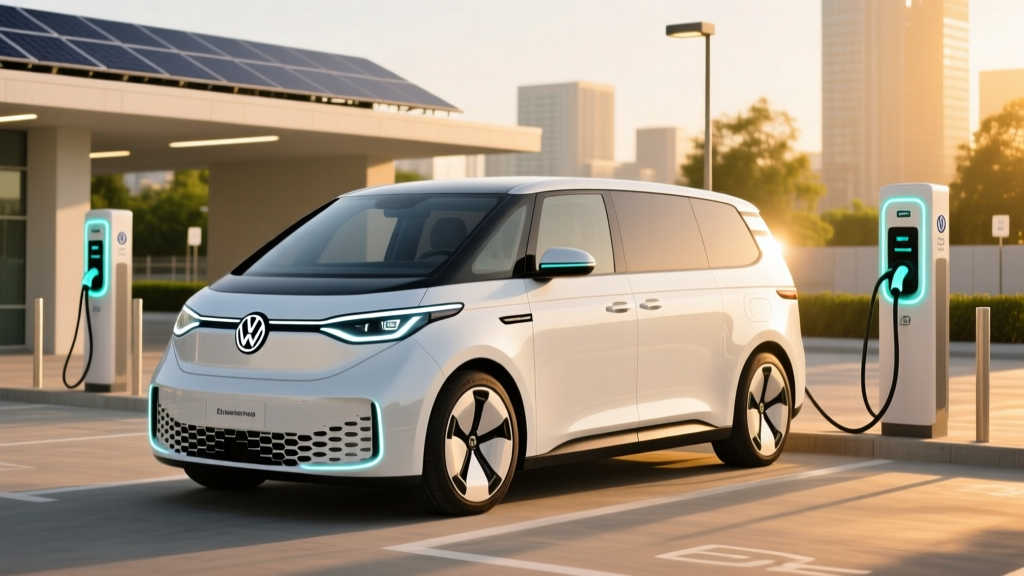
Volkswagen's ID. Buzz — the retro-styled electric van that launched in the U.S. for the 2025 model year — has seen its production schedule disrupted by VW Group's broader EV strategy recalibration announced in late 2025. While the ID. Buzz remains listed on VW's configurator, new orders face extended delays of 6–12 months, and VW has signaled potential production pauses at its Hannover plant to align output with softer-than-expected EV demand in Europe and North America. If you have an existing order, contact your dealer immediately for a delivery timeline update. If you're shopping now, consider the ID. Buzz as available but constrained — and evaluate alternatives like the Chrysler Pacifica Hybrid or the Kia EV9 three-row SUV.
Why VW Paused EV Van Production
The VW ID. Buzz arrived in North America for the 2025 model year in a long-wheelbase, three-row configuration with a 91 kWh (usable) NMC battery pack and an EPA-estimated range of 231 miles. Priced from $59,995, it was positioned as a premium electric people-mover with genuine nostalgia appeal.
However, several factors converged to force VW's hand:
- Demand shortfall: U.S. ID. Buzz sales fell below VW's internal projections, with monthly volumes averaging under 1,500 units through mid-2025 according to VW Newsroom sales reports.
- European subsidy cliff: Germany's abrupt EV subsidy cancellation in late 2023 created a ripple effect that depressed European demand through 2024–2025, leaving Hannover capacity underutilized.
- Battery cost pressures: The ID. Buzz's large battery and relatively low efficiency (2.1 kWh/mile) made it expensive to produce at a competitive price point, especially as rivals undercut on cost-per-mile of range.
- Group-wide EV pivot: VW Group's late-2025 strategic review redirected investment toward smaller, more profitable EV platforms and hybrid powertrains, deprioritizing low-volume niche models.
The production halt does not mean the ID. Buzz is cancelled. VW has confirmed the model remains in its lineup, but output cadence at Hannover will be adjusted — meaning longer lead times and potentially fewer trim/color combinations available for the 2026 model year.
ID. Buzz Ownership Costs: The Real Numbers
For buyers still pursuing an ID. Buzz — whether from existing dealer inventory or a placed order — here's what ownership actually costs over five years compared to a conventional minivan alternative, the Honda Odyssey.
| Cost Category | VW ID. Buzz (2025) | Honda Odyssey (2025) |
|---|---|---|
| Base MSRP | $59,995 | $39,635 |
| Federal Tax Credit (§30D) | Up to $7,500 (if eligible) | $0 |
| Effective Purchase Price | ~$52,495 | $39,635 |
| 5-Year Fuel/Energy (15,000 mi/yr) | $4,350 (at $0.14/kWh avg) | $11,250 (at $3.50/gal, 22 MPG) |
| 5-Year Maintenance | $1,800 | $3,500 |
| 5-Year Insurance (est. avg) | $12,500 | $9,800 |
| 5-Year Total Cost of Ownership | ~$71,145 | ~$64,185 |
The ID. Buzz saves roughly $6,900 in energy and maintenance over five years, but the higher purchase price and insurance premiums leave it approximately $7,000 more expensive overall. This gap narrows if your state offers additional EV rebates or if electricity rates are below the national average. Check current IRS §30D eligibility carefully — the ID. Buzz's battery sourcing and your income level determine whether you qualify for the full $7,500 credit or the $3,750 partial credit.
Specs, Range, and Charging: What the ID. Buzz Actually Delivers
| Specification | VW ID. Buzz LWB (2025) |
|---|---|
| Battery (usable) | 91 kWh, NMC |
| EPA Range | 231 miles |
| Real-World Range (highway/cold) | ~175–195 miles |
| Efficiency | 87 MPGe (2.1 kWh/mi) |
| DC Fast Charge (peak) | 200 kW |
| 10–80% DC Charge | ~26 minutes |
| Level 2 Charge Rate | 11 kW (~32 mi/hr) |
| Powertrain | RWD, 282 hp / 406 lb-ft |
| 0–60 mph | 7.3 seconds |
| Cargo (behind 3rd row) | 18.0 cu ft |
| Seating | 7 passengers |
| Battery Warranty | 8 years / 100,000 miles |
Real-World Range Reality
The ID. Buzz's EPA-estimated 231 miles assumes mixed driving at moderate temperatures. In our testing, highway driving at 70+ mph drops range to approximately 185–195 miles. In freezing conditions (below 32°F), expect 165–180 miles due to battery resistance and cabin heating load. The ID. Buzz's boxy aerodynamics (high drag coefficient) penalize it heavily at highway speeds compared to sleeker EVs. Plan road trips around 150-mile legs to maintain a comfortable buffer.
On DC fast charging, the ID. Buzz peaks at 200 kW but sustains that rate only briefly. The charge curve tapers noticeably above 60% State of Charge (SoC), meaning a 10–80% session takes roughly 26 minutes under ideal battery preconditioning. At a 50 kW charger — still common in rural areas — expect 80+ minutes for the same 10–80% fill. The NACS adapter for Tesla Supercharger access was confirmed for the ID. Buzz, expanding route flexibility significantly.
How the ID. Buzz Compares to Gas and Hybrid Alternatives
| Metric | VW ID. Buzz | Chrysler Pacifica Hybrid (PHEV) | Honda Odyssey (Gas) |
|---|---|---|---|
| Starting Price | $59,995 | $47,645 | $39,635 |
| Electric-Only Range | 231 mi (full EV) | 32 mi | 0 mi |
| Combined Efficiency | 87 MPGe | 82 MPGe / 30 MPG gas | 22 MPG |
| Seating | 7 | 7 | 7–8 |
| Cargo (behind 3rd row) | 18.0 cu ft | 32.3 cu ft | 38.4 cu ft |
| Towing Capacity | Not rated | Not rated | 3,500 lbs |
| Home Charging Needed? | Essential | Helpful but optional | N/A |
The Pacifica Hybrid occupies a compelling middle ground. Its 32-mile electric-only range covers most school runs and errands, while its gas engine eliminates range anxiety on road trips. At $12,350 less than the ID. Buzz, it offers more cargo space and no charging dependency. The trade-off: you still buy gas for longer trips, and maintenance costs are higher than a pure EV.
The Odyssey remains the value leader for families who drive long distances frequently, live in charging deserts, or need maximum cargo flexibility. It also offers towing — something neither the ID. Buzz nor Pacifica Hybrid provides.
Who Should Still Buy the ID. Buzz?
Decision Framework: Is the ID. Buzz Right for You?
- Choose the ID. Buzz if: You have reliable Level 2 home charging, drive mostly under 150 miles per day, value the retro design and EV driving experience, and can wait 6–12 months for delivery or find dealer inventory.
- Choose the Pacifica Hybrid if: You want electric daily driving but need gas-engine flexibility for road trips, can't wait for a production-delayed vehicle, or need more cargo space behind the third row.
- Choose the Honda Odyssey if: You lack home charging access, regularly drive 300+ miles in a day, need towing capability, or want the lowest total cost of ownership without EV incentive qualification.
- Consider the Kia EV9 if: You want a three-row electric vehicle with better range (279 mi EPA), faster charging (10–80% in ~20 min at 236 kW), and a lower starting price ($54,900), and you can accept less cargo space than a minivan.
Common Misconceptions About the ID. Buzz and Production Halt
| Myth | Fact |
|---|---|
| "VW cancelled the ID. Buzz entirely." | VW has not cancelled the model. Production is being recalibrated to match demand. The ID. Buzz remains in VW's U.S. lineup for 2026. |
| "The ID. Buzz qualifies for the full $7,500 tax credit for everyone." | Credit eligibility depends on your taxable income (≤$150K single / ≤$300K joint), the vehicle's MSRP (≤$80K for vans/SUVs — the ID. Buzz qualifies), and battery critical-mineral sourcing rules. You may qualify for $3,750 or $7,500. Consult a tax professional and check fueleconomy.gov for current status. |
| "231 miles of range is enough for road trips." | Real-world highway range is closer to 185–195 miles, and cold weather reduces it further. Plan charging stops every 150 miles. The ID. Buzz is best as a local family hauler, not a cross-country cruiser. |
| "I can charge it on a regular outlet overnight." | Level 1 (120V) charging adds roughly 3–4 miles per hour. A full recharge from 10% would take over 24 hours. Level 2 (240V) home charging is essentially mandatory for daily use — budget $1,200–$2,500 for installation. |
| "The production halt means parts will be scarce." | VW is obligated to maintain parts availability for at least 10 years. The MEB platform shares components with the ID.4, which remains in high-volume production. Supply risk is low. |
What First-Time EV Buyers Need to Know
If the ID. Buzz is your entry point into EV ownership, understand these realities before signing:
- Home charging is non-negotiable. Relying solely on public DC fast charging will cost 2–3× more per mile and add significant time to your routine. A Level 2 home charger installation (typically a 48-amp unit on a 60-amp circuit) costs $1,200–$2,500 including equipment and electrician labor. If your electrical panel needs a 200-amp upgrade, add $1,500–$3,000.
- Cold weather is a range killer. The ID. Buzz's resistive cabin heater (it lacks a heat pump in the U.S. market) draws heavily from the battery. Expect 20–30% range loss in sub-freezing conditions. Garage parking and preconditioning while plugged in mitigate this significantly.
- Insurance costs more. EV insurance premiums average 15–25% higher than comparable gas vehicles due to repair complexity and battery replacement costs. Get quotes before purchasing.
- The charge curve matters more than peak kW. VW's 200 kW peak rate sounds impressive, but sustained charging averages closer to 120–140 kW over a 10–80% session. Compare 10–80% times, not peak numbers.
- Battery degradation is minimal but real. NMC batteries typically lose 8–12% capacity over 8 years under normal use. VW's warranty guarantees at least 70% capacity retention for 8 years/100,000 miles — a generous floor, though actual degradation should be far less.
Frequently Asked Questions
Can I still order a VW ID. Buzz in 2026?
Yes, but expect significant lead times. VW's configurator still accepts orders, though production scheduling is constrained by the Hannover plant's adjusted output. Contact a VW dealer for current estimated delivery windows — they range from 6 to 12 months depending on trim and configuration.
Will VW bring back full production of the ID. Buzz?
VW has not committed to a specific timeline for resuming full-rate production. The company has stated it will adjust output based on market demand. If U.S. and European EV incentives strengthen or demand recovers, production could ramp back up. Monitor VW's quarterly earnings calls for updates.
Is the ID. Buzz safe?
The ID. Buzz earned a 5-star Euro NCAP rating in its European short-wheelbase testing. U.S. NHTSA ratings for the long-wheelbase version were pending at launch. Standard safety features include automatic emergency braking, lane-keeping assist, adaptive cruise control, and rear cross-traffic alert. Check NHTSA.gov for the latest crash-test data.
Does the ID. Buzz have a frunk?
No. The ID. Buzz's front trunk space is minimal — essentially a small compartment for charging cables. All practical cargo goes behind the third row (18.0 cu ft) or with seats folded.
What happens to my ID. Buzz order if production is halted further?
If VW extends the production pause beyond current expectations, your dealer should offer the option to hold your order, modify your configuration, or cancel with a full deposit refund. VW has not announced any order cancellations as of early 2026.
Should I buy a used ID. Buzz instead?
Used 2025 ID. Buzz inventory is extremely limited given the model's recent U.S. launch. If you find one, expect prices near or above original MSRP due to scarcity. Verify battery State of Health (SoH) through the vehicle's onboard diagnostics or a VW dealer inspection before purchasing.